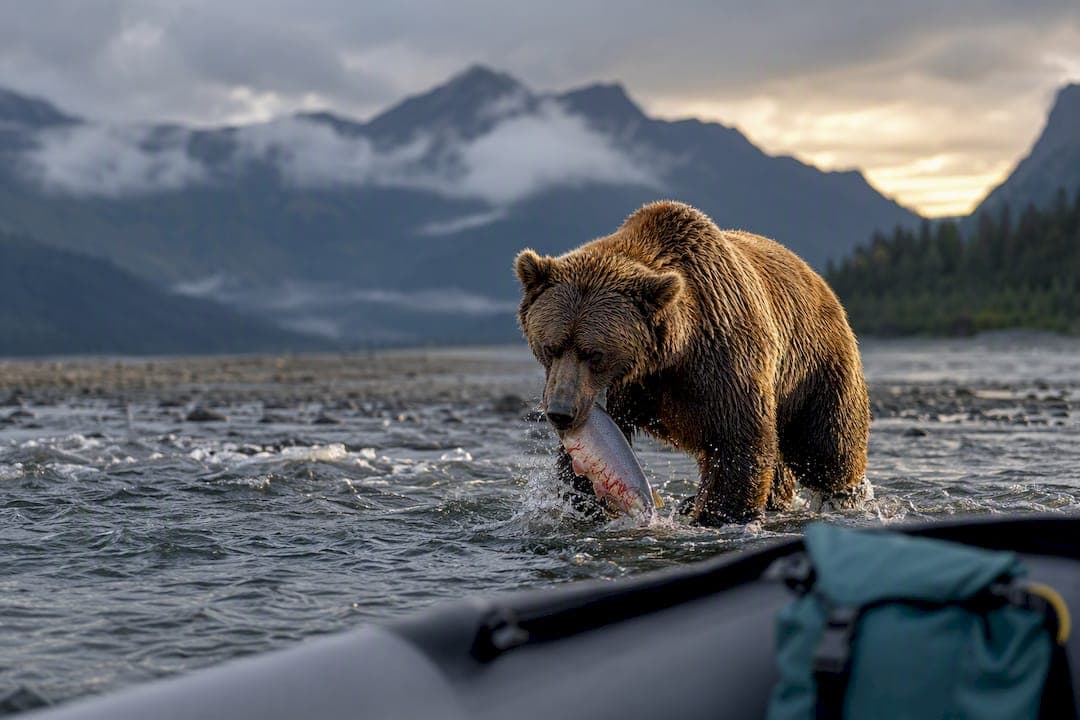
A private yacht or small expedition vessel offers a comfortable and reliable way to watch Alaska's coastal brown bears up close, particularly across Katmai and Lake Clark National Parks. The best trips run multi-day between June and August, staging shore landings by skiff at Chinitna Bay and Silver Salmon Creek when tides and salmon runs line up. Day trips work, but they gamble on a single window of weather and luck.
TL;DR:
- Multi-day yacht charters during June to August maximize bear sightings by allowing flexibility to follow tides and salmon runs, which are most active then.
- Shallow draft vessels and small skiffs are essential for accessing tidal flats and river mouths that large cruise ships cannot reach safely.
- Guides prioritize safety and natural behavior by maintaining distance, instructing guests on proper conduct, and often skipping landings that stress bears.
- The most productive sites include Katmai's dense bear population and Lake Clark's remote, tide-dependent bays like Chinitna Bay and Silver Salmon Creek.
- Booking at least five days increases chances of sightings and compensates for weather delays, which are common in Alaska's variable climate.
Table of Contents
- What Makes Katmai and Lake Clark the Best Alaska Bear Viewing Yacht Destinations
- Why a Private Yacht Beats a Cruise Ship or Day Trip for Bear Viewing
- What a Multi-Day Alaska Bear Viewing Yacht Charter Actually Looks Like
- When to Book an Alaska Bear Viewing Yacht Trip for the Best Sightings
- Getting There: Ports, Floatplanes, and Shallow-Water Vessels
- How Bear Viewing Guides Keep the Experience Safe and Respectful
- Planning Checklist for Booking Your Trip
- Why Exotica Charters Favors Yacht-Based Bear Viewing
- What an Alaska Bear Viewing Yacht Trip Actually Costs
- Who Runs These Trips: Guides, Naturalists, and Charter Specialists
- Protecting the Bears and the Bays: Responsible Yacht-Based Viewing
- An Editorial Take: What the Research Actually Supports
- Book a Private Alaska Bear Viewing Yacht Charter
- Sources
- FAQ
What Makes Katmai and Lake Clark the Best Alaska Bear Viewing Yacht Destinations
Katmai National Park spans about four million acres and holds one of the densest coastal brown-bear populations on the planet, the kind of concentration that makes a multi-day yacht trip worth the logistics. Bears gather here because the geography does the work for them: braided rivers dump salmon into shallow flats, and the bears simply wait.
Lake Clark National Park sits just across Cook Inlet from Katmai and offers a quieter, more intimate alternative. Its coastline, especially Chinitna Bay, is managed specifically as a remote-access bear-viewing area where boat arrivals and tide timing dictate almost everything about the visit. Silver Salmon Creek, a short hop down the coast, adds another productive estuary where bears dig for clams on the mudflats between salmon runs.
Each site rewards a different kind of traveler:
- Katmai's core viewing areas suit travelers who want the highest density of bears and don't mind a longer transit or a floatplane leg to reach the interior rivers.
- Chinitna Bay favors photographers chasing wide tidal-flat scenes with mountains as backdrop, since the bay opens onto Cook Inlet with dramatic sightlines.
- Silver Salmon Creek works well for shorter multi-day trips because it's closer to Homer and Kenai departure points, trimming transit time without sacrificing bear density.
- Deeply remote expedition travelers who want to string several bays together over five or more days get the most value from a private yacht that can reposition overnight while guests sleep.
The remoteness that makes these places extraordinary is exactly what makes boat access the practical choice. There are no roads into Katmai's interior bear habitat, and Lake Clark has none at all connecting it to the outside world. A yacht anchored offshore functions as a floating base camp, letting guides pick the best tide window each morning instead of committing to one fixed itinerary weeks in advance.
Why a Private Yacht Beats a Cruise Ship or Day Trip for Bear Viewing
Large cruise ships can't get close to where bears actually feed. Coastal bear habitat means shallow tidal flats, narrow river mouths, and estuaries that only shallow-draft vessels can approach safely, which is exactly why serious bear-viewing operators run smaller, purpose-built boats rather than ships designed for open water. A private yacht paired with a reliable skiff can nose into water a cruise ship would never risk.
Group size matters just as much as hull design. A small charter typically carries a handful of guests rather than hundreds, which means guides can time landings around bear behavior instead of a fixed shore-excursion schedule. Expedition operators consistently point to flexible, small-group itineraries as the operational edge that lets a trip follow bears and tides rather than a printed timetable. That flexibility also means fewer people on the beach at once, which keeps bears calmer and less likely to alter their natural foraging.
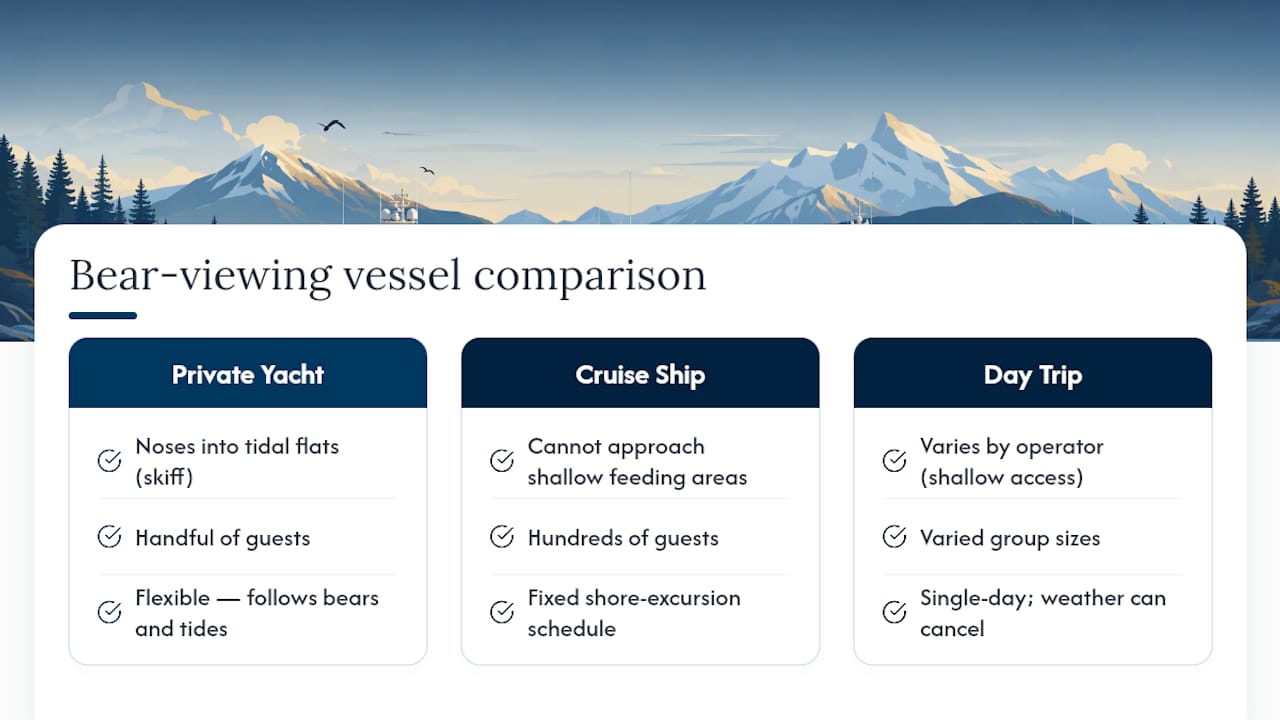
Multi-day staging solves the single biggest problem with day trips: weather. One rained-out morning on a day trip means a wasted booking. On a five- to seven-day charter, a fogged-in morning just becomes a slower breakfast, and the captain repositions to a different bay by afternoon. That built-in flexibility is often the difference between seeing two bears at a distance and watching a sow with cubs work a salmon run for an hour.
Pro Tip: Ask any operator directly about hull draft and tender capacity before booking. A vessel that can't get its skiff into six inches of water at low tide will miss the best clamming and fishing windows on Chinitna's flats.
What a Multi-Day Alaska Bear Viewing Yacht Charter Actually Looks Like
A well-run itinerary moves with the tide charts, not the clock. Here's a representative six-day skeleton used on private Alaska bear-viewing charters:
- Day 1: Embark at the home port, safety briefing, evening transit toward Cook Inlet.
- Day 2: Anchor near Chinitna Bay; morning skiff landing timed to low tide, guided walk along the flats.
- Day 3: Reposition to Silver Salmon Creek; afternoon landing to watch bears working the creek mouth for salmon.
- Day 4: Full day inside Katmai's core viewing rivers, weather and access permitting, possibly paired with a floatplane transfer for interior rivers a yacht cannot reach directly.
- Day 5: Flexible day held in reserve for weather makeup or a return visit to the most productive bay from earlier in the trip.
- Day 6: Morning landing, then transit back to port with time for packing and departure logistics.
Onboard, expect private cabins, chef-prepared meals, and expedition gear like binoculars, spotting scopes, and rubber boots supplied or available for guests who didn't pack their own. Sample itineraries from bear-viewing specialists show a consistent rhythm: guided shore excursions in the morning and afternoon, downtime onboard for meals and photo editing, and evening briefings on the next day's tide window.
The captain and guide work as a pair on timing. Landings happen when tides expose the flats bears prefer for foraging, and guides track salmon-run reports daily to decide which bay gets priority. Expect this rundown before most landings:
- A short briefing on bear behavior and what to do if a bear approaches.
- A check of wind and tide conditions to confirm the skiff landing is safe.
- Distribution of any shared gear (tripods, extra layers, bear spray where required).
When to Book an Alaska Bear Viewing Yacht Trip for the Best Sightings
June through August is peak season, and for one specific reason: salmon runs concentrate bears on tidal flats and river mouths during exactly this window. Outside these months, bears disperse to forage more broadly, and sightings become far less predictable.
Early season, roughly late May into June, brings its own trade-offs. Ice and snowmelt can still affect access to some interior rivers, and weather is less predictable than in midsummer. What you gain is thinner crowds and bears that are hungrier and more active after winter denning, often visible digging for sedges and clams before the salmon arrive in force.
Peak midsummer, July into early August, delivers the longest daylight of the year and the heaviest salmon runs, which is when multiple bears often work the same stretch of river within view of each other. The trade-off is that popular viewing areas draw more boat traffic, so private charters that can reposition to less crowded bays hold a real advantage.
A few seasonal notes worth building into any itinerary:
- Late May to mid-June: lower bear density per site, but active bears foraging on sedges and early runs.
- Late June to July: salmon runs intensify, and bear numbers on tidal flats climb steadily.
- Late July to August: peak concentration, especially at river mouths, with cubs frequently visible alongside sows.
Multi-day charters absorb the risk of any single bad-weather day, which is precisely why operators recommend booking five days or more rather than gambling on one. If timing your trip around the salmon calendar matters most to you, it's worth reading how Alaska yacht charter season actually starts before locking in dates.
Getting There: Ports, Floatplanes, and Shallow-Water Vessels
Most Alaska bear-viewing charters embark from Homer or Kodiak, both of which sit within striking distance of Katmai and Lake Clark's coastal viewing sites. Some itineraries also stage out of Kenai or Seward, depending on which bays the captain plans to prioritize that week.
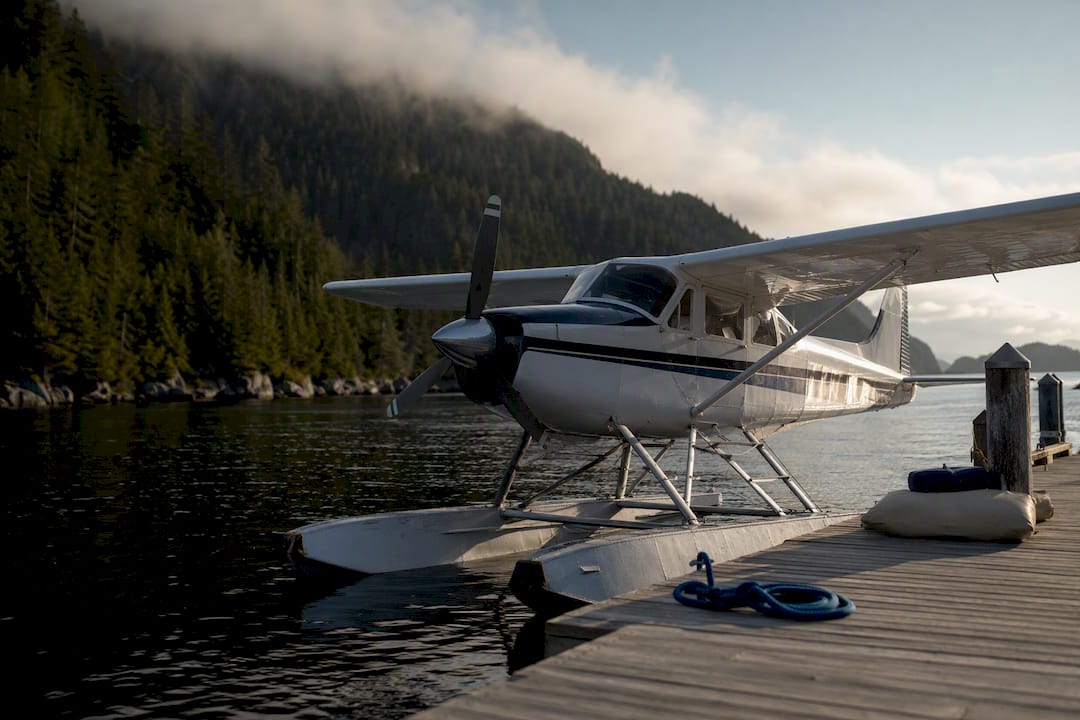
Floatplanes come into play when a yacht simply can't reach a spot. Lake Clark's coastal bear-viewing guidance notes that some of the richest interior rivers sit beyond where any boat can safely anchor, so operators pair a yacht basecamp with a floatplane transfer to extend reach without giving up the comfort of returning to a proper cabin and a real dinner each evening. This hybrid approach lets guests wake up in a stable, comfortable anchorage and still reach far-flung rivers by air within the same day.
Vessel selection is where trip quality is won or lost. Look for:
- Shallow draft, so the hull itself can anchor closer to tidal flats without running aground.
- A capable skiff or tender system, since nearly every bear encounter happens after a shore landing, not from the yacht's deck.
- An experienced captain who knows the specific bays, not just Alaska waters broadly. Local knowledge of which flats expose first at low tide is what separates a good sighting from a missed one.
Larger vessels built for open ocean passages generally cannot get close enough to matter for bear viewing, which is why the expedition-style motor yachts and smaller luxury vessels used for Alaska charters tend to outperform bigger ships on this specific job.
How Bear Viewing Guides Keep the Experience Safe and Respectful
Every credible bear-viewing operation in Katmai and Lake Clark follows the same core principle: distance protects both the bear and the guest. National Park Service guidance on bear safety centers on maintaining safe separation, minimizing disturbance, and letting bears dictate the terms of any encounter.
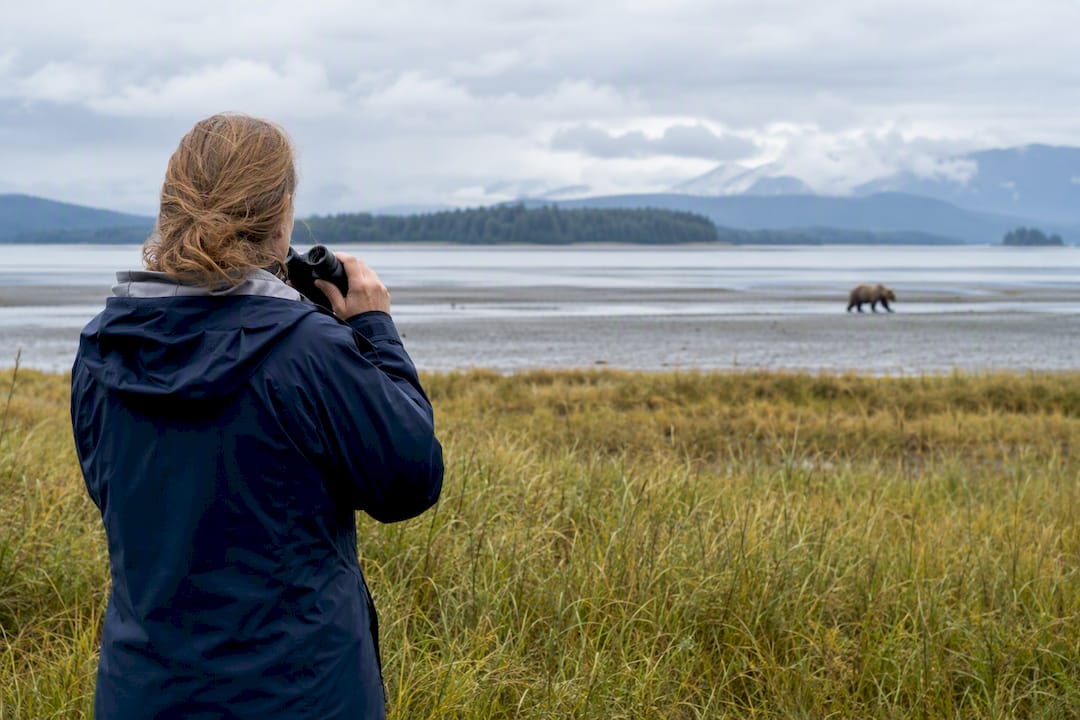
In practice, that means guides brief every group before a landing and often choose to stay farther back and rely on binoculars or a spotting scope rather than pushing closer for a better photo. Guides who prioritize undisturbed natural behavior are protecting the long-term viability of the site, not just the day's outing.
Standard etiquette on a guided landing includes:
- Staying in a tight group, since scattered guests are harder for a bear to read as non-threatening.
- Speaking at a normal volume so bears are aware of human presence and not startled.
- Following the guide's call immediately if a landing is aborted due to bear proximity or shifting wind.
Quick fact: Katmai's core bear habitat spans roughly four million acres, which is part of why guides can almost always reposition to a calmer viewing spot rather than crowd a single bear.
Guides call off landings more often than newcomers expect, and that's a sign of a well-run operation, not a wasted excursion. A skipped landing usually means a better one an hour later, once wind or bear activity settles.
Planning Checklist for Booking Your Trip
Private yacht charters for peak-season Katmai and Lake Clark trips book out months ahead, so start the conversation early if you have specific June through August dates in mind. Deposits typically secure the vessel and crew, with balances due closer to departure.
Before you go, work through this short list:
- Book early for peak-season dates, especially July, since availability on smaller expedition vessels tightens fast.
- Pack layered, waterproof gear, including a solid rain shell and rubber boots or hip waders for skiff landings on wet flats.
- Bring optics and spares, meaning binoculars at minimum, plus extra camera batteries since cold and constant use drain them quickly.
- Prepare for motion sensitivity on transit days with your preferred remedy, since some legs cross open water.
- Confirm travel insurance covers medevac, given the remoteness of Katmai and Lake Clark's coastline.
Costs vary widely between a single-day charter and a full private yacht expedition, a distinction worth understanding fully before comparing quotes.
Why Exotica Charters Favors Yacht-Based Bear Viewing
Some yacht charter companies build Alaska itineraries around former captains and water-sports professionals who understand exactly what a hull needs to do in tidal-flat conditions. That background shapes every recommendation we make, from which bays reward a longer stay to which vessel class handles skiff landings best.
Some charter operators arrange motor yachts, expedition vessels, and select luxury yachts suited to Alaska's coastal habitat, matched to the specific bays a guest wants to prioritize. A group chasing photography at Chinitna Bay needs a different vessel profile than a family wanting a gentler, shorter run to Silver Salmon Creek.
Their role is to translate a guest's priorities, whether that's maximum bear density, calm water for younger travelers, or flexibility to chase the best salmon run that week, into a specific yacht, crew, and itinerary. The remoteness of this region rewards operators who've actually worked these waters, not just booked them.
What an Alaska Bear Viewing Yacht Trip Actually Costs
Pricing on private Alaska bear-viewing charters depends heavily on vessel class, trip length, and how many shore landings and floatplane transfers are built into the itinerary. A single-day bear-viewing boat tour from a port like Homer sits at the low end of the spectrum, typically covering a few hours on the water plus one or two guided landings.
A multi-day private yacht charter costs considerably more, but the price reflects a different product entirely: exclusive use of the vessel, a dedicated crew, chef-prepared meals, and the flexibility to reposition between Katmai, Chinitna Bay, and Silver Salmon Creek as conditions dictate. What's typically included on a private multi-day charter:
- Exclusive use of the yacht and crew for the full trip.
- All meals prepared onboard by a private chef.
- Guided shore excursions with a naturalist or bear-viewing guide.
- Skiff transfers for every landing.
- Basic expedition gear, though guests should confirm exactly what's supplied versus what they need to bring.
What's usually excluded: floatplane transfers to interior rivers, travel insurance, and gratuities for crew. Because pricing varies so much by vessel and season, current rates for Alaska yacht charters are best confirmed directly rather than estimated in general terms.
Who Runs These Trips: Guides, Naturalists, and Charter Specialists
Specialized bear-viewing charters typically combine two kinds of expertise on board: a captain who knows the specific waters, tides, and anchorages, and a naturalist or bear guide who reads animal behavior and manages every shore landing. The best operations treat these as distinct roles rather than asking one person to do both.
Naturalist guides on quality Alaska charters usually bring field experience specific to coastal brown bears, not general wilderness guiding. That specificity matters because bear behavior around salmon runs and tidal flats differs meaningfully from behavior in other bear habitats, and a guide who's spent seasons in Katmai or Lake Clark reads warning signs faster than someone new to the region.
Charter brokers and specialists, meanwhile, handle the vessel side: matching a guest's priorities to the right yacht class, crew size, and itinerary length. Exotica Charters works this side of the equation, drawing on a team of former captains and water-sports professionals to plan the vessel and route while connecting guests with the naturalist expertise each destination requires. The combination of a knowledgeable crew and a shallow-draft vessel built for tidal-flat work is what actually determines trip quality, more than any single credential on its own.
Protecting the Bears and the Bays: Responsible Yacht-Based Viewing
Bear-viewing tourism only works long-term if it doesn't change bear behavior, and the operators who understand that best are the ones who build slower, smaller-group trips by design. Every landing that stays back an extra fifty yards or gets called off entirely because a bear is showing stress signals is a small trade-off that keeps the population's natural feeding patterns intact for the next group and the next season.
Small expedition vessels have a lighter footprint on these fragile coastal ecosystems than large ships simply because they carry fewer people and generate less disturbance per landing. Guides who maintain distance and rely on optics rather than close approach protect natural feeding behavior, which matters most during the narrow salmon-run windows when bears are most food-focused and least tolerant of interruption.
Responsible charters also respect the seasonal rhythms of these habitats rather than pushing for access outside safe windows. Booking a trip during the established June through August season, working with guides who know when to skip a landing, and choosing a shallow-draft vessel designed for this specific job all add up to tourism that Katmai and Lake Clark can sustain for future guests, not just this year's booking.
An Editorial Take: What the Research Actually Supports
The conventional advice for Alaska bear viewing treats a day tour and a multi-day yacht charter as interchangeable, just different price points for the same experience. They aren't. A day trip buys you a single roll of the dice on weather, tide, and bear activity. A private multi-day charter buys flexibility to fail once and recover, which is the entire game in a place this remote.
What's underrated is how much vessel design matters compared to guide reputation. A brilliant naturalist stuck on a deep-draft boat still can't get guests onto the flats at Chinitna Bay when the tide is wrong. Shallow draft and a reliable skiff are the unglamorous details that actually determine whether a trip delivers.
If you're prioritizing one thing, prioritize trip length over destination choice. A five-day charter with modest expectations will outperform a single perfect-weather day at the "best" site almost every time, because it can adapt when Alaska's weather inevitably doesn't cooperate.
— Mo
Book a Private Alaska Bear Viewing Yacht Charter
Some charter planners build itineraries differently than booking sites that list day tours by the dozen: every itinerary may be built around a crew of former captains and water-sports professionals who know which bays reward a longer stay and which vessel handles a tidal-flat landing safely. That means less time gambling on a single day trip and more time actually watching bears work a salmon run.
Getting started is simple. Share your preferred dates, ideally within the June through August window, along with party size and priorities, whether that's photography at Chinitna Bay, a gentler family trip to Silver Salmon Creek, or a full week chasing bears across both parks. From there, we match you to the right vessel class, whether that's a motor yacht built for coastal work or a larger luxury yacht for bigger groups wanting more onboard space between landings.
Reach out through Exotica Charters to start a custom proposal and check availability for your preferred dates before peak season fills up.
Sources
Start with the primary sources that govern how these trips actually run:
- Bear safety in Katmai | National Park Service
- Alaska's Inside Passage | Expedition Cruises | Lindblad Expeditions
FAQ
Where Is the Best Bear Viewing in Alaska?
Katmai National Park and Lake Clark National Park, particularly Chinitna Bay and Silver Salmon Creek, consistently produce the most reliable coastal brown-bear sightings. Katmai holds one of the densest bear populations anywhere on the continent, while Lake Clark's bays offer quieter, boat-accessible alternatives.
Is Kaktovik Closed to Visitors?
Kaktovik, on Alaska's Arctic coast, is a separate polar-bear viewing destination from the coastal brown-bear sites covered here and operates under its own local access rules that shift by season. For current status, check directly with local tour operators or Alaska state travel resources rather than relying on general Alaska bear-viewing guidance.
Is Katmai Bear Viewing Worth the Trip?
Yes, particularly during peak salmon-run months from June through August, when bear concentration at rivers and tidal flats is at its highest. A multi-day yacht-based approach gets far more out of the destination than a single rushed day trip, since it absorbs weather delays and allows repositioning between productive bays.
Where on an Alaska Cruise Will You Most Likely See Bears?
Standard cruise ships rarely get close enough to bear habitat to guarantee sightings, since coastal bears feed on shallow tidal flats that large vessels can't approach. A private yacht or small expedition vessel with shallow draft and a reliable skiff, like the charters Exotica Charters arranges for Alaska, reaches these sites directly instead of viewing from a distance.
How Long Should an Alaska Bear Viewing Yacht Trip Be?
Five to seven days is the sweet spot for most travelers, long enough to absorb a bad-weather day or two without sacrificing the trip's core goal. Shorter three-day charters can still work well for Silver Salmon Creek given its proximity to Homer, but they leave less room for error if conditions turn.