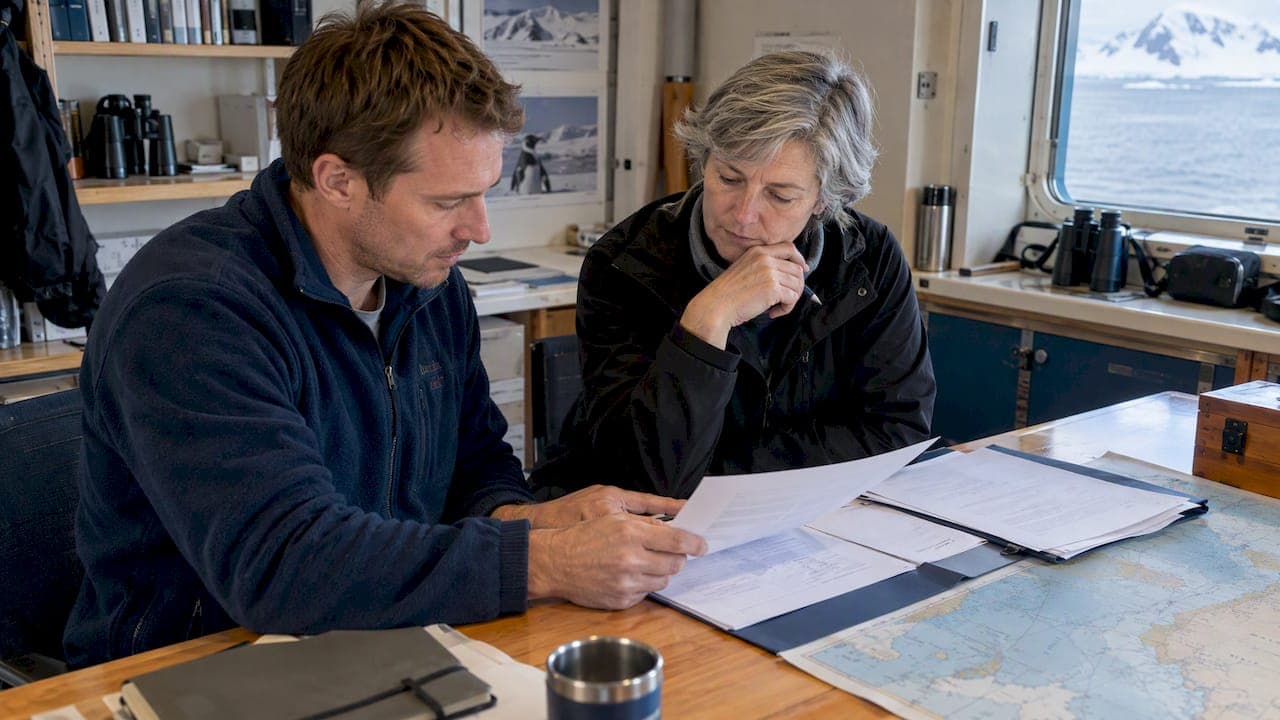
You can reach Antarctica three practical ways: a private crewed yacht, an expedition cruise, or an air-cruise that flies you over the Drake Passage. Private charters can offer greater privacy and flexibility, but every voyage still needs an approved Environmental Impact Assessment and formal authorization. IAATO guidance and national approvals are the baseline for any permitted trip.
TL;DR:
- An Argentine or Chilean exit permit alone does not authorize an Antarctic yacht; request its EIA and national approval, then verify through EIES before paying.
- Air cruises skip the rough Drake crossing but lose the sea approach; private yachts allow flexible itineraries, while expedition ships schedule landings.
- Longer voyages reach remote regions; shorter trips focus on the peninsula, while the Drake crossing takes a couple of days each way.
- Compare written quotes carefully: fares may exclude flights, clothing rental, alcohol, gratuities, and insurance, and every traveler should confirm Antarctic medical evacuation coverage.
Table of Contents
- Which type of Antarctic charter suits you?
- Routes, departure ports and trip lengths
- What does an Antarctic charter or tour cost?
- What should you pack and how should you prepare?
- Safety, authorization and regulatory requirements
- What is daily life onboard like?
- Wildlife and ecosystem: what you will actually see
- Responsible tourism and environmental impact
- Comparing vessel types for comfort and accessibility
- What to ask before you book
- How we plan your private Antarctic charter
- FAQ
- Sources
Which type of Antarctic charter suits you?
Your priorities decide the format. Group size, privacy, activity range and how much structure you want all pull in different directions.
- Private crewed yacht: a small party, a flexible itinerary, and the freedom to linger where wildlife is active. This is a format we plan for guests who want an Antarctica yacht charter built around their own interests.
- Expedition cruise: a larger vessel with a guide team, scheduled landings and set briefings. First-time visitors who like a fixed program often prefer this.
- Air-cruise (fly-cruise): you fly across the Drake Passage and board in Antarctic waters, which suits travelers short on time or wary of rough seas.
- Activities: zodiac landings are common to all three. Kayaking is widely offered on expedition vessels and private yachts, while overnight camping and diving depend on the operator and the vessel's equipment.
For a closer look at the first two, our private yacht versus expedition cruise comparison sets out the key differences.
Routes, departure ports and trip lengths
Most voyages leave from southern South America, and the route you choose shapes what you see and how long you are away.
- Departure: vessels typically sail from Ushuaia, Argentina, or a nearby Chilean port, then provision and clear paperwork before heading south.
- Drake Passage: the open-water crossing to the Antarctic Peninsula is the roughest stretch and usually takes a couple of days each way.
- Short peninsula trips: covering the Gerlache Strait, Paradise Bay and the South Shetland Islands.
- Longer voyages: adding remote regions and more landing time.
- Air-cruise option: flying the passage removes the sea transit, but you give up the gradual approach and often a day or two of flexibility.
Longer routes mean more landing sites and more chances at penguin colonies, seals and whales. Shorter trips concentrate on the peninsula's best-known scenery.
What does an Antarctic charter or tour cost?
Prices vary widely, so treat any figure as a starting point for comparing written quotes. Private crewed charters sit at the top of the range because you are paying for an entire vessel and crew. Expedition cruises price per person and cover a broad span depending on cabin and ship. Air-cruises usually fall between, since flights add to the fare.
Standard pricing generally includes the vessel, crew, meals and guided landings. Common extras are flights to the departure port, expedition clothing rental, alcohol, gratuities and travel insurance. Party size, season, vessel specification and special activities such as kayaking all move the total. Our 2026 cost breakdown for a private crewed expedition walks through the inputs, and we share pricing for specific charters on request.
Pro Tip: Hold a contingency fund and confirm that your insurance covers medical evacuation from Antarctica, since a medevac from this region is a major expense.
What should you pack and how should you prepare?
Layers beat bulk. Plan for wind, spray and long hours outdoors, then adjust to what your operator supplies.
- Base and mid-layers: merino or synthetic thermals plus a fleece or light down jacket.
- Outer shell: waterproof jacket and pants that fit over your layers.
- Footwear and extremities: waterproof boots for wet zodiac landings, warm gloves with liners, a hat and a neck gaiter.
- Sun protection: glare off ice is intense, so pack sunglasses and sunscreen. The practical advice in this guide to sun layers for boating applies on deck too.
- Electronics: spare batteries, since cold drains them quickly, and dry bags for cameras.
- Health: motion-sickness remedies for the Drake Passage, a medical check before you go, and moderate fitness for stairs, boarding zodiacs and uneven shore.
Operators typically supply boots and shells on larger ships. Confirm what is included and watch luggage limits on any flights.
Safety, authorization and regulatory requirements
Antarctic voyages are governed by treaty rules, and the paperwork matters as much as the ship. IAATO guidance requires voyages to comply with the Madrid Protocol, and every voyage needs an approved Environmental Impact Assessment (EIA) and formal authorization from the vessel's flag state or the charter operator's national authority. IAATO guidelines also cover biosecurity and wildlife approach distances.
An Argentine or Chilean exit permit (zarpe) alone is not suitable authorization for an Antarctica-bound yacht.
Yacht activity is monitored. A 2023–24 reporting paper on yachting in Antarctica documents 44 yachts sighted that season, a mix of IAATO-member-authorized yachts, non-IAATO-authorized yachts and some unauthorized vessels. Parties are urged to check authorizations through the EIES pre-season information facility, and you should do the same before you pay a deposit.
Beyond paperwork, treat mandatory insurance, a medevac plan and trained expedition staff as non-negotiable for any voyage south of 60°S.
What is daily life onboard like?
A typical day starts with a briefing over breakfast, followed by a zodiac outing or landing, a hot lunch, a second excursion, then talks or photo reviews in the evening. Weather and ice set the schedule, not the clock, so plans change often. Flexibility is part of the appeal: a closed bay can mean an unexpected whale encounter elsewhere.
- Common activities: guided hikes, zodiac cruising, kayaking, wildlife photography and, on some trips, an optional polar plunge.
- Private charters: a small crew, tailored menus, and cabin layouts arranged around your party. Our guide to what a crewed Antarctica yacht charter includes covers crew roles and inclusions.
- Expedition cruises: more passengers, set meal times, and a larger guide team running structured landings.
Wildlife and ecosystem: what you will actually see
Antarctica's coast is a seasonal feast. In the austral summer, penguin colonies of Adélie, chinstrap and gentoo species crowd the shoreline, with chicks hatching as the season advances. Fur seals and elephant seals haul out on beaches, while leopard seals patrol the ice edge. Humpback and minke whales feed in the nutrient-rich channels, often surfacing beside a zodiac.
Everything here rests on krill, the small crustaceans that feed whales, seals, penguins and seabirds alike. Sea ice, ocean currents and the brief summer bloom of plankton keep that chain running. Skuas, petrels and albatrosses ride the wind above it.
Knowing this changes how you watch. Spending quiet time at a colony can reveal nest building, chick feeding and the constant jostling over stones. Guides who understand the ecosystem can explain what you are seeing and why a particular bay is busy that week. Approach distances set by IAATO guidelines keep animals undisturbed, so bring a long lens and let the wildlife come to you.
Responsible tourism and environmental impact
Antarctica's ecosystem is fragile, and every visit leaves a footprint. Responsible charters work to keep it small.
Biosecurity comes first. Boots, clothing and gear are cleaned and vacuumed before each landing to prevent carrying seeds or microbes ashore. Guests keep to marked routes and respect wildlife approach distances set by IAATO. Nothing is left behind, including waste, and nothing is taken away.
Vessel choices matter too. Fuel use, wastewater handling and anchoring practices all affect the environment, so ask how a yacht manages each. Small parties can reduce crowding at landing sites, though they bring the same obligations as a large ship, including proper authorization and an approved EIA.
Choosing an authorized, well-run voyage is an important part of responsible travel. Unauthorized yachts bypass the checks that protect these sites. Before you book, ask how the operator handles biosecurity, waste and wildlife distances, and expect clear, specific answers rather than general reassurance.

Comparing vessel types for comfort and accessibility
The vessel shapes your comfort more than almost any other choice.
Private crewed yachts offer the most personal experience: a small number of cabins, attentive crew, flexible meals and the ability to adjust the plan to wildlife and weather. Space is limited, and the Drake Passage can feel livelier on a smaller hull, so guests who dislike motion should plan accordingly.
Expedition ships are larger and steadier, with lounges, lecture rooms and more passenger amenities. Landings run on a rotation to keep groups manageable, which means less freedom but a reliable program.
Air-cruise vessels are similar to expedition ships but skip the crossing, which helps travelers with limited mobility or tight schedules.
Accessibility deserves a direct conversation. Zodiac boarding, gangway steps and uneven shore landings are physical, whatever the vessel. Ask each operator what adaptations they can make, who provides onboard medical care, and how a medevac would work. Comfort in Antarctica is as much about preparation and honest answers as it is about thread count.

What to ask before you book
I arrange expedition charters alongside a team of former captains and water sports professionals. For wildlife and water-sports itineraries, a bespoke crewed yacht can be tailored around your interests. Whoever you choose, ask for proof of EIA and authorization, the medevac plan, the onboard medical capability, and the captain's and guides' credentials. A confident operator answers all four without hesitation.
— Mo
How we plan your private Antarctic charter
We design fully crewed charters to remote destinations, led by experienced captains and water sports professionals who build each itinerary around your wildlife and adventure goals. If you want Antarctica done properly, with a vessel, crew and plan matched to your party, we handle the details so you can focus on the voyage.
- Request a custom itinerary and we will propose vessels and routes.
- Confirm available dates for the Antarctic season.
- We help you verify authorization and medevac arrangements before you commit.
Start with our Antarctica yacht charters page or contact us at Exotica Charters to request a quote.
FAQ
Can you charter a private yacht to Antarctica?
Yes, but the voyage must be formally authorized and backed by an approved Environmental Impact Assessment. An Argentine or Chilean exit permit alone is not enough, so ask for proof of authorization before booking.
How do you verify a yacht is authorized for Antarctica?
Ask the operator for its EIA and national authorization, then check through the EIES pre-season information facility that IAATO's yachting report points to. A reputable operator shares this readily.
How long does an Antarctic trip take?
Peninsula trips are usually shorter, while remote-region voyages can take longer. Air-cruises shorten the time at sea by flying the Drake Passage.
What should you pack for Antarctica?
Pack layered thermals, a waterproof shell, polar boots, gloves, a hat and sun protection. Bring spare camera batteries and motion-sickness remedies, and confirm what your operator supplies.