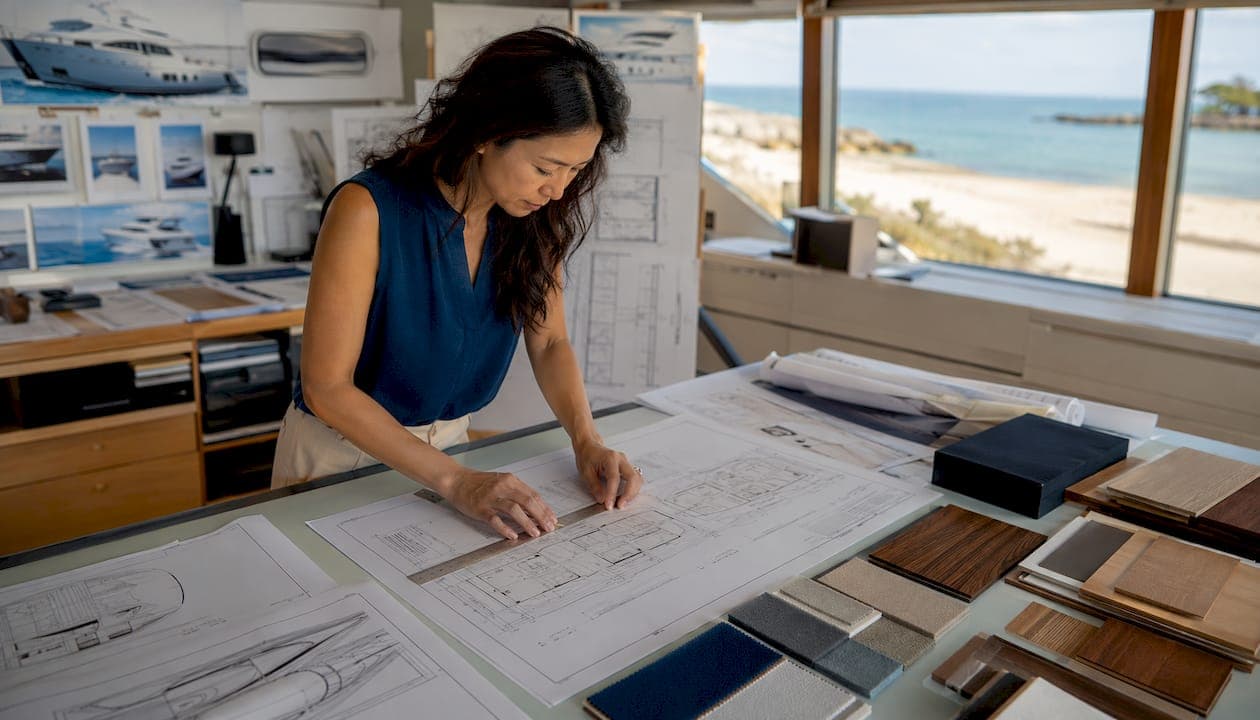
What makes a yacht cabin layout truly family-friendly?
A family-friendly yacht cabin layout organizes sleeping quarters, shared spaces, and safety zones to serve multiple generations traveling together. The goal is never simply to fit everyone aboard. It's to create a floating home where grandparents can read undisturbed, children can sleep safely near their parents, and couples can retreat to genuine privacy after a day of shared adventure.
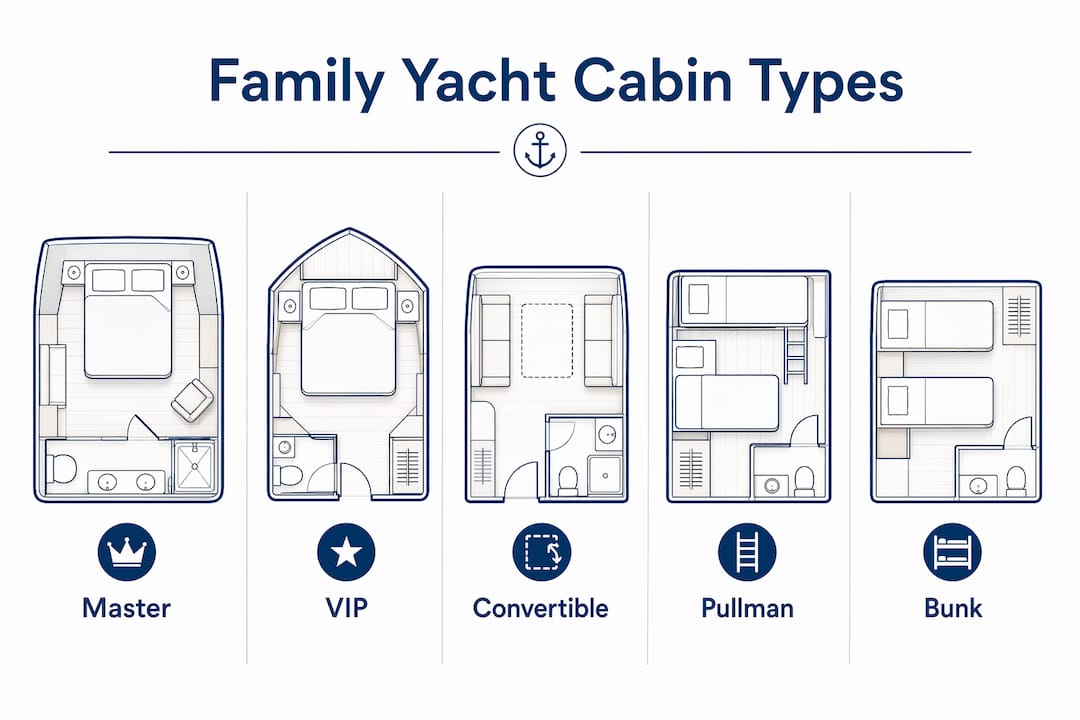
Yacht cabin terminology is standardized into seven recognized types: Master, VIP, Double, Twin, Convertible, Bunk, and Pullman. Each serves a distinct role in a family configuration. Together, they form the vocabulary you need before selecting any vessel.
The core principles at work in any well-designed family layout are:
- Privacy zoning: Cabins grouped by generation or relationship, not just by size
- Social zoning: Separate areas for dining, lounging, and children's play so different rhythms coexist peacefully
- Safety features: Gated stairways, high bulwarks, and deck netting designed for children and elderly guests
- Accessibility: On-deck master suites and wide corridors that eliminate steep stair navigation for older family members
- Flexible sleeping: Convertible and Pullman berths that adapt to odd-numbered groups without requiring a larger vessel
Cabin allocation influences family satisfaction more than vessel size. A thoughtfully clustered set of mid-size cabins with shared bathrooms placed near the master suite will outperform a sprawling layout where family members feel scattered and disconnected.
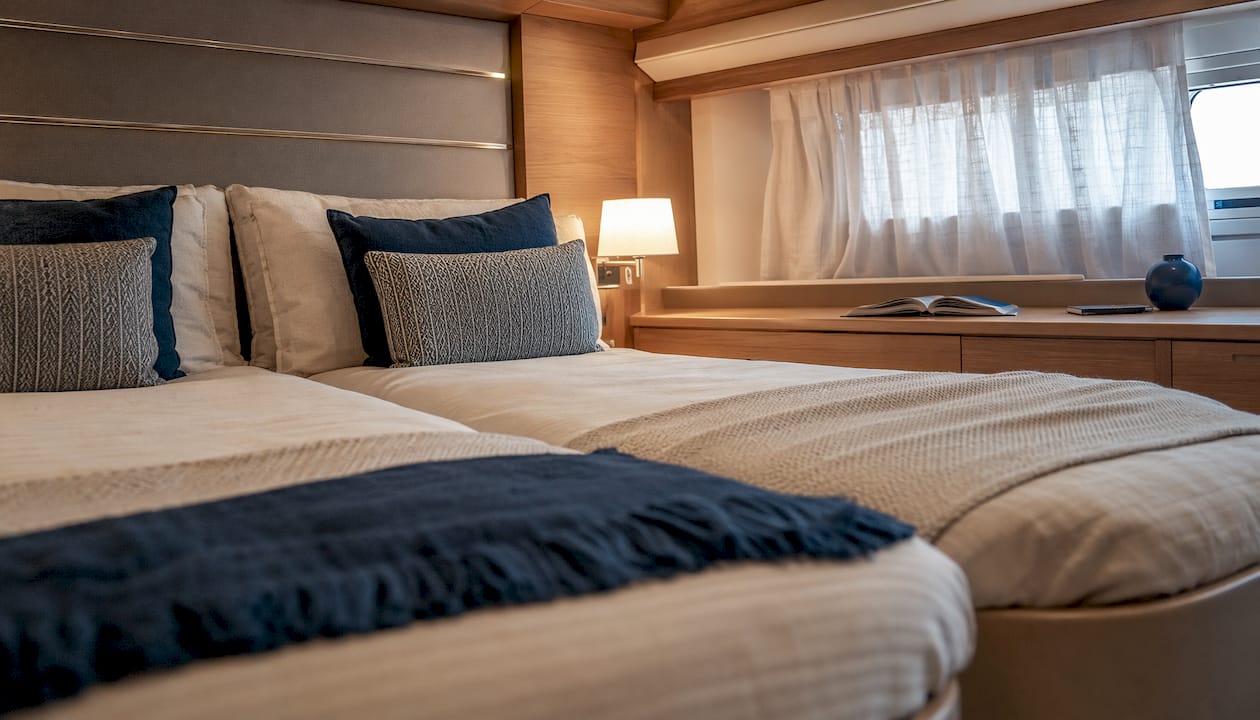
The seven cabin types every family should understand
Knowing what each cabin type actually delivers helps you match berths to people before you ever step aboard.
| Cabin Type | Sleeping Configuration | Best Suited For |
|---|---|---|
| Master | King or queen bed, the largest footprint | Primary charterer, parents, celebrating couples |
| VIP Suite | King bed, private ensuite, smaller than master cabin | Grandparents, secondary couples, equal-share groups |
| Double | Queen bed, private or shared bath | Couples wanting comfort without the master premium |
| Twin | Two single beds | Siblings, friends, older children |
| Convertible | Twin beds that slide into a king double | Mixed groups needing flexibility between trips |
| Bunk | Stacked single beds, compact footprint | Children, nannies, budget-conscious extra guests |
| Pullman | Fold-down wall or ceiling berth | Extra children, nannies, odd-numbered groups |
Master cabins sit at the top of the hierarchy. On larger motor yachts, the master is often positioned on the main or upper deck with direct sundeck access or a private balcony. For families, this placement matters: an on-deck master suite eliminates stair navigation entirely, which is a genuine advantage when traveling with elderly guests or toddlers.
VIP suites offer nearly equivalent comfort at a slightly smaller scale. On multigenerational charters, placing grandparents in a VIP rather than a smaller double cabin removes the awkward hierarchy that can sour group dynamics.
Convertible cabins are among the most practical tools in yacht planning for families. Twin beds that slide together into a king-size double let the same cabin serve a couple one week and two teenagers the next, without any structural change to the vessel.
Pullman berths fold into walls or ceilings, allowing a twin room to sleep three without sacrificing floor space during the day. We consider them a standard requirement for any serious family charter in 2026. They accommodate nannies or younger children without requiring families to book a significantly larger, more expensive vessel.
Bunk cabins work well for children but feel cramped for adults. Two to four berths stack vertically in a compact footprint, making them ideal for kids who want their own space while staying close to the family group. For kid-friendly boat tours and extended family charters alike, bunk cabins free up larger cabins for the adults who genuinely need them.
How catamaran and power yacht layouts differ for families
The structural difference between a catamaran and a monohull power yacht shapes every family privacy decision you make.
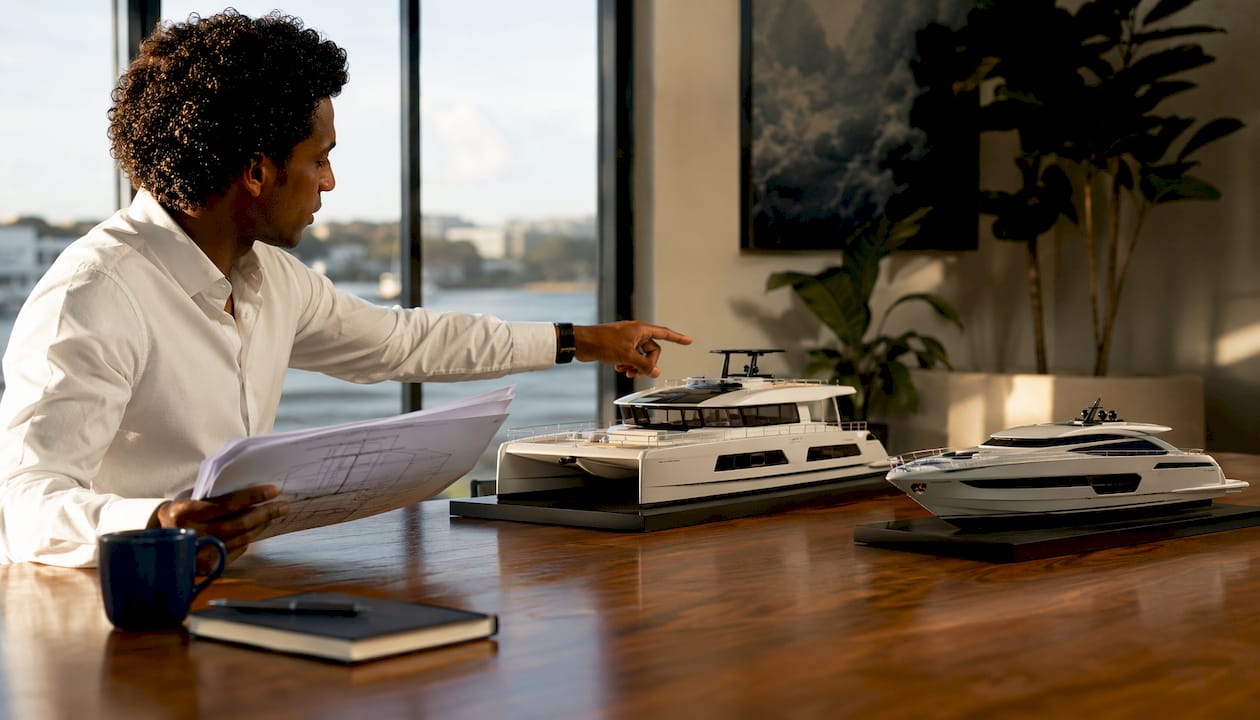
Catamarans allow dedicating an entire hull to children or crew, with the other hull reserved for adults. Separate hulls reduce noise transfer dramatically compared to monohulls, creating natural quiet zones for sleeping, studying, or simply escaping the energy of a full family group. This is the catamaran's defining advantage for multigenerational travel.
Key layout differences to weigh:
- Catamarans: Port hull for children and nanny, starboard hull for parents and grandparents; wide bridgedeck saloon as the shared social hub; inherently stable platform that reduces motion sickness for younger guests
- Power yachts and monohulls: Cabins arranged linearly along a single corridor; privacy requires greater overall vessel length; upper-deck master suites on larger motor yachts compensate with genuine separation from lower-deck guest cabins
- Deck plan: Catamarans typically offer a broader, flatter bridgedeck ideal for family dining and play; power yachts often provide multiple deck levels that naturally separate active and quiet zones
For families chartering in remote destinations like the Galápagos or French Polynesia, the catamaran's stability and hull separation make it the vessel we would suggest first. That said, a well-designed 6-cabin motor yacht with a thoughtful deck plan can match a catamaran's family comfort when the layout groups cabins correctly.
Expert practices for designing a family charter that actually works
Social zoning is the single most important design principle for family yacht layouts. Families need multiple distinct areas: a shaded spot for grandparents, a media lounge for teenagers, a safe enclosed salon for small children, and an alfresco dining area where everyone converges. Without that structure, even a short charter starts to feel long.
Cabin proximity shapes the emotional experience of a trip. Grouping children's cabins near the master suite means parents can respond quickly at night without navigating steep stairs or long corridors. Safety features like gated stairways and high bulwarks are non-negotiable on multigenerational vessels, as confirmed by the design team behind the 35m Lalabe, a four-generation family yacht built specifically around this principle.
Galley placement deserves more attention than most families give it. An open-plan galley lets parents cook while supervising children in the main salon. A galley-down configuration places the kitchen on a lower level, giving crew privacy and reducing distraction during meal service. Neither is universally better; the right choice depends on whether your family wants togetherness or clear guest-crew separation.
Storage and materials round out the picture. Durable materials like solution-dyed acrylics, quartz stones, and easy-care linens allow families to use spaces freely without treating the yacht like a showroom. Built-in drawers, foldaway desks, and under-berth storage in children's cabins keep the vessel livable across a two-week charter.
Pro Tip: When reviewing a deck plan, trace the path a child would take from their bunk to the cockpit at night. If that path crosses the main saloon or requires climbing an ungated stairway, ask the charter broker whether safety modifications are available before you book.
For families exploring 8-cabin configurations, the deck plan becomes the blueprint for peace. Prioritize vessels where crew quarters sit in a fully separate section, so the crew can work after hours without passing through guest living spaces.
Accessibility features that matter for children and elderly guests
Accessibility on a family yacht goes well beyond wheelchair ramps. For elderly guests, the most practical feature is an on-deck master suite that eliminates the need to descend steep companionway stairs to reach a sleeping cabin. Wide corridors and grab rails in heads and passageways make a meaningful difference on a vessel that moves underway.
For young children, child-safe deck netting and gated swim platforms are the features that give parents genuine peace of mind. Deck-edge rails and good sightlines from interior spaces to deck areas allow adults to supervise without hovering. Non-slip surfaces on companionway steps and cockpit soles reduce fall risk for both toddlers and older guests.
Entertainment access matters too. A media room or dedicated lounge positioned between the children's cabin cluster and the main saloon keeps younger guests engaged without pulling them toward open deck areas unsupervised. For family boat tours of any length, these design details separate a genuinely comfortable experience from one that requires constant vigilance.
Ready to find the right layout for your family?
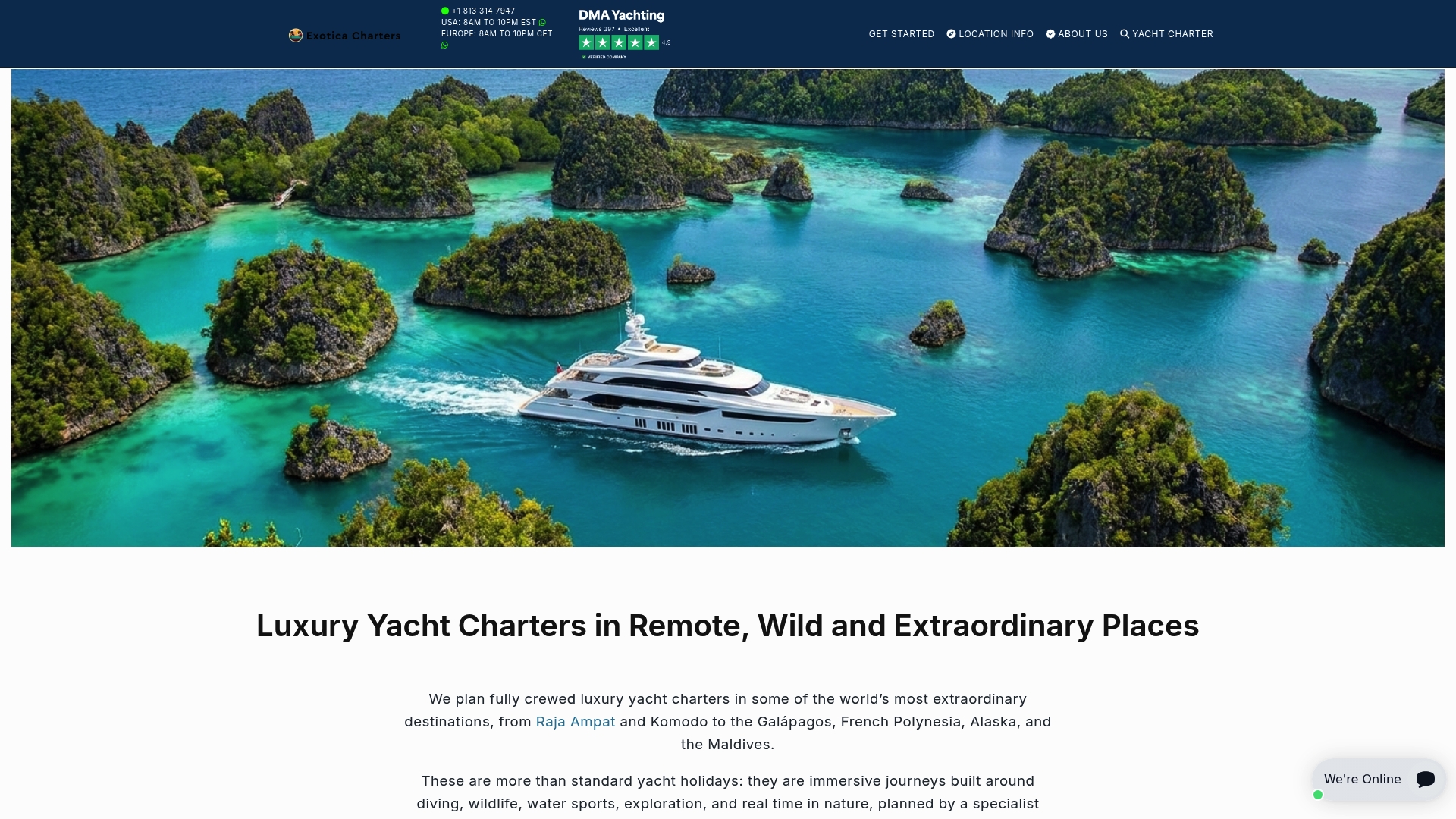
At Exoticacharters, we work with families planning extraordinary crewed charters to destinations like the Galápagos, French Polynesia, and Alaska. Our team of former captains and water sports professionals reviews deck plans with your specific family configuration in mind, matching cabin types, social zones, and safety features to your group before you commit to a vessel. Browse our luxury yacht collection to explore vessels with verified family-friendly layouts, or speak directly with a charter specialist to discuss your cabin requirements.
Key Takeaways
Cabin allocation and proximity matter more than vessel size for creating genuine comfort and privacy in a family group.
| Point | Details |
|---|---|
| Seven standardized cabin types | Master, VIP, Double, Twin, Convertible, Bunk, and Pullman each serve a distinct role in family layouts. |
| Pullman and convertible flexibility | Pullman berths fold into walls; convertible twins slide into doubles, accommodating odd-numbered groups without a larger vessel. |
| Catamaran hull separation | Dedicating one hull to children and another to adults reduces noise transfer and creates natural quiet zones. |
| Social zoning over open plans | Separate dining, lounging, and play areas allow different generations to follow their own rhythms without conflict. |
| Proximity and safety features | Grouping children's cabins near the master suite, with gated stairways and high bulwarks, defines a safe family deck plan. |