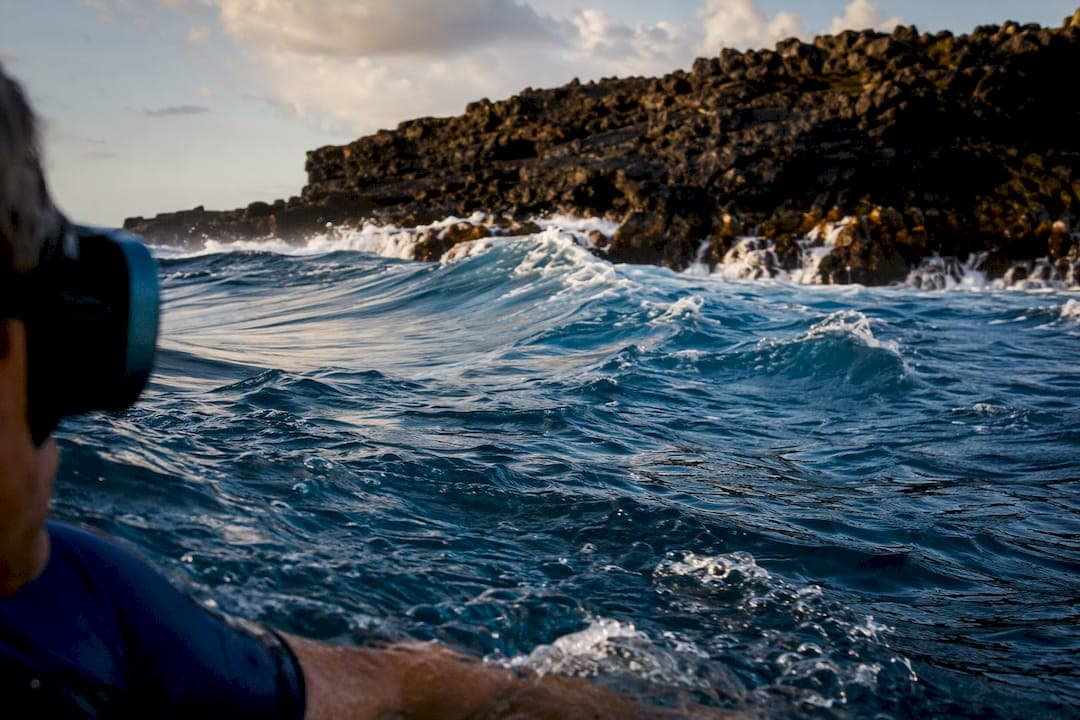
Right now, and for most of the year, Galapagos waters typically have waves of a few feet with moderate southeast trade winds, calm enough for snorkeling and small-boat transfers on most days. Before you commit to dates, check the NOAA marine zone forecast for PMZ123, and if you're traveling June through November, pack a wetsuit; the water runs noticeably cooler than the equatorial sun suggests.
TL;DR:
- Check NOAA's marine zone forecast for wind speed, sea height, and swell period, as these details directly impact snorkeling and transfer conditions.
- Be prepared for cooler water temperatures from June to November, requiring thicker wetsuits, especially if you tend to feel cold during dives or snorkels.
- Avoid relying solely on swell height; longer swell periods of 8 seconds or more create smoother seas, while shorter periods increase chop and disorientation.
- Travel during October to December offers a balance of warmer water and calmer seas, ideal for those seeking moderate conditions and wildlife encounters.
- Experienced operators like Exotica Charters monitor real-time forecasts and adjust itineraries to ensure safe, wildlife-rich trips despite changing sea conditions.
Table of Contents
- Where to Check Current Galapagos Sea Conditions
- What Drives the Seasonal Shift in Galapagos Ocean Weather
- Galapagos Sea Temperature by Month: What to Expect in the Water
- How to Read Sea State for Snorkeling, Diving, and Boat Comfort
- Staying Safe and Comfortable Once You're on the Water
- A Simple Routine for Checking Marine Forecasts Before You Go
- Choosing the Best Months for Your Priorities
- What Captains Actually Watch for Before Departure
- A Closing Thought on Sea Conditions and Trip Planning
- Book a Crewed Galapagos Charter Built Around Real Sea Conditions
- Sources
Where to Check Current Galapagos Sea Conditions
The single best source for live Galapagos sea conditions is the NOAA marine zone forecast for the Offshore Galapagos Islands, a zone product that updates several times a day with wind speed, sea height, and swell direction. A typical entry reads something like "SE to S winds 10 kt. Seas 5 to 7 ft in SE to S swell. Period 12 seconds," and those three numbers, wave height, wind, and swell period, tell you almost everything you need before committing to a snorkel outing or a zodiac transfer.
Beyond the zone forecast, NOAA's broader marine products give you the option to compare model runs against the zone's plain-language summary, which is worth doing anytime the forecast feels off from what you're seeing at anchor. Local nearshore tools such as the wind, wave, and tide forecast for Puerto Ayora fill in detail the offshore zone product skips, particularly water temperature and short-range tide timing, though they're best treated as a supplement rather than your primary source.
Here's what actually matters on any of these pages:
- Sea/wave height: lower waves are glassier and better for snorkeling; higher waves bring bumpier rides and wetter transfers.
- Swell direction at your landing site is more important than height alone.
- Longer swell periods indicate smoother, more predictable rollers; shorter periods signal choppier seas.
- Typical southeast winds are moderate and manageable; higher gusts can quickly worsen conditions.
- Tide timing is important for safe beach landings and crossings near reefs and rocks.
Pro Tip: Cross-check the zone forecast's timestamp before you plan around it. A forecast issued six hours ago in a fast-shifting trade wind pattern can already be stale, so always look at the "issued" line at the top of the NOAA product before making a go decision.
What Drives the Seasonal Shift in Galapagos Ocean Weather
Galapagos sits at the convergence of five major currents, the Humboldt, the Panama, the South Equatorial, the Equatorial Counter Current, and the Cromwell undercurrent, and that collision is why the archipelago's waters behave nothing like a typical equatorial destination. The Galapagos Dive Academy's overview of local currents explains how the Cromwell's upwelling drags cold, nutrient-rich water up along the western coasts, which is part of why some dive sites run noticeably colder than sheltered eastern anchorages even on the same day.
That current pattern splits the year into two broad seasons. From roughly January through May, warm surface water and lighter trade winds produce the calmest seas and the most tropical-feeling swims. From June through November, the Humboldt Current strengthens, trade winds pick up, and the "garúa" mist settles over the islands, bringing cooler, choppier water along with it, according to the Darwin Foundation's climate data.
A few other forces worth knowing before you lock in dates:
- El Niño years push warm water south, calming seas but sometimes disrupting the nutrient upwelling that fuels big marine wildlife encounters.
- La Niña years intensify the Humboldt's cooling effect, which usually means choppier water but stronger plankton blooms and better big-fish action.
- Interannual variability means "typical" June conditions in one year can differ meaningfully from the next, which is exactly why checking the live forecast close to your departure date matters more than any seasonal average.
It's worth sitting with this: an equatorial destination that feels, in the water, more like a cold-current dive site than a tropical one. Travelers expecting Caribbean-style bathwater are often surprised by how bracing a Galapagos dive can feel even under a blazing overhead sun.
Galapagos Sea Temperature by Month: What to Expect in the Water
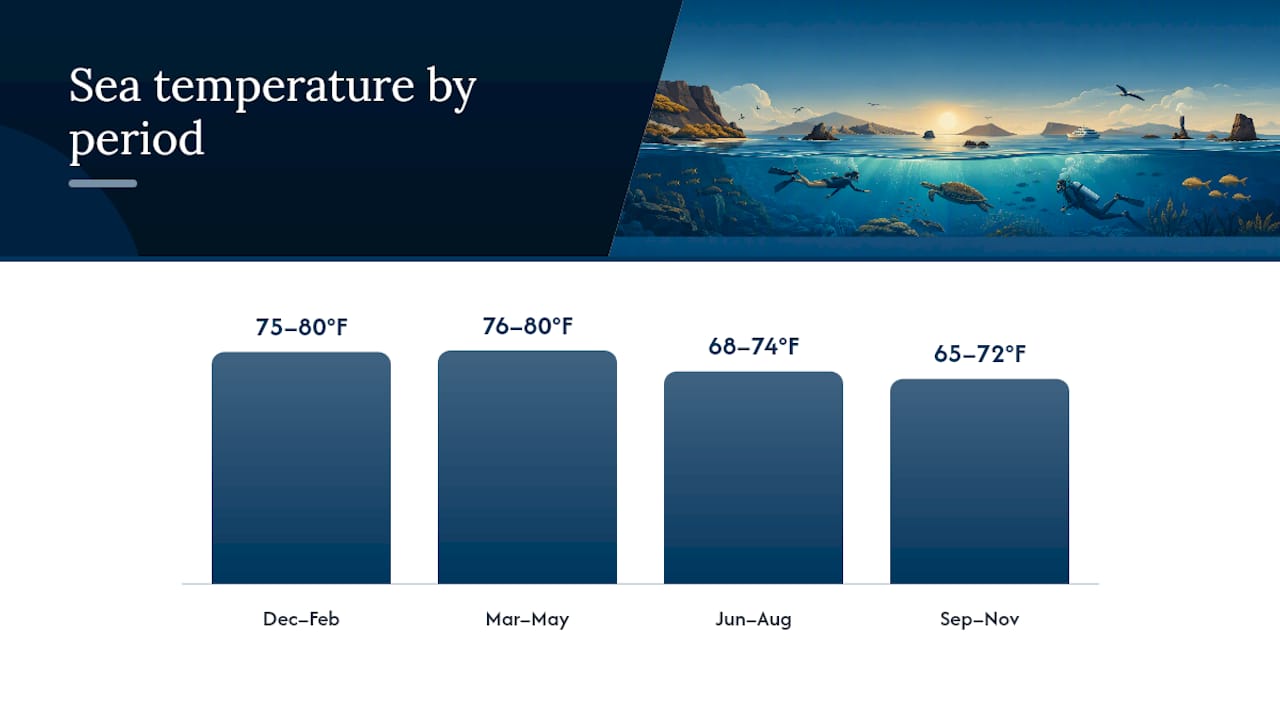
Sea temperature swings more across the Galapagos calendar than most first-time visitors expect, and the difference between January and August water is enough to change your entire gear list. Adventure Life's monthly averages put water temperature at roughly 71°F to 77°F across the year, while the Galapagos Dive Academy narrows that further by season, citing 70 to 80°F from December through June and 65 to 75°F from July through November.
| Period | Typical sea temperature | Recommended wetsuit |
|---|---|---|
| December–February | 75–80°F | Rash guard or 2mm shorty |
| March–May | 76–80°F | 2–3mm shorty |
| June–August | 68–74°F | 5mm full suit |
| September–November | 65–72°F | 5–7mm full suit with hood optional |
Operators frequently supply 3 to 5mm wetsuits during the cooler months, but if you run cold, bring your own thicker suit or a hood since rental gear at dive shops is sized for average builds, not extremes. Visibility tracks a similar pattern, averaging 25 to 35 feet but stretching to nearly 60 feet on the best days, with cooler months sometimes trading a bit of clarity for richer plankton and, in turn, more manta rays and whale sharks.
Pro Tip: Sheltered bays on the eastern side of the archipelago often run several degrees warmer than exposed western dive sites fed directly by the Cromwell upwelling, so don't assume one day's swim tells you what the next site will feel like.
How to Read Sea State for Snorkeling, Diving, and Boat Comfort
Numbers on a forecast page only matter once you know what they mean for the day you're actually planning. Here's how the headline metrics translate into a real decision:
- Seas under 3 feet. Near-glassy water, ideal for beginner snorkelers, easy zodiac landings, and steady footing on dive platforms.
- Seas 3 to 5 feet. Comfortable for most active travelers; expect gentle rocking on the yacht and manageable currents underwater.
- Seas 5 to 7 feet with a 12-second period. This is common in the NOAA zone forecast for this area and usually still workable, since a long swell period means the water moves in smooth, regular rollers rather than a chaotic slap.
- Seas over 7 feet, or a short 6 to 8 second period. Expect wetter, bumpier zodiac transfers and a real chance the crew reroutes to a sheltered anchorage instead of an exposed landing.
- Strong onshore swell at a rocky landing. Even moderate seas turn dangerous against exposed volcanic shelves, which is why captains generally favor sandy beach landings when swell direction lines up unfavorably.
Swell period is the detail most travelers overlook. A 5-foot sea with an 8-second period feels far choppier and more disorienting than a 6-foot sea with a 13-second period, because the longer interval gives your body, and the boat, time to recover between each wave. That distinction is exactly why relying on wave height alone can mislead you about how a day on the water will actually feel.
Staying Safe and Comfortable Once You're on the Water
Motion sickness ruins more Galapagos days than rough seas do outright, and the fix usually starts well before you board. If you're prone to seasickness, take medication the night before or at least an hour ahead of departure, since most anti-nausea drugs need time to build up in your system. Non-medicinal backups, acupressure wristbands, staying on deck facing the horizon, sipping water steadily, and avoiding a heavy breakfast, all help, and combining two or three of them tends to work better than relying on any single method.
Every reputable operator runs a safety briefing before the first outing, and it's worth confirming a few specifics rather than assuming they're covered:
- Lifejackets sized and fitted for each guest, not a generic one-size stack.
- A working VHF radio connection between the yacht, its zodiacs, and any dive support boat.
- A clearly stated emergency plan, including the nearest medical evacuation point.
- Signaling devices such as whistles or strobe lights for anyone doing extended snorkel drifts away from the main group.
Travelers with specific vulnerabilities deserve extra planning, not just a general assurance. Pregnant travelers should discuss zodiac transfer conditions directly with the operator, since a bumpy 5 to 7 foot sea day can jolt harder than expected during a beach landing. Guests with significant mobility limitations should ask in advance about boarding ladders and platform height, and families with small children should confirm child-sized lifejackets are actually on board rather than assuming adult gear will be resized. Full onboard equipment expectations, including what's supplied versus what to bring yourself, are worth reviewing on Exotica Charters' guide to what's included on a Galapagos charter.
Pro Tip: Ask your operator how they define a "sea tolerance" rating for guests. Crews that ask this question upfront are typically the ones best equipped to adjust an itinerary in real time rather than pushing through conditions that make guests miserable.
A Simple Routine for Checking Marine Forecasts Before You Go
Building a short habit around forecast checks removes most of the guesswork from a Galapagos sea day. Run through this three-step routine at 72, 48, and 24 hours before any snorkel, dive, or landing:
- Read the zone forecast timestamp first. Open the NOAA marine zone forecast and check when it was issued before reading anything else; a forecast that's twelve hours old in a shifting wind pattern deserves less confidence than a fresh one.
- Match swell direction and period to your specific landing site. A forecast showing manageable seas overall can still mean a rough approach if the swell direction lines up directly against an exposed rocky shore, so cross-reference the tide schedule for your intended stop, not just the general sea state.
- Check for model agreement and advisories. If NOAA's broader products and a nearshore tool like Puerto Ayora's local forecast diverge sharply, or if any advisory language appears, that's your signal to call the operator directly rather than guessing which source is right.
This habit matters more in the garúa season, when trade winds strengthen quickly and a calm morning forecast can shift by afternoon. It matters less, though it's still worth doing, during the warm season when conditions tend to hold steadier day to day.
Choosing the Best Months for Your Priorities
The core trade-off in planning a Galapagos trip comes down to comfort versus wildlife drama, and there's no single "best" answer, only what matters more to you.
- December through May: warmer water, calmer seas, and the easiest snorkeling conditions for kids or first-time divers.
- June through November: cooler, choppier seas, but this is when manta rays, whale sharks, and dramatic feeding activity peak, since the same upwelling that drops water temperature also fuels the plankton blooms that draw big marine life.
- October through December: often the sweet spot, water is warming again but seas haven't picked up the mid-season chop, making it a strong window for travelers weighing land and sea activities together.
- Bird nesting season runs largely through the warm months, so travelers chasing specific species should check nesting calendars alongside sea conditions.
Whichever window you choose, book with some flexibility built in, ask about trip insurance that covers weather-related itinerary changes, and tell your operator upfront how much motion you and your group can comfortably handle. For a deeper look at how the wet and dry seasons compare for a crewed cruise specifically, it's worth reading before you lock in dates.
What Captains Actually Watch for Before Departure
Exotica Charters' captains and water-sports crew treat sea-condition checks as a daily ritual, not a one-time booking decision. Before any transit, captains typically run through a short set of checks that rarely make it into a standard brochure:
- Reviewing the latest zone forecast and comparing it against what the boat is actually seeing at anchor.
- Choosing sheltered anchorages over exposed ones whenever swell direction threatens a rough zodiac transfer.
- Staging safety and snorkel gear before guests board, so transfers move quickly if conditions start to shift.
- Watching for the point.
Crews also adjust itineraries in real time when conditions change, often rerouting to a calmer bay rather than forcing a planned stop, without sacrificing the wildlife encounters guests came for. That kind of judgment call, knowing which alternate anchorage still delivers sea lions or a good manta pass, comes from route familiarity that no forecast page can substitute for.
A Closing Thought on Sea Conditions and Trip Planning
Chasing perfectly calm water every day of a Galapagos trip means missing the very conditions that bring the big marine life close. My honest take is that the smartest travelers pick their window based on priorities, not fear of a bumpy transfer, and then trust an experienced crew to make the real-time calls that a forecast alone can't. If you're on the fence about dates, reach out to your operator early and ask specific questions about sea tolerance, wetsuit needs, and itinerary flexibility rather than relying on averages.
— Mo
Book a Crewed Galapagos Charter Built Around Real Sea Conditions
Exotica Charters gives you something a self-booked dive trip or day boat can't: a fully crewed yacht where the captain is already reading the same NOAA zone forecasts covered here and adjusting your itinerary before rough seas ever become your problem.
The crews behind Exotica Charters' Galapagos yacht charters are former captains and water-sports professionals who route around exposed transits, stage gear for fast transfers, and know which sheltered anchorages still deliver strong wildlife encounters when the swell turns unfavorable. Charters can include dive-capable itineraries for guests wanting to explore the archipelago's cold-current dive sites without guessing at wetsuit thickness or gear rentals. If you're weighing dates against sea-condition trade-offs, browse Exotica Charters' full range of luxury yachts and request a pre-booking consultation to talk through sea tolerance, itinerary flexibility, and the best window for your group's priorities.
Sources
- Zone Area Forecast for Offshore Galapagos Islands
- Darwin Foundation: Climate data and seasonal description
- Galapagos Dive Academy: climate and dive conditions
- Galapagos weather by month: average air and water temperatures (Adventure Life)