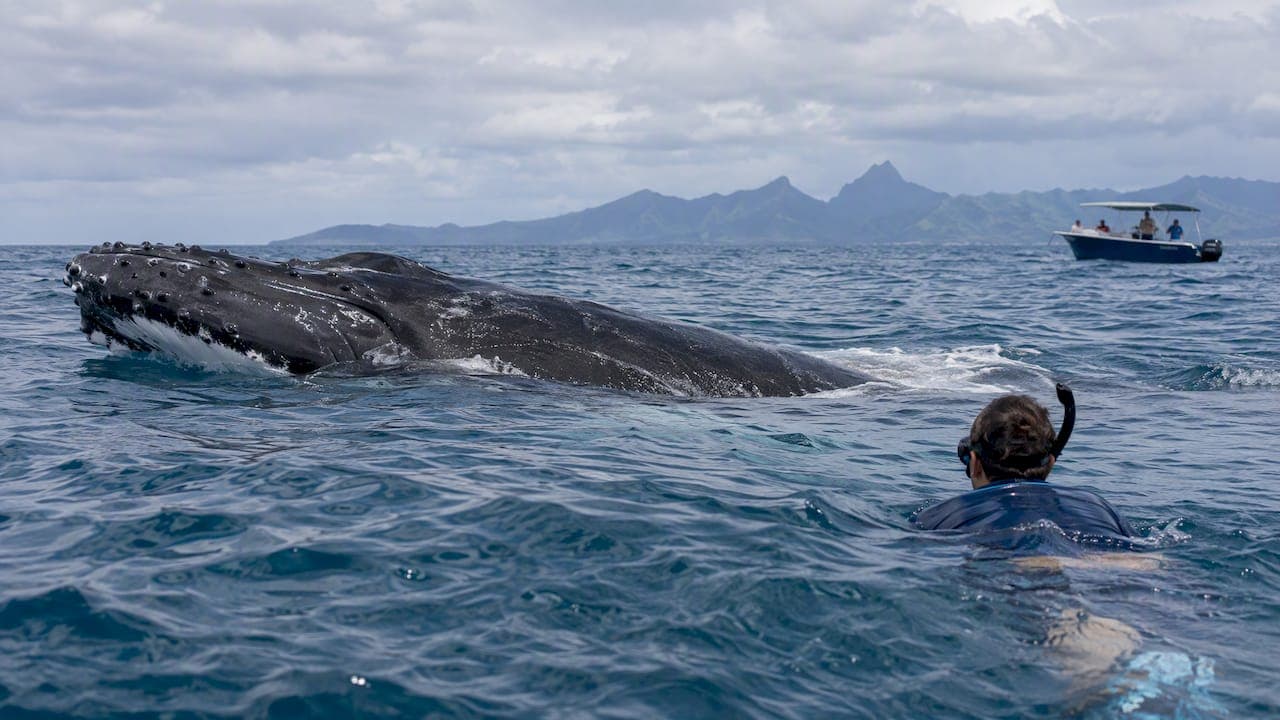
Humpback season in French Polynesia varies, and the timing of peak activity and swim-with tours can differ. September and October may offer a balance of whale-watching opportunities and thinner crowds than July and August. Rules vary by island and year, so we cover the dates, places and etiquette next.
TL;DR:
- Rurutu and the Austral Archipelago have higher encounter rates than most of French Polynesia, but reaching Rurutu often requires an internal flight.
- Moorea and Tahiti support convenient day trips, while whale distribution across other Society Islands and the Tuamotus is patchy, so assess travel time before committing.
- Permitted dates for swimming with whales vary by island and year, so confirm the rules on distance, group size, and interaction time before booking.
- Reserve internal flights and island stays early for July and August, especially for Rurutu, and schedule whale outings before your final day to absorb weather delays.
Table of Contents
- When do humpbacks arrive, peak and leave?
- Where are the best places to see humpbacks?
- What are the swim-with rules, and why do they exist?
- How do you match whale season to weather and crowds?
- How should you plan tours and set expectations?
- Why can you trust this guidance?
- Why small-group trips beat the crowded boat
- How we can plan your humpback charter in French Polynesia
- FAQ
- Sources
When do humpbacks arrive, peak and leave?
Think of the season as a slow build, a crest and a gentle fade. Humpbacks travel here from colder southern waters to mate and give birth, so everything you see is tied to breeding.
- July and August: these are busy travel months, so book early if you plan to visit then.
- September and October: these months may offer a balance of whale-watching opportunities and fewer crowds.
- Other months: whale activity and sightings vary by island and year.
Year-to-year variation is real. Storm systems, sea conditions and water clarity all shift what a given week looks like. Build in several flexible days rather than betting your trip on one morning, and treat any month as a probability, not a promise.
Where are the best places to see humpbacks?
Your choice of base shapes both your odds and your travel time.
- Rurutu and the Austral Archipelago: these islands are known as premier aggregation and breeding habitat, and humpback encounter rates are higher than in most other parts of French Polynesia. They suit travelers willing to go farther for the best chance at close calf sightings.
- Moorea and Tahiti: the most accessible bases for day trips and swim-with tours. They strike a good compromise between convenience and solid encounter odds.
- Other Society Islands and the Tuamotus: whales turn up across many islands, but distribution is patchy, so weigh the travel time before you commit.
Accessibility matters as much as whale density. Rurutu often requires an internal flight, while Moorea is a short ferry or flight from Tahiti, which makes it a dependable base for most visitors. If you are comparing routes, our French Polynesia charter itineraries show how Society Islands trips differ from longer expedition routes.
What are the swim-with rules, and why do they exist?
French Polynesia protects breeding whales with a firm framework, and a good operator treats it as non-negotiable. Permitted dates for swim-with activities can vary by year and island, so confirm them with your operator before you book.
- Distance: boats generally keep their distance, and swimmers hold back from the animals.
- Group size: operators cap the number of swimmers and the length of each interaction.
- Updates: guidelines continue to be refined, including proposals to reduce swimmers per boat.
- Purpose: calves and nursing mothers are sensitive to disturbance, so the rules protect the animals and the long-term future of swim-with tourism.
French Polynesia's framework sets limits on boat and swimmer distances, group size and interaction time. Those limits exist so whales can choose whether to approach, which is also what makes the rare close encounter feel earned.
How do you match whale season to weather and crowds?
The dry austral winter is a popular time to visit. July and August are the busiest months, partly because of local festivals such as Heiva Nui. Frommer's notes that travelers should book early for those months and consider September and October to avoid the worst crowds while still catching prime whale season.
- Best compromise: September and October may offer a balance of whale-watching opportunities and fewer crowds.
- Booking: reserve internal flights and island stays early for July and August. If you are targeting Rurutu, allow extra transit time because seats can be limited.
- Trip length: allow time for a whale-focused trip and build in flexibility for changing weather.
Pro Tip: Schedule your whale days in the middle of your itinerary, not on your last day, so one rough-weather morning never costs you the encounter.
For a broader look at timing, see our guide to the best time to charter in French Polynesia.

How should you plan tours and set expectations?
Match the format to how much flexibility and encounter time you want. Day boats from Tahiti or Moorea are simple and affordable. Multi-day expeditions to the Australs give you far more time on the water. Private or small-group charters trade a bigger commitment for comfort and control.
- Ask operators about swimmer limits and safety protocols.
- Confirm the exact permitted dates for your island.
- Ask what happens on a no-sighting day.
- Check the qualifications of the guides and skippers.
- Pack reef-safe sunscreen, snorkel gear if it is not provided, motion-sickness remedies and layered sun protection.
Sightings vary, and close swim-with moments depend on regulations and each whale's behavior. Respectful behavior and a transparent operator matter more than any single encounter. If you are flying in from the States, U.S. State Department guidance says tourists generally do not need a visa for stays up to 90 days, and you should carry a return ticket.
Why can you trust this guidance?
Mo writes for Exotica Charters, where our team of former captains and water sports professionals designs fully crewed yacht and expedition charters to remote wildlife destinations, including French Polynesia. We are highly rated on Trustpilot for tailored, wildlife-focused trips.
Why small-group trips beat the crowded boat
Here is my honest view: the best whale encounter is the quiet one, and quiet comes from time and fewer people. I would choose a multi-day private or small-group trip over a single crowded outing, because extra hours let you wait for the whales instead of chasing them. Pick operators who obey local rules and limit swimmer numbers, even if it costs a little more.
— Mo
How we can plan your humpback charter in French Polynesia
We plan fully crewed yacht charters and tailored expedition itineraries to remote wildlife destinations, French Polynesia included. A crewed charter can be timed for the peak humpback months and shaped around wildlife observation, all within local regulations, so your days follow the whales rather than a fixed schedule. Browse our French Polynesia yacht charters or contact us at Exotica Charters to plan a whale-focused itinerary today.
FAQ
What time of year can you see humpbacks in French Polynesia?
Humpbacks are present roughly from July to November, with August through October the most active stretch. September and October are commonly recommended for the best encounter odds and calf sightings.
Can I swim with whales in Tahiti?
Swim-with tours may be available from Tahiti and nearby Moorea during permitted periods. Confirm the dates and requirements with your operator. Dates vary by year, so confirm with your operator, and follow the swim-with rules on distance and group size.
What is high season in French Polynesia?
High tourism season falls in the dry austral winter, with July and August the busiest months. September and October offer a good balance of whale presence and fewer visitors.
Is swimming with humpback whales in Moorea safe?
If you are considering a guided tour, ask the operator about applicable distance limits, group sizes and skipper qualifications. Choose an operator that explains its safety protocols and sticks to local rules.
Sources
- Austral Archipelago - Marine Mammal Protected Areas Task Force
- An ethical – and safe – place to swim with whales
- French Polynesia International Travel Information