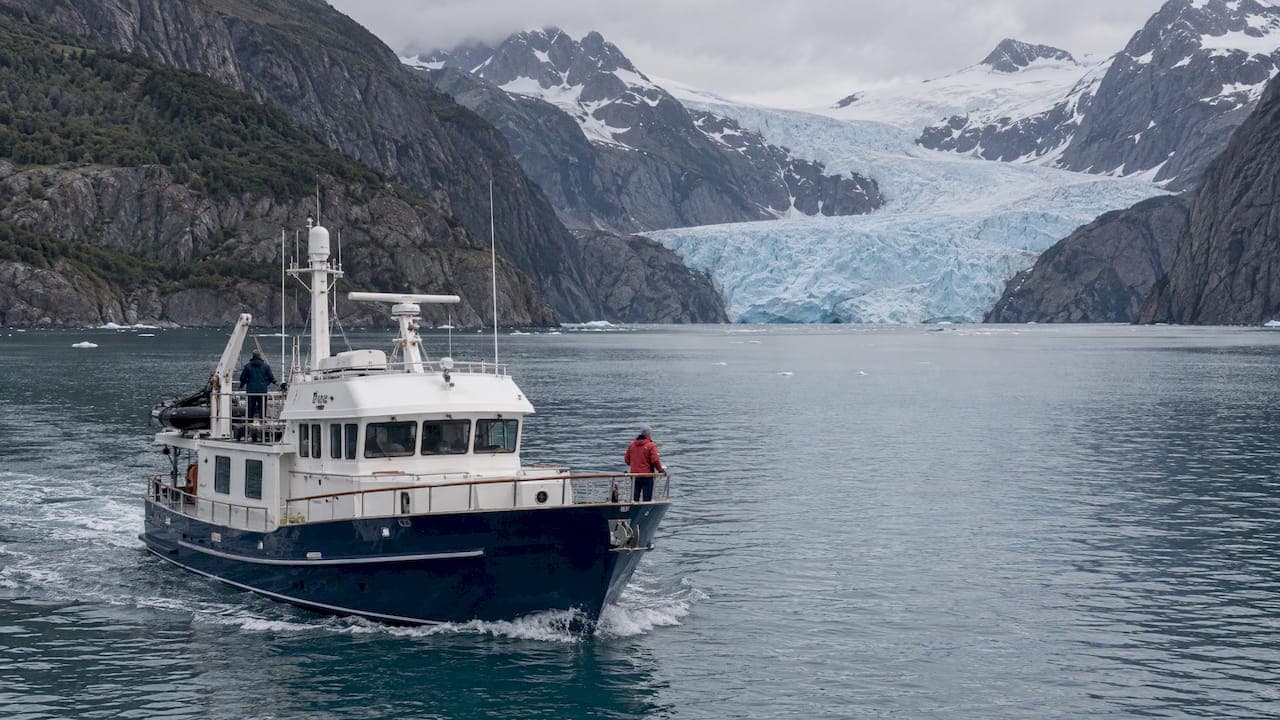
The best way to see Patagonia from the water is a crewed charter in the austral summer, roughly December to March, on a vessel sized for the channels you want to reach. Plan around three things: the route (Beagle Channel, Chilean fjords or Cape Horn), the season, and the rules that govern Chilean inner waters, including compulsory pilotage. Get those right and the rest is the pleasure of glaciers, whales and empty anchorages.
We plan these voyages with former captains and water sports professionals, so this guide leans on what matters once you are actually afloat, not only what looks good in a brochure.
TL;DR
- Season: December to March offers the most stable weather and longest daylight, with temperatures averaging 10°C to 21°C (about 50°F to 70°F). Wind is constant, so expect to adapt.
- Routes: The Beagle Channel, Glacier Alley, the Strait of Magellan and the Chilean fjords each suit a different traveler. Cape Horn is a longer, more weather-dependent ambition.
- Rules: Chilean inner waters involve pilotage and navigation warnings, and some channels limit vessel size, so bigger is not always better.
- Insurance: Carry cover that explicitly includes emergency medical care, rescue and evacuation from remote areas.
- Next step: Tell us your dates, party size and interests, and we will match a vessel to a route.
Table of Contents
- What a Patagonia charter actually is
- When to go: the austral summer window
- Choosing your route
- Wildlife you can realistically expect
- The rules that shape a Patagonia voyage
- Argentina or Chile?
- Perspective: why we favor fewer places and more time
- Planning your charter step by step
- What to pack
- Plan your Patagonia voyage with us
- FAQ
- Sources
What a Patagonia charter actually is
Patagonia is shared between Chile and Argentina, and a yacht charter here is nothing like a Mediterranean week. You are in one of the most sparsely populated coastlines on earth. Chile alone has 1,095 miles of channels and fjords south of latitude 41°45' S, which provide sheltered inland waters for navigation. That sheltered network is what makes private expedition cruising possible: you can anchor beneath a glacier one night and watch condors the next morning.
A crewed charter means a captain, crew and usually a cook or chef run the vessel while you decide how each day unfolds. The vessels worth considering are sailboats, motor yachts, catamarans and expedition vessels with proper range and hull strength. You can see how we think about the vessel question in our note on what makes a yacht suitable for polar or expedition waters.
A word on what we do and do not cover. We broker private crewed yacht charters built around wildlife, diving, water sports and exploration. If your priority is a multi-day fly-fishing program based at a river lodge, that is a different kind of trip, and a specialist lodge operator is the better fit. If you want to combine time on the water with the landscape, read on.
When to go: the austral summer window
The optimal season for yacht expeditions is the austral summer, from December to March, when weather is at its most stable and daylight hours are longest. That window gives the best conditions for reaching remote glaciers, kayaking in fjords and spotting wildlife.
Stable is relative. Travel guides describe a "four seasons in one day" mentality here, and sudden shifts are normal even in midsummer. Build slack into your itinerary: a captain who can wait out a williwaw (a violent gust funneled down a mountainside) and move to a different anchorage will give you a better week than a rigid schedule ever could.
For the season trade-offs in more depth, we have written up when to charter a yacht in Patagonia and which season suits adventure seekers.
A rough season guide
| Period | What to expect | Best for |
|---|---|---|
| December to January | Longest days, most stable weather, busiest anchorages | First-time visitors, families, glacier access |
| February to March | Settled conditions, long days beginning to shorten | Wildlife, photography, quieter anchorages |
| Shoulder months | More variable weather, fewer vessels | Experienced travelers who value solitude |
This table reflects our general planning experience rather than a published dataset, so treat the shoulder-month row as a conversation to have with your charter specialist.
Choosing your route
The route decides everything else: which vessel, how many days, how much you will sail versus explore ashore. Four areas come up most often.
The Beagle Channel
The Beagle Channel runs between Argentina's Tierra del Fuego and Chile's Navarino Island, with Ushuaia on one shore and the village of Puerto Williams diagonally opposite on the other. It is the classic first charter: sheltered enough for comfortable days, dramatic enough to feel remote, with sea lions, cormorants and mountain walls dropping to the water. Our comparison of Cape Horn versus the Beagle Channel explains how the two differ in effort and reward.
Glacier Alley and the Chilean fjords
The western channels deliver the ice. Highlights of expedition itineraries here include Glacier Alley and Torres del Paine National Park, and the whole region rewards a smaller vessel that can slip into side fjords. If you are torn between the Argentine side and Chile's labyrinth of channels, see our guide to the Beagle Channel versus the Chilean fjords.
The Strait of Magellan and Francisco Coloane Marine Park
The Strait of Magellan is the historic inner route between the Atlantic and the Pacific. Francisco Coloane Marine Park, established in 2003, is known as the only feeding ground for humpback whales in the Strait of Magellan. For a charter built around wildlife, this is a serious contender.
Cape Horn and the Fuegian archipelago
The southern tip of South America presents two routes linking the Atlantic and Pacific: the Strait of Magellan and the Drake Passage. Rounding the Horn is a bucket-list voyage, but it depends on weather windows, so we advise treating it as a possibility, not a promise. Travelers weighing Patagonia against the white continent should read Patagonia versus Antarctica.
Wildlife you can realistically expect
Expedition itineraries in the region report Magellanic penguins, humpback whales, southern elephant seals and several albatross species. Birders will find the remote western islands especially rewarding: operators describe the Fuegian archipelago's outer islands as ideal for bird and nature lovers, where unusual species feed in the open Pacific.

Sightings are never guaranteed, and a good captain will say so. What a private yacht gives you is time: you can stay an extra morning where the whales are working, rather than keeping to a ship's timetable.
The rules that shape a Patagonia voyage
This is where private charters in Chile differ most from warmer destinations, and where experience counts.
Pilotage and the Chilean Navy
The maritime authority, DIRECTEMAR, describes compulsory pilotage for the Chilean channels, and the Armada de Chile's presence is part of daily life in these waters, from lighthouse staff at Cape Horn to the navigation warnings (radioavisos) every vessel is expected to follow. In practice, a yacht transiting the inner waters carries channel pilots, often retired Navy or merchant masters, who act as advisers to the captain. The same source indicates they are booked through a ship agency with at least 72 hours' notice, and charter budgets commonly allow roughly $800 to $1,200 per day for pilotage plus their travel, food and lodging. Confirm the current requirements and rates for your specific itinerary before you commit, because they vary with route and vessel.
You will not handle any of this yourself. It is exactly what a charter specialist and your captain arrange. It does, however, affect your budget, so ask for it to be itemized.

Vessel size limits
Bigger is not better here. DIRECTEMAR publishes size limits for certain channels and narrows; one example is that Angostura Kirke restricts passage to vessels under about 492 feet, while other channels allow up to around 755 feet. The same source notes that smaller expedition ships can use Zodiacs where conditions and permits allow, while larger ships mostly stick to scenic cruising through navigable channels. For a private charter, a smaller, sturdier yacht usually means more anchorages, more landings and fewer compromises.
Insurance and evacuation
Expect your operator to ask for comprehensive travel insurance covering emergency medical care, rescue and sea or air evacuation from remote regions of Chile or Argentina. Before you buy, read the policy wording for exclusions on marine and expedition activities, and confirm with your insurer that kayaking, shore hikes and Zodiac landings are covered. If you have a pre-existing condition, speak to your own physician before booking a voyage that is days from a hospital.
Argentina or Chile?
Both countries promote sailing in the region. Argentina's tourism board lists cruises and navigations across its lakes, rivers and southern channels, and many travelers combine Ushuaia with the Chilean side. Crossing the Beagle Channel between Ushuaia and Puerto Williams is possible, but it is a border crossing: one local operator notes its ferry service runs October to March, one way only. Your yacht's itinerary will handle clearance, but you should carry passports and any documentation your charter specialist requests.
Perspective: why we favor fewer places and more time
Most first-time Patagonia charterers ask us to see everything. We understand the instinct, and we gently talk them out of it. The region's scale is the first lesson: distances are long, weather sets the pace and the best days are rarely the ones that were planned.
Our advice is to choose one region, pick a vessel with a capable crew and give it a few more days than feels necessary. A week in the Beagle Channel with time to wait for the right light, hike a ridge above an anchorage and linger with a colony of sea lions will leave you with more than a fortnight of rushed hops. Our team of former captains and water sports professionals plans with that in mind, and we would suggest asking any charter provider who will actually be on the helm, and what they do when the forecast turns.
If you are comparing a yacht with a land-based itinerary, our piece on Patagonia yacht charter versus trekking sets out the trade-offs honestly.
— Mo
Planning your charter step by step
- Choose your region and season. Decide between the Beagle Channel, the fjords or a longer expedition, and aim for December to March.
- Pick the vessel type. Sailboats suit travelers who enjoy the sailing itself, catamarans offer stability and living space, and motor yachts give range and comfort in changeable weather.
- Ask about crew and activities. Learn what crew is on board and what activities are available, from kayaking to shore hikes.
- Understand the costs. Our overview of how much an expedition charter costs explains what drives the figure. Ask for pilotage, fuel, provisioning and port fees to be itemized.
- Plan your travel. See how to get to remote expedition regions and build in a buffer day on either side of the charter.
- Arrange insurance and documents. Do this early, before payment deadlines.
What to pack
Layers beat bulk. Bring a waterproof shell, insulating mid-layers, a warm hat, gloves, sun protection (the light is strong) and non-slip footwear for wet landings. Our packing guide for an expedition charter goes item by item, and this luxury cruise packing checklist is a useful second reference for organizing your bags and being ready for rapidly changing conditions.
Plan your Patagonia voyage with us
We specialize in fully crewed charters to remote destinations, with a team that includes former captains and water sports professionals. Tell us your dates, who is traveling and what you hope to see, and we will propose vessels and routes that fit. Start with our Patagonia yacht charter page, or speak to a yacht charter specialist about your trip.
FAQ
When is the best time to charter a yacht in Patagonia?
December to March, the austral summer, offers the most stable weather and longest daylight. Even then, conditions can change within hours, so keep your schedule flexible. We discuss the details in our season guide.
Can I go fishing on a Patagonia yacht charter?
Often yes, but rules on permits, species and protected areas vary by country and location, and national parks and marine parks have their own regulations. Tell your charter specialist early if fishing matters, and they will confirm what is allowed on your route. For a dedicated multi-day fly-fishing program, a lodge-based specialist is usually the better fit.
Do I need a pilot on a Chilean Patagonia charter?
Chilean inner waters involve compulsory pilotage in many areas, and pilots are arranged through a ship agency in advance. Your charter team handles the booking, but the cost should be visible in your budget.
Is a bigger yacht better for Patagonia?
Not necessarily. Some channels limit vessel size, and smaller, robust yachts can reach more anchorages and landing sites. Choose the vessel for the route, not the other way round.
What wildlife will I see?
Expect penguins, humpback whales, elephant seals and albatross depending on region and timing. Sightings vary, which is why extra days on board pay off.
Sources
- Your ultimate Patagonia travel guide, Adventure World
- Deep Patagonia: Tierra del Fuego and the Chilean Fjords, Chimu Adventures
- General information on the Strait of Magellan, DIRECTEMAR
- Strait of Magellan, DIRECTEMAR
- Estrecho de Magallanes, DIRECTEMAR
- Chilean Fjords Cruise: Glaciers, Channels and Cape Horn, Cruise Ports
- Fjords of Chilean Patagonia on yacht, Powder Nomads
- Islas Occidentales, Whalesound
- Puerto Williams, Experience Chile
- Cruises and Navigations, Patagonia Argentina
- Ferry Puerto Williams to Ushuaia, Howlanders