
Peak season yacht charter is defined as the concentrated window of the year when charter demand, pricing, and social activity reach their highest levels across a given sailing region. This period typically lasts 2–3 months within a broader seasonal window and is shaped by weather patterns, public holidays, and high-profile marine events. Understanding the yacht charter high season is the difference between securing your ideal vessel at a fair rate and scrambling for leftovers at a premium. Whether you are drawn to the electric atmosphere of the Mediterranean in August or the turquoise calm of the Caribbean in January, knowing when peak season falls, and what it costs you, is the foundation of smart charter planning.
What is peak season yacht charter, and when does it happen?
Peak season yacht charter is the period when a destination's sailing conditions, cultural calendar, and traveler demand converge to create maximum activity on the water. The Mediterranean yacht charter season broadly spans april through october, but the true peak runs from mid-July through mid-September. That eight-week window aligns with Bastille Day celebrations in the south of France, the Monaco Yacht Show, and the Italian national holiday of Ferragosto in mid-August. Each of these events pulls thousands of travelers onto the water simultaneously, compressing availability and pushing prices sharply upward.
The Caribbean follows a different rhythm entirely. Caribbean peak season runs december through april, driven by the region's dry, settled weather and the escape from Northern Hemisphere winters. Demand spikes hardest around Christmas and New Year, when families and groups compete for the most desirable crewed yachts weeks or even months before the season opens. Hurricane season, which runs june through november, suppresses activity and creates a natural low season with discounted rates.

Other regions have their own distinct peaks. Alaska and Norway see their highest demand in june and july, when daylight is nearly continuous and wildlife activity peaks. French Polynesia draws the most charters between may and october, when the southeast trade winds create reliable sailing conditions. The table below maps the key regions and their peak windows at a glance.
| Region | Peak Season | Key Drivers |
|---|---|---|
| Mediterranean | Mid-July to mid-September | Bastille Day, Ferragosto, Monaco Yacht Show |
| Caribbean | December to April | Winter escape, Christmas, New Year |
| Alaska and Norway | June to July | Midnight sun, wildlife season |
| French Polynesia | May to October | Trade winds, dry season |
| Indian Ocean / Maldives | November to April | Dry season, calm seas |
What drives peak season demand and pricing?
Weather is the primary engine behind peak season demand. Travelers want predictable sunshine, calm anchorages, and reliable winds. The Mediterranean in July and August delivers all three, which is why the region attracts its heaviest traffic during those weeks. The Caribbean's december-to-april window offers the same promise: low humidity, minimal rain, and seas that reward both sailors and divers.
High-profile events layer additional demand on top of the weather pull. The Monaco Yacht Show, Cannes Lions, and Ferragosto each act as focal points that concentrate bookings into specific weeks. Charter brokers consistently report that rates increase significantly around these events, with some weeks selling out a full year in advance. That scarcity is real, not manufactured.
The pricing impact is direct and measurable. Charter rates run 35%–50% higher during peak weeks compared to shoulder months. That premium reflects genuine supply constraints: the same yacht that costs $30,000 per week in may can command $45,000 or more in August. Beyond the base rate, peak season also brings higher provisioning costs, busier marinas, and additional fees at popular anchorages.
Key factors that intensify peak season demand:
- Settled weather windows that reduce cancellation risk and maximize time on the water
- School holiday calendars in Europe and North America that concentrate family travel into specific weeks
- Social and cultural events like the Monaco Yacht Show and Ferragosto that create must-attend moments
- FOMO-driven booking behavior where travelers book peak dates simply because peers are doing the same
- Limited fleet availability as the most desirable crewed yachts fill up months before the season opens
How does peak season compare to shoulder and low seasons?
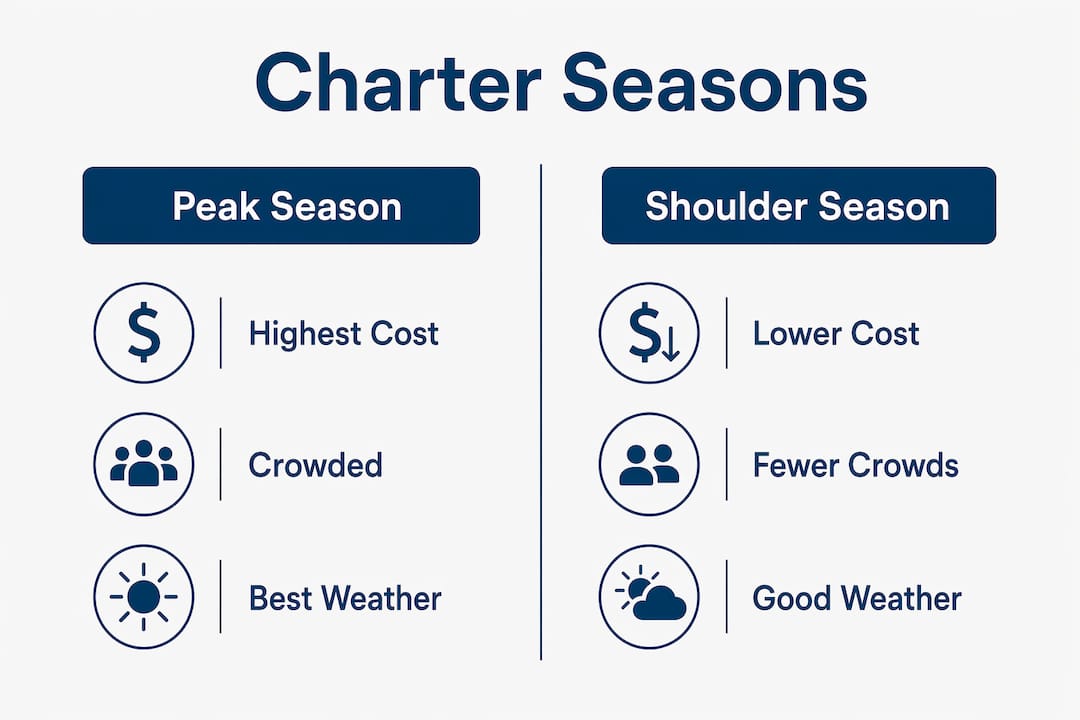
The honest answer is that peak season is not always the best season. Shoulder season weeks in late may and mid-September often deliver milder temperatures, more manageable winds, and far less crowded anchorages than the August peak. The price ratio between peak and shoulder sits at roughly 1.45 to 1, meaning a shoulder season charter costs about 30%–40% less for a comparable yacht and itinerary. That is a meaningful saving on a charter that might otherwise run $40,000 or more per week.
Crowd levels tell an equally compelling story. Peak season anchorages can feel like floating car parks, with marinas packed and popular bays holding dozens of yachts at anchor. The solitude and privacy that define a truly extraordinary charter experience are harder to find when every other traveler has chosen the same week. Shoulder season, by contrast, gives your captain more freedom to find quiet coves and uncrowded dive sites.
Pro Tip: If your priority is privacy, wildlife encounters, or diving quality rather than social atmosphere, late june or mid-September in the Mediterranean will almost always outperform August on every metric except nightlife.
Low season carries the lowest prices but introduces genuine trade-offs. Weather becomes less predictable, some marinas and restaurants close, and crew availability can be thinner. For destinations like the Caribbean, low season overlaps with hurricane season, which adds real risk. Low season works well for experienced charterers who know a region and can adapt to variable conditions.
| Season | Typical Cost | Crowd Level | Weather | Best For |
|---|---|---|---|---|
| Peak | Highest (35%–50% premium) | Very high | Excellent | Social atmosphere, events |
| Shoulder | Moderate (30%–40% below peak) | Low to moderate | Very good | Value, privacy, diving |
| Low | Lowest | Minimal | Variable | Budget travelers, experienced sailors |
What are the best booking strategies for peak season yacht charters?
Timing your booking is as important as timing your trip. Peak season charters require 6–12 months of lead time to secure preferred yachts and dates. Holiday peaks around Christmas and New Year in the Caribbean can require 12–18 months of advance planning to guarantee the vessel you want. The best crewed yachts fill first, and they fill fast.
A practical booking timeline looks like this:
- Decide your destination and dates first. Locking in the region and week before selecting a yacht gives your broker the clearest brief and the most options to work with.
- Contact a specialist 9–12 months out for peak season. For holiday weeks, start the conversation 12–18 months ahead. Read more about ideal booking lead times before you commit to a timeline.
- Shortlist three to five yachts. Having alternatives prevents you from losing your trip entirely if your first choice is already booked.
- Confirm with a deposit immediately. In peak season, a verbal hold rarely lasts more than 24–48 hours. Hesitation costs you the boat.
- For shoulder season, book 3–6 months ahead. Shoulder season bookings carry more flexibility, but the best yachts still go early.
Last-minute peak season bookings are rarely a bargain. The yachts available at short notice during high season are typically those that other travelers passed on, often for good reason. Budget and flexibility are both compromised when you wait.
Pro Tip: If your schedule allows any flexibility, shifting your charter by just one week on either side of the absolute peak can save you 20%–30% on the base rate while delivering nearly identical conditions. Ask your broker which specific weeks represent the sharpest price breaks.
Explore charter itineraries by destination to match your preferred timing with the right region before you start the booking conversation.
What impact does peak season have on the crew and your experience?
Peak season places real demands on yacht crew that travelers rarely consider. The intense pace of consecutive charters during peak months creates a high-pressure environment where turnaround time between guest groups can be as short as a few hours. That pace can occasionally affect the depth of personalized service that defines a truly memorable crewed charter. It does not mean the crew performs poorly; it means they are operating at full capacity with less margin for the small, thoughtful touches that elevate an experience.
"Peak season creates relentless, high-pressure demands on yacht crew, sometimes affecting personalized service quality. Crew workload intensifies with fast charter turnovers during peak months, leaving less room for the kind of attentive, unhurried hospitality that makes a crewed charter genuinely extraordinary."
Shoulder season shifts that dynamic noticeably. With fewer consecutive charters and more breathing room between guests, crew can invest more time in tailoring meals, planning surprise anchorages, and responding to individual preferences. Peak season is vibrant and socially dynamic but may not be ideal for first-time charterers or those seeking a deeply relaxed, personalized experience. Understanding this distinction helps you choose the timing that matches your actual priorities, not just the dates that sound most glamorous.
Key Takeaways
Peak season yacht charter delivers the most vibrant atmosphere and ideal weather but commands the highest prices and requires the earliest booking commitment of any charter window.
| Point | Details |
|---|---|
| Peak season timing | Mediterranean peaks mid-July to mid-September; Caribbean peaks december through april. |
| Pricing premium | Peak season rates run 35%–50% higher than shoulder months for the same yacht. |
| Booking lead time | Book peak season 6–12 months ahead; holiday weeks require 12–18 months. |
| Shoulder season value | Shoulder weeks cost 30%–40% less and often deliver better privacy and comparable weather. |
| Crew and experience | Fast charter turnovers during peak season can reduce the depth of personalized crew service. |
What I've learned from watching travelers choose the wrong week
Most travelers I speak with assume that peak season equals the best experience. That assumption costs them money and, sometimes, the trip they imagined. The Mediterranean in August is extraordinary in many ways: the light is golden, the ports are alive, and the social energy is real. But the anchorages are crowded, the marinas are loud, and the yacht you wanted was booked eight months ago by someone who planned ahead.
The travelers who consistently report the most satisfying charters are those who chose late june or mid-September in the Mediterranean, or february rather than Christmas week in the Caribbean. They paid less, found quieter bays, and had crew who could actually focus on them. The experience was not a compromise. It was often superior.
The common mistake is conflating social prestige with charter quality. Peak season has a gravitational pull because everyone else is going. That logic works for music festivals. It works less well when you are paying $40,000 for a week of privacy and you end up anchored next to thirty other yachts. My honest advice: treat shoulder season not as a fallback but as a deliberate choice. The dry season versus shoulder season question applies across nearly every destination, and the answer is almost always more nuanced than "peak is best."
If you are set on peak season, commit early and commit fully. Half-measures, like waiting to see if prices drop or holding off on a deposit, will leave you without the yacht you wanted.
— Mo
Planning your peak season charter with Exoticacharters
Securing the right yacht for the right week takes more than a search filter. Exoticacharters works with travelers who want fully crewed, expertly planned charters to destinations like the Galápagos, French Polynesia, and Alaska, where seasonal timing is everything and the best vessels disappear fast.

The Exoticacharters team includes former captains and water sports professionals who know exactly which weeks deliver the best conditions in each region and which yachts are worth the peak season premium. Whether you are planning a Mediterranean summer or a Caribbean winter escape, the luxury yacht fleet covers the full range of crewed options, from intimate sailing yachts to expedition-ready motor yachts. Speak with a specialist to match your dates, destination, and budget before the best options are gone.
FAQ
What is peak season for yacht charters?
Peak season yacht charter is the 2–3 month window when demand, prices, and social activity reach their highest levels in a given sailing region. The Mediterranean peaks mid-July through mid-September; the Caribbean peaks december through april.
How much more expensive is peak season yacht charter?
Peak season charter rates run 35%–50% higher than shoulder month rates for the same vessel. A yacht priced at $30,000 per week in may can cost $45,000 or more during August in the Mediterranean.
How far in advance should I book a peak season charter?
Book peak season charters 6–12 months in advance. For holiday weeks like Christmas and New Year in the Caribbean, 12–18 months of lead time is the standard recommendation to secure preferred yachts.
Is shoulder season better than peak season for yacht charters?
Shoulder season offers comparable or better weather, significantly lower prices, and far less crowded anchorages than peak season. Late may and mid-September in the Mediterranean are widely regarded as the best value weeks for quality and experience.
Which destinations have different peak seasons from the Mediterranean?
The Caribbean, Alaska, Norway, French Polynesia, and the Indian Ocean all follow distinct seasonal calendars. The Caribbean's peak runs december through april, while Alaska and Norway peak in june and july during the midnight sun period.