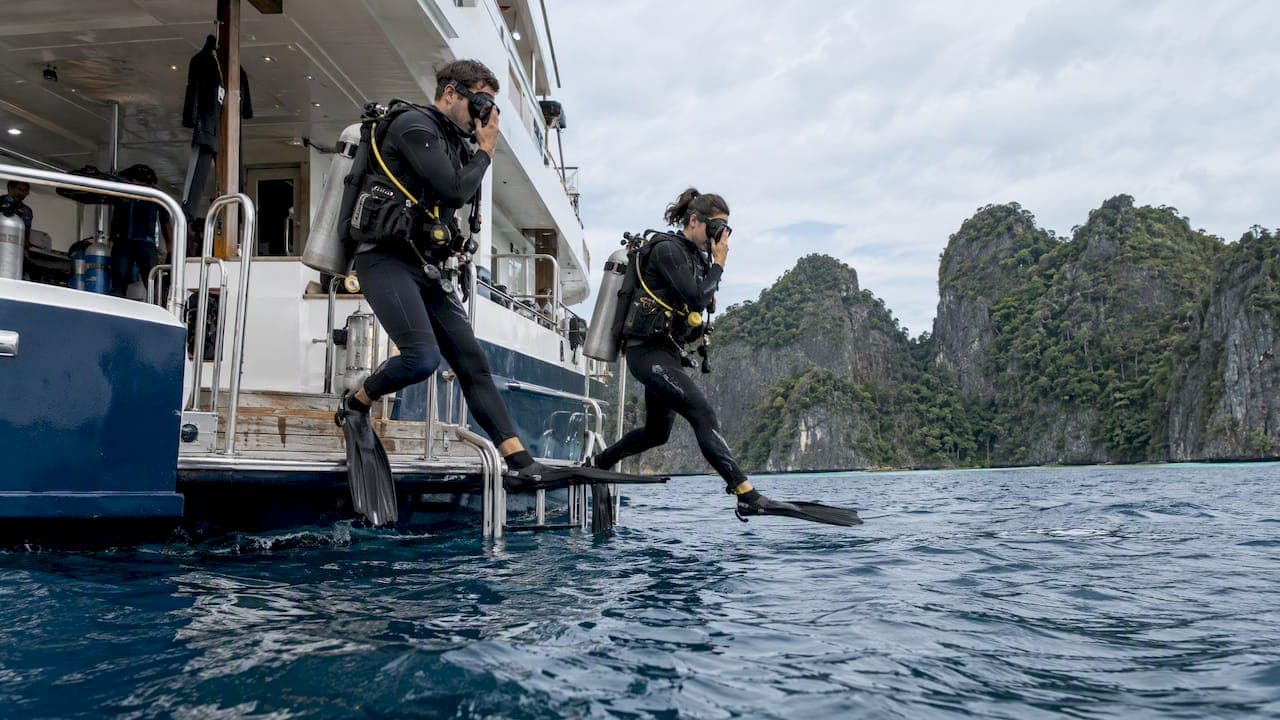
The best window for a Raja Ampat charter runs October through April, with the two decisions that matter most made early: choosing a fully crewed yacht with real dive facilities, and building a buffer day into Sorong (SOQ) before embarkation. We build itineraries around exactly these two pressure points, because a single missed domestic flight into Sorong can unravel a week of planning. Book your vessel for peak months well ahead, and treat the Sorong transfer as part of the trip, not a formality.
TL;DR:
- December and January book up months ahead, while October, November, March, and April often offer good conditions with more vessel availability.
- Seven days covers Dampier Strait, Kri, and Pianemo; a 10 to 12 day charter can add Wayag and Misool when weather permits.
- Most channel sites suit Advanced Open Water divers or stronger; confirm nitrox, onboard compressors, tender access, and dive crew numbers before booking.
Table of Contents
- When to go: dry season, wet season, and booking windows
- How to choose the right yacht for your dive goals
- Two practical itineraries: 7 days versus 10 to 12 days
- Diving and snorkeling: sites, certification, and park rules
- Getting there: Sorong, transfers, and cash on hand
- Onboard comforts built for a remote destination
- Shaping the itinerary around what you actually want to do
- How crews protect the reefs and islands they depend on
- Staying safe on a remote multi-day expedition
- What we've learned planning charters in remote dive destinations
- Let Exotica Charters handle the logistics for you
- FAQ
- Sources
When to go: dry season, wet season, and booking windows
Raja Ampat's dry season runs October through April, bringing calmer seas, clearer water, and the most reliable crossings to outer sites like Wayag. The wet season months bring more rain and choppier conditions in open channels, which can delay longer crossings even when diving itself remains possible closer to shore.
December and January sit at the peak of demand, and experts advise arriving in Sorong at least one full day before embarkation to absorb any domestic flight delay before it costs you a day on the water. Manta sightings at cleaning stations in the Dampier Strait are strongest through these drier months, when visibility holds and currents settle into a predictable rhythm.
A few practical notes shape how early you should lock in dates:
- Peak-season vessels, especially those with dedicated dive crews, fill months ahead of December and January sailings.
- Shoulder months (October, November, March, April) often combine good conditions with more boat availability.
- Longer crossings to Wayag and Misool are easier to schedule with confidence during the driest stretch of the season.
Peak-month booking pressure is real: December and January are widely cited as the busiest booking months for Raja Ampat charters, according to travel guides.. The best-equipped boats are often reserved well before the season opens. If those dates matter to you, start the conversation early rather than waiting for a quiet week to plan. For a deeper month-by-month breakdown, our guide to the best time to visit Raja Ampat walks through what each month typically delivers.
How to choose the right yacht for your dive goals
A liveaboard dive boat and a private crewed charter solve different problems. Liveaboards are built around a fixed dive schedule shared with other guests; a private crewed yacht gives you a dedicated itinerary, your own crew, and the flexibility to linger at a site the group loves or skip one that disappoints. For divers who want control over pacing, certification mix, and non-diving days for partners or kids, a crewed charter versus a liveaboard is worth understanding before you commit.
Matching vessel to group size keeps the trip comfortable rather than cramped:
- Couples and small groups often do best on a compact sailing yacht or smaller motor yacht with two to three cabins.
- Families benefit from a catamaran's stability and open deck space, useful for seasick-prone kids and gear storage alike.
- Larger groups of divers or multi-generational families tend toward bigger motor yachts or expedition vessels with four or more cabins and separate dive deck space.
Before you book, confirm the onboard dive setup directly with the operator. Operators note the importance of onboard dive compressors, nitrox availability, and capable tenders for reaching Raja Ampat's scattered sites without long surface swims. An experienced dive crew who knows current timing at specific cleaning stations matters as much as the equipment itself.
Pro Tip: Ask every operator three questions before booking: does the charter rate include marine park fees and nitrox fills, how many dive crew are aboard versus guests, and what's the cancellation policy if weather forces a route change.
Two practical itineraries: 7 days versus 10 to 12 days
Charter length shapes which parts of Raja Ampat you actually reach. Seven-day and ten-to-twelve-day formats are the two most commonly offered charter lengths, each suited to a different balance of diving depth versus geographic reach.
A 7-day charter keeps transit short and diving dense:
- Days 1 to 2: embark in Waisai, settle into the Dampier Strait for manta cleaning station dives.
- Days 3 to 4: Kri and Mioskon reefs for reef fish diversity, short tender rides between sites.
- Day 5: Pianemo's limestone viewpoint and lagoon snorkeling, a lighter day between dives.
- Days 6 to 7: final Dampier Strait dives, disembark in Waisai with minimal backtracking.
A 10 to 12 day charter adds the remote north and south, at the cost of longer crossings:
- Days 1 to 4: Dampier Strait and Kri as above, building dive fitness before longer runs.
- Days 5 to 6: overnight crossing north to Waigeo and Wayag, weather dependent and best attempted in the driest months.
- Days 7 to 8: Wayag's lagoon, karst islands, and snorkel-friendly shallows.
- Days 9 to 11: crossing south to Misool for muck diving and healthy soft coral walls.
- Day 12: return transit and disembark.
The trade-off is straightforward: the longer route reaches sites few short charters ever see, but it spends real days in transit rather than in the water. Our Raja Ampat destination page outlines sample vessels suited to both formats.
Diving and snorkeling: sites, certification, and park rules
Raja Ampat's reputation for biodiversity holds up in the data. A mesophotic reef survey recorded 152 fish species on deeper reefs and 521 species across shallow to mesophotic zones combined, confirming that the richness extends well past standard recreational depths.
The highlights worth building a trip around:
- Manta cleaning stations in the Dampier Strait, best at mid to high tide.
- Misool's muck dives and macro life, including pygmy seahorses on seafans.
- Wayag's lagoon for snorkeling and shallow reef that suits non-divers in the group.
- Cape Kri, often cited for sheer fish-count density in a single dive.
Most sites suit Advanced Open Water divers or stronger, given current exposure at channel sites; guided drift dives with an experienced crew member are standard practice rather than an upsell. Snorkelers have real options too, particularly at Wayag and around Pianemo's lagoon.
Every visitor pays a marine park entry fee of approximately IDR 1,000,000 per person, valid for one year, payable at the government office in Waisai. Keep the permit card on you for spot checks, and follow basic reef etiquette: no touching coral, no feeding fish, and tenders anchor away from reef structure wherever possible.
Getting there: Sorong, transfers, and cash on hand
Sorong (SOQ) is the only practical gateway to Raja Ampat; there's no direct international flight onto the islands themselves, so every charter routes through it. Because Sorong is the mandatory regional hub and domestic connections can run late, arriving at least a full day before embarkation is the simplest insurance against losing a day of your charter.
From Sorong, you'll either take a scheduled fast ferry or arrange a private speedboat to Waisai or directly to your vessel:
- Public fast ferry fares run around IDR 120,000 one way from Waisai.
- Private speedboat charters typically cost IDR 2,500,000 to 5,000,000 per boat, depending on distance and vessel type.
- Carry cash: ATMs in Sorong and Waisai are limited and not always reliable, so budget for the marine park fee, guide gratuities, and incidentals before you leave port.
A well-run charter folds these transfers into the itinerary so you're not scrambling to coordinate them solo.
Onboard comforts built for a remote destination
A Raja Ampat charter spends long stretches away from any town, which makes what's on board matter more than it would on a Mediterranean hop. Gourmet dining prepared fresh from provisioned stores, a shaded deck for the hours between dives, and a spa treatment after a long crossing all turn remote diving into something closer to a proper escape than an endurance test.
Water sports gear beyond scuba kit extends the trip for non-divers and divers alike: paddleboards and kayaks for exploring shallow lagoons at Wayag, snorkel gear fitted to each guest, and sometimes a jet ski for covering distance between anchorages quickly. A dedicated dive deck with rinse stations, camera charging, and gear storage keeps the diving side of the trip organized rather than improvised.

The crew composition shapes the experience as much as the hardware. A chef, stewardess, dive guide, and captain working together mean your days can shift around weather or a particularly good manta sighting without the logistics falling apart. What crew typically staffs an expedition charter is worth understanding before you compare boats, since crew ratio affects both service quality and dive safety in remote water.
Shaping the itinerary around what you actually want to do
Diving is the headline reason most travelers charter in Raja Ampat, but the region rewards a more tailored approach. Underwater photographers often want extra time stationary at a single cleaning station rather than covering more sites, with the crew adjusting tender pickups and surface intervals to suit a slower, more deliberate shooting pace.
Birdwatchers come for the red bird-of-paradise displays in Waigeo's forest canopy, which calls for an early shore excursion timed to dawn display activity rather than a dive briefing. Cultural visits to local villages, when built into the route thoughtfully, add context to the marine environment guests have been diving in all week, and a good crew will coordinate these stops with local hosts rather than treating them as a drive-by.

The itinerary itself should flex around these interests rather than forcing every guest through an identical dive-heavy script. A family with mixed interests might split days between diving, snorkeling, and land excursions; a dedicated dive group might stack as many sites as weather allows and skip shore time altogether. What activities are available on an expedition charter is a question worth raising directly with your broker before the route is finalized, since not every vessel carries the gear or guide expertise for every interest.
How crews protect the reefs and islands they depend on
Operating in Raja Ampat means operating inside one of the most intact reef systems left anywhere, and the better charter operators treat that as a working condition rather than a marketing line. Mooring at designated points instead of anchoring on live coral, briefing guests on no-touch and no-feed rules before the first dive, and limiting single-use plastic aboard are now standard practice among reputable crews in the region.
Waste management on a live-aboard vessel in a marine park this remote is a genuine logistical challenge: gray water, food waste, and any trash generated during a week-plus charter has to be handled without contaminating the water guests are diving in. Crews who know the region well plan provisioning and waste storage around this reality rather than treating it as an afterthought.
The marine park fee itself, paid directly in Waisai, funds park management and local ranger patrols, which makes paying it promptly and correctly part of supporting the system that keeps these reefs worth visiting. Respecting no-anchor zones near coral heads and giving manta rays space at cleaning stations, rather than crowding them for a better photo, protects the exact experience divers travel this far for.
Staying safe on a remote multi-day expedition
Raja Ampat's appeal comes partly from its distance from everything else, which is also why safety planning deserves real attention before departure. A properly crewed charter carries a trained captain and dive guide who run a safety briefing before the first dive covering currents, depth limits, and emergency ascent procedures specific to each site.
Medical support on a remote expedition typically means a stocked first-aid kit, oxygen for dive-related emergencies, and a clear evacuation plan involving the nearest hospital, usually in Sorong, reached by boat and then road. Crews experienced in the region plan this route before departure rather than figuring it out mid-emergency, and confirm it as part of pre-trip briefings.
Weather monitoring matters as much as medical readiness on longer crossings to Wayag or Misool, where open-water stretches can turn rough with little warning during shoulder-season transitions. A good captain builds flexibility into the schedule specifically so a weather delay doesn't force a rushed crossing. Before booking, it's worth asking directly what a yacht's ice class or expedition-water suitability rating covers, since the same principles around vessel capability and crew readiness apply to any remote expedition water, Raja Ampat included.
What we've learned planning charters in remote dive destinations
The charters that work best in Raja Ampat aren't the ones with the longest itinerary on paper. They're the ones where the crew has planned for the region's two real constraints: unpredictable domestic flight timing into Sorong, and weather windows that can close a crossing to Wayag or Misool with little notice. Charters that build in a buffer day and a flexible route tend to deliver far more diving than ones that chase every site on a fixed schedule and lose days to delays instead.
We've found that the details travelers overlook, like confirming nitrox availability or asking how many dive staff are aboard relative to guests, matter more to how the week actually feels than cabin count or deck layout. A crew that knows the tide timing at a specific cleaning station is worth more than a longer brochure.
— Mo
Let Exotica Charters handle the logistics for you
Raja Ampat rewards careful planning more than almost any other charter destination we work with, and that's exactly where a specialist broker earns their place. We coordinate vessel selection, marine park logistics, and Sorong transfer timing so a single flight delay doesn't cost you a dive day, and match boats to actual priorities rather than a generic package.
Working with us typically means:
- A shortlist of crewed yachts matched to your dive goals, group size, and preferred season.
- Direct coordination of Sorong transfers, marine park fees, and onboard dive equipment checks before you arrive.
- A single point of contact for itinerary changes if weather forces a route adjustment mid-charter.
If you're ready to see what's available for your dates, visit our Raja Ampat yacht charter page to check vessel availability and start the conversation with a specialist.
FAQ
What is the best month to charter in Raja Ampat?
The driest, calmest conditions typically fall between October and April, with December and January being the busiest booking months. Shoulder months like October, November, March, and April often combine good diving conditions with more vessel availability.
How many days do I need for a Raja Ampat charter?
Seven days covers the Dampier Strait and central highlights like Kri and Pianemo comfortably. A 10 to 12 day charter adds Wayag and Misool but requires longer open-water crossings and a calmer weather window.
How much is the Raja Ampat marine park fee?
The marine park entry fee is approximately IDR 1,000,000 per person, valid for one year, and is paid at the government office in Waisai. Keep your permit card accessible, since rangers check it at multiple sites during your charter.
Do I need to arrive in Sorong early before my charter starts?
Yes. Because domestic flights into Sorong can run late, arriving at least one full day before embarkation is the standard precaution experienced operators recommend.
What diving certification do I need for Raja Ampat?
Most sites in the Dampier Strait and around Misool suit Advanced Open Water divers or stronger, given current exposure at channel sites. Guided drift dives with an experienced crew member are standard practice, which makes the trip accessible to divers without technical-level certification.
Sources
- Raja Ampat Islands: Marine Life, Wayag, Wildlife & Diving | The Indonesia Guide
- Record highest mesophotic fish diversity found in Raja Ampat | bioRxiv