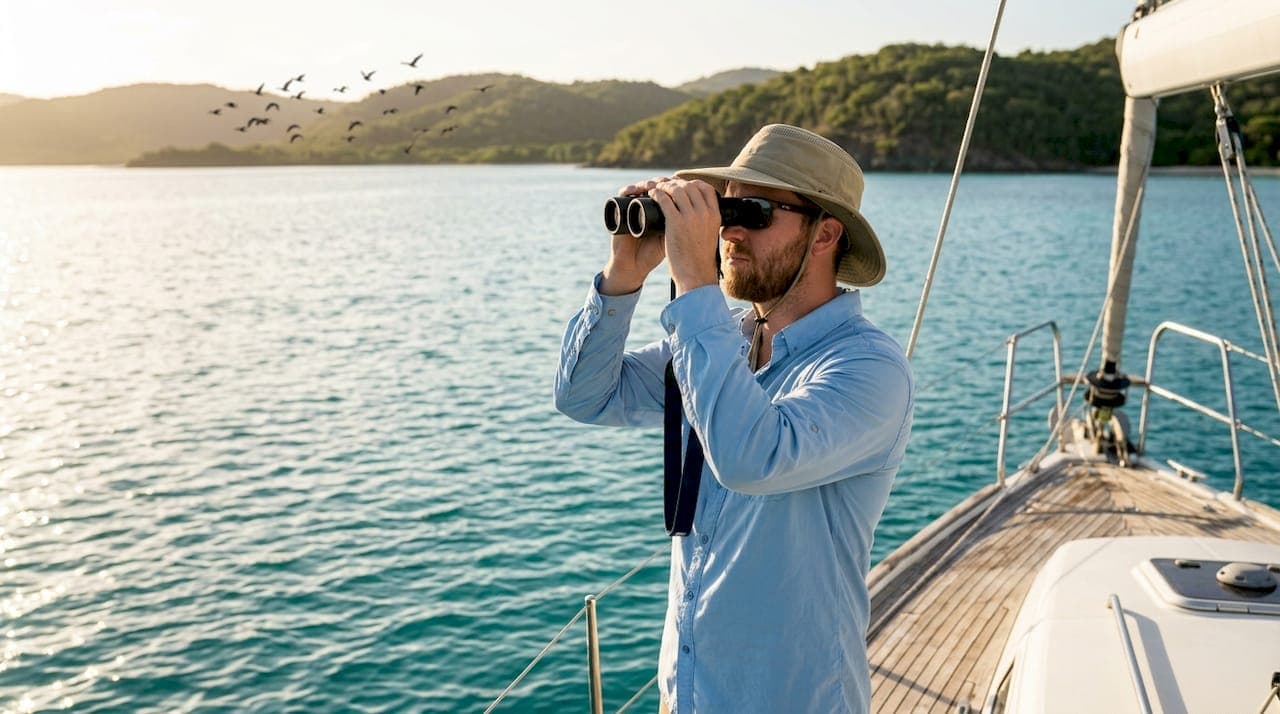
Rare bird species seen on yacht charters represent some of the most extraordinary wildlife encounters available to serious birdwatchers. Pelagic birding, the recognized industry term for open-ocean bird observation, places you miles from shore where elusive seabirds and endemic island species live entirely beyond the reach of land-based birders. Exoticacharters specializes in exactly these remote, expedition-style voyages to destinations like the Galápagos, French Polynesia, and Alaska, where dramatic ocean habitats and island archipelagos produce sightings that no terrestrial trip can replicate. This guide covers the top 10 rare species you can realistically encounter, the techniques that make sightings happen, and what separates a productive birding charter from a disappointing one.
1. What rare bird species are most seen on yacht charters?
The ten species below represent the most sought-after targets across pelagic and coastal birding charters worldwide. Each one demands a specific habitat, season, or technique to find reliably.
- Wilson's Storm-Petrel (Oceanites oceanicus): One of the world's most abundant seabirds, yet rarely seen without a dedicated pelagic trip. It dances low over the water, pattering its feet on the surface. Pelagic seabirds like this are drawn reliably to chum slicks.
- South Polar Skua (Stercorarius maccormicki): A powerful, dark predator that follows vessels across the Southern Ocean. Sightings peak during austral summer migrations.
- Red-footed Booby (Sula sula): Unmistakable with its vivid scarlet feet, this tropical booby nests on remote Pacific and Indian Ocean atolls. It regularly lands on yacht rigging, giving photographers extraordinary close access.
- Wandering Albatross (Diomedea exulans): The largest flying bird on Earth, with a wingspan reaching 11 feet. It glides effortlessly alongside vessels in the Southern Ocean for hours.
- Cory's Shearwater (Calonectris borealis): A large, buoyant shearwater common on Atlantic pelagic routes. Its lazy, arcing flight is one of the signature sights of a mid-ocean crossing.
- Great Shearwater (Ardenna gravis): Identified by its dark cap and white neck collar, this species migrates through the North Atlantic in enormous numbers during late summer.
- Sabine's Gull (Xema sabini): A delicate, fork-tailed gull that breeds in the Arctic and winters off West Africa. Catching it mid-migration from a yacht is a genuine prize.
- Wirebird (Charadrius sanctaehelenae): The critically endangered plover of St. Helena, found nowhere else on Earth. Coastal anchorages near the island put you within reach of one of the rarest shorebirds alive.
- Humboldt Penguin (Spheniscus humboldti): A near-threatened species that forages in the cold Humboldt Current off Peru and Chile. Coastal yacht tours near Callao bring birdwatchers within meters of breeding colonies.
- Tristan Albatross (Diomedea dabbenena): Critically endangered and breeding only on Gough Island in the Tristan da Cunha group. A Southern Ocean expedition charter is the only practical way to see it.
Pro Tip: Bring a scope or image-stabilized binoculars rated at least 10x42. Open-ocean swell makes standard binoculars difficult to hold steady, and many pelagic species require sustained observation to confirm identification.
2. Top rare seabirds spotted on pelagic ocean charters
Pelagic charters operate in open water, far from the coastal routes most birdwatchers know. The rewards are proportional to the distance. A single Atlantic pelagic expedition recorded 112 bird species, including rare petrels and multiple albatross species, over a multi-week ocean transit. That figure illustrates what dedicated ocean time produces compared to a standard coastal cruise.
The key species on a true pelagic charter include Wilson's Storm-Petrel, Great and Cory's Shearwaters, Sabine's Gull, Red-footed Booby, and South Polar Skua. Each occupies a distinct oceanic niche, from the storm-petrel's preference for nutrient-rich upwelling zones to the skua's habit of shadowing fishing vessels. Understanding these preferences helps you and your guide position the yacht for maximum productivity.
Albatross species deserve special mention. The Wandering, Black-browed, and Tristan Albatross all require Southern Ocean latitudes, which means charters routed between Ushuaia and Cape Verde or through the Tasman Sea offer the best windows. These are not casual sightings. They are the reason serious birdwatchers plan entire expeditions around a single ocean crossing.
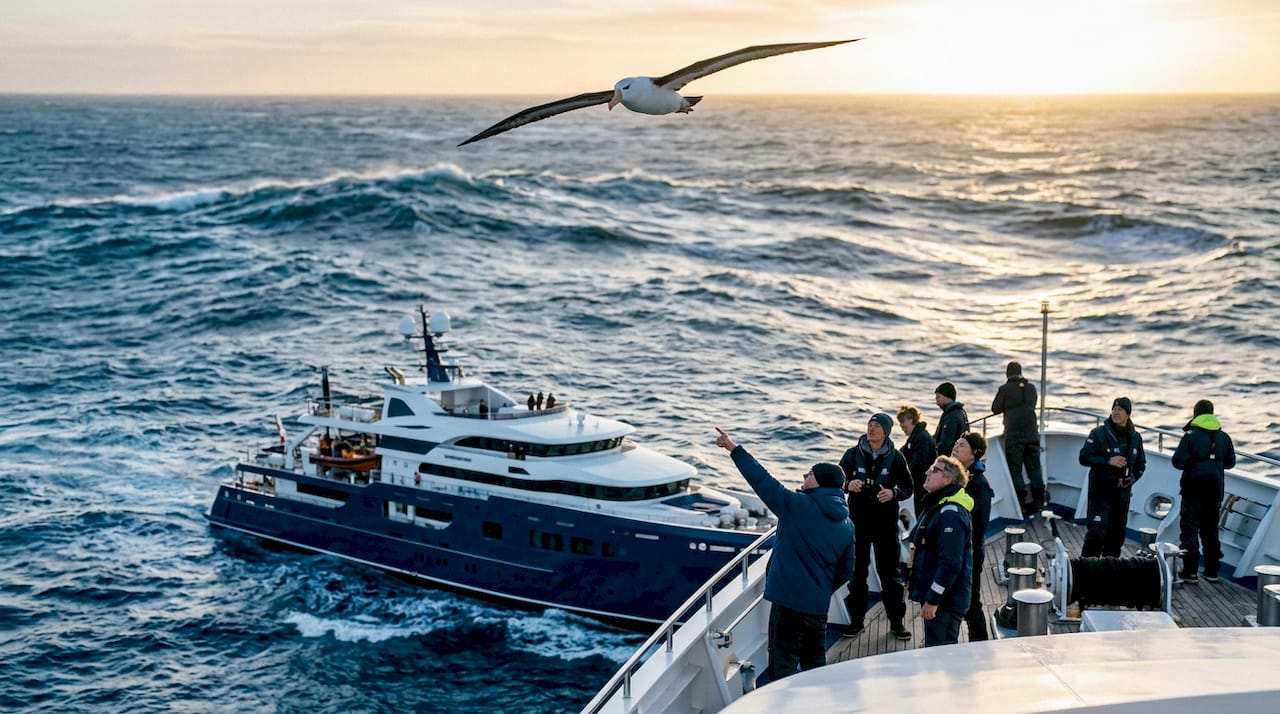
Pro Tip: Ask your charter operator whether the vessel carries fish oil and offal for chum slicks. Chum slick techniques attract storm-petrels and other elusive species within photographic range. This detail rarely appears in standard yacht brochures, but it separates a productive pelagic from a frustrating one.
3. Rare island birds accessible on coastal yacht trips
Island archipelagos reward a completely different style of birding. The Wirebird on St. Helena and the endemic finches of the Tristan da Cunha group represent species that evolved in total isolation and exist nowhere else on the planet. Reaching them requires a vessel willing to anchor in remote, often exposed roadsteads where no commercial ferry operates.
- St. Helena Wirebird: Critically endangered, with a global population of only a few hundred individuals. The island's interior pastures are its last stronghold.
- Tristan Albatross and endemic finches: Gough Island, part of the Tristan archipelago, hosts species found nowhere else. Access is restricted and practically requires a private vessel.
- Humboldt Penguin at Palomino Island, Peru: Yacht tours near Callao run approximately three hours and cost around $99 per person, making this one of the most accessible rare-species encounters available.
- Galápagos endemics: The Galápagos penguin, Waved Albatross, and Flightless Cormorant are all endemic to the archipelago. A crewed yacht charter gives you access to anchorages that day-trip boats cannot reach.
- Marquesas endemics, French Polynesia: The Marquesas Kingfisher and Ultramarine Lorikeet are restricted to specific valleys and ridgelines. A yacht provides the flexibility to position near the right island at the right time.
Island habitats support rare birds because geographic isolation drives speciation. A species that evolved on a single island over millions of years has no reason to disperse, which means your yacht is the only practical vehicle for finding it.
4. How expedition-style charters improve rare birdwatching
Expedition charters are purpose-built for naturalists, and the difference from a standard luxury yacht charter is significant. Expert naturalist guides and onboard workshops are standard features on dedicated birding expeditions. They are rarely available on general charter vessels, where the crew's expertise centers on sailing and hospitality rather than species identification.
The practical advantages of an expedition-style charter include:
- Resident naturalist guides who know the target species, their behavior, and the best observation positions on deck
- Daily photography briefings covering light angles, shutter speeds for fast-moving seabirds, and equipment settings for overcast ocean conditions
- Route planning around productive waters, including known upwelling zones and migration corridors rather than scenic anchorages alone
- Chum slick deployment, which disperses fish oil near the vessel to draw storm-petrels and shearwaters within close range
- Flexible itineraries that allow the captain to hold position when a productive feeding flock appears, rather than adhering to a fixed schedule
Exoticacharters builds itineraries around exactly this kind of flexibility. Their team of former captains and water sports professionals understands that the best expedition yacht destinations for birdwatchers are not always the most photographed ones. Sometimes the most productive anchorage is a windswept, uninhabited island that no brochure has ever featured.
5. Environmental factors that affect rare bird sightings
Rare avian sightings on charters depend on oceanographic conditions as much as on skill or planning. Sighting predictability remains low even with expert navigation, because nutrient upwelling zones, weather fronts, and migratory timing all shift unpredictably. Understanding these variables helps you set realistic expectations before departure.
| Factor | Effect on sightings | Practical implication |
|---|---|---|
| Nutrient upwelling | Concentrates fish, which attracts seabirds | Route through known upwelling zones like the Humboldt Current |
| Weather fronts | Strong winds push pelagic birds closer to vessels | Post-frontal conditions often produce the best sightings |
| Migratory timing | Species are only present during specific windows | Book charters aligned with target species' migration calendar |
| Ocean "dead zones" | Low productivity areas produce few birds | Experienced guides avoid these corridors |
| Sea state | Heavy swell reduces observation quality | Calmer windows within a trip often yield the most identifications |
Patience is not optional in pelagic birding. A morning with no sightings can precede an afternoon where a feeding frenzy draws a dozen species simultaneously. Experienced guides read the water surface, bird flight lines, and weather patterns to anticipate these events. No charter can guarantee a specific species, but a well-planned route and a knowledgeable crew dramatically improve the odds.
Key takeaways
Yacht-based pelagic birding, combined with access to remote island archipelagos, produces rare bird encounters that no land-based trip can match.
| Point | Details |
|---|---|
| Pelagic species require ocean time | Species like Wilson's Storm-Petrel and Wandering Albatross are only reliably seen far offshore. |
| Chum slicks are the key technique | Dispersing fish oil near the vessel draws elusive storm-petrels within photographic range. |
| Island endemics need remote anchorages | Birds like the Wirebird and Tristan Albatross are accessible only by private vessel. |
| Expedition charters outperform standard ones | Naturalist guides, workshops, and flexible routes produce significantly better sightings. |
| Ocean conditions control outcomes | Upwelling zones, weather fronts, and migratory timing determine what you see more than any other factor. |
What I've learned from years of watching birders at sea
The birdwatchers who come back most satisfied are never the ones who boarded with a rigid checklist. They are the ones who treated the ocean as a living system rather than a backdrop. I have watched guests dismiss a morning of "only shearwaters" and then miss the South Polar Skua that appeared twenty minutes after they went below deck. The ocean rewards presence.
The single biggest mistake I see is booking a general luxury charter and hoping rare birds will appear. They sometimes do. But a vessel without chum, without a naturalist, and without a route designed around productive waters is essentially a floating hotel with a view. That is a fine thing. It is just not a birding expedition.
My honest recommendation is to prioritize the crew's knowledge over the vessel's amenities. A smaller, purpose-fitted yacht with an expert guide will outperform a superyacht with a generic itinerary every time. The luxury yacht options that genuinely serve birdwatchers are the ones where the captain has already been to the upwelling zone and knows what time the storm-petrels feed. That knowledge is not listed in any brochure. You have to ask for it directly.
— Mo
Plan a wildlife-focused yacht charter with Exoticacharters
Birdwatchers who want access to the world's rarest seabirds and island endemics need more than a beautiful vessel. They need a charter built around the right destinations, the right timing, and a crew that understands wildlife observation.
Exoticacharters plans fully crewed yacht charters to remote destinations like the Galápagos, French Polynesia, and Alaska, where rare avian sightings are a genuine feature of the itinerary rather than a lucky accident. Their team of former captains and water sports professionals designs routes around wildlife productivity, not just scenic anchorages. Browse the top exotic charter options to find a voyage matched to your target species and travel window. Speak directly with a charter specialist to discuss naturalist services, route flexibility, and the best seasons for the birds you most want to see.
FAQ
What are the best destinations for rare bird sightings on a yacht?
The Galápagos, the Southern Ocean between Ushuaia and Cape Verde, and coastal Peru near Palomino Island consistently produce the highest density of rare and endemic species. Remote island groups like Tristan da Cunha require a private vessel to access at all.
What is a chum slick and why does it matter for pelagic birding?
A chum slick is a trail of fish oil and offal dispersed near the vessel to attract seabirds. It draws storm-petrels and shearwaters within close observation and photographic range, and it is the single most effective technique for improving rare bird encounters on open-ocean charters.
How many bird species can a pelagic yacht expedition realistically record?
A dedicated multi-week Atlantic pelagic expedition recorded 112 bird species, including rare petrels and albatrosses. Shorter trips in productive waters typically yield 20–50 species depending on season and route.
Do I need a specialized charter for rare birdwatching, or will any yacht work?
A specialized expedition charter with a resident naturalist guide, flexible routing, and chum slick capability produces dramatically better results than a standard luxury charter. General charters can produce opportunistic sightings, but they are not designed around bird productivity.
When is the best time to book a birdwatching yacht charter?
Timing depends entirely on target species. Southern Ocean albatross sightings peak during austral summer (december through february), while North Atlantic pelagic species like Great Shearwater and Sabine's Gull are most abundant from july through september. Book at least six months ahead to align your charter with the right migration window.
Recommended
- Top 10 Exotic Yacht Charters – Exotica Charters
- 11 Most Unique Yacht Charter Destinations in the World – Exotica Charters
- Which Crewed Charter Destinations Offer the Best Marine Biology Experiences? – Exotica Charters
- Which Remote Charter Destinations Have the Strictest Biosecurity — and Why – Exotica Charters