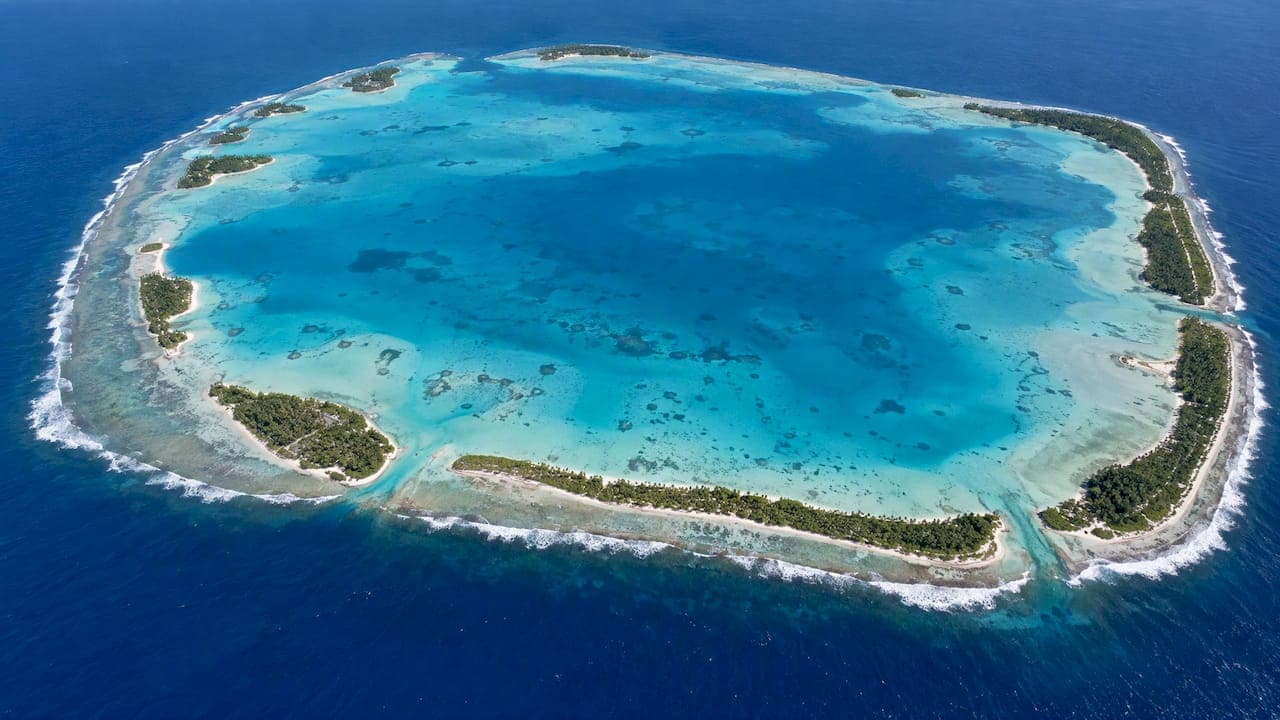
A Tuamotu charter is a different kind of voyage from the postcard sailing of Tahiti and Bora Bora. You move between low coral rings, enter their lagoons through narrow, current-swept passes, and spend your days diving, snorkeling and drifting over water in impossible shades of blue. The islands are remote and the logistics are demanding, so the best way to see them is aboard a fully crewed yacht with a captain who knows the passes. This guide covers where to go, how a route comes together, what to ask about season and cost, and how to choose the right vessel.
TL;DR
- The Tuamotus are 77 coral atolls, the largest archipelago in French Polynesia, and they reward divers, wildlife lovers and anyone who wants space and silence.
- Lagoon passes are the main navigational challenge. Timing them around slack tide is a job for an experienced local captain, which is why we recommend crewed charters.
- Five days is enough for a rewarding taste: pick one or two atolls rather than racing across many.
- Provisions are imported and costly, so menus, fuel and fresh food need planning well ahead.
- Charter prices depend on the yacht, crew and itinerary, so request a tailored proposal rather than relying on a headline rate.
Table of Contents
- What makes the Tuamotus different from Tahiti and the Society Islands
- Which atolls are worth a stop
- Planning your route: a realistic five-day itinerary
- Lagoon passes, weather and why crew matters
- Season and conditions
- Provisioning, logistics and what a charter costs
- Our perspective
- Plan your Tuamotu charter with us
- FAQ
- Sources
What makes the Tuamotus different from Tahiti and the Society Islands
The Tuamotu Archipelago consists of 77 atolls, the oldest islands in French Polynesia, formed by coral growing on top of submerged volcanoes. That geology explains everything you see: thin ribbons of palm-covered reef enclosing vast lagoons, with no mountains, no dramatic peaks and almost no shade other than coconut palms.
The Society Islands (Tahiti, Moorea, Raiatea, Bora Bora) are volcanic, green and close together, with short hops between anchorages and plenty of marinas and restaurants. The Tuamotus are the opposite: low, wide-open and far apart. Distances between atolls can mean overnight passages, services are sparse, and many anchorages have no town at all. If you are weighing the two routes, our comparison of Society Islands vs Tuamotus walks through the trade-offs, and our guide to which crewed charter route suits you helps you decide by travel style.
Many guests combine both: the Society Islands for mountains and easy cruising, then a flight or passage to the Tuamotus for diving and lagoon life. Others commit to the atolls alone, which is where the "expedition feel" of this region comes through most strongly.
Which atolls are worth a stop
Not every atoll suits every guest. Here is how we think about the best-known ones, matched to what you want from the trip.
Rangiroa and Fakarava for diving
Rangiroa and Fakarava are the two big names for divers. Rangiroa's Tiputa Pass is known for dolphins and shark encounters, and Fakarava's South Pass is famous for dense gatherings of sharks along the wall; the atoll is also a UNESCO biosphere reserve, according to one regional guide. Dive conditions in passes depend heavily on the tide, so your itinerary should be built around dive-operator advice rather than a fixed timetable. A captain with a diving background, which is how our team approaches charters, will plan anchorages near the pass and keep surface time flexible.
Mataiva and quieter lagoons for families
Families often prefer calmer, more intimate stops. Mataiva is described by Tahiti Tourisme as perfect for families, with guesthouses and natural swimming pools. For children, shallow lagoon water, sandbars and long snorkeling sessions over healthy coral are the draw, and a yacht gives you a floating base with your own kitchen, cabins and shade.

Pearl farms, villages and vineyards
On shore, the atolls offer black pearl farms, village life and even a vineyard on a coral islet at Rangiroa, as the same guide notes. Time ashore tends to be short and quiet: a pearl-grading visit in the morning, lunch on a motu, a sunset swim. For more ideas on choosing, see our page on which Tuamotu atolls are worth a crewed yacht charter stop.

Planning your route: a realistic five-day itinerary
The most common mistake is trying to see too much. Distances are long, passes limit when you can arrive, and the best moments (a shark-filled wall, a motu picnic, a night of stars) need time.
A sensible five-day shape looks like this:
- Day 1: Arrival and settling in. Meet the crew, review the plan, provision, and make a short first move to a sheltered anchorage. Use the evening for a briefing on dive and snorkel plans.
- Days 2 and 3: One atoll, explored properly. Dive or snorkel the pass at the right tide, then spend the rest of the day in the lagoon: paddleboarding, kayaking, a sandbar lunch, a visit to a pearl farm or village.
- Day 4: Reposition or stay. If the weather and distance allow, move to a second atoll. If not, take a slower day and a second dive window.
- Day 5: Gentle finish. A last swim, a relaxed morning and an unhurried return in time for your onward flight.
Guests with more time can add a second or third atoll, and a week or ten days opens up a true sampling of the chain. Because the Tuamotus are spread out and flights are limited, we would suggest building a buffer day around international connections.
If you are choosing between the Tuamotus and the main Tahiti islands for a short trip, the answer depends on priorities. For diving, wildlife and solitude, the atolls win. For scenery variety and shorter sails, the Society Islands are easier. Our page on adding atolls to a crewed itinerary helps combine them.
Lagoon passes, weather and why crew matters
Atoll lagoons are entered through gaps in the reef called passes. Water pours in and out with the tide, and the current can be strong. Cruising guidance says passes should ideally be entered at slack or near-slack tide, and that wind blowing against the current can build standing waves. In strong wind or swell the flow can be much faster, and slack periods can shrink or vanish.
That is why tide tables alone are not enough. A local marina guide makes the point that real-time knowledge from cruisers already inside the lagoon or from a dive operator at the pass is more reliable than predictions. A crew who has run these passes many times, and who talks to the local operators before arriving, is your best protection.
Some other practical points:
- Coral heads in lagoons. Lagoon water looks clear, but isolated coral heads rise abruptly, so a lookout on the bow is standard practice.
- Anchoring. Many atolls have limited sandy patches; anchoring with care protects coral and your yacht.
- Distances. Atolls can be a long sail apart, so overnight passages are common on wider itineraries.
- Remote atolls. On uninhabited stretches, medical help is far away, so a crew with safety training and good communications is not optional.
The Tuamotus are what experienced sailors call a crew-dependent destination: reliable local professionals are essential for pass navigation, provisioning and safety in uninhabited places, a view reflected in the Tuamotus Compendium published by a French Polynesian sailing association. Our own approach is built around that idea. For a look at what a professional crew handles aboard, see what crew is on board an expedition charter.
Season and conditions
French Polynesia has a drier, cooler stretch roughly from May to October and a warmer, wetter, more changeable period for the rest of the year. Southeasterly trade winds are the backbone of sailing here, and the dry months are generally the most popular for charters. Conditions in any given week still vary, and the atolls can see wind shifts and squalls at any time, so ask us about the specific window you are considering. Check the official French Polynesian meteorological service and Tahiti Tourisme for current conditions before you travel.
Diving has its own rhythm: some marine life events, such as shark and ray gatherings, are seasonal and vary by pass, so tell us what you most want to see and we will shape the dates around it.
Provisioning, logistics and what a charter costs
Most goods in the islands arrive in Papeete and are shipped on from there, so provisioning is costly and logistics are complex, which calls for early planning on crewed charters. Fresh produce, special dietary items and wine should be ordered before you arrive, and your crew will often fish for part of your meals.
We do not publish fixed prices because charter costs depend on the yacht, the crew, the season and the route. When you request a proposal, make sure it answers these questions:
- What does the base charter fee cover, and for how many guests?
- Are fuel, dockage, water sports gear and dive equipment included?
- How are food and beverage costs handled: allowance or at cost?
- Are there taxes, crew gratuity or delivery fees on top?
- What are the cancellation and weather-change terms?
Vessel type changes the experience as well. Catamarans offer stable, spacious living and shallow draft for lagoons; sailing yachts give you the feel of the wind; motor yachts add speed for covering long distances. Browse our catamarans, sailboats and motor yachts, or read about superyacht charters in Tahiti if you want maximum space and amenities.
On evenings ashore or on deck, many of our guests enjoy following the sporting side of yachting too, whether that means maxi yacht regatta racing or simply watching a sailing yacht heel under a trade-wind sky.
Our perspective
We have spent our careers as captains and water sports professionals, and we would say the Tuamotus are best understood as a place to slow down. The atolls do not offer a long list of sights. They offer water, light, marine life and silence, and a well-planned charter protects all four.
What we consider essential is a crew that knows the passes and respects the weather. We would rather shorten an itinerary than push a schedule, and we plan every route with a second option in case the tide, wind or swell says otherwise. Guests who give us that flexibility are rewarded with the best of the lagoons.
Because we know what a good dive briefing, a safe anchorage and a well-stocked galley look like, we match each family, couple or group to a yacht and crew we would choose ourselves.
Mo
Plan your Tuamotu charter with us
If you are ready to turn this guide into a plan, our team will build a crewed itinerary around your dates, your group and your interests, from dive-focused weeks to relaxed family cruises. Start with our Tuamotus yacht charter page, explore French Polynesia yacht charters, or speak to a yacht charter specialist through Exotica Charters.
FAQ
How many days do I need for a Tuamotu yacht charter?
Five days is enough to enjoy one or two atolls well, with time for diving, lagoon swimming and a village or pearl farm visit. A week or more lets you add a second or third atoll and gives you buffer for weather and tides. We suggest keeping an extra day around your flights.
Can I charter a yacht in the Tuamotus without a crew?
The passes, coral heads and remote anchorages make the region demanding even for experienced sailors. We specialize in fully crewed charters, where a captain who knows the passes handles navigation, safety and provisioning, and you handle the holiday.
Is the Tuamotus suitable for families with children?
Yes, with the right atoll and vessel. Quiet lagoons such as Mataiva, which Tahiti Tourisme describes as ideal for families, offer calm water and natural pools. A spacious catamaran is often the most comfortable choice for younger guests.
What is the best time of year to charter in the Tuamotus?
Many guests choose the drier months, roughly May to October, when trade winds are steady. Conditions still change from week to week, so tell us your dates and what you want to see, and we will advise. Check official forecasts before you travel.
Sources
- Tuamotu Archipelago by Air Reveals True Atolls, Lagoons (Living Oceans Foundation)
- Tuamotu Islands (Tahiti Tourisme)
- Tuamotu Islands Guide 2026: Rangiroa, Fakarava & Diving
- Tuamotus Compendium (pass timing)
- Navigating the Tuamotus: Pass Timing, Chart Accuracy
- The Tuamotus Compendium (Voiliers de Polynésie)