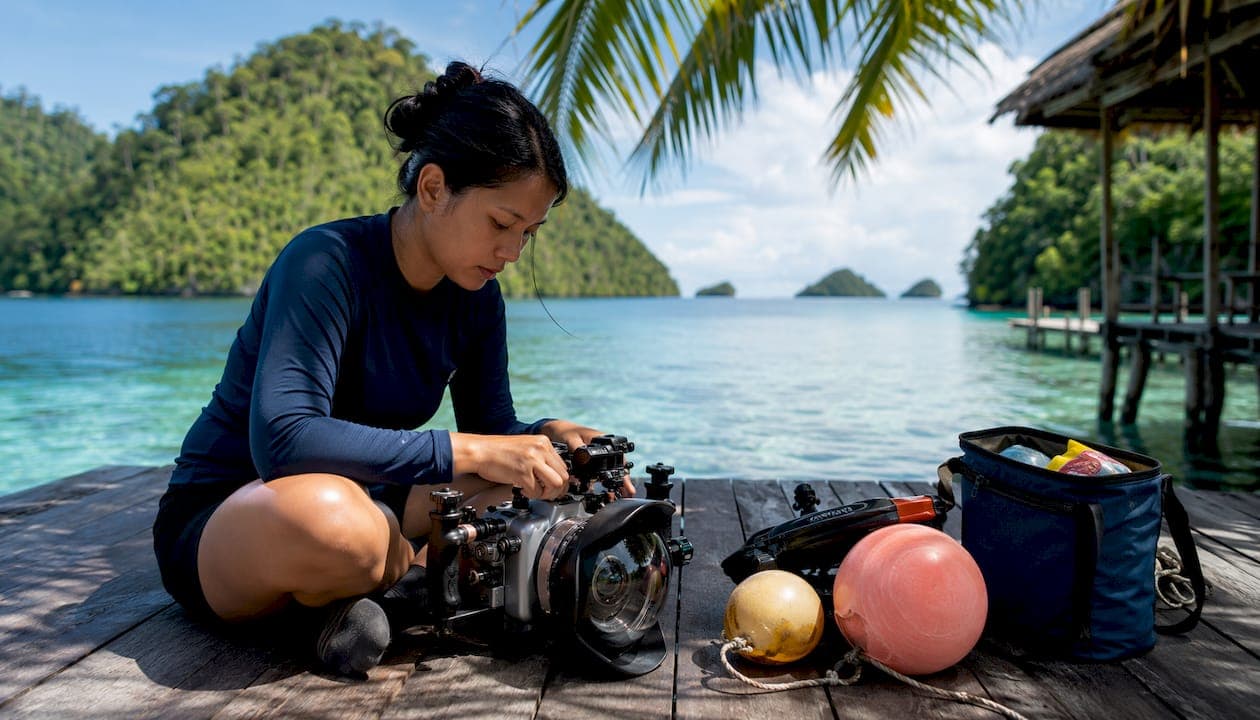
For serious underwater photographers, a photography-focused yacht charter in Raja Ampat is the single most effective way to capture world-class images. Book an expedition of sufficient length on a vessel equipped with a dedicated camera room, powered rinse and charging stations, and at least one PADI-certified photo dive guide. Those three features, more than any camera system you bring, determine whether you return with publishable work or a hard drive of near-misses. Exoticacharters, which specializes in fully crewed expedition charters to remote destinations, is one of the operators worth contacting early. Raja Ampat's combination of extraordinary biodiversity, dramatic limestone topography, and genuinely remote anchorages makes it the most photogenic marine environment on the planet. The planning decisions you make before you board matter as much as the gear you pack.
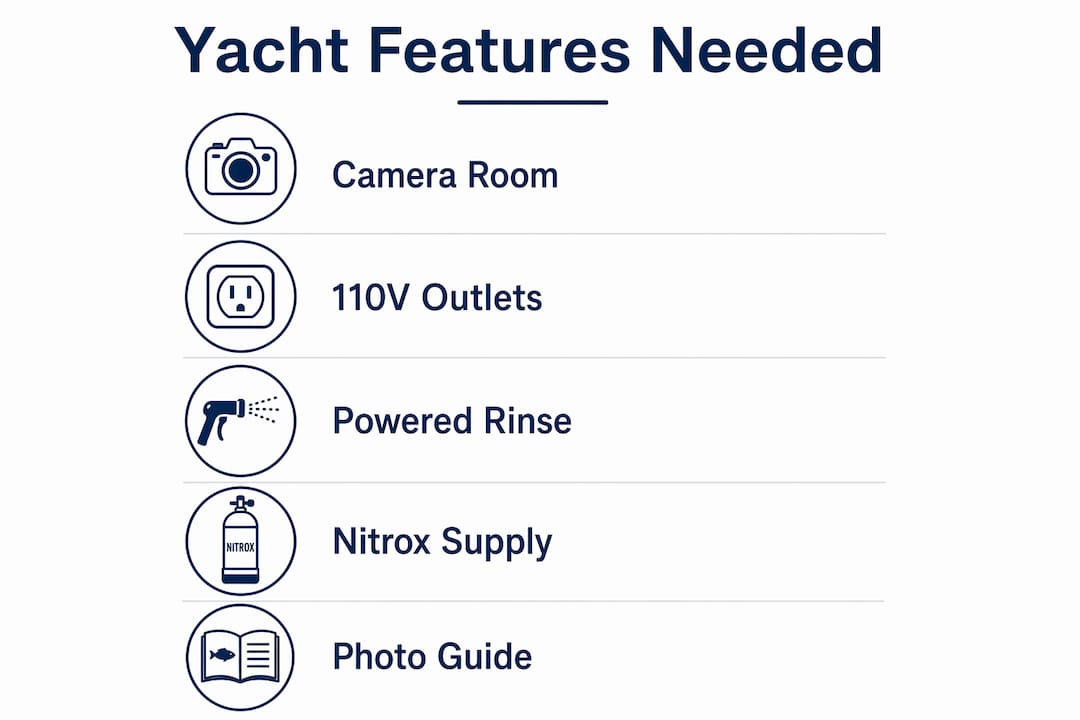
Table of Contents
- Why are yacht charters ideal for underwater photography in Raja Ampat?
- Where should you shoot in Raja Ampat, and what will you find?
- What yacht features do photographers absolutely need onboard?
- What does a 7–10 night photography itinerary actually look like?
- Which underwater photography techniques work best in Raja Ampat?
- What gear and travel logistics should U.S. photographers plan for?
- How do you evaluate a photography-focused charter operator before booking?
- How should you document life on board alongside your underwater work?
- Key Takeaways
- Why a photography-focused charter is worth every dollar
- Exoticacharters makes photography expedition planning straightforward
- Useful sources and next steps for planning your charter
Why are yacht charters ideal for underwater photography in Raja Ampat?
Raja Ampat sits at the heart of the Coral Triangle, a region recognized by UNESCO for its exceptional marine biodiversity. The species count here is staggering: more than 1,500 fish species and over 600 coral species have been recorded across the archipelago. No land-based dive resort can match what a liveaboard or crewed yacht delivers in this environment, because the photographic opportunities are spread across hundreds of islands, reefs, and seamounts that are simply unreachable by day boat.
A crewed charter gives you operational control that transforms photographic outcomes. You choose when to enter the water, which means you can time dives to coincide with the best ambient light windows, typically the first 90 minutes after sunrise and the hour before sunset. You anchor privately, away from dive-resort crowds, so a cleaning station or a soft-coral bommie is yours alone. The tender gives you access to shallow lagoons and split-shot positions that a larger vessel cannot reach.
The core photographic advantages of a Raja Ampat charter:
- Remote reef access: Sites like Misool's southern reefs and the outer seamounts of Wayag are only reachable by a vessel that can anchor overnight nearby.
- Flexible dive scheduling: Three to four dives per day, timed to light and tide, rather than the fixed morning-and-afternoon slots of resort diving.
- Private anchorages: No other divers at the cleaning station means you can work a subject for a full dive without competition.
- Tender-based positioning: A rigid inflatable tender lets you drop into split-shot positions, frame yacht hull compositions, and reach shallow macro gardens that larger boats miss.
- Extended golden-hour access: Sunset lifestyle shots from the tender, with limestone karst silhouettes in the background, are only possible when you control the vessel's schedule.
- Macro and pelagic variety in one trip: Pygmy seahorses on sea fans at 20 meters, manta rays at cleaning stations, schooling barracuda at current-swept points, and soft-coral panoramas wide enough to fill a double-page spread.
The photographic range Raja Ampat offers within a single 10-night itinerary is extraordinary. You can shoot intimate macro work one morning and wide-angle manta sequences the same afternoon, all from the same anchorage.
Where should you shoot in Raja Ampat, and what will you find?
The archipelago rewards photographers who plan their locations deliberately. Each major area has a distinct photographic character, and knowing what to prioritize at each site saves you from spending a wide-angle dive at a macro garden.
| Location | Primary Subjects | Best Conditions | Lens Choice |
|---|---|---|---|
| Piaynemo / Wayag | Karst topography, aerial-style surface shots, reef overviews | Morning light, calm seas | Wide-angle, split-shot |
| Misool (south) | Soft coral walls, schooling fish, reef sharks | October–April visibility peaks | Wide-angle, fisheye |
| Manta Sandy / Arborek | Manta rays at cleaning stations | October–April manta season | Wide-angle, 14–16mm equivalent |
| Kabui Bay | Mangrove macro, pygmy seahorses, nudibranchs | Year-round, best at slack tide | Macro 60–100mm equivalent |
| Fam Islands | Wobbegong sharks, soft coral gardens, baitball action | June–September current season | Wide-angle, mid-range zoom |
Piaynemo and Wayag are the visual icons of Raja Ampat, those jungle-covered limestone islands rising straight from the sea. The most compelling shots here are split-shots taken from the tender at low tide, combining the turquoise shallows with the karst skyline above. Shoot early, before the wind picks up and the surface texture becomes too chaotic for a clean split.
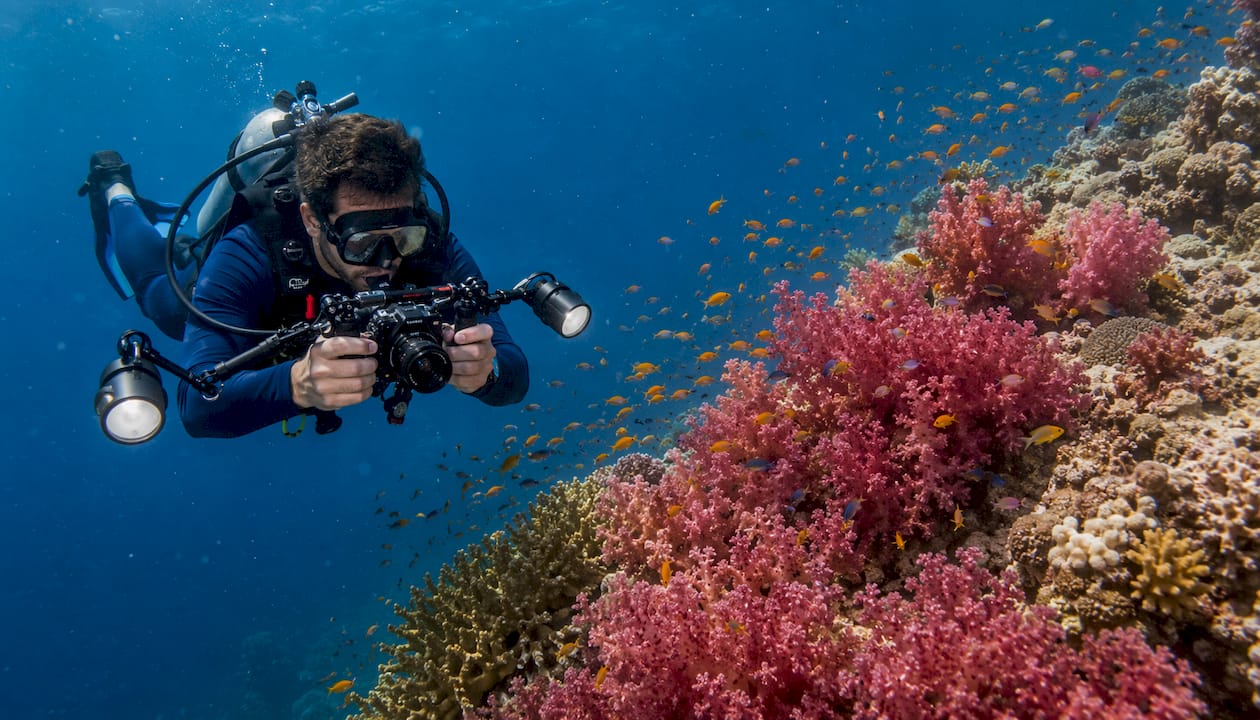
Misool's southern reefs are arguably the most photogenic dive sites in the entire archipelago. Soft coral walls in orange, pink, and purple drop from 5 meters to beyond recreational limits, and the fish life is dense enough that a single wide-angle frame can contain dozens of species. October through April brings the clearest visibility, often exceeding 25 meters.
Manta Sandy and Arborek are the manta photographer's primary targets. Mantas aggregate at these cleaning stations predictably from October through April, hovering motionless while cleaner wrasse work their gill plates. Approach slowly from down-current, settle on the sand at the station's edge, and let the mantas come to you. Shooting into the light with strobes balanced to fill the underside produces the most dramatic results.
Kabui Bay rewards patience and a macro lens. Pygmy seahorses live on specific sea fans at 18–22 meters, and the bay's sheltered water means minimal current drift. Nudibranchs, ghost pipefish, and ornate frogfish are year-round residents. Slack tide is the only time to work this site comfortably.
Pro Tip: At Manta Sandy, position yourself at the cleaning station before the mantas arrive, not after. Latecomers who fin in aggressively scatter the rays. Ask your dive guide to signal when the station is active, then descend slowly and hold position at depth.
What yacht features do photographers absolutely need onboard?
The difference between a photography-focused charter and a standard dive charter is not the diving itself. It is the infrastructure that protects your gear, keeps it charged, and gives you a clean workspace between dives. These are the features worth insisting on before you sign a charter agreement.
Must-have features:
- Dedicated camera room or dry workspace: A shaded, stable surface where you can open housings, swap ports, and review images without salt spray or direct sun. This is the single most important amenity for a photographer.
- Powered rinse tanks: Fresh water tanks with 110V/220V outlets nearby for charging strobes and focus lights while gear soaks. Separate tanks for cameras and regulators prevent cross-contamination.
- Abundant charging points: At minimum, four to six outlets accessible from the camera bench, with adapters for U.S. plugs. Mirrorless systems, strobes, focus lights, laptops, and backup drives all need simultaneous power.
- Secure, padded camera storage: Lockable drawers or foam-lined cases that keep housings stable at sea and protected from vibration underway.
- Wide swim platform with a low-profile ladder: Easy water entry and exit with a housing in hand. A narrow boarding ladder with a heavy swell is a gear-loss scenario.
- Shaded deck area for editing: Direct tropical sun makes laptop screens unreadable. A covered cockpit or salon with good airflow is where you will spend your surface intervals.
- Reliable tender with camera-friendly access: A rigid inflatable with a low freeboard and a flat bow section lets you mount a camera tray or shoot split-shots without contorting.
- Nitrox availability: Extended bottom time at 15–25 meters is where most Raja Ampat photography happens. Nitrox 32 adds meaningful no-decompression time at those depths. Confirm that the vessel carries a dive-capable compressor and nitrox blending before booking.
- Experienced photo dive guides: A guide who understands not to touch subjects, who knows where the pygmy seahorses are, and who can hold position in current while you work a frame is worth more than any lens upgrade.
Pro Tip: Before paying a deposit, ask the operator to confirm the number of 110V outlets in the camera room and whether the generator runs overnight. A vessel with four charging points for eight photographers is a workflow bottleneck that no amount of planning can fix once you are at sea.
What does a 7–10 night photography itinerary actually look like?
A well-designed photography charter in Raja Ampat is structured around light windows and dive timing, not just site coverage. The itinerary below reflects the kind of day-by-day rhythm that produces the highest keeper rates.
| Day | Location | Dives / Activities | Photography Focus |
|---|---|---|---|
| 1 | Sorong arrival, sail to Fam Islands | 1 check dive | Gear setup, test shots, sunset from tender |
| 2–3 | Wayag / Piaynemo | 3 dives + tender excursion | Karst split-shots, reef overviews, dawn light |
| 4–5 | Misool south reefs | 3–4 dives per day | Soft coral walls, wide-angle, schooling fish |
| 6–7 | Manta Sandy / Arborek | 3 dives, manta focus | Cleaning station sequences, reef portraits |
| 8 | Kabui Bay | 3 dives, macro day | Pygmy seahorses, nudibranchs, ghost pipefish |
| — | Fam Islands | 3 dives + night dive | Baitball action, nocturnal macro |
| 10 | Return to Sorong | Transit + final dive | Hull shots, lifestyle, group portraits |
A typical day begins with a pre-dawn briefing and an early-morning dive timed to the first light filtering through the water column. Surface interval runs from roughly 8:30 to 10:00 AM, which is when most photographers ingest the morning's cards, make quick selects, and charge batteries. A second dive follows before lunch. The afternoon offers a third dive or a tender excursion for topside and split-shot work. Night dives, when the itinerary includes them, add mandarin fish, Spanish dancers, and hunting lionfish to the portfolio.
Pricing signals for photography-focused charters in Raja Ampat vary considerably. Specialist photo charters, which include a dedicated photo guide, camera room, and nitrox, command a meaningful premium over standard dive charters. The primary cost drivers are the photo guide's day rate, nitrox blending equipment, extra fuel for remote logistics, and peak-season demand from October through April. Booking lead times of 12–18 months are common for the best vessels during peak manta season. Exoticacharters publishes charter experiences and itinerary options that give a useful starting point for understanding what a fully crewed photography expedition includes.
Which underwater photography techniques work best in Raja Ampat?
Raja Ampat's conditions are forgiving by tropical standards, but the sites vary enough that a single approach does not serve every subject. Here is how to adapt your technique to the three main shooting scenarios.
Wide-angle reef and manta work rewards patience over pursuit. For manta sequences at cleaning stations, settle at depth before the rays arrive, shoot into the available light with strobes set to fill rather than overpower, and use a 14–16mm equivalent focal length to capture the full wingspan with environmental context. A common starting point for mirrorless systems in Raja Ampat's clear water is f/8, 1/160s, ISO 200, adjusted for the depth and time of day. The goal is a balanced exposure where the manta's white underside and the blue water column are both rendered correctly.
Pelagic and schooling fish require anticipation rather than reaction. Barracuda and trevally schools at current-swept points move in predictable arcs. Position yourself at the edge of the school's turning point, not inside it, and use a slightly longer focal length (24–35mm equivalent) to compress the school's depth. Avoid chasing: the school will come back.
Macro technique in current is the most technically demanding discipline in Raja Ampat. At sites like Kabui Bay, even a gentle drift makes precise focus on a 2cm pygmy seahorse extremely difficult. The most effective approach is to establish a stable hover position using a reef hook or by holding a dead coral rubble piece, signal your buddy to hold a focus light steady on the subject, and use single-point autofocus with a fast burst rate. A 60mm or 100mm macro equivalent gives working distance without disturbing the subject.
Practical in-water habits that raise keeper rates:
- Shoot slack tide whenever possible. Current-swept sites like Manta Sandy are dramatically easier to work during the 20–30 minute slack window.
- Use a focus light for macro, not just a strobe. A continuous focus light helps autofocus lock in low-contrast situations and reveals color that ambient light strips away.
- Work the split-shot from the tender, not from the water. A stable platform produces sharper results than treading water with a housing.
- Signal your guide before approaching a subject. A guide who knows you are about to shoot will hold position and keep other divers back.
Pro Tip: For split-shot compositions at Piaynemo, use a dome port rather than a flat port. A flat port creates significant refraction at the waterline that no amount of post-processing corrects cleanly. A 230mm dome port is the standard choice for this type of shot.
What gear and travel logistics should U.S. photographers plan for?
Traveling from the United States to Raja Ampat involves at least two international connections, typically through Singapore or Jakarta, and Indonesian customs procedures that require some preparation for professional camera equipment.
| Item | Notes |
|---|---|
| Primary housing + camera body | Carry on; never check a housing |
| Backup camera body (mirrorless) | Carry on; invaluable if primary floods |
| Two strobes + sync cords | Carry on; check airline watt-hour limits |
| Wide-angle dome port | Padded carry-on case |
| Macro port + lenses | Carry on or padded checked bag |
| Focus light (rechargeable) | Carry on; battery rules apply |
| Spare o-rings, silicone grease | Checked bag |
| Silica gel packets (10+) | Checked bag; essential in tropical humidity |
| Floating straps + safety lanyards | Checked bag |
| Spare sync cords and fuses | Checked bag |
Battery and flight rules for U.S. international travelers are governed by FAA regulations, which limit lithium-ion batteries to 100 watt-hours per battery in carry-on luggage without airline approval, and 101–160 watt-hours with airline approval. Spare batteries must travel in carry-on, not checked bags. Most strobe batteries fall well under 100Wh, but confirm the watt-hour rating on each battery before you pack. Indonesian customs may ask about professional camera equipment; carrying receipts and a list of serial numbers speeds the process considerably.
Insurance is non-negotiable for a trip of this value. Look for a policy that covers underwater camera equipment in transit and in use, and add a dive-medical supplement that includes decompression illness evacuation. DAN (Divers Alert Network) offers dive-specific medical coverage that most travel policies do not include. Keep digital copies of all serial numbers and purchase receipts in cloud storage before departure.
Pro Tip: Pack at least six spare o-rings for each housing model you carry, plus a tube of Molykote 111 silicone grease. In Raja Ampat's humidity, o-rings degrade faster than in temperate water, and a flooded housing on day two of a 10-night charter is a trip-defining disaster.
How do you evaluate a photography-focused charter operator before booking?
The questions you ask before signing a charter agreement reveal more about an operator's photography credentials than any marketing brochure. Exoticacharters maintains a detailed FAQ about dive availability that illustrates the level of transparency worth expecting from any operator.
Questions to ask every operator:
- Does the vessel have a dedicated camera room with powered rinse tanks and at least four 110V outlets?
- How many photographers has the crew supported in the past 12 months, and can you share sample portfolios from recent charters?
- Is nitrox available onboard, and what is the blending capacity per day?
- What is the tender configuration, and can it be used for split-shot and lifestyle photography?
- Does the dive guide have specific experience with photo dive protocols (no touching, subject approach distances, focus light use)?
- What are the cancellation and force-majeure terms for remote-region charters?
- How many charging points are available in the camera room, and does the generator run overnight?
Red flags that should pause a booking:
- No mention of a camera room or rinse facilities in the vessel specification.
- Crew who describe dive guides as "experienced divers" without any photography-specific credentials or portfolio evidence.
- Inconsistent power supply (generator hours limited to daytime only).
- No photographs from previous photography charters in the operator's portfolio.
- Itineraries that do not account for light windows or slack-tide timing.
- Vague or absent force-majeure terms for a remote destination like Raja Ampat.
A simple scoring approach: List your must-haves (camera room, nitrox, photo guide, powered rinse tanks) and your nice-to-haves (strong Wi-Fi, night dive capability, tender with camera mount). Score each operator out of 10 on the must-haves first. Any operator who scores below 7 on must-haves should be eliminated before you evaluate the nice-to-haves, regardless of how attractive the itinerary looks on paper.
How should you document life on board alongside your underwater work?
Underwater photography and editorial lifestyle documentation are genuinely distinct disciplines, and treating them as one is the most common workflow mistake on photography charters. Professionals working on private charters consistently recommend a discreet, observational approach for on-board documentation: anticipate moments rather than stage them, work with the vessel's natural rhythm, and use environmental light wherever possible.
A practical onboard workflow:
- Morning (pre-dive): Shoot the vessel at anchor in early light, crew preparing equipment, the water's surface texture. These frames establish place and atmosphere.
- During surface intervals: Ingest cards from the morning dive, make quick selects, back up to two separate drives. Do not begin heavy editing until you are in a stable Wi-Fi environment or post-charter.
- Afternoon: Tender-based lifestyle work during the hour before sunset. Frame the yacht against the karst backdrop, shoot swimmers beside the hull for surface-interval compositions that combine above and below-water storytelling.
- Evening: Review the day's selects, charge all batteries, prepare housing for the next day. A 15-minute gear check every evening prevents the o-ring failures that ruin morning dives.
Keeping underwater and lifestyle work on separate memory cards from the start simplifies post-charter editing considerably. Label cards by date and session type before you leave the camera room.
Exoticacharters' team of former captains and water-sports professionals brings exactly this kind of operational awareness to expedition planning. Their Trustpilot ratings reflect consistent client satisfaction across remote-destination charters where logistics complexity is highest.
Key Takeaways
A photography-focused yacht charter in Raja Ampat delivers superior underwater images when the vessel combines a dedicated camera room, nitrox, experienced photo dive guides, and itineraries timed to light windows and manta seasons.
| Point | Details |
|---|---|
| Book 7–10 nights minimum | Shorter charters cannot cover Wayag, Misool, Manta Sandy, and Kabui Bay in a single trip. |
| Insist on a camera room | Powered rinse tanks and dedicated charging points are non-negotiable for multi-dive days. |
| Time your trip for October–April | Manta aggregations at Arborek and Misool visibility peaks both align with this window. |
| Carry spare o-rings and insurance | A flooded housing or uninsured gear loss can end a charter; both are preventable. |
| Contact Exoticacharters early | Peak-season vessels book 12–18 months out; share your shot list when you first inquire. |
Why a photography-focused charter is worth every dollar
The conventional wisdom in underwater photography circles is that gear determines results. Spend enough on a housing, the right strobes, and a fast mirrorless body, and the images will follow. That is only half true. The other half is access: being in the right place at the right time, with no other divers at the cleaning station and a guide who knows exactly where the pygmy seahorses are holding on that particular sea fan.
What a photography-focused charter actually sells you is time and positioning. Three to four dives a day, timed to light and tide, at sites you reach because you slept 200 meters from the reef, is a fundamentally different proposition from a resort's fixed morning-and-afternoon schedule. The images that come from that kind of access look different, because they are different. The manta is closer. The soft coral is lit by the first light of the day, not the flat midday sun. The pygmy seahorse has not been stressed by six other divers before you arrived.
The operators who understand this build their vessels around photographers, not just divers. A camera room is not a luxury amenity. It is the difference between a housing that floods on day three because it was opened on a wet deck and one that performs for the full 10 nights. That distinction is worth paying for, and it is worth asking about before you commit to any charter.
Exoticacharters makes photography expedition planning straightforward
For photographers who want Raja Ampat's extraordinary marine life without the logistical complexity of sourcing a vessel, crew, and itinerary independently, Exoticacharters offers a direct solution. The team, composed of former captains and water-sports professionals, plans fully crewed luxury yacht charters to some of the world's most remote and photogenic destinations, including Raja Ampat, the Galápagos, and French Polynesia.
Their luxury yacht fleet includes dive-capable vessels with the photography amenities that matter most: camera-friendly layouts, scuba diving support, and itineraries built around expedition-style access to remote reefs. When you inquire, bring your shot list and ask specifically about camera room configuration, nitrox availability, and photo dive guide credentials. The team's background means they understand what those questions actually mean for your images, not just your comfort.
Exoticacharters also covers scuba diving expedition logistics in detail, so you can confirm dive protocols and vessel capabilities before committing. Speak with a charter specialist to discuss your photography goals and request a tailored itinerary for your preferred travel window.
Useful sources and next steps for planning your charter
Before you finalize any booking, we recommend working through the following steps and resources.
- Prepare your shot list: List your primary subjects (mantas, pygmy seahorses, wide-angle reef, lifestyle) and share it with any operator you are evaluating. A good operator will respond with specific site recommendations.
- Confirm batteries and insurance: Check watt-hour ratings on all batteries before purchasing flights, and secure dive-medical and equipment transit coverage before departure.
- Request camera-room confirmation in writing: Ask the operator to confirm the number of charging points, rinse tank configuration, and generator hours as part of the charter agreement.
- Exoticacharters yacht charter experiences: Itineraries and activity options for photography and wildlife-focused charters, including dive-capable vessel details.
- Dive-capable yacht overview: The charter yachts with scuba diving onboard page outlines which vessels carry compressors, nitrox, and dive support.
- Wildlife and naturalist guidance: The wildlife expedition charter FAQ explains what marine life to expect and how naturalist guides support photographers.
- Remote logistics planning: For U.S. travelers, the getting to remote expedition regions page covers transfer logistics and access routes to destinations like Raja Ampat.
- Marine life expectations: For a sense of how operators present wildlife to guests, the marine life guide for St. Andrews Bay offers a useful model for the kind of pre-trip briefing to request from your charter operator.