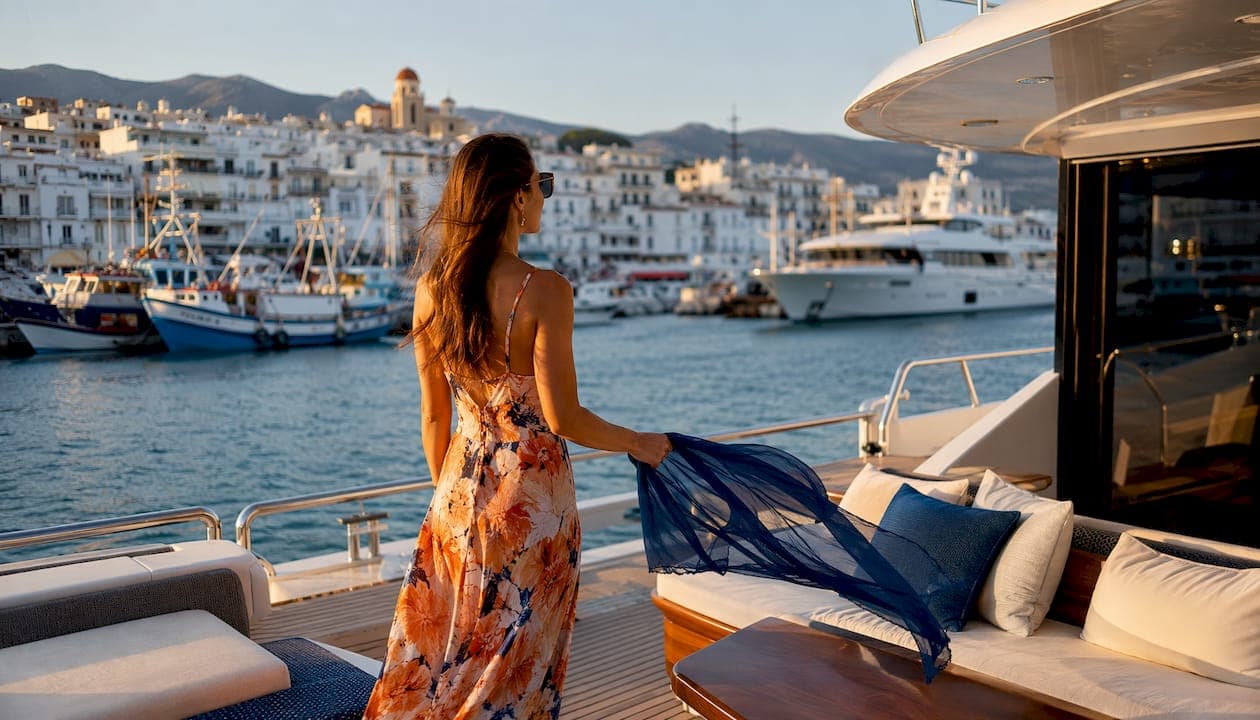
A superyacht charter is the exclusive rental of a professionally crewed luxury vessel, typically 24 meters (approximately 80 feet) or longer, for a set period during which you control the itinerary, meals, pace, and onboard experience entirely. Think of it as a private mobile villa on the water: the yacht moves where you want, stops where you choose, and a dedicated crew handles every detail from sunrise coffee to sunset cocktails.
Most charters run one to two weeks, though shorter and longer arrangements exist. The crew, which typically includes a captain, chef, stewardesses, and deckhands, handles all navigation, housekeeping, provisioning, and guest services. Families, small groups of friends, and corporate parties are the most common charterers; the experience sits firmly between the intimacy of a private home and the service standard of a five-star hotel. Exoticacharters plans and operates fully crewed superyacht charters to some of the world's most remote and extraordinary destinations, and this guide covers everything a U.S.-based traveler needs to know: realistic cost ranges, the booking timeline, top destinations, and what daily life actually looks like onboard.
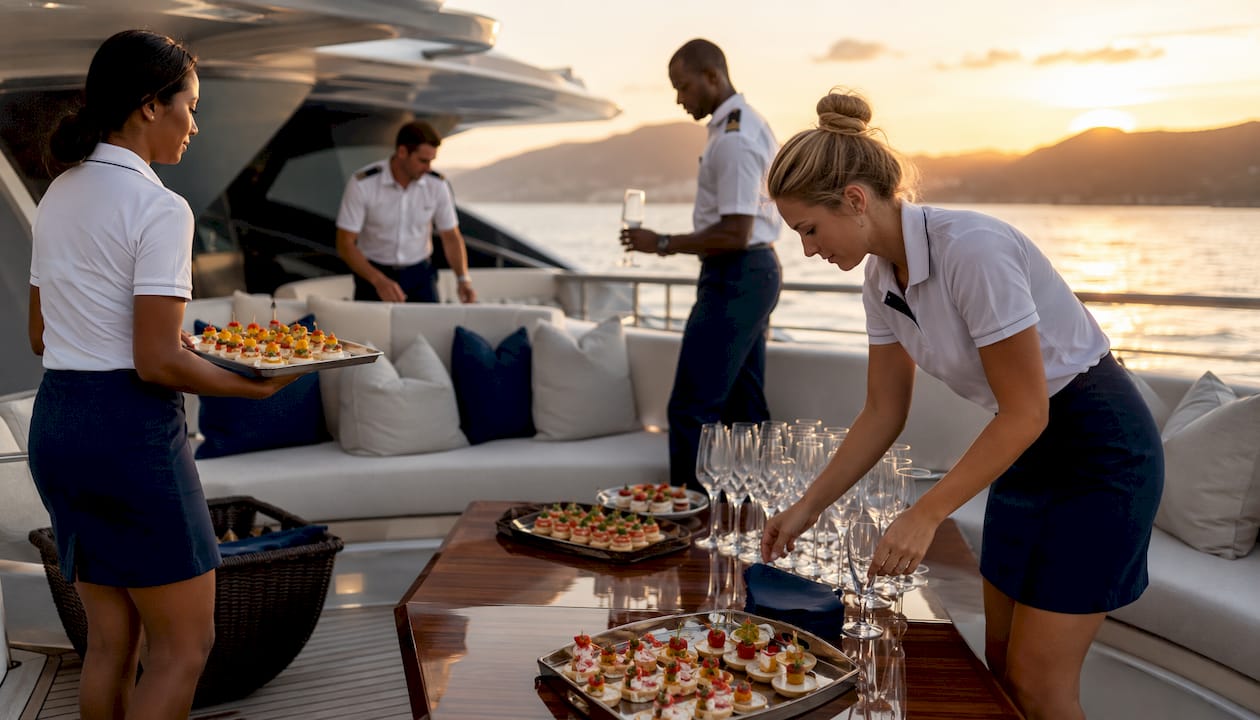
Table of Contents
- What does a superyacht charter actually include?
- How does chartering differ from owning a yacht or taking a cruise?
- Which yacht types and sizes suit your trip style?
- How much does a superyacht charter cost?
- How do you book a superyacht charter, step by step?
- Pre-charter checklist: what to arrange before you board
- Where do superyacht charters go, and when?
- Onboard etiquette, safety, and tipping norms
- How Exoticacharters plans and runs a charter
- Key Takeaways
- Why the "bigger yacht" instinct leads first-time charterers astray
- Plan your charter with Exoticacharters
- Useful sources and further reading
What does a superyacht charter actually include?
Crewed superyacht charters come with a clearly defined set of standard inclusions, and understanding the line between what is covered and what is extra is the single most useful skill when reading a charter proposal.
Standard inclusions
- Exclusive use of the entire yacht for your group
- Full professional crew for the duration (captain, chef, chief stewardess, deckhands)
- Routine fuel for typical cruising distances
- Onboard housekeeping and laundry
- Standard water toys (kayaks, paddleboards, snorkel gear on most yachts)
- Basic provisioning (water, soft drinks, standard pantry staples)
Common extras
- APA (Advance Provisioning Allowance): a prepaid fund, typically 25–35% of the base rate, that covers variable costs including fuel overages, fine wines, specialty foods, port fees, and marina berths
- Crew gratuity, usually calculated as a percentage of the base charter fee, paid at the end
- VAT or local taxes (applicable in some regions; U.S. domestic charters may carry state-level taxes)
- Shore excursions, dive guides, and specialty equipment rentals
- Travel insurance and medical evacuation coverage
Crew roles at a glance
| Role | What they deliver for guests |
|---|---|
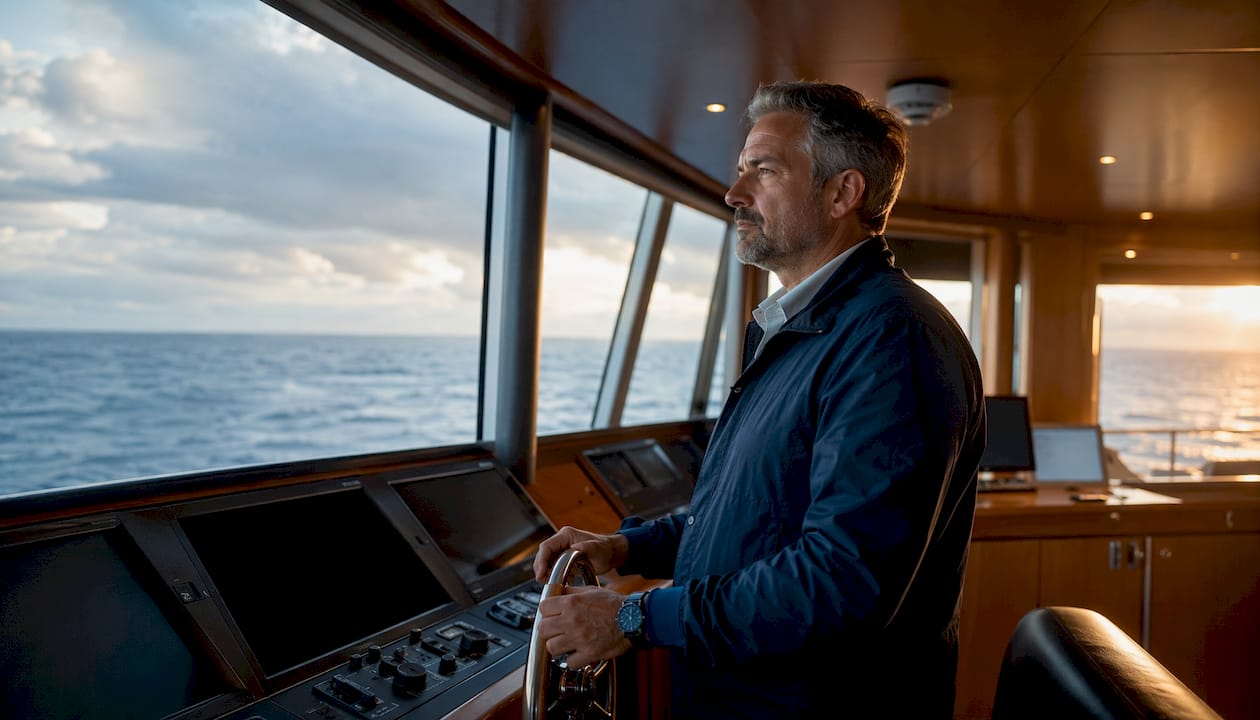
| Captain | Navigation, safety, itinerary execution, and liaison with port authorities |
| Chef | All meals, dietary accommodations, and provisioning management |
| Chief stewardess | Interior service, table settings, guest preferences, and cabin housekeeping |
| Deckhands | Deck operations, water toy deployment, and tender driving |
| Chief officer | Navigation support and safety systems (on larger vessels) |
| Line item | Usually included | Commonly extra |
|---|---|---|
| Crew wages | ✓ | |
| Basic provisioning | ✓ | |
| Standard water toys | ✓ | |
| Routine fuel | ✓ | |
| Fine wines and spirits | ✓ | |
| Fuel overages | ✓ | |
| Port and marina fees | ✓ | |
| Crew gratuity | ✓ | |
| Shore excursions | ✓ | |
| VAT / local taxes | ✓ |
How does chartering differ from owning a yacht or taking a cruise?
Chartering gives you hotel-level service without ownership responsibilities, and far more privacy and itinerary control than any cruise ship can offer. That distinction shapes the entire experience.
Owning a superyacht carries costs that rarely appear in the brochure: annual maintenance runs roughly 10% of the vessel's purchase price, mooring and marina fees accumulate year-round, and a full-time crew requires salaries, benefits, and training regardless of whether the yacht moves. Chartering sidesteps all of that. You pay for the weeks you actually use, and the operator absorbs every operational headache.
Compared to a cruise, the differences are even more dramatic. A cruise ship carries hundreds or thousands of passengers; a superyacht carries your group alone. Cruise itineraries are fixed months in advance and shared with everyone aboard. On a charter, the captain adjusts the route daily based on your preferences, weather, and what the crew discovers locally. You anchor in secluded bays that no cruise ship can reach. Dining happens when you want it, not when a dining-room schedule dictates.
Pro Tip: The crew-to-guest ratio matters more than the yacht's overall length. A 90-foot yacht with six crew for eight guests will almost always deliver a richer experience than a 120-foot vessel with the same crew count for twelve guests. Ask for the ratio before you shortlist.
For those curious about the spectrum of private-boat options, captained boat tours offer a useful contrast: they share the private-captain model but operate on a day-trip scale, without the live-aboard crew, provisioning, or itinerary flexibility that define a superyacht charter.
Which yacht types and sizes suit your trip style?
Superyachts start at 24 meters and scale up dramatically from there. The type and size you choose should follow your trip goals, not the other way around.
Size bands and what they mean practically
- 80–120 ft (24–37 m): Suits groups of 6–10 guests; typically 3–5 cabins; excellent maneuverability for tight anchorages and shallow bays; most accessible price point in the superyacht category
- 120–180 ft (37–55 m): Accommodates 10–12 guests comfortably; larger crew, dedicated gym, multiple deck spaces, and a proper beach club; better stabilization for open-ocean passages
- 180 ft+ (55 m+): Megayacht territory; helicopter pads, multiple tenders, full spa facilities, and crew of 20 or more; suited to large groups or guests who want resort-level amenities at sea
Matching type to trip style
Motor yachts cover distance quickly and offer the most interior volume for their length, making them ideal for families and celebration charters where comfort and speed matter. Sailing yachts suit guests who want the romance of wind-powered travel and a quieter, more immersive connection to the sea. Catamarans provide exceptional stability and wide deck space, a strong choice for families with young children or guests prone to seasickness. Expedition yachts are built for remote, rough-water destinations: reinforced hulls, extended fuel range, and specialist equipment for diving or wildlife observation.
Beyond type and length, stabilizers, tender size, and water-toy inventory often determine comfort and daily activities more than raw footage. A yacht with a large, fast tender opens up shore access that a smaller tender cannot. A well-stocked toy garage, with jet skis, an inflatable slide, and dive compressors, transforms a week at anchor into something genuinely active. We always recommend asking for the full toy and tender manifest before committing to a shortlist.
How much does a superyacht charter cost?
Charters are quoted as a weekly base rate plus an APA to cover variable costs; extras including fuel overages, port fees, and crew gratuity are added on top. Reading a quote correctly means understanding all three layers.
Weekly base rate ranges
Representative pricing across the superyacht category runs roughly as follows:
| Yacht category | Approximate weekly base rate | Notes |
|---|---|---|
| Entry-level superyacht (80–120 ft) | From mid-five figures | Older builds or less-traveled regions |
| Mid-size superyacht (120–180 ft) | — | Most common range for U.S. charterers |
| Large / megayacht (180 ft+) | — | Top-end crew, amenities, and destinations |
APA and total cost
The APA is prepaid before departure and held by the captain as a running tab. At the end of the charter, unused funds are returned; overages are settled on departure. For a base-rate charter, the APA adds a significant upfront cost, bringing the pre-departure commitment higher before gratuity and taxes.
Crew gratuity is customary and typically paid directly to the captain at the end of the trip for distribution among the crew. Budgeting additional funds for gratuity is advised.
Pro Tip: Build a simple three-column budget before you request quotes: base rate, APA (use 30% as a planning figure), and gratuity (use 15%). That total is your realistic trip cost. Anything left in the APA comes back to you.
Regional taxes add another variable. VAT applies in the Mediterranean and varies by flag state and cruising area. U.S. domestic charters may carry state-level sales or use taxes depending on the port and vessel registration. Confirm the applicable tax treatment with your broker before signing.
How do you book a superyacht charter, step by step?
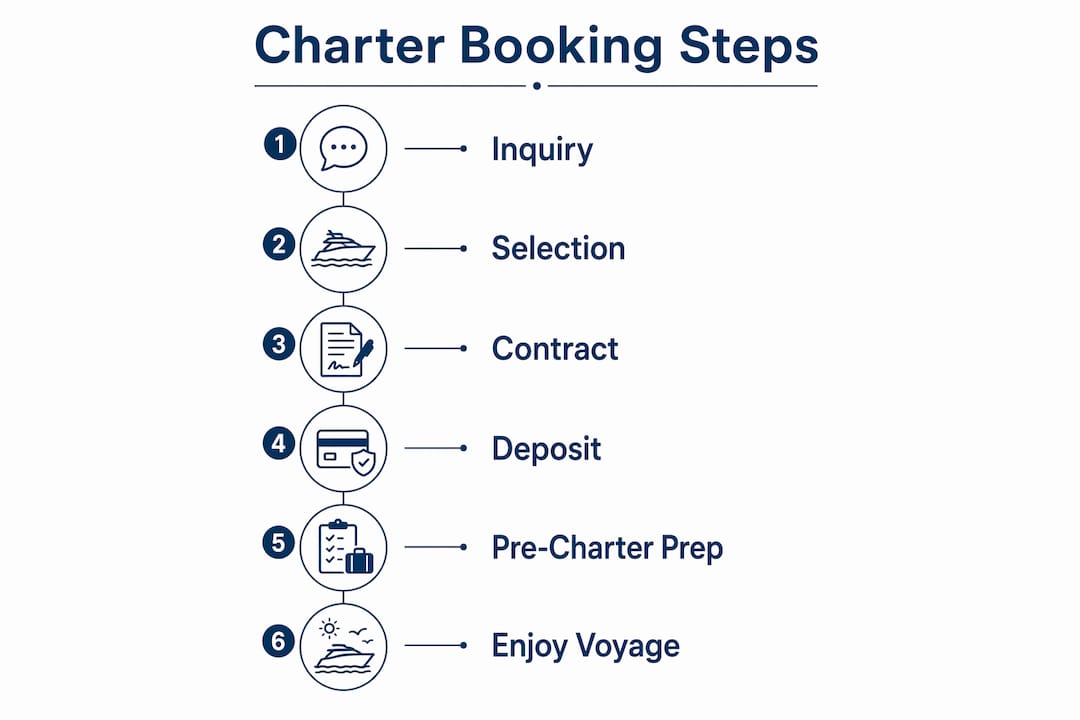
The standard path runs from inquiry through broker consultation, shortlisting, contract signing, and pre-charter planning to embarkation. Most bookings complete in 3–12 weeks, though peak-season yachts in the Mediterranean and Caribbean are often reserved 6–12 months ahead.
The booking sequence
- Inquiry and consultation: Share your group size, preferred dates, destination region, and rough budget with a broker or directly with an operator like Exoticacharters. A good broker narrows the field immediately based on crew fit, itinerary suitability, and availability.
- Shortlist and comparison: Comparing 3–4 yachts side by side reveals meaningful differences in layout, crew setup, and amenities that are invisible in a single listing. Request full spec sheets, crew profiles, and recent guest feedback.
- Contract signing and deposit: A standard charter agreement covers the base rate, APA amount, cancellation terms, fuel policy, guest limits, insurance requirements, and any special requests. A deposit of 50% of the base rate is typical at signing; the balance is due 4–8 weeks before departure.
- APA payment: The APA is usually due 2–4 weeks before embarkation and transferred directly to the captain's provisioning account.
- Travel logistics and visas: Confirm passport validity, visa requirements for each destination, and travel insurance coverage. For remote expedition regions, logistics for getting there often involve connecting flights to smaller regional airports or seaplane transfers.
- Final balance and embarkation: Settle any remaining balance, confirm the provisioning list with the chef, and arrive at the embarkation port with luggage within the agreed weight limits.
Broker vs. owner-direct
Working through a broker gives you access to a broader fleet, independent advice, and negotiating leverage, particularly for first-time charterers who do not yet know which questions to ask. Booking owner-direct can occasionally save the broker's commission (typically 10–15% of the base rate), but you lose the independent advocacy and the broker's liability if something goes wrong. For most U.S.-based charterers, especially those targeting remote or expedition destinations, a specialist broker or operator is worth every dollar.
Contract checklist
Confirm these items in writing before signing:
- Insurance coverage (hull, P&I, and guest liability)
- Cancellation and force-majeure terms
- APA scope and reconciliation process
- Fuel policy (included vs. metered)
- Maximum guest count and overnight guest rules
- Special requests (dietary, dive equipment, celebration setups)
Pre-charter checklist: what to arrange before you board
Confirm your itinerary, provisioning preferences, medical needs, travel documents, and any required permits well before embarkation. Last-minute gaps in any of these areas are the most common source of avoidable stress on a charter.
What to arrange in advance
- Provisioning and dietary requests: Submit a detailed preference sheet to the chef at least two weeks out. Include allergies, dietary restrictions, preferred wines, and any celebration meals.
- Dive and activity equipment: If your charter includes scuba diving, confirm tank capacity, regulator availability, and whether a dive guide is aboard. Expedition charters often include naturalists or wildlife specialists.
- Passports and visas: All passengers need valid passports with at least six months of remaining validity. Research visa requirements for each country the itinerary enters; some remote destinations require advance permits.
- Travel and medical insurance: Standard travel insurance rarely covers medical evacuation from remote anchorages. A policy with helicopter or air-ambulance evacuation coverage is strongly advisable for expedition destinations.
- Shore excursion planning: Discuss planned shore activities with the captain before departure so the crew can arrange permits, local guides, and tender logistics in advance.
- Luggage and packing: Most yachts have limited storage for hard-sided luggage. Soft duffel bags pack into lockers far more efficiently. Reef-safe sunscreen is required on most charters operating in protected marine areas.
Pro Tip: Ask the chief stewardess for a preference form the moment your booking is confirmed, not the week before departure. The earlier the crew knows your group's habits, the more personalized the experience from day one.
Where do superyacht charters go, and when?
The Mediterranean and Caribbean are the two dominant charter seasons; the U.S. market adds compelling domestic options in Florida, New England, and Alaska that suit different travel styles and budgets.
Region-by-region overview
- Mediterranean (May–October): The Balearics, Amalfi Coast, Greek islands, and Croatian coast peak in July and August. Shoulder months (May, June, September) offer better availability, lower rates, and fewer crowds at anchorages.
- Caribbean (November–April): The British Virgin Islands, St. Barts, Antigua, and the Grenadines are the core circuit. Hurricane season (June–November) pushes most yachts north or into the Pacific.
- Florida and the Bahamas (year-round, peak October–May): Accessible from Miami and Fort Lauderdale, this region suits shorter charters and families who want warm water without a transatlantic flight.
- New England (June–September): Nantucket, Martha's Vineyard, and the Maine coast offer dramatic scenery, excellent seafood, and a distinctly American charter experience. New England charters are popular with East Coast families and corporate groups.
- Alaska (June–August): Glacier bays, fjords, and extraordinary wildlife make Alaska one of the most dramatic expedition charter destinations in the world. The season is short and yachts book early.
- Galápagos and South Pacific (year-round, varies by island group): French Polynesia and the Galápagos offer immersive wildlife and diving experiences that no other region matches. Exoticacharters specializes in Galápagos expedition charters, where permits and local knowledge are critical.
Seasonality affects more than weather. Peak-season rates in the Mediterranean run 20–30% higher than shoulder months, and the most sought-after yachts in any region are reserved well in advance. For U.S.-based travelers heading to remote destinations, factor in connecting flight timing and customs clearance windows, which can add a day on each end of the itinerary.
Onboard etiquette, safety, and tipping norms
Follow the captain's lead. That single principle covers most of what you need to know about life aboard a superyacht, but a few specifics make the difference between a good charter and an exceptional one.
Dos and don'ts
- Do attend the safety briefing at embarkation, even if you have chartered before. Each vessel has different emergency equipment locations and procedures.
- Do communicate dietary needs, activity preferences, and daily schedule wishes to the chief stewardess early, ideally the evening before.
- Don't enter crew quarters or the bridge without an invitation. The crew's working and living spaces are off-limits to guests.
- Don't wear shoes on deck unless the captain specifies otherwise. Most yachts operate shoe-free above the waterline to protect teak decking.
- Do respect quiet hours, typically after 11 PM, particularly in marinas where sound carries easily.
- Do supervise children near the water at all times; the crew will assist, but parental responsibility does not transfer.
Tipping norms
Crew gratuity is not included in the charter fee and is considered a professional norm rather than an optional gesture. The standard crew gratuity is commonly calculated as a percentage of the base charter fee, with a mid-range benchmark often used. Tips are typically pooled and distributed by the captain according to crew hierarchy and contribution. Hand the envelope to the captain on the final morning, not the last night, so the crew can focus on departure logistics.
Pro Tip: Before the first dinner, spend ten minutes with the chief stewardess to walk through your group's daily rhythm: preferred wake-up time, how formal you want meals, and whether you prefer the crew to be proactive or to wait to be asked. That conversation shapes the entire week.
How Exoticacharters plans and runs a charter
Exoticacharters uses former captains and water-sports professionals to plan immersive, fully crewed superyacht charters to remote and luxury destinations, bringing genuine operational experience to every stage of the process.
The typical charter flow looks like this:
- Initial consultation: A specialist reviews your group size, destination interests, activity priorities (diving, wildlife, sailing, relaxation), and budget to identify the right vessel and region.
- Yacht selection and crew briefing: The team shortlists yachts based on crew quality, refit status, toy inventory, and itinerary fit, then briefs the selected crew on guest preferences before departure.
- Provisioning and local permits: For expedition destinations like the Galápagos, local park permits, biosecurity requirements, and provisioning logistics are arranged well in advance. These details are where specialist knowledge pays for itself.
- Pre-embarkation briefing: Guests receive a detailed briefing covering safety, daily schedule, itinerary highlights, and what to expect at each anchorage.
- On-charter support: The Exoticacharters team remains available throughout the charter for itinerary adjustments, emergency logistics, and any guest needs that fall outside the crew's scope.
The team's background in captaincy and water sports means they evaluate yachts the way an experienced charterer would: crew-to-guest ratio, refit status, and toy inventory first, headline length second. Exoticacharters holds a strong Trustpilot rating, reflecting consistent guest satisfaction across diverse destinations including French Polynesia, Alaska, and the Galápagos. Their charter insights library covers destination-specific planning in depth for travelers who want to research further.
Key Takeaways
A superyacht charter is the most private, flexible, and crew-supported way to experience the world's most extraordinary waters, with total costs typically running base rate plus APA (25–35%) plus gratuity (10–20%).
| Point | Details |
|---|---|
| Definition and threshold | A superyacht charter is the exclusive rental of a crewed vessel 24 meters (80 ft) or longer, with full itinerary control. |
| Cost structure | Budget base rate plus 25–35% APA plus 10–20% gratuity; mid-size superyachts commonly range $50,000–$250,000 per week. |
| Booking timeline | Most charters book 3–12 weeks out; peak Mediterranean and Caribbean seasons require 6–12 months' advance planning. |
| What to prioritize | Crew-to-guest ratio, refit status, and tender/toy inventory matter more than raw yacht length for guest satisfaction. |
| Exoticacharters | Specializes in fully crewed expedition and luxury charters to the Galápagos, French Polynesia, Alaska, and beyond, staffed by former captains and water-sports professionals. |
Why the "bigger yacht" instinct leads first-time charterers astray
Most people researching their first superyacht charter fixate on length. It is the most visible number in any listing, and it feels like a reliable proxy for quality. In practice, it is one of the least reliable indicators of how good a week you will actually have.
A 120-foot yacht with a tired interior, a crew of four for ten guests, and a tender that barely fits a paddleboard will disappoint in ways that a well-run 85-footer with six crew, a recent refit, and a full toy garage simply will not. The crew-to-guest ratio and upkeep status are the metrics that experienced charterers look at first, and they are the ones most commonly buried in the fine print of a listing.
The same logic applies to destinations. The instinct is often to pick the most famous region: the French Riviera, the Greek islands. These are extraordinary, but they are also the most crowded, the most expensive in peak season, and the least likely to offer the kind of solitude that makes a superyacht charter genuinely different from any other luxury trip. Expedition destinations like the Galápagos or Alaska deliver something no five-star hotel can replicate: genuine remoteness, wildlife encounters that feel unscripted, and anchorages where your yacht is the only vessel in sight. That is where the format truly earns its cost.
We consider the best charter to be the one matched most precisely to what your group actually wants, not the one with the most impressive spec sheet. Crew experience, tender fit, and itinerary flexibility are the three variables we prioritize every time, and they are the ones that determine whether guests come back.
Plan your charter with Exoticacharters
Exoticacharters offers something most charter operators cannot: a team of former captains and water-sports professionals who have personally navigated the remote anchorages, managed the local permits, and run the dive briefings that define an expedition charter. That firsthand knowledge shapes every yacht recommendation, itinerary, and crew selection they make.
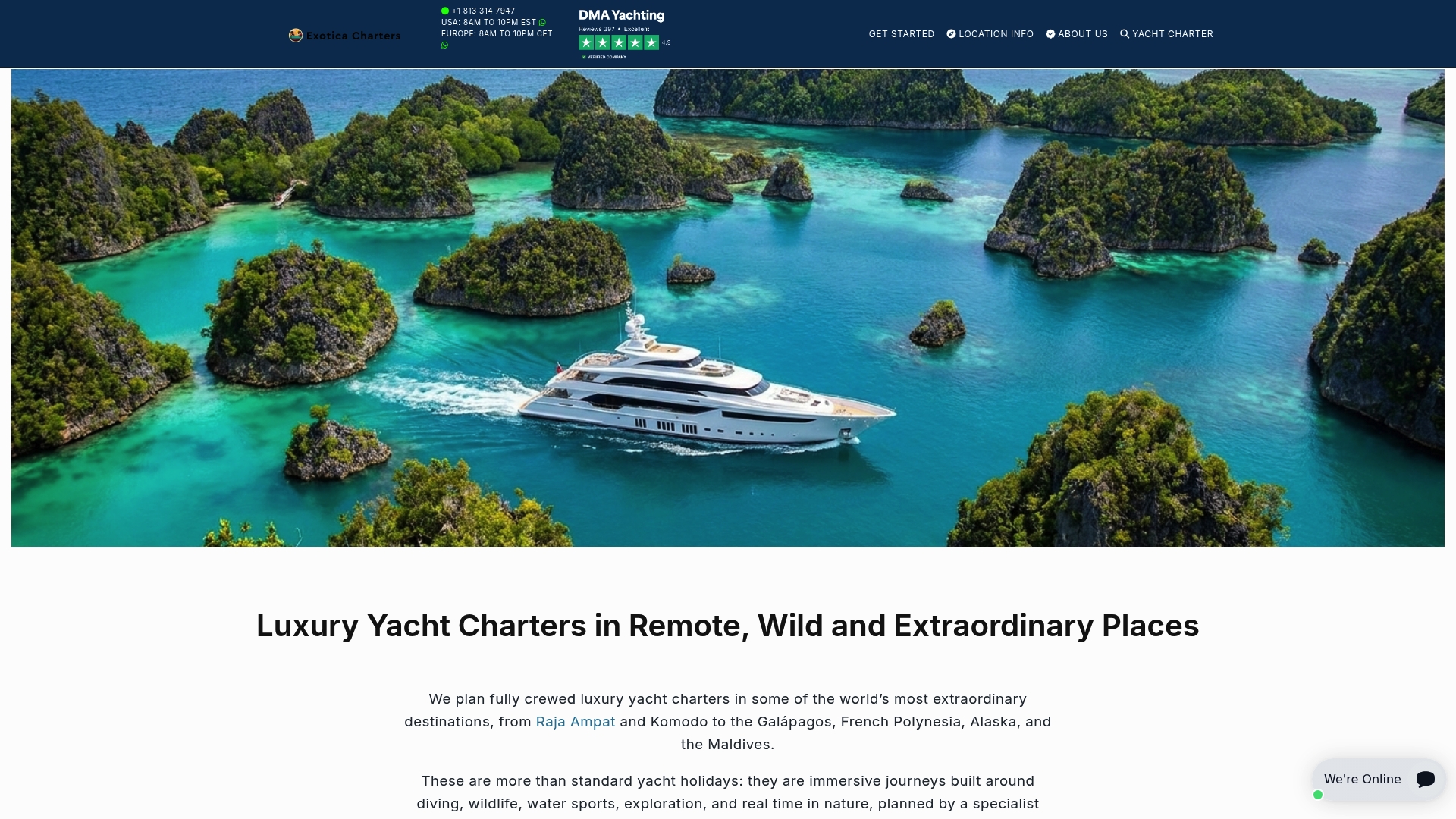
Services include yacht sourcing and shortlisting, bespoke itinerary design, expedition logistics for remote destinations, specialist crew placement, and full pre-charter planning support. Whether you are considering a week in the Galápagos, a sailing circuit through French Polynesia, or a wildlife charter along the Alaska coast, the team can match you with the right vessel and handle every operational detail.
Browse Exoticacharters' luxury yacht fleet to see current availability, or reach out directly to speak with a charter specialist about your dates, group size, and destination priorities.
Useful sources and further reading
- YachtBuyer — Superyacht definition and market overview: Reliable reference for the 24-meter threshold definition and market context used throughout this guide.
- Boat International — charter process and crew guidance: Industry-standard resource for crew role descriptions, refit impact, and charterer considerations.
- YATCO — charter pricing overview: Source for representative weekly rate bands and APA structure used in the pricing section.
- BookYachtCharter — yacht comparison tool: Practical tool for shortlisting yachts side by side; useful for comparing layout, crew, and features.
- Uncompromised Travel — what to expect on a superyacht charter: Clear explainer on service standards above the 24-meter threshold.
- Exoticacharters — Yacht Charter Insights: Destination-specific planning articles and charter guidance from the Exoticacharters team, including expedition regions and crew Q&As.
- Exoticacharters — getting to remote expedition regions: Practical logistics guide for U.S.-based travelers planning charters to the Galápagos, French Polynesia, and Alaska.