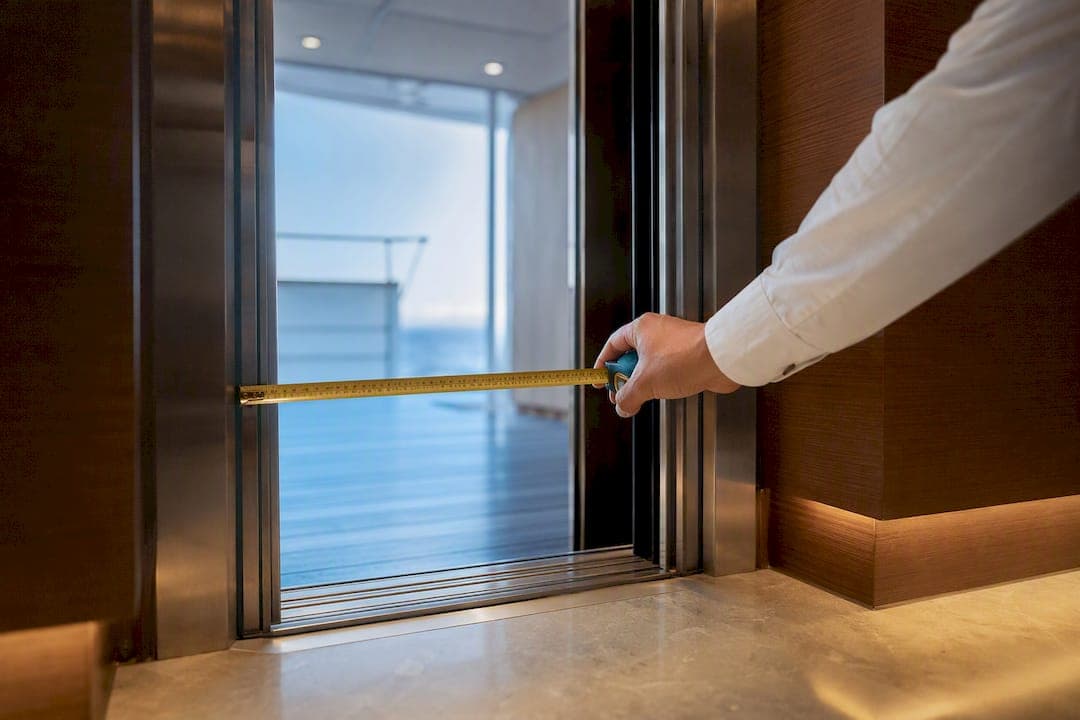
Yes, wheelchair accessible yacht charters exist, from purpose-built vessels with elevators to thoughtfully retrofitted motor yachts and catamarans. The real work starts with a mobility audit: confirm the elevator or lift dimensions, passerelle width, roll-in shower, and tender transfer method before you book anything. Exoticacharters coordinates these specifications directly with owners and crews, then builds a quote around what you actually need.
TL;DR:
- Yachts with true accessibility features typically include wider doors, level boarding ramps, and interior elevators with specified dimensions, not just mentions in listings.
- The size of the yacht significantly influences accessibility; larger yachts often have embedded elevators and wider corridors, while smaller vessels may lack these features.
- Conducting a detailed mobility audit before booking can prevent failures, covering boarding ease, cabin dimensions, shower access, and transfer capabilities.
- Accessible charters generally cost more due to structural modifications, specialized equipment, and the need for trained crew, requiring careful budget planning.
- Prioritize specific measurements and transfer procedures over vague claims of accessibility to ensure the yacht truly meets mobility needs.
Table of Contents
- What Accessibility Features Matter Most on a Yacht Charter
- How Yacht Size Shapes Accessibility and Group Fit
- Running Your Mobility Audit Before You Call a Broker
- What Actually Happens During Boarding and Tender Transfers
- Why Accessible Charters Cost More and How to Plan for It
- Behind the Guidance: How Exoticacharters Handles Accessible Charters
- How to Book an Accessible Charter Without Getting It Wrong
- Get a Mobility-Aware Quote From Exoticacharters
- Sources
What Accessibility Features Matter Most on a Yacht Charter
A yacht's brochure photos rarely tell you whether a wheelchair will fit through its doorways. The details that decide whether a charter works or fails for you are mostly invisible until someone asks the right questions.
Start with the passerelle, the boarding ramp or gangway that connects the yacht to the dock. Level, hydraulic passerelles allow smooth roll-on boarding; older or improvised versions often have a lip or incline steep enough to stop a manual chair cold. Next comes vertical movement between decks. An elevator (sometimes called a lift) is different from a platform lift bolted onto a staircase; you want the interior car dimensions, not just the word "elevator" in the listing.
Bathrooms are where retrofits succeed or fail. A genuine roll-in shower has no curb, a fold-down or fixed bench, and a door at least 32 inches wide, matching the doorway clearances you should be requesting throughout the vessel.
- Passerelle: request width, gradient, and whether it is hydraulic or manual
- Elevator or platform lift: ask for interior car dimensions, not just presence
- Roll-in shower: confirm curb height (should be at or near zero) and door width
- Doorways and corridors: 32 inches minimum for most manual and power chairs
- Grab rails: placement near beds, showers, and cockpit seating
Retrofits can work beautifully, and several operators have adapted older yachts with indoor lifts and level-access cabins with genuine success. But a retrofit installed to satisfy a single prior charter isn't the same as one engineered into the vessel's structure. Ask when the modification was made and by whom.
Pro Tip: Ask for photos of the elevator door open and closed, plus a tape measure against the frame. A verbal "yes, we have an elevator" means nothing without the numbers.
How Yacht Size Shapes Accessibility and Group Fit
Size changes what's physically possible on board, and it changes it quickly. Superyachts in the 45-meter-plus range far more often include true elevators, wider corridors, and step-free circulation between salons, simply because there's structural room to build them in. One recent example, the Benetti Oasis 40.5m Alpha Waves, was designed from the keel up with step-free access and an ADA-referenced elevator, proving that scale and genuine accessibility can go together without compromising the interior's polish.
Smaller yachts and catamarans tell a different story. Catamarans offer excellent stability at anchor and underway, a real advantage for guests prone to seasickness, but they rarely carry elevators and their internal stairs can be tighter than a motor yacht's. If stability matters more than deck-to-deck mobility for your group, a catamaran can still be the right call; if a guest needs to move independently between three decks, it usually isn't.
For multigenerational trips mixing a wheelchair user with grandparents, toddlers, and everyone in between, prioritize in this order:
- Step-free access to at least one full-size cabin and the main salon
- A master or VIP cabin on the same deck as the accessible entry, cutting elevator dependency
- Cockpit and dining areas reachable without a threshold or step
- Enough beam and volume for a motor yacht layout, which typically outperforms sailing yachts on interior width
Bigger isn't automatically better here. It's about matching layout to the specific mix of mobility needs in your group, not chasing length overall.
Running Your Mobility Audit Before You Call a Broker
A mobility audit isn't a formality; it's what stands between a relaxing week on the water and a disaster on day one. The UN World Tourism Organization recommends exactly this audit-based approach for accessible tourism, and it applies directly to chartering.
Work through these steps before contacting any operator:
- Boarding test: Can the guest board via a level passerelle, or will a tender transfer be required at some anchorages?
- In-cabin clearance: Measure the wheelchair's width and turning radius against the cabin's real dimensions, not the yacht's published square footage.
- Shower transfer test: Confirm whether the guest transfers independently or needs assistance, and whether the shower curb height accommodates that.
- Daily transit ability: How many times per day will the guest need to move between decks, and is a lift available every time?
- Medication and equipment storage: Does the cabin have secure, accessible storage for a spare chair, batteries, or medical supplies?
Once you have those answers, request exact specs from the broker: door width in inches, elevator car interior dimensions, passerelle width and gradient, tender step height, and shower threshold height. Then ask the operational questions that don't show up in a spec sheet: does the crew perform assisted transfers, is there an extra staffing cost for that, what's the insurance or medical contingency policy, and will the crew rehearse the boarding sequence before guests arrive.
Pro Tip: Request the same six data points from every yacht you're comparing. Brokers who hesitate to provide them are telling you something about how carefully that yacht has actually been vetted.
What Actually Happens During Boarding and Tender Transfers
Most charter accessibility failures happen not on the yacht itself, but in the ten minutes it takes to get from dock to deck. Passerelle boarding is the gold standard: a wide, low-gradient ramp that a wheelchair rolls across directly. Low-step platform transfers come next, workable if the step height stays modest, generally well under the point where a manual lift becomes necessary. Ladder transfers and unassisted tender transfers are the two scenarios to avoid entirely for most wheelchair users; common transfer obstacles include swim platforms with high freeboard and tender step heights that exceed a comfortable, safe threshold.
If your itinerary includes anchorages without dock access, ask specifically whether the yacht carries a dedicated accessible tender or a boarding lift, and how the crew handles that transfer physically.
- Passerelle boarding: fastest and safest when available
- Platform transfers: fine if step height is low and crew-assisted
- Ladder or unassisted tender transfers: avoid these where possible
- Fewer port calls and sheltered anchorages reduce transfer frequency overall
Stabilizers matter here too. A yacht that pitches and rolls at anchor makes every transfer riskier, so ask about both underway and at-anchor stabilization before you commit.
Why Accessible Charters Cost More and How to Plan for It
Purpose-built accessible superyachts and larger motor yachts carry higher weekly base rates than standard charters of comparable size, mainly because true elevators, widened corridors, and reinforced roll-in bathrooms cost real money to engineer and maintain. Retrofitting an existing yacht adds its own line items: structural modification, specialized lift equipment, and often an additional crew member trained specifically in guest transfers.
Budget for these add-ons directly:
- Extra crew or a dedicated assistant for transfers and daily mobility support
- Specialized or reinforced tenders built for wheelchair boarding
- Travel insurance that explicitly covers mobility equipment and medical contingencies
- Deposit and cancellation terms, which tend to be stricter on purpose-built accessible vessels given limited fleet availability
Seasonality still applies the way it does to any charter: shoulder-season weeks in popular regions run noticeably cheaper than peak summer dates, and booking six to nine months ahead gives your broker room to negotiate crew staffing rather than scrambling to find it.
Behind the Guidance: How Exoticacharters Handles Accessible Charters
Exoticacharters' team is built from former captains and water sports professionals, the people who have actually stood on a passerelle in rough weather and know why a two-inch step height difference matters. That background shapes how the company approaches every accessibility request: not as a checkbox, but as a specification to confirm in writing before a contract is signed.
Clients requesting an accessible charter go through a pre-charter planning call, where mobility needs are matched against confirmed vessel specs, followed by a staff briefing so the crew knows the transfer plan before day one. Exoticacharters' strong Trustpilot rating reflects that same operational discipline applied across luxury yacht itineraries, from wildlife-focused trips to water sports-heavy charters with jet skis and documented, guest-specific itineraries.
How to Book an Accessible Charter Without Getting It Wrong
The conventional advice on this topic, "just ask if the yacht is accessible," is close to useless. Every operator will say yes to some version of that question because "accessible" has no fixed definition in this industry. What actually protects you is specificity: measurements, not adjectives.
The biggest mistake we see is prioritizing destination before mobility fit. Guests fall in love with an itinerary, then discover mid-negotiation that the yacht they want has a spiral staircase and no elevator. Flip that order. Run the mobility audit first, narrow the vessel shortlist to yachts that pass every item on it, and only then start matching those specific yachts to destinations and dates.
The second mistake is treating crew assistance as a given rather than a line item. Ask directly whether transfer assistance is included or billed separately, and get it in writing. A broker who can answer these questions in an email, without hedging, is telling you they've done this before.
— Mo
Get a Mobility-Aware Quote From Exoticacharters
Exoticacharters is the alternative to guessing your way through generic charter listings: instead of hunting through brochures for accessibility clues, you tell Exoticacharters your mobility needs once, and the team matches you to vessels that actually meet them, with specs confirmed in writing before you commit.
Reach out with your guest's mobility requirements (transfer ability, equipment needs, cabin clearance requirements), your preferred travel dates, and any destination preferences. From there, Exoticacharters' team, staffed by former captains who know exactly which questions matter, will shortlist crewed yacht charters that fit and follow up with a pre-charter planning call to confirm every spec before a deposit changes hands. If a purpose-built accessible superyacht fits your group better, the luxury yacht options can be shortlisted the same way. Start by sending your mobility audit results; the quote follows within days.
Sources
Accessibility planning draws on UNWTO's accessible tourism guidance and practical charter checklists like multigenerational family charter planning. For yacht type trade-offs, see itinerary planning for mixed-mobility groups and Exoticacharters' own destination pages.