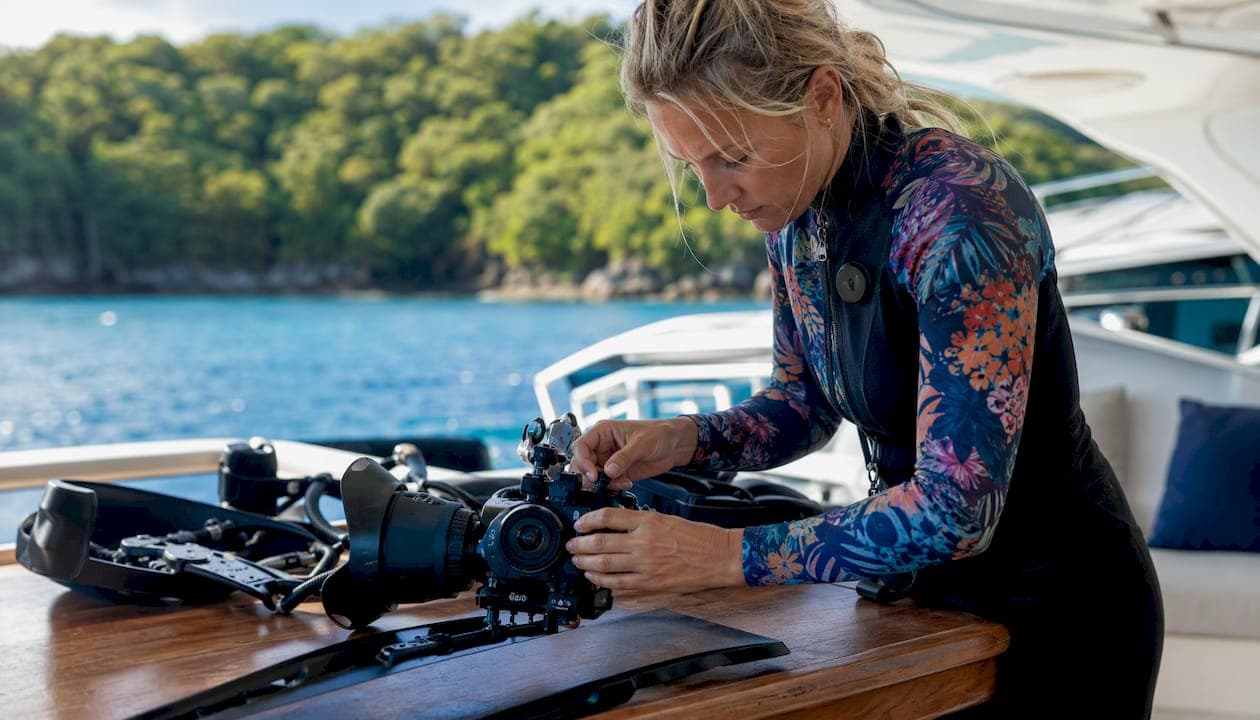
Yes, book the marine biologist. On a luxury, fully crewed yacht charter, adding an expert dive guide turns a good trip into an extraordinary one, and the case is stronger than most guests realize. Private yachts are increasingly matched with scientists to expand research access, and Exotica Charters arranges exactly this kind of pairing for guests who want more than a guided swim.
The rationale is simple:
- Safety improves when someone on board can identify hazardous species before a guest handles or eats one.
- Enrichment deepens because behavior, ecology, and rare sightings get real interpretation, not just a thumbs-up signal.
- Conservation benefits when your dive data feeds into an active research effort instead of disappearing into a memory card.
Key Takeaways
Booking a marine-biologist guide on a luxury charter improves diver safety, deepens wildlife encounters, and lets guests contribute real data to ongoing conservation research.
| Point | Details |
|---|---|
| Safety comes first | A marine biologist identifies hazardous species and toxin risks like ciguatera before they become a problem. |
| Small groups matter | Expect 2 to 5 divers per session, with longer, more deliberate dives than standard trips. |
| Certification is accessible | Open Water certification or equivalent typically covers scuba participation; snorkelers can join surface roles. |
| Conservation is real, not symbolic | Photo IDs and species counts can feed into active monitoring projects like Yachts for Science. |
| Exotica Charters manages the logistics | The team sources qualified specialists, coordinates yacht logistics, and builds the add-on into your itinerary. |
Table of Contents
- Why dive with a marine biologist guide instead of a standard instructor?
- What does a day of expert-guided diving actually look like on board?
- Who should book this, and what certification do you need?
- Does hiring a marine biologist actually support conservation?
- How do you actually arrange a marine biologist for your charter?
- What do past divers say about booking a marine-biologist-guided trip?
- How Exotica Charters brings marine biologists into your itinerary
- Frequently Asked Questions
- Sources
Why dive with a marine biologist guide instead of a standard instructor?
A standard dive guide keeps you safe and on schedule. A marine biologist does that too, then explains why the octopus just changed color, why this reef has three times the fish life of the one you dove yesterday, and which of the two lionfish you just passed is actually venomous to touch. The difference shows up most sharply in three areas.
Safety comes first. A local marine biologist aboard a yacht can flag species linked to ciguatera poisoning, warn about currents around a specific reef structure, and spot early behavioral signs of a marine hazard that a generalist crew member might miss entirely.
Enrichment is where the experience separates from typical charter diving. Instead of a hand signal for "look, a turtle," you get real-time species identification, an explanation of feeding behavior, and better framing for your photos and video. Guests consistently report that trips built around expert-led wildlife encounters feel more educational and memorable, especially when children are on board.
Access matters too. A biologist who knows a region's seasonal patterns can time a dive around a manta aggregation or a rarely visited microhabitat that a generic itinerary would miss by a week.
Pro Tip: Ask your broker whether the marine biologist has dove your specific region before. Local pattern knowledge, not just a degree, is what unlocks rare encounters.
Every dive log your onboard scientist keeps can also become a small contribution to ongoing ocean research, turning a week of diving into something that outlasts the trip itself.
What does a day of expert-guided diving actually look like on board?
Expect a slower, more deliberate rhythm than a resort dive boat. Mornings typically open with a briefing on the day's target species or habitat, followed by one or two longer, research-style dives rather than a rushed double-tank rotation. Afternoons often include surface time for data entry, photo identification, or a short lab session using onboard equipment.
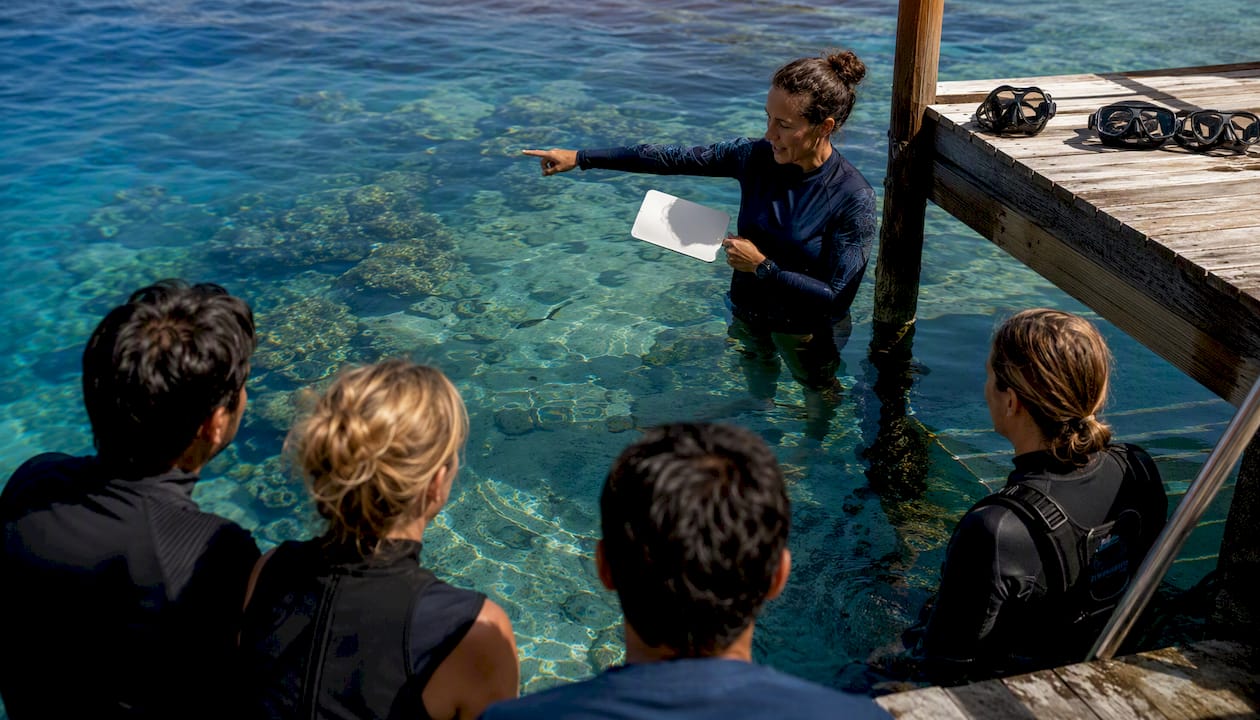
Groups stay small, usually two to six divers, because the value of the experience depends on individual attention and conversation, not throughput. Small-group research dives commonly build in post-dive lab work, which is something a standard dive operation rarely offers.
| Element | What to Expect |
|---|---|
| Group size | Typically 2 to 5 divers per guided session |
| Daily dives | 1 to 2 longer, targeted dives plus optional snorkel time |
| Surface activity | Species ID review, photo cataloging, or basic sample logging |
| Equipment needs | Tender support, a spare crew berth, compact monitoring or camera gear |
| Deliverables | Dive logs, photo identification records, and sometimes data uploads |
A yacht does not need a laboratory to host this well. A spare berth, tender access, and modest kit are often sufficient for meaningful in-water work, which is part of why more owners are open to the idea. The guest experience differs from standard diving mainly in pacing: longer bottom times, more debrief, and dives chosen for what they reveal rather than for a checklist of sites.
Who should book this, and what certification do you need?
This experience suits certified divers, confident snorkelers, and families with older children who are comfortable in the water. You do not need advanced credentials, but a few baseline expectations keep the day running smoothly for everyone.
- An Open Water certification or equivalent is the common minimum for scuba participation in research-style dives.
- Snorkelers and non-divers can still take part through surface observation roles, photo spotting, or lab-side participation once the divers surface.
- General fitness for swimming and moderate current handling matters more than advanced dive count.
- Crews should brief guests on oxygen availability and confirm dive insurance coverage before departure, the same way any expedition-level safety briefing would.
Non-divers are rarely left out. A well-run itinerary builds in family-friendly briefings and surface roles so the whole party gets something from the day, not just the certified guests.
Does hiring a marine biologist actually support conservation?
It can, and this is where the value goes beyond your own trip. Photo identification, species counts, and basic habitat notes collected during a charter can feed directly into regional monitoring projects. The Yachts for Science initiative demonstrated in 2025 that private expedition yachts can reach remote regions research vessels rarely visit, generating new biodiversity data simply by being present with the right expert aboard.
Owners increasingly see this as more than a nice add-on. Industry observers note that charterers now want science-driven experiences, not just leisure activities, and that shift is reshaping how yachts get used in remote cruising grounds.
- Ask whether collected data goes to a named partner project or database, not just an internal file.
- Confirm data ownership terms before the trip if you want credit or a copy of the findings.
- Treat crew involvement as part of the value; many crews gain lasting skills from working alongside a scientist.
Pro Tip: If conservation legacy matters to you, ask your broker for a scientist who already partners with a named monitoring program. That connection is what turns your dive log into usable research.
How do you actually arrange a marine biologist for your charter?
Timing shapes both cost and availability. Requesting a marine biologist three to six months ahead gives your broker room to match a specialist to your region and dates; last-minute requests are possible but limit your choice of expert and itinerary.
Before confirming, ask the provider these questions:
- What are the guide's academic and dive credentials, and have they worked in your specific charter region before?
- How is data shared after the trip, and who owns it?
- What insurance and liability coverage applies to the scientist's presence on board?
- What biosecurity procedures are in place to prevent introducing species or contaminants between dive sites?
Confirm logistics directly with your captain or broker: a spare berth for the scientist, tender availability for dive drops, compressor and gas logistics if you are running multiple dives daily, and table space for any lab or data work.
Pricing typically follows one of three models: a daily rate for the scientist's time, a project-based fee tied to a specific research goal, or inclusion within a specialized itinerary package. A quick inquiry checklist to send your broker should cover timing, credentials, expected deliverables, cost estimate, and biosecurity protocols, all in one message so nothing gets missed.
What do past divers say about booking a marine-biologist-guided trip?
Guests who have added a marine biologist to a charter tend to describe the same shift: the dive stopped being a checklist item and became the centerpiece of the trip. Families report that children who were mildly interested in snorkeling became genuinely engaged once someone explained what they were seeing in real time, a pattern consistent with reporting on how expert-led trips raise perceived trip value for guests of all ages.
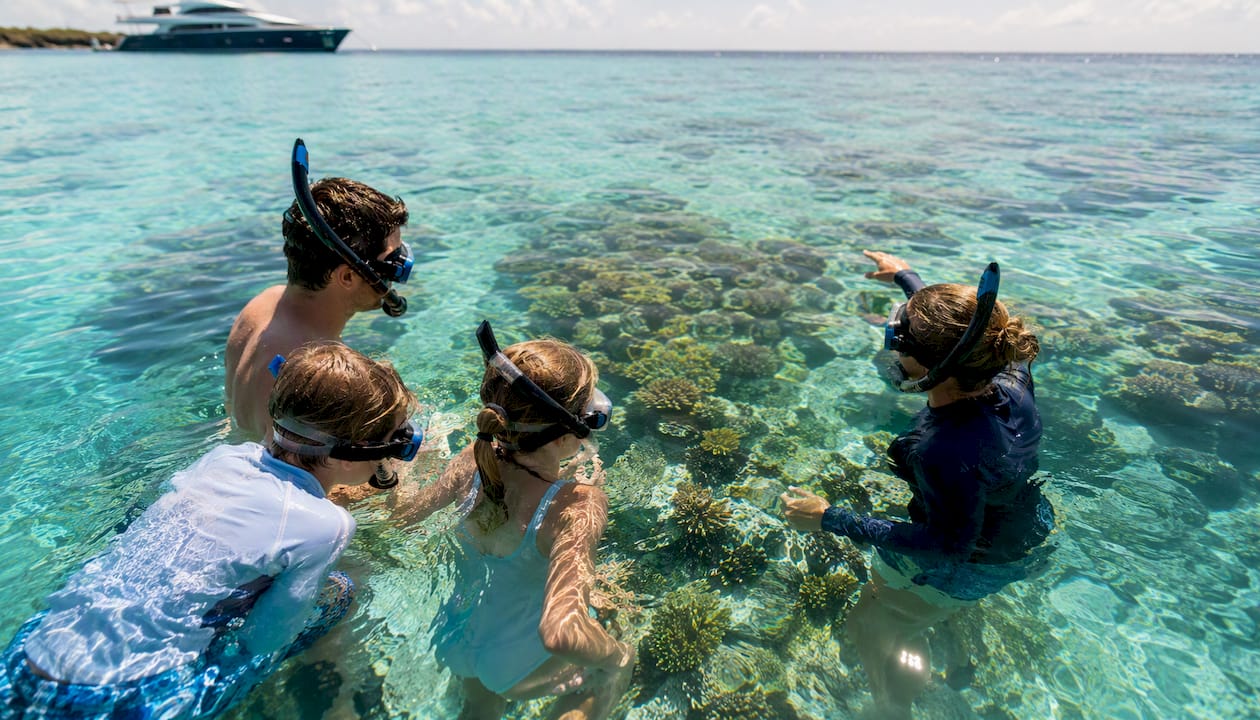
Divers with years of experience often say the surprise was not the marine life itself but the depth of interpretation. Seeing a reef shark is one thing; understanding its role in the local food web, and why its presence signals a healthy reef, changes how the sighting lands. Small-group research-style dives that pair in-water time with post-dive lab sessions consistently produce this kind of deeper engagement compared to a standard guided dive.
Repeat charter guests also mention the social dynamic. A scientist eating dinner with the group and answering questions about the day's dive creates a different atmosphere than a crew member simply logging tank pressures. It becomes a shared project rather than a service transaction, and that shift is often what guests remember longest after the trip ends.
Host perspective: why owners request marine biologists on board
Owners rarely book a scientist for a single reason. It is usually philanthropic curiosity mixed with a genuine wish to give guests something they cannot get on a standard charter. Crew training is part of it too; deckhands who spend a week working alongside a marine biologist often carry that species knowledge into every future season.
A typical pattern looks like this: a planned reef itinerary shifts by a day once the scientist identifies a nearby aggregation worth documenting, and that detour becomes the trip's highlight. Exotica Charters manages this as matchmaker and logistics partner, sourcing the right expert for the region and handling the on-water coordination so guests and captain can focus on the dive itself.
How Exotica Charters brings marine biologists into your itinerary
Exotica Charters sources specialists suited to your destination and matches them to a yacht already equipped for diving, whether that means a scuba-ready vessel in the Red Sea or a remote Pacific route with reef systems most operators never reach.
The team handles the parts guests rarely want to manage themselves: confirming the scientist's credentials, arranging berthing and tender logistics, coordinating briefings with your captain, and setting expectations for post-trip deliverables like dive logs and photo identification records. Concierge planning, permit assistance where needed, and pricing transparency are built into the process from the first inquiry, not bolted on later. If you are already asking what a marine biologist on a crewed yacht actually does, that curiosity is the right starting point for a conversation with the team.
Reach out with your target dates and region, and Exotica Charters will propose a shortlist of yachts and specialists suited to your group size and dive interests. Browse available luxury yachts to see what's currently open for the season, and request a tailored proposal to get pricing and specialist availability confirmed before you commit to dates.
Frequently Asked Questions
Do I need advanced scuba certification to join a marine-biologist-led dive? No. An Open Water certification or equivalent typically covers participation, and non-divers can join through snorkeling or surface-based roles.
How many divers usually join one guided session? Most marine-biologist-led dives run with two to six divers, keeping the group small enough for real interaction and attention.
Does the data collected during these dives actually go anywhere useful? Often yes. Photo identification, species counts, and habitat notes can feed into partner research projects, though it's worth confirming data-sharing terms before booking.
How far in advance should I request this for my charter? Three to six months gives your broker the best chance of matching a qualified specialist to your region; last-minute requests are possible but limit your options.
Is this only for serious divers, or can families enjoy it too? Families do well with this format. Children and non-divers often engage more deeply once someone explains what they're seeing, making it a strong fit for multi-generational trips.
Sources
- Eco-cruising: The benefits of bringing an expert on board
- Matchmaking for superyachts and science – Superyacht Life
- Yachts for science: turning private vessels into ocean discovery platforms - The Islander Magazine
- Research diving with a marine biologist in Crete
Recommended
- What Does a Marine Biologist on a Crewed Yacht Actually Do? – Exotica Charters
- Charter Yachts with Scuba Diving Onboard – Exotica Charters
- Which Crewed Charter Destinations Offer the Best Marine Biology Experiences? – Exotica Charters
- Charter Yachts with Scuba Diving Onboard in selected locations – Exotica Charters