
Travel insurance for yacht charters is a financial necessity, not an optional add-on, because charter contracts lock in large non-refundable deposits and expose travelers to maritime risks that standard travel policies simply do not cover. Understanding why yacht charters require travel insurance starts with one fact: charter contracts require non-refundable deposits locked in well before departure, meaning a single cancellation can cost you tens of thousands of dollars with no recourse. The vessel's own insurance protects the yacht and the charter company's deposit, but it does not protect your personal medical costs, your trip investment, or your ability to get home safely from a remote anchorage. Specialized sailing insurance fills that gap. This guide explains exactly what coverage you need, when to buy it, and what mistakes to avoid before you step aboard.
Why yacht charters require travel insurance beyond standard policies
Standard travel insurance is built for hotel stays and flights, not for week-long voyages to the Galápagos or the Aegean. The coverage gaps become dangerous the moment you leave the dock.
The most critical gaps fall into four areas:
- Offshore medical emergencies. A helicopter medevac from a remote island costs €8,000–15,000 and is not covered by standard health cards or basic travel policies. For island-hopping charters in French Polynesia or Alaska, this is a real and frequent risk.
- Trip cancellation from yacht-specific causes. Mechanical breakdown or cessation of service of the yacht itself is a covered reason under specialized policies. Standard trip interruption coverage excludes vessel operational failures entirely.
- Water sports and crewing exclusions. Standard travel insurance excludes crewing a vessel and most water sports activities. Sailing-specific plans that cover on-water incidents are available for approximately €40–80 per person per week, which is a modest price for the protection they provide.
- Personal belongings onboard. Gear lost or stolen from a shared vessel falls into a coverage gray zone. Specialized yacht policies address this directly, while standard plans often exclude items left unattended on a boat.
Pro Tip: Ask your insurer specifically whether "crewing a vessel" and "recreational water sports" are covered before purchasing any policy. If the answer is vague, the policy is wrong for a yacht charter.
Liability is another layer worth noting. On a shared vessel, incidents involving other guests or crew can create personal liability exposure. Sailing-specific policies include liability protection that standard travel insurance does not offer. The importance of travel insurance for yacht charters becomes clear when you map each of these risks against what a generic policy actually pays out.
How do weather cancellations affect yacht charter insurance?
Weather is the single most unpredictable variable on any sailing trip, and standard insurance handles it poorly. The gap between what travelers expect and what policies actually pay is where most disputes happen.
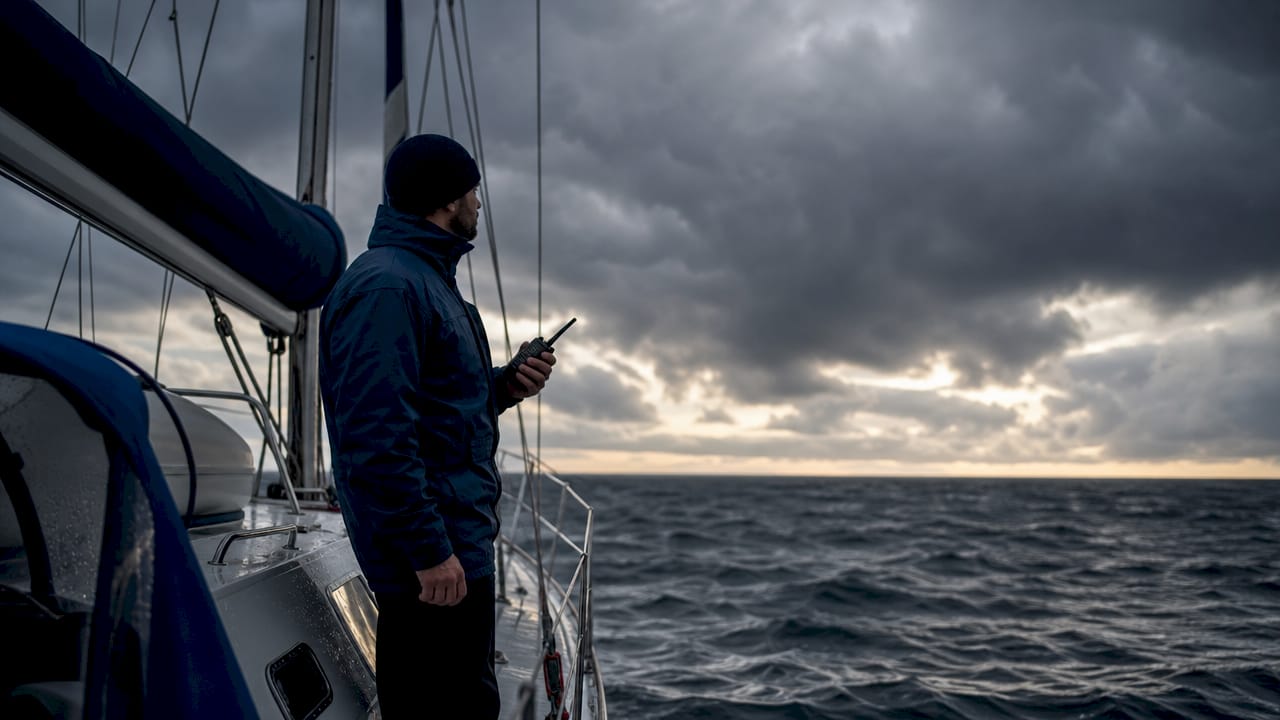
Standard trip cancellation policies cover weather only under one strict condition: a named storm with an official government warning in effect during your travel dates. That sounds reasonable until you realize how many severe disruptions fall outside that definition.
| Weather Event | Covered by Standard Policy? | Covered by CFAR Add-On? |
|---|---|---|
| Named hurricane with official warning | Yes | Yes |
| Tropical wave causing dangerous seas | No | Yes |
| Meltemi winds in the Aegean | No | Yes |
| Persistent fog preventing departure | No | Yes |
| Unnamed storm system | No | Yes |
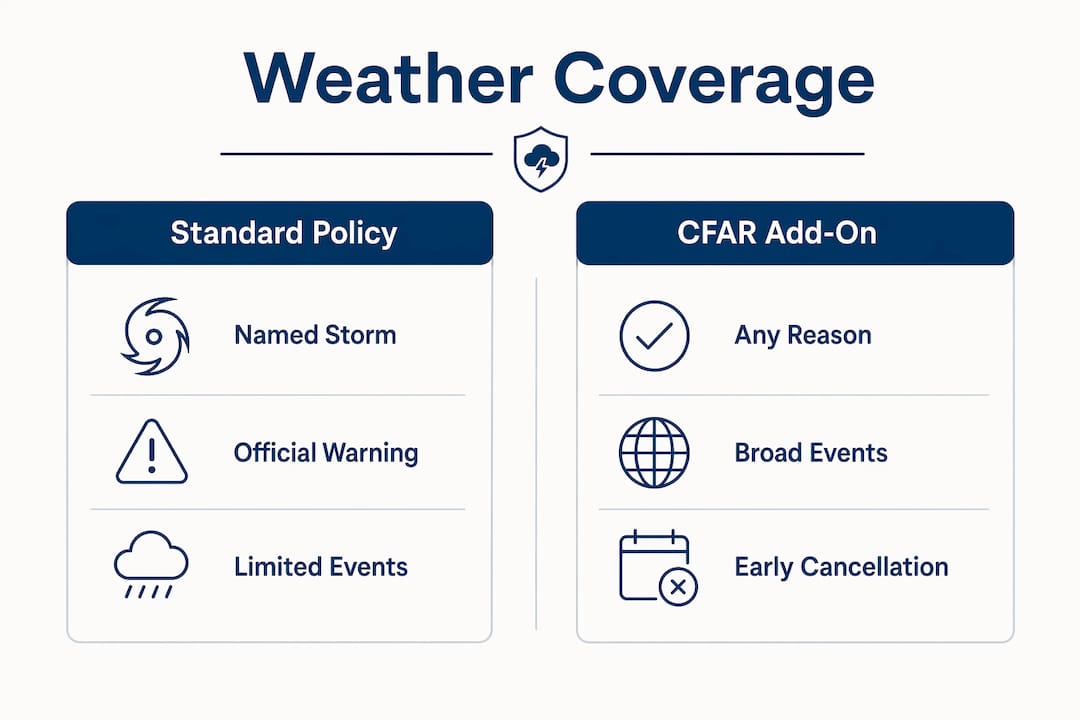
Standard policies exclude many severe weather events that routinely disrupt charters. Meltemi winds in Greece, for example, can ground a vessel for days without ever reaching named-storm status. Tropical waves in the Caribbean create dangerous conditions without triggering official warnings. These are not edge cases. They are common seasonal realities.
Cancel For Any Reason (CFAR) coverage is the solution. CFAR add-ons increase the base premium by 40–60% but cover up to 75% of non-refundable costs when standard policies fail to trigger. For a $30,000 charter, that translates to roughly $700–$1,200 in additional premium to protect against losses that a standard policy would deny entirely. That math favors CFAR almost every time.
Pro Tip: CFAR coverage requires you to cancel at least 48–72 hours before departure, depending on the insurer. Waiting until the morning of departure to cancel forfeits the benefit.
Exoticacharters operates in destinations like French Polynesia and the Galápagos where weather windows are narrow and conditions can shift without warning. Understanding your charter cancellation policy before you book is the first step. Pairing that knowledge with a CFAR-enabled policy is the second.
When should you buy yacht charter travel insurance?
Timing is the most underestimated factor in yacht charter travel insurance. Buy too late and you lose access to the two most valuable features: pre-existing condition waivers and CFAR coverage.
The critical purchase window is 1–21 days after your initial deposit. Here is why that window matters so much:
- Pre-existing condition waivers activate only within this window. If you have a medical condition diagnosed before your policy purchase date, a late-purchased policy will exclude it. Buying within 21 days of your deposit locks in a waiver that protects you regardless of prior health history.
- CFAR eligibility closes after the window. Most insurers will not add CFAR to a policy purchased more than 21 days after the first trip payment. Once that window closes, you are left with standard weather coverage only.
- Named storm exclusions apply to late purchases. Late purchase of travel insurance invalidates coverage for named storms that form after the policy is issued but before departure. If a hurricane is already named when you buy, it is excluded immediately.
- Insure 100% of prepaid costs from day one. Proper insurance requires covering all prepaid expenses including VAT, transfers, and excursions, not just the base charter fee. Insuring a partial amount limits your maximum claim payout proportionally.
- Keep documentation ready. Charter company statements confirming non-refundable amounts, booking confirmations, and payment receipts are all required for a successful claim. Collect these at the time of booking, not after an incident occurs.
The practical takeaway is simple: buy your policy the same week you pay your deposit. Waiting until a few weeks before departure is the most common and most costly mistake travelers make.
What are the most common yacht charter insurance mistakes?
Travelers who book yacht charters often carry assumptions from past vacations that do not apply at sea. These misconceptions lead to real financial losses.
- Assuming vessel insurance covers personal costs. The charter company's insurance protects the yacht and the company's financial interest. Charter insurance does not cover personal medical costs or trip cancellation losses. These require a separate personal travel insurance policy.
- Expecting standard travel insurance to cover sailing activities. Most standard plans exclude water sports or limit coverage by vessel type and offshore distance. A policy that covers snorkeling from a beach resort does not automatically cover diving from a moving yacht 20 miles offshore.
- Underinsuring total trip costs. Travelers frequently insure only the base charter fee and forget VAT, pre-charter flights, hotel nights, guided excursions, and transfer costs. Underinsuring non-refundable expenses means the insurer pays only a fraction of actual losses at claim time.
- Failing to verify evacuation coverage limits. Medical evacuation limits vary widely between policies. A policy with a $50,000 evacuation limit sounds generous until a medevac helicopter from a remote Pacific atoll costs $80,000. Verify the limit matches the geography of your charter.
- Skipping coverage for sailboat charters specifically. Sailing vessels carry different risk profiles than motor yachts. Confirm your policy covers the vessel type you are booking.
Each of these mistakes is avoidable with a single focused review of your policy wording before purchase. Read the exclusions section first, not last.
Key Takeaways
Yacht charter travel insurance is a specialized product that protects travelers against financial loss, offshore medical emergencies, and weather disruptions that standard travel policies exclude entirely.
| Point | Details |
|---|---|
| Buy within 21 days of deposit | Waiting longer eliminates pre-existing condition waivers and CFAR eligibility. |
| Add CFAR for weather protection | CFAR covers up to 75% of non-refundable costs when standard weather clauses fail. |
| Insure all prepaid costs | Include VAT, excursions, and transfers to avoid partial claim payouts. |
| Verify water sports coverage | Standard plans exclude crewing and offshore activities; sailing-specific policies do not. |
| Medevac costs are extreme | Helicopter evacuation from remote anchorages can reach €15,000 and requires dedicated coverage. |
Why I think most travelers get this completely wrong
Most travelers treat yacht charter insurance the way they treat travel insurance for a city break: something to buy the week before departure, mostly for flight delays and lost luggage. That approach works fine for a hotel in Barcelona. It fails completely on a crewed charter in the Coral Sea.
The financial exposure on a yacht charter is categorically different. You are not protecting a $400 hotel deposit. You are protecting a $20,000 to $50,000 commitment, often paid months in advance, in a contract that offers zero refunds. The vessel's insurance covers the boat. Nothing else covers you unless you buy it yourself.
What I find most striking is how few travelers ask about mechanical breakdown coverage. If the yacht's engine fails on day two of a ten-day charter, your trip is effectively over. A specialized policy treats that as a covered trip interruption. A standard policy treats it as your problem. That single difference can mean the difference between recovering your costs and absorbing a total loss.
My advice: treat insurance as part of the charter booking process, not an afterthought. The same week you wire your deposit, buy your policy. Read the exclusions before the benefits. And if your charter takes you somewhere genuinely remote, like the Galápagos or French Polynesia, price in CFAR and medevac coverage as non-negotiable line items.
— Mo
Planning a charter? Protect your investment from the start
Exoticacharters specializes in fully crewed voyages to some of the world's most extraordinary destinations, from the wildlife-rich waters of the Galápagos to the dramatic anchorages of French Polynesia and Alaska. These are not trips you reschedule lightly, and the financial commitment reflects that.
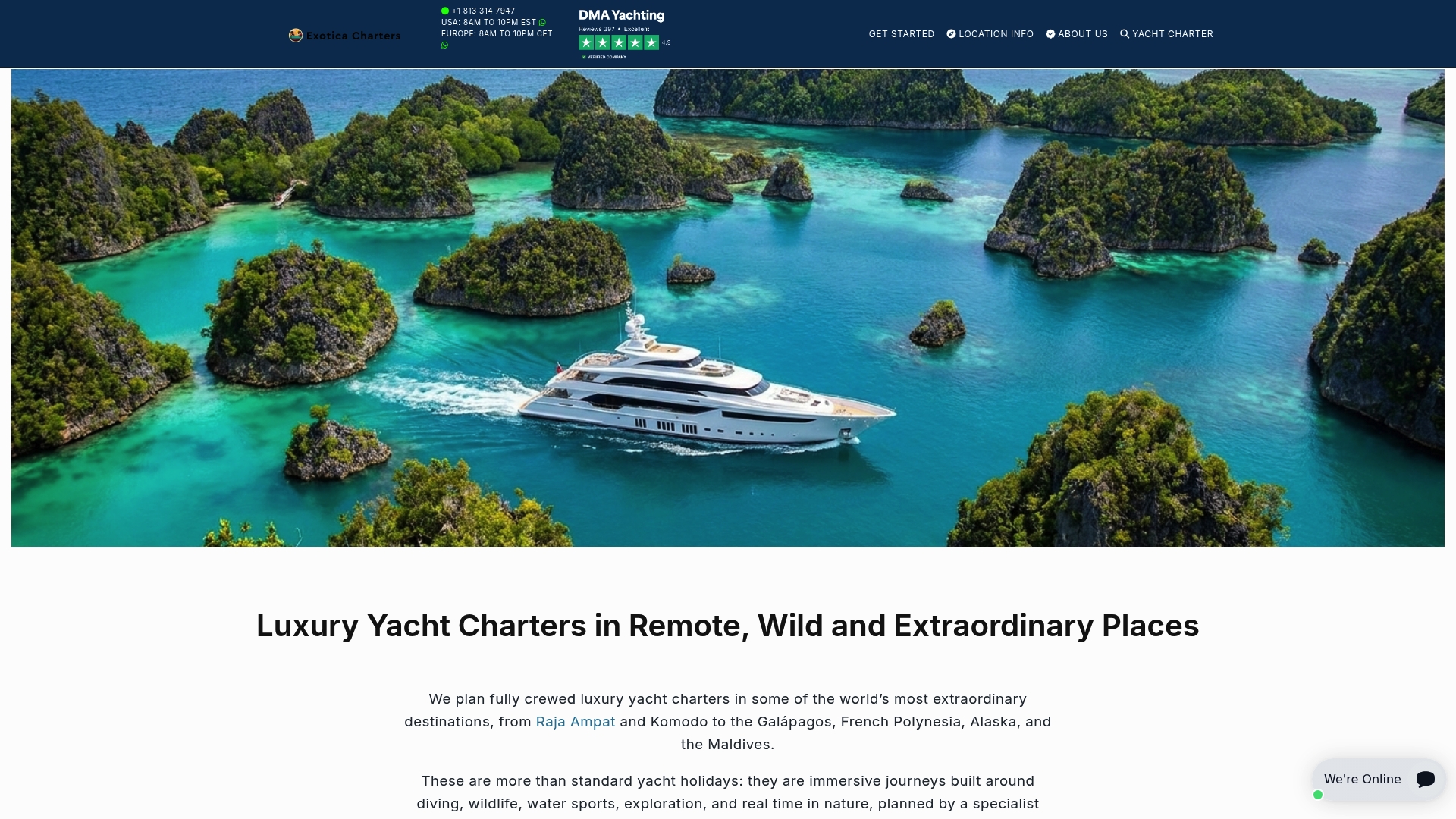
Pairing the right charter with the right insurance coverage is part of planning any serious expedition at sea. Browse the full collection of luxury yacht options to find the vessel and destination that fits your vision, then build your insurance around the specific costs and geography of that trip. The Exoticacharters team, made up of former captains and water sports professionals, can walk you through what to expect on the water so you can make informed decisions about the coverage you need before you ever leave the dock.
FAQ
Does the charter company's insurance cover me personally?
No. Charter insurance protects the yacht and the company's financial interest. Personal medical costs, trip cancellation losses, and evacuation expenses require a separate personal travel insurance policy.
How much does sailing-specific travel insurance cost?
Sailing-specific plans covering on-water incidents cost approximately €40–80 per person per week. Adding CFAR to a $30,000 charter costs roughly $700–$1,200 in additional premium.
What is the best time to buy yacht charter travel insurance?
Buy your policy within 1–21 days of your initial deposit. This window unlocks pre-existing condition waivers and CFAR eligibility that are unavailable with late purchases.
Does standard travel insurance cover weather cancellations on a charter?
Standard policies cover weather only when a named storm carries an official government warning during your travel dates. Common disruptions like Meltemi winds or unnamed tropical systems are excluded without CFAR coverage.
What costs should I include when calculating my insured trip amount?
Include every prepaid, non-refundable expense: the base charter fee, VAT, pre-charter flights, hotel nights, guided excursions, and transfers. Insuring only the base fee results in partial payouts at claim time.