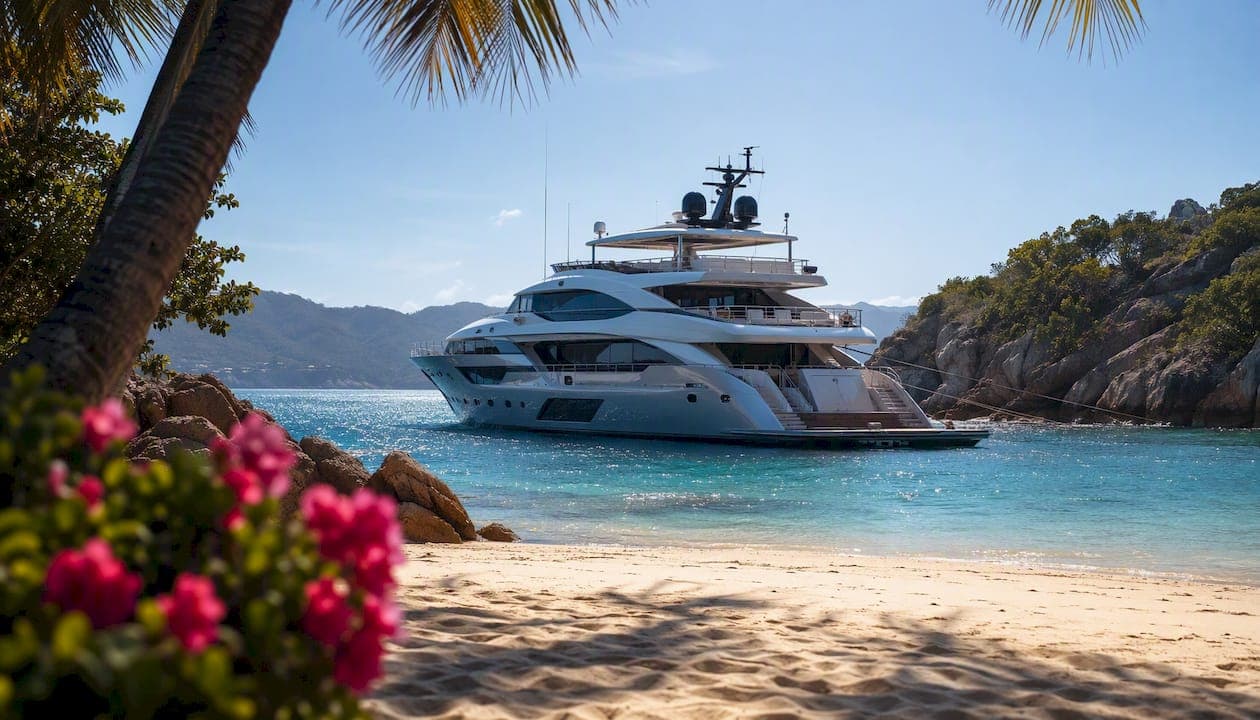
Most private yacht charters are booked for one week, typically running Saturday to Saturday. That said, charter trip duration ranges from a few hours to several months, and the right length depends almost entirely on what you want to do.
Here are the four shapes most charters take:
- Half-day or full day (4–10 hours): Celebrations, corporate events, or a first taste of life on the water. A separate day-charter fleet handles most of these.
- Mini-week or multi-day (2–5 days): Two or three anchorages, a short coastal route, or a long-weekend escape. Available but often priced at a premium per day.
- One-week / 7-night charter: The industry standard. Enough time for five or six distinct anchorages, real provisioning, and genuine relaxation.
- 10+ day expedition or repositioning charter: Remote archipelagos, wildlife-focused itineraries, or passages that need extra transit days. The natural fit for destinations like the Galápagos, French Polynesia, or Alaska.
A simple decision rule: choose a day charter for events and first-timers, a mini-week when your schedule is tight, a full week when you want a real voyage, and 10+ days when the destination demands it.
Pro Tip: Book the longest duration your schedule and budget allow. The fixed costs of mobilizing a crew and provisioning a yacht are spread across every day you're aboard, so a longer trip almost always delivers better value per day.
Key Takeaways
The weekly 7-night charter is the industry standard for good reason: it balances cost efficiency, itinerary depth, and crew logistics better than any other duration.
| Point | Details |
|---|---|
| Weekly is the standard | Most operators book 7-night charters; shorter trips are available but typically cost more per day. |
| APA adds 25–35% to base rate | Budget for the Advance Provisioning Allowance on top of the base charter fee for every trip. |
| Expedition trips need 10+ days | Remote destinations like the Galápagos or Arctic require extra days for transit and weather contingency. |
| Schedule gaps unlock short charters | Brokers can find prorated 3–5 day bookings when yachts have gaps between confirmed charters. |
| Exoticacharters for week and expedition trips | Exoticacharters matches fully crewed luxury yachts to week and 10+ day itineraries in remote destinations worldwide. |
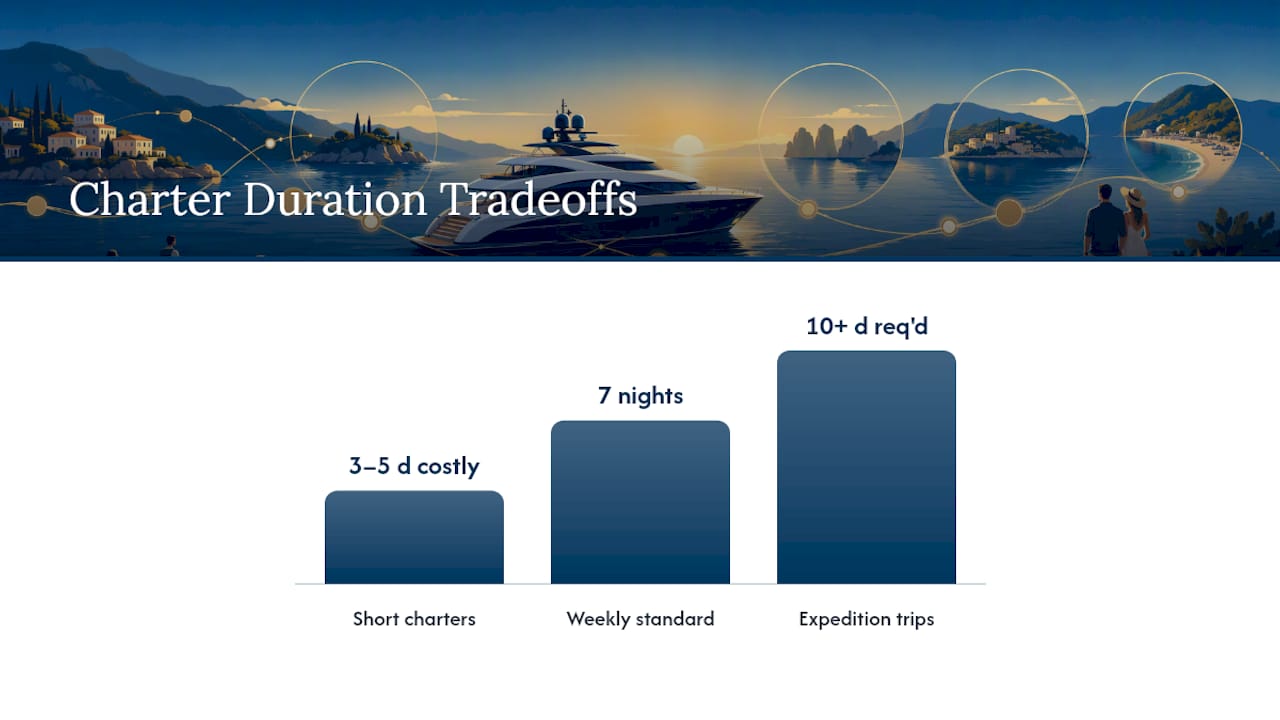
Table of Contents
- What does "yacht charter duration" actually mean in industry terms?
- How does charter length change what you pay?
- What are the minimum-stay rules, and when can you book shorter?
- Sample itineraries for every charter length
- Bareboat, skippered, or fully crewed — how does duration steer the choice?
- What to pack and what to expect onboard
- How to choose the right charter duration for your trip
- Why fully crewed charters suit week and 10+ day trips best
- What experienced charter planners know that most guides skip
- Planning a week or expedition charter with Exoticacharters
- Sources
What does "yacht charter duration" actually mean in industry terms?
The phrase "yacht charter duration" is the planning term; the industry itself uses a handful of specific labels, and knowing them prevents confusion when you're reading contracts or talking to a broker.
Half-day charter: Typically 4–5 hours, often morning or afternoon. Common for corporate events, birthday parties, and sunset cruises. Pricing is usually per hour or as a flat half-day rate.
Day charter: 6–10 hours on the water, returning to the same marina at the end. A distinct market with its own fleet of smaller vessels, separate from the overnight charter world.
Mini-week or multi-day charter: Two to five nights aboard. Operators may call these a "3-day escape," "long-weekend charter," or "mini-week." Contracts for these are structurally similar to weekly charters but prorated. The term "mini-week" is common in the Mediterranean; U.S. operators sometimes call the same product a "short-term charter."
Weekly / 7-night charter: The standard booking unit across most of the world. Contracts typically run Saturday to Saturday, though some Caribbean operators use Monday to Monday. When a broker quotes you a "base rate," they almost always mean the weekly rate.
On a crewed charter, the count is usually nights aboard, not days underway. A 7-night charter gives you eight calendar days: embarkation afternoon on Day 1 and disembarkation morning on Day 8. That distinction matters when you're planning port visits and provisioning stops.
Expedition or 10+ day charter: Any booking that extends beyond a standard week. These range from 10-night itineraries to multi-month repositioning passages. Expedition charters are the norm for remote destinations where travel time to the first anchorage alone can consume two days.
How does charter length change what you pay?
Pricing on a crewed yacht has two main components: the base rate (the weekly or daily fee for the vessel and crew) and the APA, or Advance Provisioning Allowance. At the end of the trip, the captain reconciles actual expenses against the APA and either returns the surplus or invoices for any overage.
The base rate is almost always quoted weekly. Most operators offer charters on a weekly basis, and a week remains the operational standard because it simplifies crew scheduling, provisioning runs, and marina logistics. When you book fewer than seven nights, operators typically prorate the base rate, but the APA does not shrink proportionally. Fuel costs, port fees, and provisioning don't scale neatly with a shorter trip, so the per-day cost on a 3-day charter is often noticeably higher than on a 7-day booking.
To illustrate the shape of that difference: a sample listing in the Adriatic shows a 7-day voyage priced at €17,850 and a 3-day escape on the same vessel at €8,100. The 3-day option works out to €2,700 per day versus €2,550 per day for the full week — a modest gap on a smaller vessel, but the difference widens significantly on larger yachts where fixed crew costs are higher.
What to ask your broker:
- Is the APA prorated for shorter charters, or is it a fixed minimum?
- Are port fees and fuel included in the APA or billed separately?
- Does the vessel charge crew overtime for late returns or early departures?
- Are there marina switch fees if you change your embarkation port?
Pro Tip: On a week-long charter, ask the captain to anchor out rather than marina-berth every night. Marina fees in popular ports can add $200–$600 per night to your APA, and anchoring is often the more dramatic experience anyway.
What are the minimum-stay rules, and when can you book shorter?
Most crewed charter yachts require a minimum of seven nights. This isn't arbitrary: a full crew needs a viable income per trip, and the logistics of provisioning, passage planning, and customs clearance rarely justify mobilizing for two nights. Day-charter fleets operate as a separate market with smaller vessels and no overnight component, so they have no minimum beyond a half-day.
Where shorter crewed charters do appear, they tend to fall into two situations. First, shoulder-season gaps: when a yacht has an unbooked week between confirmed charters, operators sometimes release those days at prorated rates rather than leave the vessel idle. Second, specific regional markets, particularly in the Caribbean and parts of Southeast Asia, where 3–4 night charters are a recognized product rather than an exception.
The best short-charter deals almost always come from schedule gaps. A broker who knows the fleet can identify a yacht with three open days between bookings and negotiate a prorated rate that benefits both sides. These opportunities rarely appear on public listing sites — they're brokered directly.
Booking lead times and deposits vary by season and destination. For peak-season Caribbean or Mediterranean charters, booking 6–12 months ahead is standard. Shoulder-season or last-minute gap charters can sometimes be confirmed within weeks. Cancellation penalties are usually tiered: a cancellation more than 90 days out may forfeit only the deposit, while cancellations inside 30 days often forfeit the full charter fee.
Pro Tip: Ask your broker specifically about "schedule gap" availability if your dates are flexible. A 4-day gap charter on a vessel you couldn't otherwise afford can be one of the best-value bookings in the market.
Sample itineraries for every charter length
Seeing what each duration actually looks like on the water is the fastest way to decide which one fits your trip.
Half-day and full-day charters
A half-day runs 4–5 hours and suits events: a birthday on the water, a corporate outing, or a sunset sail with 10–12 guests. A full day (6–8 hours) allows a coastal run to a nearby anchorage, a swim stop, lunch aboard, and a return to the marina by late afternoon. These are event-driven, not exploration-driven.
Three-day mini-charter
- Day 1: Embark mid-afternoon, depart marina, anchor in a sheltered bay for the first night.
- Day 2: Morning snorkel or water sports, sail to a second anchorage or small port, dinner ashore.
- Day 3: Morning at leisure, return passage to home marina, disembark by noon.
Realistic expectation: two anchorages, one port visit, and a comfortable pace. The per-day cost is higher than a weekly booking, and three days rarely justifies the travel time to a remote destination. For family groups or first-timers testing the experience, it works well.
Seven-day / one-week charter
A 7-night weekly charter typically allows five or six distinct anchorages, one or two longer transit days, a provisioning stop, and genuine leisure time. A sample week might look like this:
- Day 1 (Saturday): Embark, provision, short afternoon sail to first anchorage.
- Day 2: Explore a coastal town, swim, snorkel.
- Day 3: Longer transit day to a new area; sundowner at anchor.
- Day 4: Leisure day, water sports, diving, or hiking ashore.
- Day 5: Visit a local market or historic port.
- Day 6: Final anchorage, farewell dinner aboard.
- Day 7 (Saturday): Return to base marina, disembark by 9–10 AM.
This is why the week is the industry standard: it gives the itinerary room to breathe without feeling rushed.
Ten-plus day expedition charter
Expedition itineraries in remote destinations like the South Pacific or the Arctic typically run 10–21 days. Two or three of those days are pure transit to and from the remote zone. The remaining days are dense with wildlife encounters, diving, or shore excursions that simply aren't possible on a shorter trip.
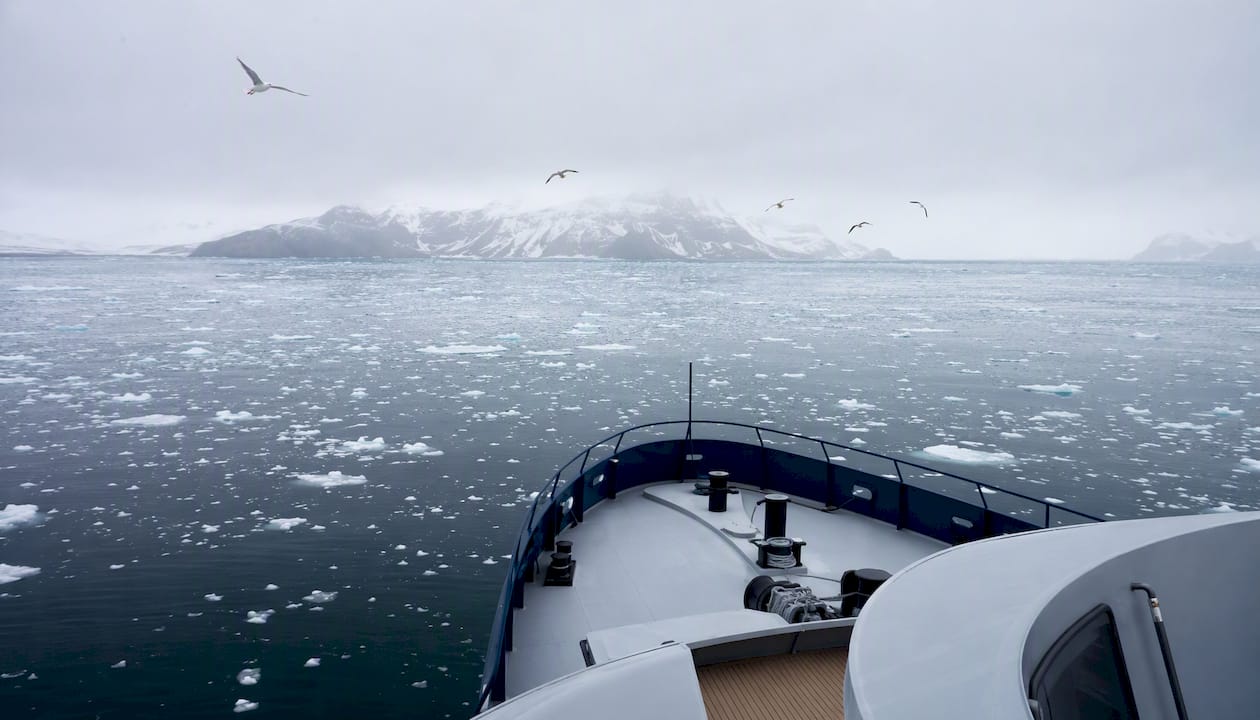
A 14-day expedition outline might allocate: 2 days transit each way, 3 days in a primary wildlife zone, 4 days exploring secondary anchorages, and 3 days for weather contingencies and flexible exploration. The contingency buffer is essential on remote itineraries because weather windows in places like Alaska or the Galápagos are unpredictable.
Bareboat, skippered, or fully crewed — how does duration steer the choice?
Charter length is one of the clearest signals for which crewing model fits your trip. The three models differ in who handles the vessel, and that difference becomes more consequential the longer and more remote the voyage.
| Factor | Bareboat | Skippered | Fully crewed |
|---|---|---|---|
| Who sails the boat | You (licensed skipper required) | Professional captain; you crew | Full professional crew |
| Minimum experience | Coastal skipper certification or equivalent | None required | None required |
| Provisioning | Self-managed | Self-managed | Chef and crew handle all provisioning |
| Ideal duration | 3–7 days, familiar waters | 3–14 days, moderate routes | 7 days to multi-week, remote or expedition |
| Insurance complexity | Higher; personal liability | Moderate | Lower; operator carries primary coverage |
Bareboat suits experienced sailors on short coastal routes where the waters are well-charted and marinas are frequent. For a 3-day trip in the British Virgin Islands or the Florida Keys, a bareboat is a legitimate and often more affordable option, provided you hold the right certification. Charter management services for bareboat operators typically require proof of competency before releasing a vessel.
For any trip longer than a week, or any itinerary that takes you into remote waters, a fully crewed yacht is the practical choice — not a luxury upgrade. Provisioning for 10 days in a place with no grocery store, navigating unfamiliar currents, and managing safety protocols for a group of non-sailors is a full-time job. A professional crew handles all of it.
Fully crewed charters also unlock a different quality of experience. A chef who knows the local markets, a captain who has run the same passage a dozen times, and a dive guide who knows exactly where the manta rays feed — these are not amenities you can replicate by hiring a bareboat and figuring it out yourself.
What to pack and what to expect onboard
Packing for a yacht charter is different from packing for a hotel trip, and the right kit changes significantly with duration.
Half-day / day charter:
- Swimwear, sunscreen, a light cover-up, and non-marking soft-soled shoes
- A small dry bag for valuables; most day vessels have limited storage
- No need for formal documents beyond a photo ID
Three to four-day charter:
- Soft-sided duffel bags only (hard-shell suitcases don't fit in most yacht cabins)
- Casual evening wear for one or two port dinners
- Basic seasickness medication, personal prescriptions, and a small first-aid kit
- Snorkel gear if you prefer your own fit; most crewed yachts carry a set
One-week charter:
- Add a light layer for cooler evenings at anchor and one smart-casual outfit for a marina restaurant
- Passport and any required visas for the cruising area
- Underwater camera or GoPro; chargers and a universal adapter
- Any specialty dietary items your chef can't source locally (confirm with the crew in advance)
Ten-plus day expedition:
- Dive certification cards if the itinerary includes scuba; expedition yachts carry compressors and tanks
- Dry bags, waterproof cases, and a personal locator beacon for remote shore excursions
- A full week's worth of clothing that can be washed and re-worn; most expedition yachts have laundry facilities
- Binoculars, field guides, and any specialist gear for wildlife photography
Onboard amenities by charter type:
- Day charter fleet: Basic galley, cooler, swim platform, and shade. Minimal.
- Crewed sailing or motor yacht (week): Full galley with a professional chef, air-conditioned cabins, water toys (paddleboards, kayaks, snorkel gear), and a tender for shore access.
- Expedition yacht (10+ days): Dive compressors, Zodiacs or rigid inflatables for remote landings, specialist naturalist or dive guides, and satellite communications for remote passages.
Pro Tip: Tell your charter broker about dietary restrictions and any special provisioning requests at least three weeks before departure. In remote destinations, the captain may need to source specialty items at the last major port before the cruising area.
How to choose the right charter duration for your trip
A few honest questions will narrow the choice faster than any checklist.
What is the primary purpose of the trip? A celebration or corporate event points to a day charter. A family vacation with young children often works best as a week, with enough time to settle into the rhythm of the boat. A wildlife or diving expedition almost always needs 10+ days to justify the travel.
How much of your vacation time is transit? Long-haul flights to remote destinations consume real days. If you're flying from the U.S. to French Polynesia, a 7-night charter gives you roughly five full days on the water after accounting for arrival and departure days. A 10-night booking gives you eight. That difference is significant when the destination is the point.
What is your group's tolerance for transit days at sea? A week-long itinerary in a compact cruising area like the U.S. Virgin Islands can be almost entirely anchorage-to-anchorage with short sails. A week in a larger area, or an expedition to a remote archipelago, will include one or two longer passages where the scenery is open ocean. Know your group before you plan the route.
We would suggest asking your broker three specific questions before confirming a duration: What is the minimum stay for this vessel? How many transit days does the itinerary realistically require? And are there any permits or restricted-access zones that need to be booked in advance? Those three answers will tell you whether your planned duration is realistic or whether you need to add days.
Budget range and booking flexibility matter too. If your budget is fixed, a shorter charter on a larger or better-equipped vessel can sometimes deliver a richer experience than a full week on a smaller boat. A broker who knows the fleet can help you find that balance.
Why fully crewed charters suit week and 10+ day trips best
The operational case for a full crew on longer voyages is straightforward. Safety, provisioning, navigation, and guest experience all become more complex as duration and remoteness increase, and a professional crew handles each of those dimensions as a matter of routine.
On a week-long crewed charter, the captain manages passage planning, weather routing, and port clearances. The chef handles provisioning, dietary requirements, and daily meals. Deck crew manage the tender, water toys, and anchor watch. Guests arrive, enjoy the experience, and leave. The logistics are invisible.
On a 10+ day expedition to a place like the Galápagos or the South China Sea, the crew's expertise becomes even more critical. Permits for restricted wildlife zones, customs clearances across multiple countries, dive safety protocols, and wildlife encounter guidelines all require specialist knowledge that a bareboat crew simply doesn't carry.
Exoticacharters supports complex week and expedition itineraries with:
- Specialist staff including former captains, dive professionals, and naturalist guides
- Expedition-grade vessels equipped with Zodiacs, dive compressors, and satellite communications
- Pre-arranged permits and access for restricted wildlife zones
- Custom provisioning plans built around the cruising area and guest preferences
- Itinerary planning that accounts for weather windows, transit days, and contingency routing
For groups considering a first expedition-style charter, we consider a 10–14 day booking the practical minimum for destinations like the Galápagos or Alaska. Anything shorter and the transit days consume too large a proportion of the trip.
What experienced charter planners know that most guides skip
The conventional advice on charter duration focuses almost entirely on budget and schedule. What it underestimates is the role of pace.
Most first-time charterers book a week and then fill every day with port visits, activities, and movement. By Day 4, they're exhausted. The most experienced charter travelers we work with do the opposite: they plan fewer stops, leave more days open, and let the itinerary find its own rhythm. A week on the water with two unscheduled days is a fundamentally different experience from a week with seven planned stops.
The same logic applies to expedition charters. A 14-day itinerary in the Galápagos with two weather contingency days built in will almost always deliver a richer trip than a 10-day itinerary with no margin. Remote destinations are not forgiving of over-scheduled plans.
A few practical tips from years of planning these trips:
- Test the experience with a day charter before committing to a week, especially for guests who have never sailed overnight.
- Shoulder season, typically May–June and September–October in the Mediterranean, often offers the same itineraries at lower base rates with fewer crowds.
- Choose ports that are close together for the first half of the week and save the longer transit for Day 4 or 5, when guests are settled and comfortable at sea.
- Always ask your broker about yacht charter insights specific to your destination before finalizing duration.
Planning a week or expedition charter with Exoticacharters
For travelers ready to move beyond a day trip, Exoticacharters offers fully crewed luxury yachts built for week-long and expedition-length itineraries in some of the world's most extraordinary destinations. The fleet spans sailing yachts, motor yachts, catamarans, and superyachts, each matched to the specific demands of the cruising area.
What sets Exoticacharters apart from a standard booking platform is the operational depth behind each charter. Former captains and water-sports professionals plan the itinerary, arrange permits for restricted zones, and match the vessel to the destination rather than simply listing available boats. For a 10-day dive expedition in the Red Sea or a 14-day wildlife voyage to the Galápagos, that expertise is the difference between a trip that works and one that doesn't.
To get started, check availability for your preferred dates and destination, request a custom itinerary, or ask about expedition add-ons including dive guides, naturalists, and specialist provisioning. Speak with a charter specialist at Exoticacharters to find the right vessel and duration for your trip.
Sources
The sources below informed this guide and offer deeper detail on pricing, sample itineraries, and charter mechanics.
- Day Charter vs Week Charter: When Each Makes Sense — Trillionaire Daily
- Yacht Charter Cost Guide 2026
- Weekly Yacht Charter – Elaphite Islands & Coastal Dubrovnik, Croatia - KaterBlue
For custom pricing, permit requirements, and itinerary planning specific to your destination and duration, contact the specialists at Exoticacharters directly. Published guides give you the framework; a broker who knows the fleet gives you the trip.