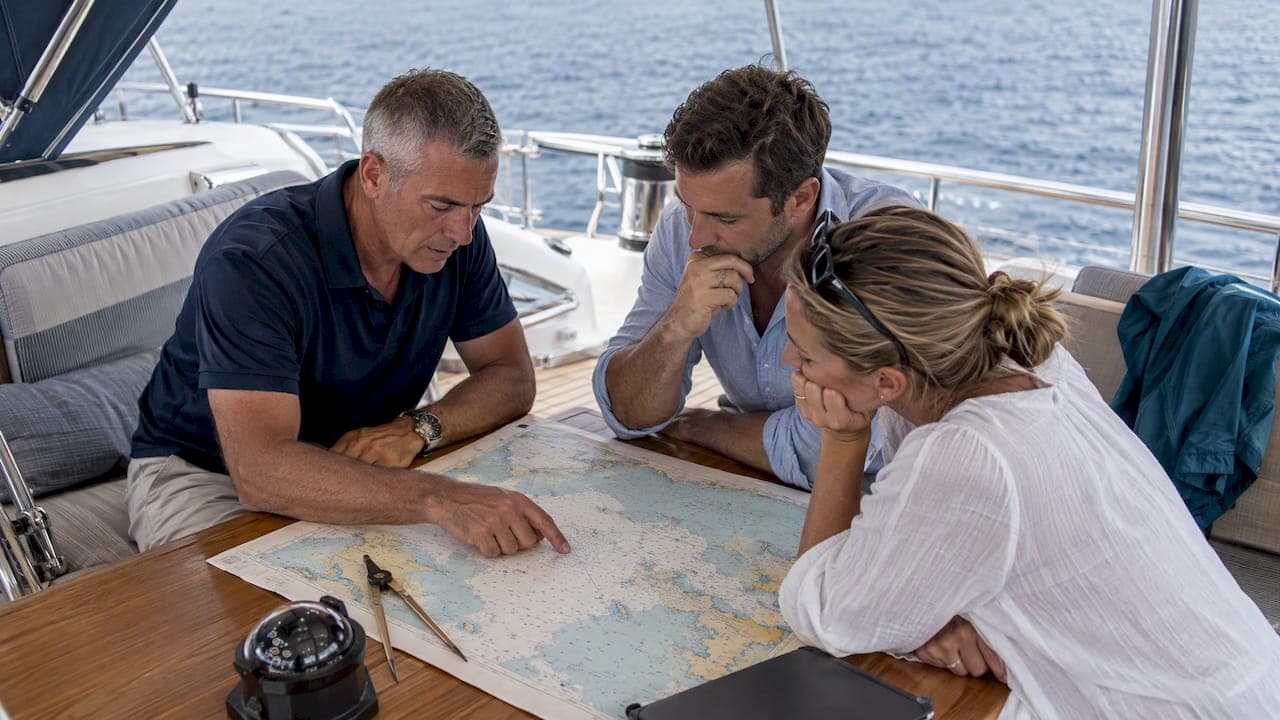
The fastest way to start planning a bespoke yacht itinerary is to complete a short guest-priorities sheet covering pace, activities, dietary needs, and non-negotiables, then hand that sheet to a specialist broker who can turn it into a draft route. This article walks through sample itineraries, daily scheduling, provisioning, permits, and weather contingencies, with the planning approach we use at Exotica Charters woven throughout.
TL;DR:
- Planning begins with a guest-priority sheet that guides a broker in drafting an adaptable route tailored to region, pace, and activities.
- Shorter transit days of under three to four hours help maximize time anchored or ashore, ensuring a relaxed experience.
- Permits and early reservations are crucial for high-demand regions and protected waters, with weather contingencies requiring short-term forecasting tools.
- Remote destinations need longer lead times for provisioning and special requests, while flexible drafting allows adjustments based on weather and wildlife conditions.
Table of Contents
- Three sample itineraries to spark your planning
- How to turn your preferences into a working itinerary
- Building a realistic daily schedule and provisioning plan
- Permits, berths, and customs: the paperwork behind the route
- Weather windows and contingency planning for remote routes
- The Exotica Charters approach to itinerary design
- Let us build your itinerary with you
- FAQ
- Sources
Three sample itineraries to spark your planning
Before building a route from scratch, it helps to see what a well-paced charter actually looks like across different regions. Each of these samples assumes a different guest profile and pace, and each can be adapted once you know your own priorities.
- Western Mediterranean, 7 to 10 days: A route from St. Tropez to Monaco to Corsica suits guests who want a blend of glamorous port calls and quiet coves, with half the days left open for swimming stops and long lunches ashore.
- Caribbean or BVI island-hopping, 7 days: Protected anchorages and short hops between islands make this ideal for families or groups focused on water sports, with private beach dinners built into two or three evenings.
- Galápagos expedition, 10 to 12 days: A wildlife and diving-focused route through the outer islands works best for guests who want an immersive, expedition-paced trip rather than a string of port visits; permits and naturalist guides are arranged well ahead of departure, and our Galápagos charter area page outlines the planning notes specific to that region.
The Mediterranean route rewards guests who want visible luxury and nightlife within reach. The Caribbean route rewards guests chasing warm, calm water and reef time. The Galápagos route rewards guests willing to trade polish for genuinely remote wildlife encounters, which is where expedition pacing (fewer stops, longer dwell time at each) tends to outperform a packed schedule.
How to turn your preferences into a working itinerary
A good itinerary starts as a document, not a schedule. Begin with a guest preference sheet rather than an hour-by-hour plan: list your priorities, preferred pace, must-do activities, accessibility needs, dietary restrictions, and any non-negotiables (no overnight passages, say, or a strict dive schedule). This single step does more to shape a successful charter than any amount of hour-by-hour detail.
- Define priorities first. Note activities, pace, and non-negotiables before picking a single port.
- Choose region and duration together. Balance transit time against time on station. A short charter with three well-chosen anchorages usually beats a packed itinerary of five ports.
- Match the vessel to the route. Range, tender capacity, stabilizers, and crew skillset (dive instruction, wildlife guiding) all affect which itineraries are realistic; our motor yacht options vary widely on exactly these points.
- Set a timeline. Book berths and permits early for high-season regions, then finalize menus and equipment lists closer to departure.
- Hand it to the crew. The captain turns a preference sheet into a draft route and adjusts it daily based on weather, swell, and port availability.
Pro Tip: Give your captain a short preference sheet instead of a minute-by-minute schedule; it gives them room to swap a windy anchorage for a calmer one without derailing your trip.
The itinerary should stay a living document through the whole charter. A broker or captain who treats the first draft as final is setting you up for disappointment the moment the wind shifts.
Building a realistic daily schedule and provisioning plan
Long cruising hops are the single biggest threat to a relaxed charter. As a rule of thumb, keep daily transit under three to four hours so guests spend most of the day anchored, swimming, or ashore rather than underway.
- Active day: Morning dive or hike, midday cruise to the next anchorage, afternoon water sports, sunset dinner ashore.
- Leisure day: Late breakfast, short swim stop, long lunch at anchor, free afternoon, onboard dinner with wine paired by the chef.
- Provisioning touchpoints: A pre-charter chef consultation covering dietary restrictions and wine preferences, lead time for specialty ingredients in remote regions, and advance notice for any private dinner or special-event catering.
Provisioning in remote destinations needs longer lead times than a Mediterranean marina stop, so flag any special requests, from a particular Champagne to a dietary restriction, as early as possible; for curated excursions and dining experiences, see Exploring the Coastal Charms.
Permits, berths, and customs: the paperwork behind the route
Certain regions require authorization well before departure. Marine parks, Antarctic waters, and some wildlife sanctuaries require permits and environmental checks; the ATCM yachting guidelines lay out the planning and environmental obligations for any yacht heading south of 60°S, and similar scrutiny applies to other protected waters.
- Confirm permit and environmental requirements for any marine park or protected area on the route.
- Reserve berths in high-season marinas as early as possible; popular Mediterranean ports fill months ahead.
- Clarify customs and immigration timing for any itinerary that crosses borders or involves one-way repositioning.
- Build a final checklist: permits, berth confirmations, customs paperwork, and crew documentation, all signed off before departure.
Weather windows and contingency planning for remote routes
Short-range forecasts remain reliable for roughly three to five days out, which is why experienced crews plan the next leg rather than the whole voyage at once. Tools like Buoyweather give mariners the forecast detail needed to set that window, while a database like Navily helps identify alternate anchorages when conditions shift.
A reliable itinerary always carries a backup plan: Buoyweather's short-term forecast products are built for exactly this kind of voyage planning, and pairing them with a fuel and provisions buffer, satellite communications, and a medevac plan for remote regions keeps a luxury trip both enjoyable and safe.

The Exotica Charters approach to itinerary design
Our planning team draws on experience in yachting and water sports, which shapes every route we draft: we know which anchorages actually suit a dive schedule and which "must-see" ports eat a day without delivering much. We treat the itinerary as a living document, starting with your preference sheet, drafting a route, then letting the captain adjust it once underway based on weather and wildlife conditions.
— Mo
Let us build your itinerary with you
We specialize in fully crewed luxury charters featuring a range of yachts and vessels, with particular focus on remote destinations where captain judgment matters most. If you want a bespoke route built around your priorities rather than a generic port list, we can turn your preference sheet into a working itinerary.
Browse our luxury yacht options or visit Exotica Charters to start a conversation about your route, your region, and your pace.
FAQ
What is the 12 person rule on a yacht?
Many countries limit passenger-carrying commercial vessels without additional safety certification to 12 guests, which is why most crewed luxury charter yachts are designed around that maximum. The rule affects itinerary planning mainly through cabin count and tender capacity rather than route choice itself.
Is there a free app that can create a trip itinerary?
Several crew-facing itinerary builders exist that help captains and brokers assemble and share a visual day-by-day plan quickly. These tools speed up presentation, but they still rely on a captain's judgment for actual passage planning and weather-driven adjustments.
How much does a yacht trip cost?
Pricing depends heavily on vessel size, region, season, and length of charter, so there is no single figure that applies across the board. Our expedition charter cost page covers what shapes pricing for remote, experience-led itineraries specifically.
How do I make an itinerary plan?
Start with a short preference sheet covering pace, activities, dietary needs, and non-negotiables, then match that to a region, duration, and vessel before drafting a day-by-day route. Treat the draft as flexible: the best itineraries adjust daily based on weather and guest energy rather than locking in a fixed schedule months in advance.