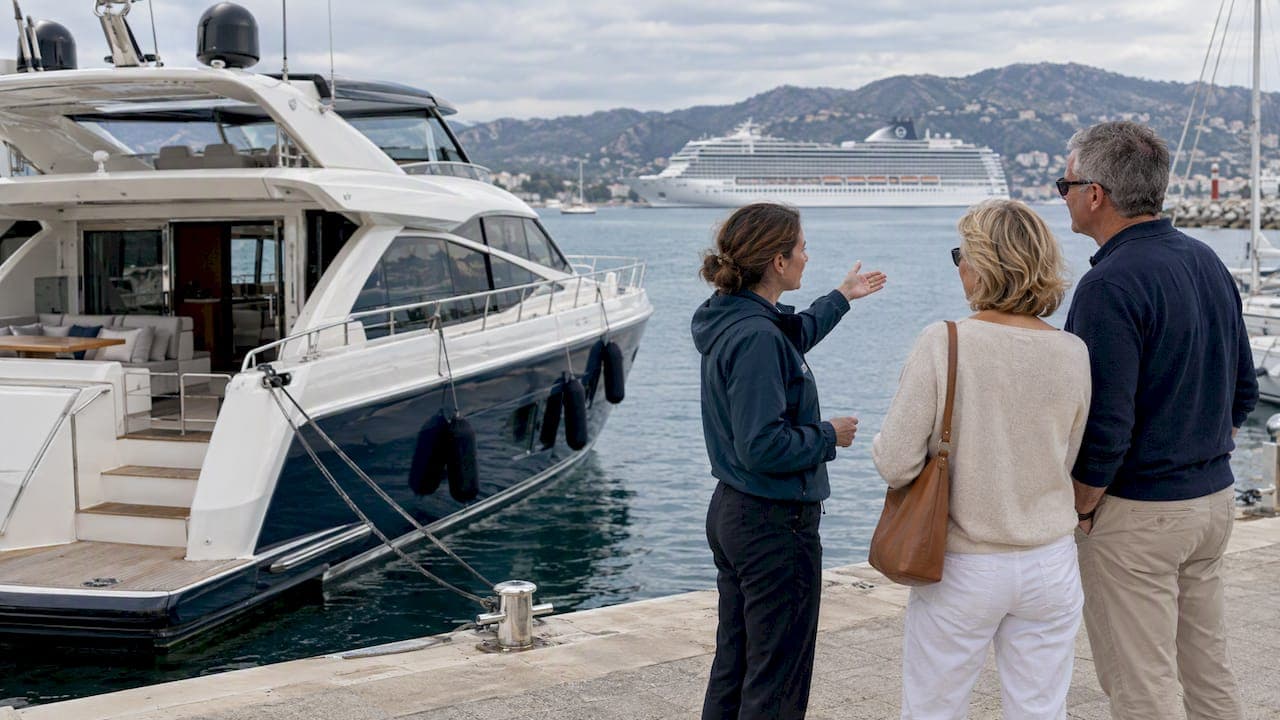
Choose a private yacht charter when privacy, itinerary flexibility, and access to small or remote sites matter most to you; choose a cruise when cost per person, built-in amenities, and a socially active onboard program top your list. We see both paths work beautifully, depending on what you are chasing: an intimate, custom expedition, or a value-driven, full-service voyage.
TL;DR:
- Yacht charters typically host fewer than 20 guests, allowing for personalized service and flexibility in itinerary and activities.
- Smaller yachts can access remote coves and wildlife sites that larger cruise ships cannot reach, especially in protected or shallow areas.
- Yacht costs are based on a whole-boat rate, including additional fees for fuel, permits, and gratuities, and often match cruise per-person prices on larger vessels.
- Cruises often provide organized entertainment and communal activities for larger groups, with a standard schedule, unlike the flexible, personalized nature of yachts.
- Regulatory differences mean yachts may require early booking deposits and have varying inspection standards, influencing costs and availability depending on vessel size and location.
Table of Contents
- Yacht vs cruise: the practical differences that matter
- Who should choose a yacht, and who should choose a cruise
- Budgeting realistically for a yacht charter or a cruise
- Safety, regulation, and booking logistics to know
- A day in the life: activities and personalization
- Why specialist brokerage changes the outcome
- Our take: match the trip to your priorities, not the trend
- A practical next step for private yacht travelers
- FAQ
- Sources
Yacht vs cruise: the practical differences that matter
The gap between a yacht charter and a cruise starts with scale, and that single factor ripples through everything else. A private yacht typically carries a handful of guests, sometimes a dozen on a larger catamaran or expedition vessel, while a cruise ship can carry thousands. That difference shapes the entire feel of a trip: on a yacht, the crew learns your name, your preferred cocktail, and your diving pace by day two; on a cruise, you are one of many enjoying a well-run, larger-scale operation.
Itinerary access tells a similar story. Smaller yachts and expedition vessels can reach wildlife sites and coves that larger ships cannot navigate, which matters enormously in places like the Galápagos, where draft and maneuverability determine which islands you actually see.

Trip length and passenger volume also diverge sharply. The average cruise runs about 7.0 days globally, a tidy week that suits travelers with fixed vacation windows, while yacht charters flex from a long weekend to several weeks depending on the itinerary.
Key contrasts worth weighing:
- Group size and privacy: a handful of guests on a yacht versus hundreds or thousands on a ship.
- Itinerary access: yachts can tuck into shallow coves and remote anchorages large ships must skip.
- Amenities: cruises offer broad entertainment programming; yachts offer specialized, request-driven activities.
- Cost structure: cruise pricing is per person; charter pricing is a whole-boat rate split among your group.
The cruise industry carried a record 37.3 million passengers globally in 2025, a scale that lets operators spread fixed costs across enormous volume, which is part of why mass-market cruise fares often undercut charter rates on popular routes.
Who should choose a yacht, and who should choose a cruise
Your travel style, not your budget alone, should drive this decision. Families with young children often value a cruise's built-in supervision, kids' clubs, and variety of distractions, while families seeking a shared, unplugged adventure may prefer a yacht's flexibility to set their own pace.
- Couples and privacy-seekers: a yacht charter delivers a tailored, uninterrupted experience with no crowds to navigate.
- Solo travelers and social groups: cruises offer easy mingling, organized activities, and often better per-person value.
- Divers and wildlife travelers: yachts typically allow closer access to sensitive sites and custom dive scheduling built around conditions, not a fixed itinerary.
- Multigenerational groups: cruises provide more space to spread out; yachts offer more shared, intentional time together.
A hybrid approach works too: some travelers book a cruise for the main journey, then add a short private charter day to reach a site the larger ship cannot, getting a taste of both worlds without committing fully to either.
Budgeting realistically for a yacht charter or a cruise
Cruise pricing is built per person, layered across cabin tiers, with package inclusions that vary by line. The industry's scale, reflected in that 37.3 million passenger figure, helps keep base fares competitive, especially on shorter, popular routes.
Yacht charters work differently: you pay a whole-boat rate, driven by vessel size and season, plus an Advance Provisioning Allowance (APA) for fuel, food, and dockage, along with crew gratuities. Split among a group of eight or ten, that rate often lands closer to cruise pricing per person than travelers expect, particularly on larger catamarans.
Watch for these add-ons when comparing quotes:
- Flights to the embarkation point or port.
- Fuel surcharges, especially on longer or remote itineraries.
- Park entrance or conservation fees in protected destinations.
- Specialty equipment, such as dive gear or scientific permits.
- Crew gratuities and APA settlement at trip's end.
Pro Tip: Ask any charter broker for an all-in quote that bundles APA, gratuities, and permits, so you are comparing true totals, not base rates alone.
Safety, regulation, and booking logistics to know
Regulatory frameworks differ meaningfully between the two. U.S. Coast Guard policy treats large commercial yachts differently depending on tonnage and passenger count, and yachts carrying paying passengers above certain thresholds can trigger inspection and certification requirements, similar in spirit to the compliance programs cruise lines have long operated under.
- Crew certification: reputable charter operators staff licensed captains and trained crew, though oversight varies by flag state.
- Tendering: yachts often land guests via small boats into protected coves; cruise ships rely on established tender operations or direct docking.
- Booking lead times: charters often require earlier deposits and firmer cancellation terms than flexible cruise fare classes.
Regulatory classification affects more than paperwork. Vessels that trigger stricter Coast Guard inspection regimes can face added operational costs, which can influence both availability and pricing during peak season.
A day in the life: activities and personalization
Daily rhythm is where the two experiences feel most different. Cruise days typically follow a set schedule, with shore excursions organized in large groups and a fixed window ashore before the ship departs. Yacht days bend around your preferences: a late start after a long dive, an extra hour at a wildlife site, or a detour to a cove the crew knows but the customized yacht itinerary never mentioned.
- Water sports access: yachts often include kayaks, snorkel gear, and dedicated dive support tailored to your certification level.
- Shore excursions: cruises run large-group tours on a schedule; yachts arrange private guides suited to your pace.
- Pacing: cruise days are pre-set; yacht days are negotiable with your captain each morning.
- Wildlife viewing: smaller vessels can idle closer to shy or sensitive species without disturbing them.
Onboard entertainment splits similarly: cruises bring stage shows and multiple dining venues, while yachts bring a private chef adjusting the menu to what the morning's catch or your group's taste calls for.
Why specialist brokerage changes the outcome
Planning a private charter well takes more than picking a boat. We built our team around former captains and water sports professionals who understand both the safety margins and the activity possibilities in demanding destinations like the Galápagos, French Polynesia, and Alaska.
- Safety judgment: a former captain reviewing an itinerary catches risks a standard booking engine never flags.
- Access expertise: knowing which anchorages and sites suit a given vessel size saves guests from wasted days.
- Activity quality: water sports professionals calibrate dive and snorkel plans to guest skill level, not a generic package.
Pro Tip: When comparing brokers, ask directly about crew background. A captain's firsthand knowledge of a region often determines whether you see the wildlife you came for.
Our take: match the trip to your priorities, not the trend
Most travelers overthink this choice. If privacy, flexibility, and close wildlife access matter more to you than headline price, a yacht charter wins decisively. If you want predictable costs and a packed social calendar, a cruise remains the smarter pick. Speak to a broker only once you know which of those two things you actually value more.
— Mo
A practical next step for private yacht travelers
We arrange luxury, fully crewed yacht charters, including sailing yachts, motor yachts, catamarans, and superyachts, built around immersive itineraries in extraordinary locations. Rather than choosing from a fixed brochure, you work with planners who have piloted these waters and know which anchorages deliver the experience you are picturing.
When requesting a quote, ask about:
- Itinerary flexibility and which sites the vessel can realistically reach.
- Included water toys and whether dedicated dive support comes standard.
- How APA, crew gratuities, and permits are handled in the final cost.
Our luxury yacht listings span vessel types and cabin counts, and you can start a conversation about your destination and dates directly on our main booking page.
FAQ
Is a yacht technically a boat?
Yes, a yacht is a type of recreational boat, generally larger and more luxuriously appointed than a standard pleasure craft. The term covers everything from modest sailboats to large motor yachts, with no single universal size cutoff.
Is a yacht bigger than a cruise ship?
No, a cruise ship is almost always far larger than a private yacht. Cruise ships carry passengers by the thousands, while yacht charters typically host a dozen or fewer guests, which is precisely what gives yachts their intimate, flexible feel.
Is a 40ft boat considered a yacht?
Definitions vary across markets, but many brokers and charter companies commonly treat vessels around 40 feet and above as yachts in practical terms. Below that size, a boat is usually described simply as a boat rather than a yacht.
What are the three types of cruises?
Cruises are commonly grouped into mainstream large-ship sailings, river cruises, and small-ship expedition or luxury cruises. Each category differs in onboard amenities, itinerary access, and the overall pace of the trip.
Sources
- CLIA 2025 Global Market Report
- CG-CVC policy letter on port state control examinations for foreign-flagged yachts
- How to choose a Galapagos cruise: ship, budget & more