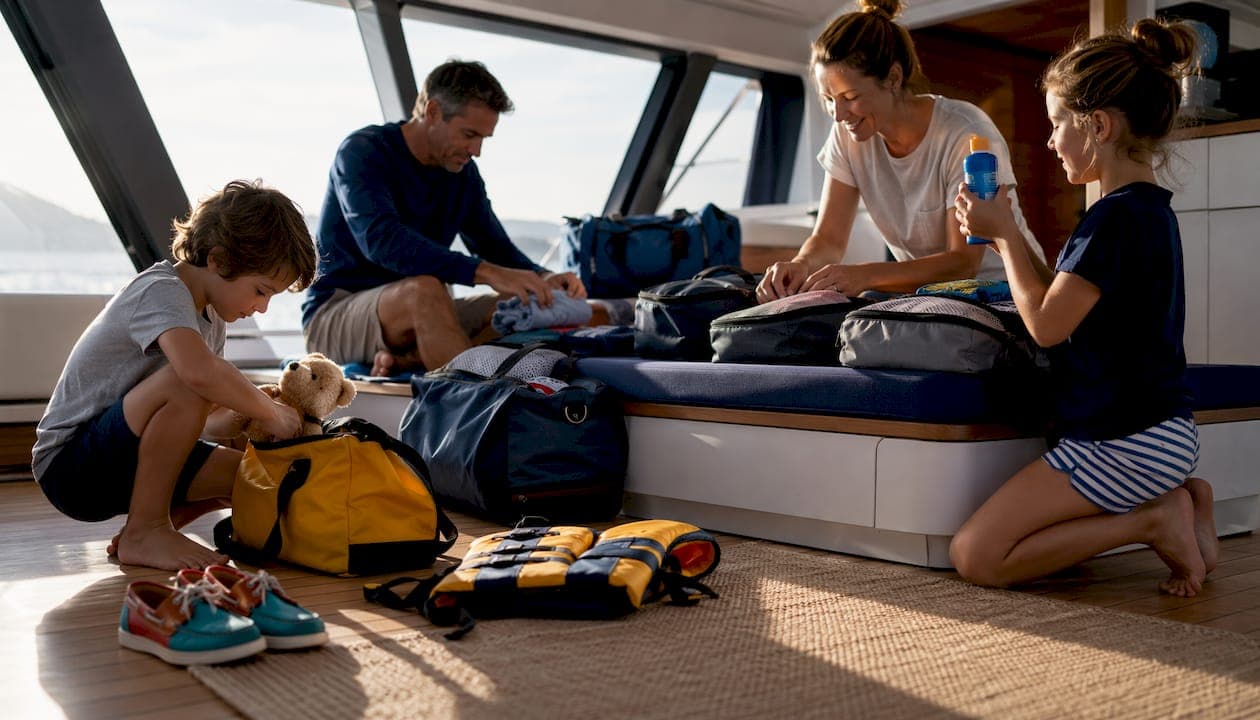
What every family needs to pack for a yacht charter
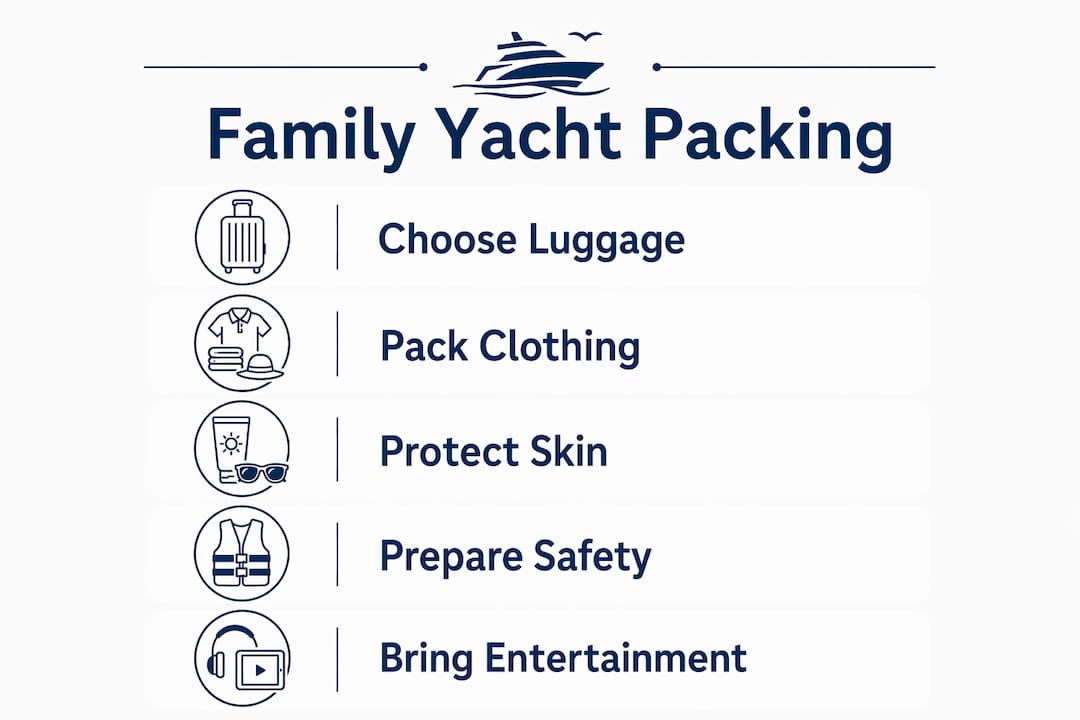
A well-planned yacht charter packing list separates a genuinely memorable family vacation from a week of scrambling for dry clothes and forgotten sunscreen. Space aboard any yacht is finite, moisture is constant, and the sea rewards preparation. Pack around these core categories and you will arrive ready for anything.
- Luggage: Soft-sided duffel bags or collapsible weekenders only. Hard suitcases cannot compress into curved cabin lockers.
- Clothing: Lightweight, quick-drying layers; multiple swimwear sets, smart-casual pieces for shore dinners.
- Footwear: Non-marking, soft-soled deck shoes for adults and reef shoes or water sandals for children.
- Sun protection: High-SPF reef-safe sunscreen, wide-brimmed hats, polarized sunglasses, and lip balm with SPF.
- Personal items: Toiletries, dry bags, reusable water bottles, waterproof phone cases, and compact entertainment.
- Medications and wellness: Motion sickness tablets, antihistamines, pain relievers, and child-appropriate remedies.
- Child safety gear: Properly rated life jackets and harnesses sized for each child.
Table of Contents
- Travel documents and important paperwork for family yacht charters
- How to choose the right luggage for life aboard a yacht
- Clothing essentials for families on a yacht charter
- What footwear should your family wear on a yacht?
- Sun protection and skin care your family needs at sea
- Personal essentials and entertainment for relaxing days at sea
- Medications, wellness, and safety gear for the whole family
- Expert insights on choosing the right yacht and setting safety rules
- What food and snacks should families pack for a yacht charter?
- Toys and activities to pack for different age groups
- Baby and toddler packing checklist for yacht charters
- How to manage seasickness for every family member
- Key Takeaways
Travel documents and important paperwork for family yacht charters
Every family member's documents should travel in a carry-on bag, never in checked luggage or a main duffel that goes into a cabin locker. Losing a passport mid-charter in a remote anchorage is a genuine crisis, not an inconvenience.
- Passports valid for at least six months beyond your return date
- Charter contract and booking confirmation
- Travel and medical insurance certificates
- Vaccination records if the destination requires them
- Prescription medication documentation for each family member
- Emergency contact list and your charter broker's contact details
- Copies of all documents stored separately from the originals (a cloud backup works well)
How to choose the right luggage for life aboard a yacht
Hard-sided suitcases are the first thing experienced charterers leave at home. They cannot fold flat, they scratch cabin interiors, and they occupy floor space that simply does not exist on most vessels. Soft-sided duffel bags, particularly those in the 40L–55L range, slide into lockers and compress to almost nothing once unpacked.
Look for bags made from water-resistant or coated nylon. Marine environments are relentlessly damp, and a bag that absorbs salt spray will smell unpleasant by day three. One bag per person, clearly labeled, keeps the cabin organized and the crew happy.
- Soft duffel or collapsible weekender per person (40L–55L for adults, 20L–30L for children)
- Water-resistant or coated exterior fabric
- Separate small day bag for beach excursions and dinghy rides
- Dry bag for electronics, documents, and anything that cannot get wet
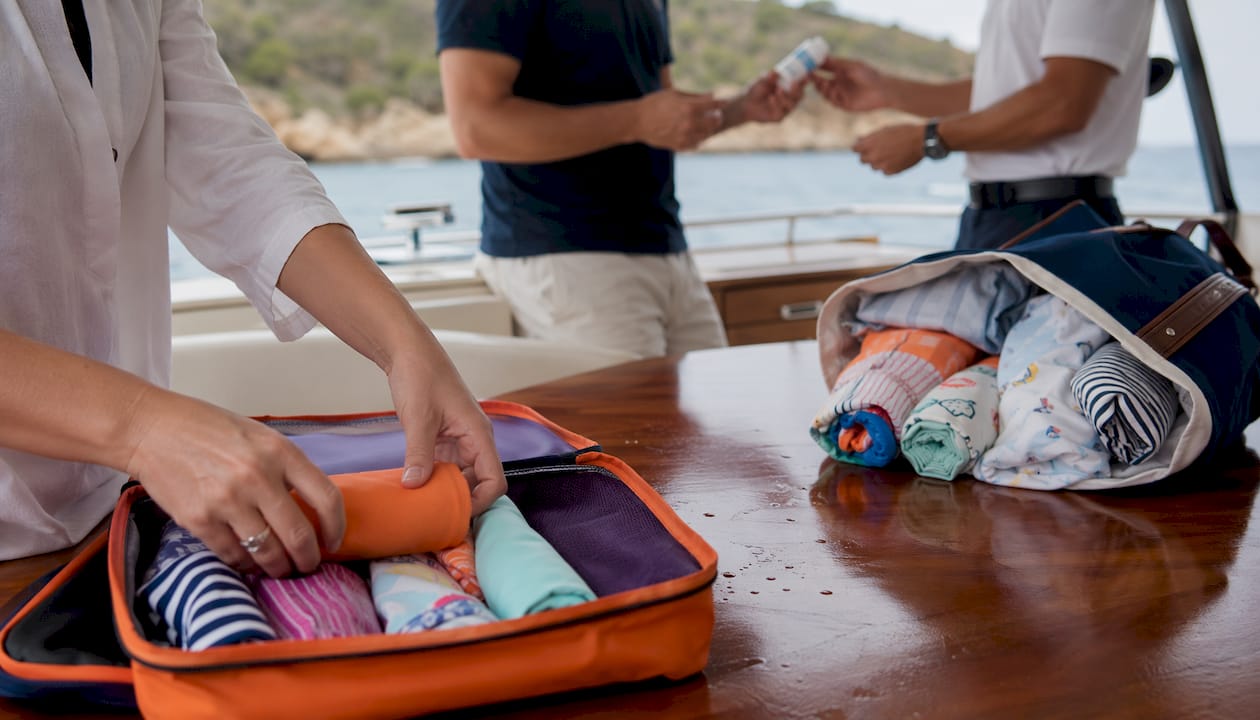
Pro Tip: Packing cubes and rolling clothes instead of folding them will cut the volume of a family's clothing by roughly a third, leaving room for the gear that actually matters.
Clothing essentials for families on a yacht charter
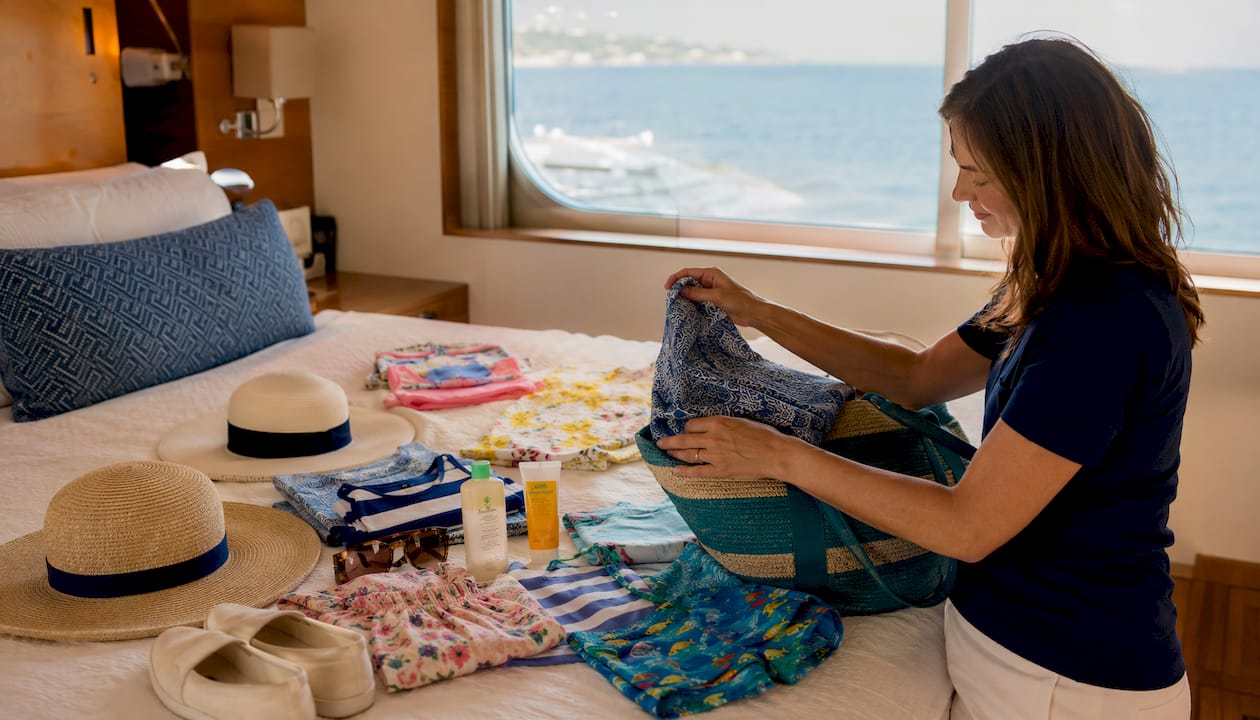
The golden rule aboard any charter is versatility. Every garment should work in at least two situations, whether that is a swim cover-up that doubles as a beach dress or a lightweight fleece that handles both cool evenings at anchor and early-morning passages. Packing multiple swimwear sets is genuinely non-negotiable; swimwear stays damp at sea, and rotating through two or three sets keeps everyone comfortable.
For children, rash guards and UPF-rated shirts are more practical than relying entirely on sunscreen. They protect without the need for constant reapplication, and they dry fast enough to wear again within an hour.
- 2–3 swimwear sets per person
- Rash guards and UPF shirts for children
- Lightweight, breathable shorts and linen-style pants
- One smart-casual outfit per adult for shore dinners
- A thin fleece or windbreaker for cooler evenings
- Underwear and socks in quick-drying fabrics
What footwear should your family wear on a yacht?
Deck shoes are a safety item, not a style choice. Soft-soled, non-marking deck shoes protect teak decks from scuff marks and provide the grip needed when the boat is moving. Hard-soled street shoes are banned on almost every charter yacht for good reason: they leave permanent black marks on gelcoat and become dangerously slippery when wet.
Children do well in reef shoes or neoprene water sandals that stay secure on their feet during dinghy rides and beach landings. Comfortable walking shoes or light sneakers round out the kit for shore excursions.
- Non-marking, soft-soled deck shoes for adults
- Reef shoes or water sandals for children
- Light sneakers or walking sandals for shore excursions
- Flip-flops for use below deck only
Sun protection and skin care your family needs at sea
Sun exposure at sea is intensified by 25%–40% due to water reflection, which means the usual once-a-morning application is nowhere near enough. Reef-safe sunscreen is the only responsible choice in most charter destinations; Hawaii, the U.S. Virgin Islands, and several Caribbean nations have restricted oxybenzone-based products to protect coral reefs.
Apply sunscreen frequently when you are on the water. Wide-brimmed hats with chin straps stay on in wind; polarized sunglasses cut the glare that causes headaches after a full day on deck.
- High-SPF (50+) reef-safe sunscreen for the whole family
- SPF lip balm
- Wide-brimmed hats with chin straps for children
- Polarized sunglasses for adults and older children
- Aloe vera gel for after-sun care
Personal essentials and entertainment for relaxing days at sea
Compact travel games, books, and age-appropriate activities make downtime genuinely enjoyable without relying on screens that drain limited battery power. Power outlets on a marine electrical system are scarce, so prioritize items that do not need constant charging.
A waterproof phone pouch protects your primary camera and navigation backup from salt spray. Dry bags handle the rest: towels, spare clothes, and snacks for dinghy rides to shore.
- Waterproof phone pouch or case
- Dry bags (one per family member for beach trips)
- Reusable water bottles
- Compact travel games and card games
- Books, e-readers in waterproof cases
- Small personal care kit: toothbrush, travel-sized toiletries, hand sanitizer
Medications, wellness, and safety gear for the whole family
Seasickness medication works best when taken before boarding, not after the discomfort starts. Pack enough for every family member, including children, and keep it in the main cabin where it is easy to reach. A third of seafarers report experiencing seasickness at some point, so even seasoned travelers benefit from having remedies on hand.
Children must wear life jackets at all times on deck; in U.S. waters, personal flotation devices rated for children are legally required. Request child-sized PFDs from your charter company at booking and confirm the buoyancy rating matches each child's weight.
- Motion sickness tablets (Dramamine or Bonine) for adults and children
- Antihistamines and pain relievers
- Child-specific first aid kit: bandages, antiseptic wipes, tweezers
- Prescription medications clearly labeled and documented
- Life jackets sized and rated for each child
- Safety harnesses for children on passages
Pro Tip: Run a short safety briefing on day one covering life jacket locations, man-overboard procedures, and the rule that no child goes near the water unattended. Revisiting it briefly each morning takes two minutes and builds genuine confidence.
Expert insights on choosing the right yacht and setting safety rules
Catamarans are the preferred choice for families with children under 10 because of their stability, wide deck space, and minimal heel angle. Teenagers often enjoy the sportier feel of a monohull, but for younger children, the broad, flat cockpit of a catamaran is far safer and more comfortable. We would suggest requesting safety netting along the lifelines at the time of booking; most charter companies fit it without charge when asked in advance.
Clear safety rules set by parents are as important as any piece of gear. "Never go near the water alone" and "always ask an adult before going on deck" are the two rules that experienced crew consistently recommend. Crew provide outstanding service, but they are not a substitute for parental supervision.
- Choose a catamaran for children under 10; consider a monohull for active teenagers
- Request safety netting, child-sized PFDs, and non-slip mats at booking
- Set and repeat clear safety rules before and during the charter
- Plan short daily passages aligned with children's energy levels
- Anchor in calm, protected bays for swimming and exploration
Pro Tip: Involve children in simple sailing tasks like coiling lines or watching the anchor drop. It keeps them engaged, builds confidence, and turns the boat itself into part of the adventure. For family boat tours of any size, active participation is the single best antidote to boredom.
What food and snacks should families pack for a yacht charter?
Most crewed charters include a chef or cook who handles meals, but provisioning for snacks and children's preferences is still a family responsibility. Coordinate with your crew in advance using a detailed preference sheet; Exoticacharters recommends this as part of every family meal planning conversation before departure.
Pack individually portioned, non-perishable snacks for passages and beach days: trail mix, dried fruit, nut bars, and crackers travel well and do not require refrigeration. Avoid anything in glass containers, which are a hazard on a moving boat.
Toys and activities to pack for different age groups
Toddlers and young children do well with waterproof bath toys, small figurines, and simple puzzles that work in a confined space. School-age children enjoy snorkeling gear, underwater cameras, and fishing lines; the sea itself becomes the activity. Teenagers tend to appreciate a good book, a waterproof speaker, and the freedom to help sail the boat.
Keep the total volume of toys to one small dry bag per child. Anything larger competes with safety gear for locker space. For destination-specific ideas, the family-friendly yacht destinations guide covers what activities each region naturally offers.
Baby and toddler packing checklist for yacht charters
Sailing with a baby or toddler requires a dedicated packing list beyond the standard family kit. Confirm with your charter company that the vessel has a safe sleeping arrangement, such as a lee cloth on a berth or a portable travel cot, before you book.
- Infant or toddler life jacket with crotch strap (mandatory on deck)
- Portable travel cot or co-sleeper if not provided by the yacht
- Reef-safe, mineral-based sunscreen formulated for infants
- Swim diapers and a generous supply of regular diapers
- Baby carrier or soft-structured carrier for dinghy rides
- Familiar comfort items: a stuffed animal, a favorite blanket
- Portable white-noise device for sleeping in an unfamiliar environment
- Baby-safe insect repellent for tropical destinations
How to manage seasickness for every family member
Seasickness is most effectively prevented rather than treated after it starts. Administer motion sickness medication at least 30 minutes before departure; for children, consult a pediatrician about appropriate dosing of dimenhydrinate or meclizine. Acupressure wristbands (Sea-Bands) offer a drug-free option that works well for mild cases and are safe for children of all ages.
On the boat, position queasy family members in the cockpit with a clear view of the horizon. Fresh air, a fixed focal point, and avoiding screens or books below deck all reduce symptoms significantly. Ginger candies and ginger tea are practical, well-tolerated supplements that many families keep on hand throughout the charter.
Key Takeaways
A well-packed family yacht charter kit centers on soft luggage, reef-safe sun protection, child-rated safety gear, and motion sickness remedies administered before departure.
| Point | Details |
|---|---|
| Luggage type matters | Use soft-sided duffel bags of 40L–55L; hard suitcases cannot fit in cabin lockers. |
| Sun exposure is amplified | Water reflection intensifies UV by 25%–40%; apply reef-safe SPF 50+ frequently. |
| Child safety gear is mandatory | Life jackets rated for each child's weight are legally required in U.S. waters on deck. |
| Catamaran for young children | Catamarans offer superior stability and deck space for families with children under 10. |
| Prevent seasickness early | Take motion sickness medication at least 30 minutes before boarding for best results. |
Ready to put this packing list to use on an extraordinary voyage? Exoticacharters plans fully crewed family yacht charters to some of the world's most dramatic destinations, from the Galápagos to French Polynesia, with every detail arranged by former captains and water sports professionals. Speak with a charter specialist and explore our luxury family yachts to find the vessel that fits your family perfectly.