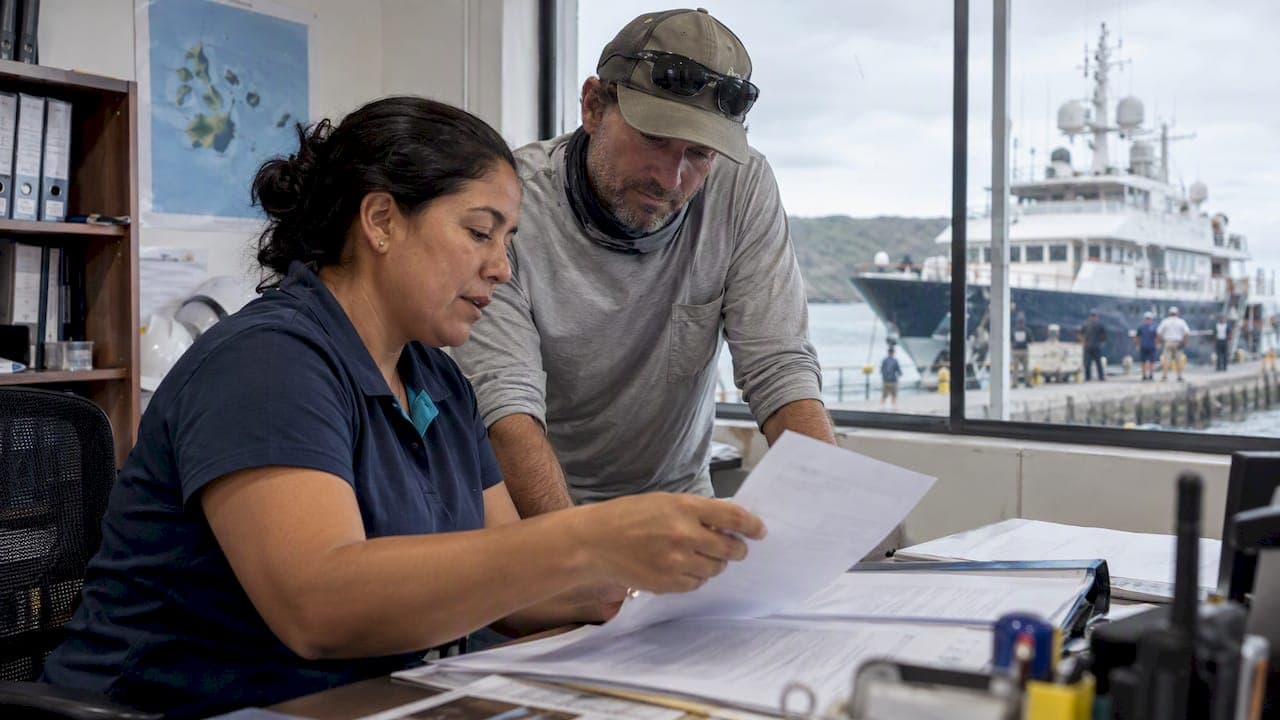
Private yacht charters in the Galápagos require two layers of authorization: an Autógrafo, the entry permit that clears your vessel to enter protected waters, and park authorizations tied to a fixed itinerary. Once the Park assigns your route, whether Eastern, Western or full loop, you cannot swap islands or improvise stops. A registered Galapagos shipping agent files this paperwork on your behalf, and a certified naturalist guide travels with you throughout.
TL;DR:
- The permit process includes obtaining a pre-arrival Autógrafo through a registered agent and an inside permit tied to a fixed itinerary, which cannot be changed once issued.
- Itineraries are assigned by the Park based on three broad routes—Eastern, Western, or full loop—reflecting conservation limits rather than guest preferences or flexibility.
- Biosecurity measures such as fumigation, hull cleaning, and cargo inspection are mandatory before departure and can cause delays if not scheduled properly.
- A naturalist guide must accompany every landing, and passenger limits are strictly defined by the permit modality, regardless of vessel size.
- Coordinating permits and biosecurity steps is complex and managed by experienced operators or agencies, so early planning and documentation review are essential to avoid travel disruptions.
Table of Contents
- Permits and legal authorizations explained
- How itineraries are assigned and what routes actually mean
- Onboard and operational requirements you should expect
- Biosecurity checks that shape your arrival timeline
- The permitting process from first call to final confirmation
- Who handles the paperwork on your behalf
- How we approach permits at Exotica Charters
- Let Exotica Charters manage the permit logistics for you
- Where to verify the official rules yourself
- Sources
- FAQ
Permits and legal authorizations explained
Two distinct approvals govern any private vessel wanting to explore these waters, and confusing them causes most of the planning headaches we see.
The Autógrafo is the entry permit itself, arranged before your vessel ever approaches Galapagos waters. According to the Galápagos National Park, private vessels must contract a registered Galapagos shipping agent to manage this filing, and the permit has to be issued prior to arrival. Think of it as the key that unlocks the door; without it, entry can be denied outright.
Once inside, operating within protected sites calls for a second tier: the Patente de operación turística, alongside an environmental permit. The legal foundation for this sits in the Special Tourism Regulation for Protected Natural Areas (RETANP), which spells out the Permiso Ambiental de Actividad Turística and confirms that itineraries and permitted modalities are set by the Park Directorate itself, not negotiated by operators or charter guests.
The distinctions worth holding onto:
- Autógrafo covers vessel entry into Galápagos waters, filed through your shipping agent before departure.
- Patente de operación turística authorizes tourist activity once inside, tied to a specific modality and route.
- Passenger caps are written into the permit type itself; RETANP lists modalities like Tour de Crucero Navegable with specific passenger limits for certain categories.
- Private yacht entry and commercial tourist operation face the same underlying legal framework, even though the vessels differ.
Neither permit is optional, and neither substitutes for the other. A vessel with a valid Autógrafo but no operating patente still cannot land at protected visitor sites.
How itineraries are assigned and what routes actually mean
Here is where charter clients most often feel the friction: you do not choose your islands the way you might plan a Caribbean hop between anchorages. The Park assigns one of three broad itinerary types, Eastern, Western or full loop, and that assignment becomes your route for the trip.
The Eastern itinerary tends to focus on islands like San Cristóbal, Española and Genovesa, prized for seabird colonies and dramatic cliff landscapes. The Western route swings through Isabela and Fernandina, where volcanic scenery and marine life congregate around cooler upwelling waters. A full loop, when granted, combines elements of both but requires longer trip lengths and is not always available depending on season and vessel scheduling.
Why the rigidity? The Park's permits and authorizations page lists categories including cupos, authorizations of operation and vessel entry permits, all of which tie back to management plans designed around visitor carrying capacity. Routes are not arbitrary; they exist to spread human presence across the archipelago and protect fragile sites from concentrated pressure.
A few planning consequences follow:
- Your booking length should match the itinerary type, since a full loop demands more days than a single-region route.
- Seasonal water temperature and currents influence which itinerary suits your interests, warmer months favor snorkeling near Eastern sites, cooler months bring nutrient-rich water to the West.
- Once your permit is issued, changing course mid-trip is not something your captain can simply decide.
Charter guests who understand this upfront plan a richer trip; those who expect total flexibility are often disappointed until they see how the system protects what they came to see.
Onboard and operational requirements you should expect
Beyond paperwork, several onboard rules shape daily life aboard your charter, and they are worth knowing before you pack.
- A certified naturalist guide must accompany every landing and excursion. The Reglamento de Guías Naturalistas establishes licensing categories, training requirements and a two-year license validity period, meaning your guide is both educator and enforcement presence on shore.
- Passenger numbers are capped according to your permit's modality, with certain categories limited to 16 guests, a figure drawn directly from RETANP's operational rules.
- Vessels must carry proper registration and classification matching their operator patente; a yacht licensed for one modality cannot simply switch to another mid-charter.
- Noncompliance carries real consequences, ranging from fines to suspension of the operating patente, which is why reputable operators treat these rules as non-negotiable rather than optional guidance.
For guests weighing a private charter against a cabin-style booking, it helps to know that passenger caps apply regardless of vessel type. A smaller private yacht does not get more latitude than a larger commercial one; the modality governs the number, not the boat's size alone.
Biosecurity checks that shape your arrival timeline
Galápagos protects its ecosystems through inspection routines that happen well before you ever set foot on a beach, and skipping the planning around them is the fastest way to lose a travel day.
Mandatory measures typically include:
- Fumigation certificates confirming the vessel has been treated against invasive insects and pests.
- Hull cleaning to prevent transfer of marine organisms between mainland waters and the archipelago.
- Cargo inspection and quarantine seals applied to food, plants and equipment brought aboard.
Most of this inspection activity happens at mainland embarkation points, particularly the dock in Guayaquil, where procedures for cargo entering Galápagos are formally documented. According to official inspection procedures, the process includes stepwise checks and published fee ranges tied to cargo volume and type, and delays here ripple straight into your departure schedule.
Biosecurity inspection procedures for Galápagos-bound cargo carry documented, stepwise fees, according to official Ecuadorian government procedure filings; the practical takeaway is to build inspection time into your pre-departure schedule rather than treating it as a formality.
These checks exist because a single stowaway insect or seed can alter an isolated ecosystem permanently. For guests, the practical advice is simple: pack fresh food sparingly, avoid bringing untreated wood items, and confirm with your operator that fumigation and hull certificates are current well before your trip. Destinations with similarly strict biosecurity protocols follow comparable logic, protecting what makes the place worth visiting in the first place.

The permitting process from first call to final confirmation
Securing permits follows a fairly predictable sequence, though peak season adds pressure to every step.
- Engage a registered Galapagos shipping agent early, ideally as soon as your travel dates firm up.
- The agent files the Autógrafo application along with vessel technical documents, crew lists and insurance records.
- Once entry is cleared, the operator secures the Patente de operación turística and confirms itinerary assignment with the Park Directorate.
- Biosecurity certificates, including fumigation and hull inspection records, are gathered in parallel.
- Final permit confirmation arrives, typically before final balance payment is due.
Lead times stretch during high season months, largely because carrying-capacity limits under the Plan de Manejo restrict how many vessels can operate a given itinerary at once. Document checklists commonly include vessel registration, crew certifications and inspection fee receipts, and building in contingency time protects against the bottlenecks that capacity limits create. As a rule of thumb, we would suggest treating deposit payment as the trigger to begin permit filing, and reserving final payment until written permit confirmation is in hand.
Who handles the paperwork on your behalf
A locally registered shipping agent, the Agente Naviero, is not a convenience; it is a legal requirement for any private vessel entering Galápagos waters. The Park's own guidance is explicit that private vessels must contract this agent to manage entry procedures, and arriving without one risks denial or restricted operation.
Responsibilities typically divide this way:
- The agent files the Autógrafo and coordinates directly with port authorities.
- The operator secures the tourist operation patente and confirms guide credentialing.
- The client's role is largely confirmation: reviewing documents and providing accurate passenger and vessel details.
Pro Tip: Ask your broker for copies of the Autógrafo confirmation and guide license well before departure, not on embarkation day.
How we approach permits at Exotica Charters
Coordinating Galapagos permits is a process we manage closely, from contracting the registered shipping agent to confirming naturalist guide credentials and biosecurity steps ahead of arrival. Our team, built from former captains and water sports professionals, has handled the operational logistics behind vessels like Galapagos Angel and Galapagos SeaStar, and our Trustpilot rating reflects the consistency clients expect from that experience. Clients receive written permit confirmations, guide credentials and a contingency plan before final payment.
— Mo
Let Exotica Charters manage the permit logistics for you
Planning a Galapagos charter means navigating an entry permit, an operating patente and biosecurity clearances before your crew even lifts anchor, and getting one step wrong can cost you travel days. Our service coordinates registered Galapagos shipping agents, arranges certified naturalist guides, and manages biosecurity steps to help keep your itinerary on schedule.
- We confirm your permit timeline and provide documentation before you finalize payment.
- We connect you with the registered agent handling your Autógrafo filing so you can request copies directly.
- We match your interests, whether that leans toward diving the Western sites or birdwatching in the East, to an itinerary your permit supports.
Explore our Galapagos yacht charter offerings, or browse the full range of luxury yachts we work with, and speak with our team about getting your permit process started.
Where to verify the official rules yourself
For guests who want to read the regulations directly rather than take our word for it:
- The Galápagos National Park permits page lists current authorization categories and procedural links.
- RETANP contains the legal text governing tourist operation permits and itinerary modalities.
- The naturalist guide regulation details licensing categories enforced on every excursion.
- Cargo inspection procedures explain biosecurity steps at mainland embarkation points.
Sources
- Otras formas de acceso al Archipiélago – Parque Nacional Galápagos
- REGLAMENTO ESPECIAL DE TURISMO EN AREAS NATURALES PROTEGIDAS (RETANP)
- REGLAMENTO DE GUIAS NATURALISTAS DE AREAS PROTEGIDAS
- INSPECCIÓN DE CARGA QUE INGRESA A LAS ISLAS GALÁPAGOS EN MUELLE EN GUAYAQUIL
- Permisos / Autorizaciones – Parque Nacional Galápagos
FAQ
What colors should you wear in the Galápagos?
Neutral, muted colors such as khaki, gray or navy are generally recommended for wildlife excursions since bright colors can startle or attract animal attention. There is no formal dress code enforced by permit regulations, but naturalist guides often advise avoiding bright white or fluorescent shades near seabird nesting sites.
What is not allowed on the Galápagos Islands?
Visitors cannot remove or disturb plants, animals, rocks or sand from any site, and feeding wildlife is prohibited under park rules. Straying from marked trails, bringing uninspected food or plant material, and traveling without a certified naturalist guide at protected sites are also against the regulations described by the Galápagos National Park.
How much cash should I bring to Galápagos?
Cash needs depend on your itinerary and personal spending habits, since most charter costs are settled before departure and many island vendors accept cards. Carrying a modest amount of cash for small purchases, tips or local markets is a reasonable practice, though the exact amount is a personal planning choice rather than a fixed permit requirement.
Are you allowed to live on the Galápagos Islands?
Permanent residency in Galápagos is tightly restricted and governed by Ecuadorian regulations separate from tourism permits, generally requiring established residency status, family ties or specific work authorization. This falls outside the entry and charter permit system described here, and anyone considering long-term residence should consult Ecuadorian immigration authorities directly.
Do I need a naturalist guide for a private yacht charter?
Yes, a certified naturalist guide is mandatory for any excursion into protected areas of the Galápagos, regardless of whether you charter a private yacht or join a commercial vessel. The Reglamento de Guías Naturalistas sets the licensing standards these guides must meet before accompanying any group ashore.