
A luxury crewed catamaran charter is the fastest route to a private, all-inclusive sailing vacation built entirely around you: your own captain and chef, gourmet provisioning, premium watersports, and an itinerary that bends to your pace rather than a cruise schedule. It suits affluent travelers who want the intimacy of a private villa with the movement of a real voyage. If that sounds like the trip you have been trying to describe to a travel agent, keep reading.
TL;DR:
- The crew and itinerary are the most critical factors, with experienced regional captains and chefs making the difference in remote or activity-focused charters.
- Costs beyond the base fee often include gratuities (10-20%), upgrades like premium drinks, and destination fees such as marine park entry or mooring charges.
- Booking six to twelve months in advance is recommended for peak seasons, as the best vessels and crews fill quickly, especially in the Caribbean from November to April.
- A reputable operator provides a detailed contract, verifiable crew credentials, and transparent details about inclusions, fees, and cancellation policies, avoiding vague promises.
- Variations in regional climates, activity preferences, and desired pace demand clear communication before booking to ensure the crew and vessel match your ideal experience.
Table of Contents
- What Is a Luxury Catamaran Charter Experience?
- Life Onboard: Cabins, Crew, and Daily Rhythm
- Where to Sail: Regions and Sample Itineraries
- How Do You Choose the Right Catamaran Charter?
- When Should You Book, and What Does "All-Inclusive" Cover?
- Exotica Charters: Built for Immersive, Remote Charter Experiences
- What Does a Luxury Charter Actually Cost, Fees Included?
- How Does the Booking Process Actually Work?
- How Do Charter Companies Compare, and What Makes One Reputable?
- What Do Past Clients Say About Service Quality?
- What Cancellation and Insurance Policies Should You Expect?
- Choosing Your Charter's Pace and Tone
- Ready to Plan Your Own Charter?
- Sources
- FAQ
What Is a Luxury Catamaran Charter Experience?
A luxury crewed catamaran charter puts a private vessel, a professional crew, and a custom itinerary entirely at your disposal for the length of your trip. No shared decks, no fixed shore excursions, no strangers at the dinner table. The captain designs each day around your interests, and a dedicated chef handles every meal.
That is a different proposition from a bareboat charter, where you or a hired skipper handle navigation yourselves, or a day-sail outing that returns to the marina by sunset. It is also worlds apart from a shared or "cabin" charter, where you book a berth alongside other paying guests you have never met. A private, fully crewed catamaran charter gives you the whole boat.
Catamarans earn their place in luxury sailing for practical reasons as much as comfort. Their twin-hull design offers far more stability than a monohull sailing yacht, along with a shallow draft that lets the captain tuck into anchorages a deeper-keeled vessel could never reach, a point Modern Luxury notes when comparing catamarans to other yacht types. The hallmarks that matter most to affluent travelers:
- A dedicated crew, typically a captain, chef, and stewardess, working exclusively for your group
- Wide, stable decks and multiple lounging zones instead of one cramped cockpit
- A genuinely bespoke itinerary shaped by your preferences, not a set route
- Privacy from arrival to departure, with no other paying guests aboard
Life Onboard: Cabins, Crew, and Daily Rhythm
Most luxury catamarans in the 45 to 65 foot range sleep six to ten guests across three to five en-suite cabins, each with air conditioning, generous storage, and hotel-grade linens. Owner's cabins on the larger models rival a boutique hotel suite, with dedicated bathrooms and sometimes a private deck access point.
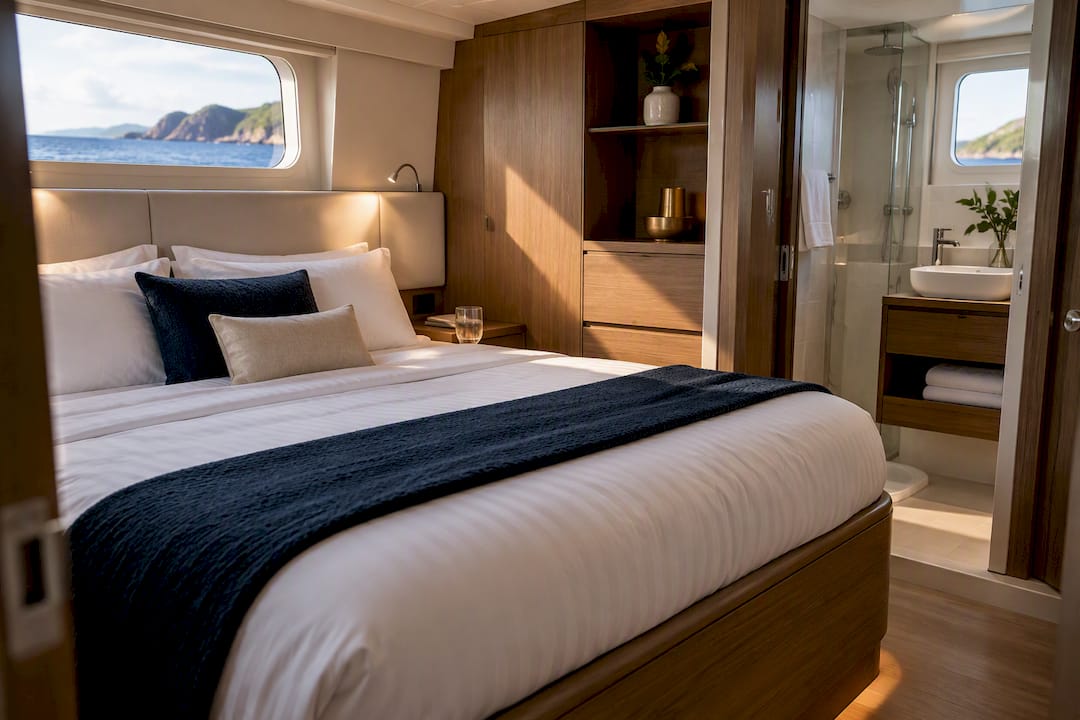
The crew is what actually shapes the experience. The captain is your navigator and your local expert, choosing anchorages based on weather, privacy, and what you want to do that day. The chef builds menus around your dietary needs and the destination's ingredients, from fresh-caught mahi-mahi in the Caribbean to Mediterranean mezze on a Greek island stop. A stewardess or additional crew member handles service, housekeeping, and often serves as a watersports guide. Aquanimity Yacht Charters and similar operators build their entire pitch around this trio working in concert, not as separate hired hands.
A typical day starts with coffee on deck, breakfast to order, a morning snorkel or paddleboard session, lunch aboard or ashore, an afternoon swim stop or dive excursion, and a sunset cocktail before a multi-course dinner. Tenders, dive gear, kayaks, and inflatable toys usually travel with the boat.
- En-suite cabins with air conditioning and full climate control
- A galley stocked and provisioned specifically for your group's preferences
- Watersports equipment: snorkel gear, paddleboards, kayaks, and often a dive compressor
- Flexible daily planning built around weather and your mood, not a printed schedule
Pro Tip: Tell your chef about dietary restrictions and favorite dishes before you board, not on day one. The best onboard meals come from provisioning lists built weeks in advance, not requests improvised mid-charter.
Where to Sail: Regions and Sample Itineraries
Destination shapes the entire feel of a catamaran charter, and the top operator pages consistently lead with the same short list of regions, as Yachts Croatia's guide to super cats confirms. Each has a distinct rhythm.
The Caribbean favors easy island hopping and calm, protected anchorages, ideal for travelers who want warm water and short hops between stops. The Mediterranean leans into culture and scenery, threading between historic ports, cliffside towns, and long lunches ashore. The South Pacific rewards travelers chasing seclusion, with reef systems and lagoons far from any crowd. Expedition-style regions push further, built around wildlife encounters and serious diving rather than beach time.
- Caribbean, 7 nights: Depart from a British Virgin Islands base, spend two days snorkeling the Baths and nearby reefs, sail to a quieter outer island for a beach barbecue, and finish with a final night anchored off a calm bay for stargazing.
- Mediterranean, 7 nights: Start among the Greek Cyclades, alternate port days for culture with anchorage days for swimming, and close with a sunset sail into a working fishing harbor for a final dinner ashore.
- South Pacific or expedition route, 7 nights: Sail between remote atolls with daily reef dives, a dedicated day for a wildlife-focused excursion, and flexible days built entirely around conditions rather than a fixed plan.
Season dictates provisioning and activity mix as much as geography does, so a good captain adjusts the plan daily rather than forcing a fixed route regardless of wind or wildlife movement.
How Do You Choose the Right Catamaran Charter?
The vessel matters less than who is running it. A beautiful boat with an inexperienced or overstretched crew will disappoint far faster than a slightly older catamaran with a captain who knows the region cold. Start your evaluation with the crew, not the brochure photos.
Work through these criteria before committing:
- Vessel layout and cabin count relative to your group size, so nobody is squeezed into a bunk built for a smaller party
- Crew credentials and regional experience, especially for dive-heavy or remote itineraries
- A written, itemized list of what the charter fee actually includes
- Insurance coverage and cancellation terms, spelled out in the contract, not implied verbally
- Recent, verifiable reviews rather than a handful of testimonials on the operator's own site
Ask these questions directly, and be wary of vague answers:
- "What exactly is included in the charter fee, and what falls under APA?"
- "Tell me about the crew's certifications, dive experience, and time in this specific region."
- "What happens if weather forces an itinerary change or early return?"
- "Can I see recent, independently verified guest reviews?"
- "What is your cancellation and refund policy in writing?"
Red flags worth walking away from: inclusions that stay deliberately vague until after you pay a deposit, wildly inconsistent reviews across platforms, and any operator who cannot clearly explain fuel and provisioning policies before you sign. A reputable broker or operator answers all five questions above without hesitation.
When Should You Book, and What Does "All-Inclusive" Cover?
Book six to twelve months ahead for peak weeks, particularly Caribbean season, which runs roughly November through April, and holiday periods anywhere in the world. Aquanimity's booking guidance echoes what most brokers advise: the best boats and crews get reserved early, and waiting until three months out usually means settling for whatever is left.
Pricing varies by region, vessel size, and season, but high-end listings give a useful reference point. Seven-night, all-inclusive charters on mid-size luxury catamarans commonly start in the low-to-mid five-figure range, according to sample rates from Orca's charter listings, with an Advance Provisioning Allowance, or APA, typically running 20 to 30% on top to cover food, drink, fuel, and shore excursions. Treat these as planning benchmarks, not fixed quotes.
A genuinely all-inclusive base fee usually covers:
- The vessel, dedicated crew, and standard watersports equipment
- Fuel for normal cruising and generator use
- Base provisioning: meals, standard beverages, and linens
What typically sits outside the base fee: premium alcohol upgrades, specialty shore excursions, national park or marine reserve fees, and crew gratuities. Ask for these in writing before you book.
Exotica Charters: Built for Immersive, Remote Charter Experiences
We built Exotica Charters around a simple observation: the vessel is only half the equation. A stunning catamaran means little if the crew has never dived the reef you are heading to or handled the permits a remote anchorage requires. That is why our team is made up of former captains and water sports professionals rather than booking agents working from a spreadsheet.
That background shows up in the itineraries we design, particularly for destinations where logistics matter as much as scenery. Getting access to remote dive sites or wildlife encounters often depends on relationships with local operators and knowledge of permits, a factor our team has flagged as decisive in regions like the Red Sea.
What that means for you:
- Itineraries built around diving, wildlife, and genuine expedition-style adventure, not generic beach stops
- A concierge planning process where we match crew expertise to your specific interests
- Strong client satisfaction reflected in positive Trustpilot ratings
- A straightforward first step: provide your dates, guest count, and priorities, and the plan will be built from there
What Does a Luxury Charter Actually Cost, Fees Included?
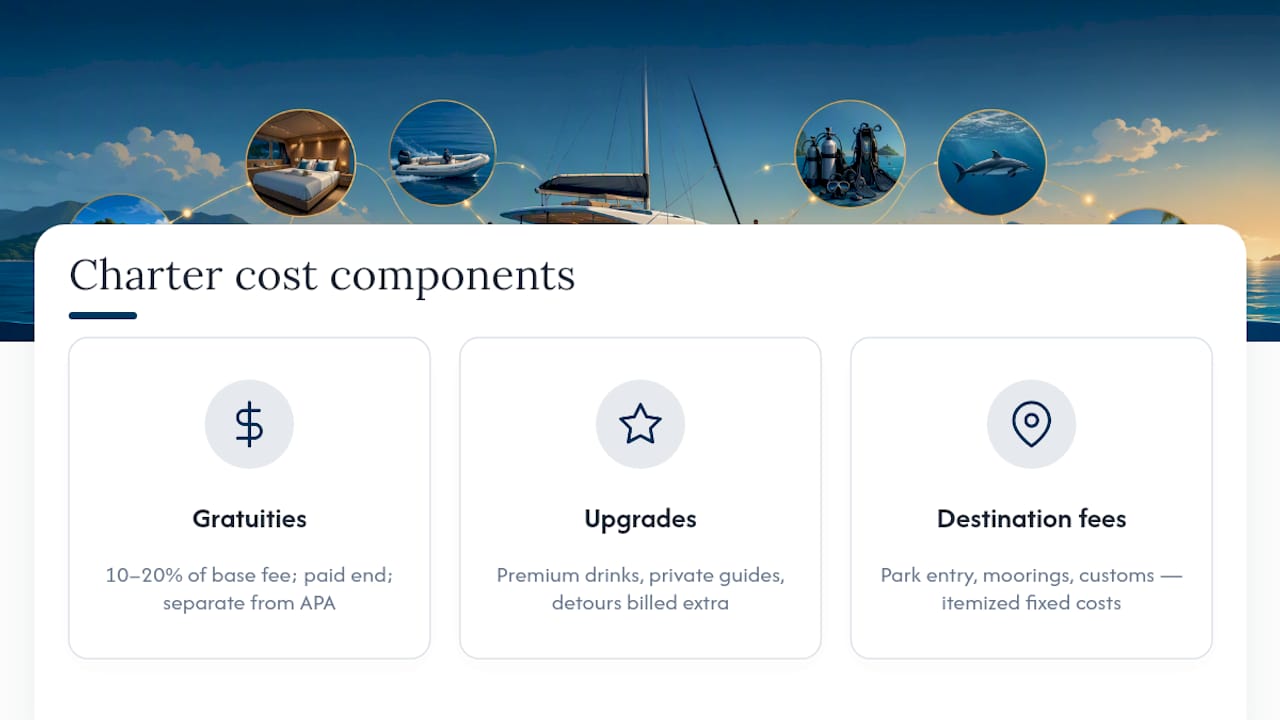
The quoted charter fee is only the starting number. Beyond the base rate and the APA already mentioned, three cost categories catch first-time charterers off guard: gratuities, upgrades, and destination-specific fees.
Crew gratuities are customary and expected on a crewed charter, typically running 10 to 20% of the base charter fee, paid at the end of the trip and split among the crew. This is separate from the APA and should be budgeted independently. Some operators suggest a figure in the contract; when they do not, ask directly rather than guessing on the last night.
Upgrades add up fast if you are not tracking them. Premium wine and spirits beyond the standard bar, specialty excursions like a private dive guide or a helicopter transfer, and off-itinerary detours requested mid-charter usually carry additional charges. A well-run charter will quote these before you commit to them, not bill you afterward as a surprise.
Destination fees vary enormously by region. Marine park entry fees, mooring charges in popular anchorages, and customs or clearance fees for multi-country itineraries can add a meaningful sum to a trip, particularly in areas with strict conservation zones. These are usually itemized separately from the APA because they are fixed costs rather than consumables.
The practical move is to ask your broker for a full written breakdown before booking: base fee, APA percentage, expected gratuity range, and any destination-specific charges known in advance. A transparent operator will hand you this without resistance, and the absence of one on request is itself worth noting.
How Does the Booking Process Actually Work?
Booking a luxury catamaran charter typically runs through five stages, and understanding the timeline helps you avoid last-minute scrambling for peak weeks.
It starts with a consultation, where you share your dates, guest count, budget range, and the kind of experience you want, whether that is diving, relaxation, or a mix. A broker then presents a shortlist of vessels and crews matched to those criteria, usually within a few days.
Once you select a vessel, you review and sign a charter agreement, which should spell out inclusions, the APA percentage, cancellation terms, and insurance coverage in plain language. A deposit, often 50%, secures the booking at this stage, with the balance and APA due closer to departure, commonly 30 to 60 days out.
After the contract is signed, the real planning begins. Your captain and chef reach out directly to discuss preferences: dietary needs, activity priorities, must-see stops, and any special requests like a celebration dinner or a specific dive site. This conversation usually happens four to eight weeks before departure, giving the crew time to provision properly.
The final stage is embarkation, where you meet your crew, review the safety briefing, and start the itinerary your captain has tailored around the planning conversation. From first inquiry to stepping aboard, the full process typically spans two to six months depending on season and vessel availability.
How Do Charter Companies Compare, and What Makes One Reputable?
Charter companies generally fall into two categories: large fleet operators managing dozens of vessels across multiple regions, and specialized brokers who curate a smaller, hand-picked selection matched to specific interests like diving or wildlife travel. Neither model is inherently better, but they serve different travelers.
Fleet operators offer more vessel choice and often more availability on short notice, which suits travelers who are flexible on destination and mainly want a reliable, well-maintained catamaran. Specialized brokers trade some of that breadth for depth, matching crew expertise to a specific kind of trip, which matters more for remote or activity-focused charters where local knowledge changes the experience significantly.
Whichever type you consider, the criteria for reputability stay consistent: verifiable insurance coverage, crew credentials you can confirm independently, a clear and itemized contract, and a track record of reviews across more than one platform. A company that only showcases testimonials on its own site, with no presence on independent review platforms, deserves a second look before you commit a deposit.
What Do Past Clients Say About Service Quality?
Guest feedback on crewed catamaran charters tends to cluster around two things: the crew and the food. Independent review platforms covering private catamaran excursions consistently highlight captain skill and meal quality as the factors that separate a good charter from a forgettable one, a pattern reflected in TripAdvisor's guest reviews of St. Maarten catamaran charters.
That pattern holds for multi-day luxury charters too. Guests rarely complain about the boat itself if the crew is attentive and the chef delivers on dietary requests. Complaints, when they surface, almost always trace back to unclear inclusions discovered mid-trip or a crew that felt understaffed for the group size. Both are avoidable with the vetting questions covered earlier in this guide.
Reading reviews across more than one platform, rather than relying solely on an operator's curated testimonials, gives a fuller picture. Look specifically for repeat mentions of crew responsiveness and food quality, since those two factors predict satisfaction more reliably than the vessel's age or brand.
What Cancellation and Insurance Policies Should You Expect?
Cancellation terms on luxury catamaran charters are typically tiered by how far out you cancel. Canceling well outside 90 days from departure often returns most or all of your deposit; canceling inside 30 to 60 days usually forfeits a much larger share, sometimes the full amount, since the operator has already turned away other bookings for that window.
Charter insurance, often called trip or cancellation insurance, is worth purchasing separately rather than assuming it is bundled into your charter fee. It rarely is. A dedicated policy typically covers trip cancellation for covered reasons, medical emergencies during the charter, and sometimes weather-related itinerary disruptions, though coverage specifics vary by provider and should be confirmed directly with the insurer.
Ask your broker whether the operator carries its own liability and hull insurance, separate from any personal trip insurance you purchase. Both should exist. A reputable operator will provide proof of vessel insurance without hesitation, and this is worth confirming before your deposit, not after.
Choosing Your Charter's Pace and Tone
The biggest planning mistake I see isn't picking the wrong region. It's picking the wrong pace. Some travelers want slow luxury: long lunches, minimal movement, a crew that anticipates rather than proposes. Others want active exploration, reef after reef, a dive briefing every morning.
Get honest about which one you are before you talk vessel size. If diving or wildlife access is the point, crew expertise matters more than the boat's finish. If relaxation is the point, cabin comfort and a chef who reads the room matter most. Either way, tell your broker the tone you want before the dates.
— Mo
Ready to Plan Your Own Charter?
Exotica Charters builds each itinerary around a specific advantage most operators cannot match: our team is staffed by former captains and water sports professionals, not general travel agents, which matters most the moment your trip involves diving, wildlife, or a destination most brokers have never actually sailed.
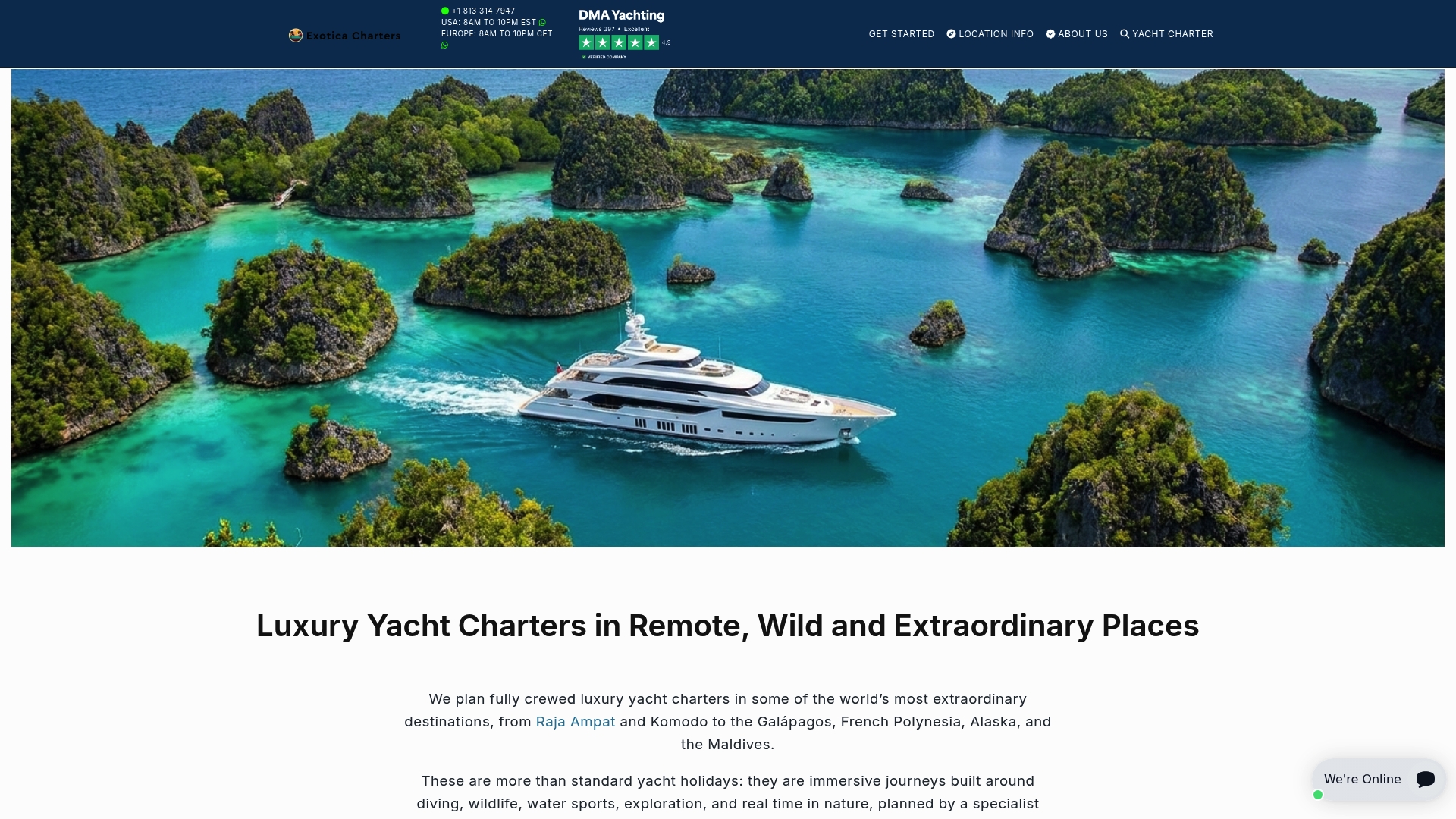
We handle the details that make a charter feel effortless rather than improvised: bespoke daily itineraries, a dedicated captain and chef matched to your group, full provisioning tailored to your dietary preferences, and a genuine focus on diving and wildlife access where the destination calls for it. When you reach out, come with your preferred dates, guest count, key interests, and any must-haves, whether that is a specific dive site or a milestone celebration. We take it from there.
Browse available vessels on our catamarans page, or start a conversation through our main enquiry page if you are still weighing vessel types. Either way, the next step is simple: tell us what you want your week on the water to feel like, and we will build the plan around it.
Sources
- Why you should charter a catamaran for your next adventure
- Luxury catamarans: Complete guide to super cats
FAQ
What Is Included in a Luxury Catamaran Charter?
A luxury catamaran charter typically includes the vessel, a dedicated crew, standard watersports gear, fuel, and base provisioning for meals and drinks. Premium alcohol, specialty excursions, and destination fees usually sit outside the base fee, covered instead by the APA.
How Much Does a Luxury Catamaran Charter Cost?
Seven night, all-inclusive charters on mid-size luxury catamarans commonly start in the low-to-mid five-figure range, with an APA of roughly 20 to 30% added for consumables and excursions. Exotica Charters does not publish fixed rates since pricing depends on vessel, region, and season, so current options are available on request through the catamarans page.
How Far in Advance Should I Book?
Book six to twelve months ahead for peak weeks, particularly Caribbean season from November through April, since the best vessels and crews reserve early. Waiting until three months out usually limits your options considerably.
Is a Catamaran Better Than a Monohull for a Charter?
For most groups seeking comfort and space, yes. Catamarans offer greater stability and a shallower draft, letting captains reach anchorages a deeper-keeled monohull cannot access.
What Should I Ask Before Booking a Charter?
Ask exactly what the charter fee includes, request the crew's certifications and regional experience, and get the cancellation policy in writing. Any operator hesitant to answer these clearly is worth reconsidering before you pay a deposit.