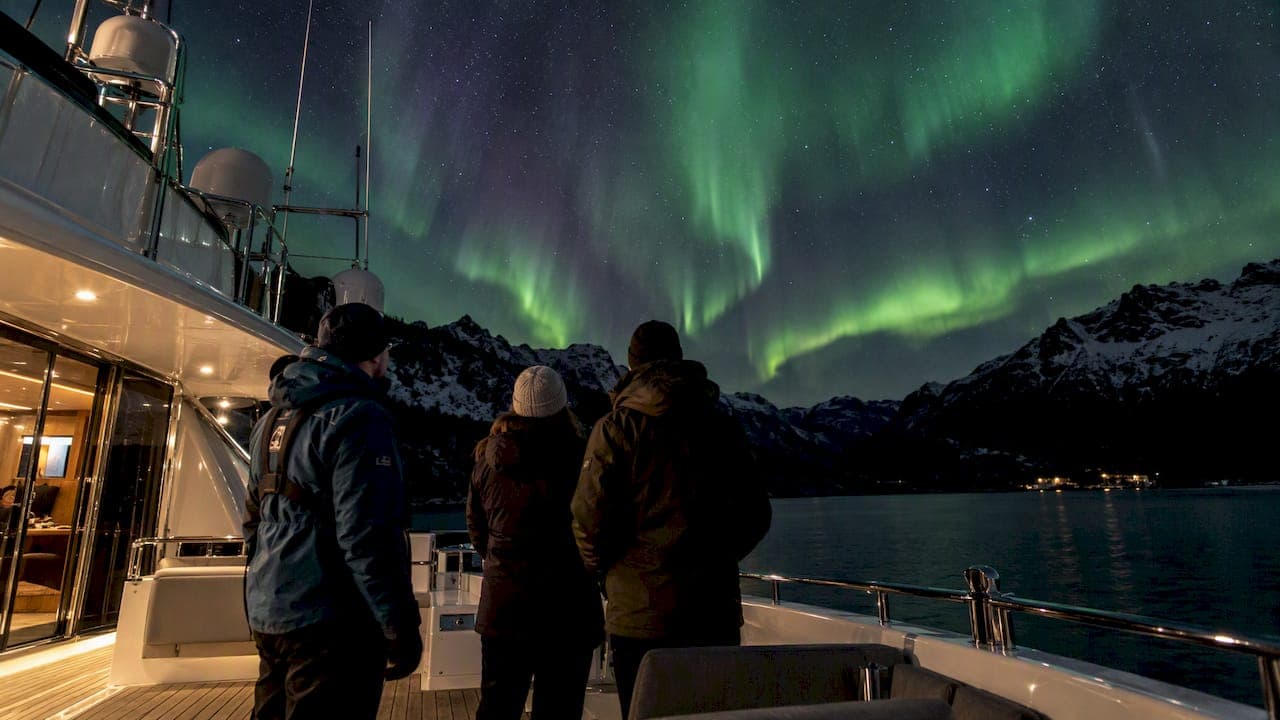
A private yacht charter is one of the most effective ways to increase your odds of seeing the northern lights while staying in genuine comfort. The season runs roughly September through March, with the equinox months offering some of the best viewing odds, and operators can arrange dedicated Arctic itineraries built entirely around clear skies.
TL;DR:
- Book a three to six night itinerary rather than a single overnight hunt, so weather does not leave the trip dependent on one viewing window.
- Schedule night watches around 11 PM to 2 AM; September and October offer milder temperatures, longer daylight for excursions, and fewer crowds.
- Choose a vessel built for cold water with redundant navigation and communications, and confirm that its crew has polar or high latitude sailing experience.
- Request the voyage plan and medical evacuation procedures, and check that the vessel meets relevant IMO Polar Code measures for polar operations.
- Confirm the captain can move between fjords as cloud cover changes, because a sheltered anchorage may offer clearer skies than nearby coastal waters.
Table of Contents
- Why a Yacht Charter Improves Your Odds of Seeing the Aurora
- Best Places and Timing for an Aurora Yacht Charter
- What to Expect on Board During an Aurora Charter
- Safety and Vessel Suitability for Arctic Waters
- How to Choose and Book Your Aurora Charter
- Onboard Activities and Gear Built for Watching the Lights
- Excursions That Pair Well With an Aurora Charter
- Staying Comfortable Through Arctic Nights
- What Running These Charters Has Taught Our Team
- Plan Your Arctic Aurora Charter With Us
- FAQ
- Sources
Why a Yacht Charter Improves Your Odds of Seeing the Aurora
A chartered yacht can do something a coach tour or scheduled cruise cannot: move. When cloud rolls in over one fjord, the captain repositions toward clearer skies rather than waiting out a fixed itinerary, and experts note that this mobility measurably increases sighting chances compared with land-based tours tied to a single location. Norway's fjords each hold their own microclimate: one arm of water can sit under thick cloud while a sheltered anchorage ten miles away is wide open to the sky, and a crew with local knowledge reads those patterns in real time.
This flexibility also means escaping the light pollution that dulls aurora displays near towns and ports, something fixed coach routes and scheduled sightseeing cruises rarely manage.
- A yacht can relocate within the same night if forecasts shift.
- Sheltered anchorages often sit in clearer microclimates than open coastal routes.
- Moving away from shore lighting sharpens contrast for both eyes and cameras.
Pro Tip: Build at least one flexible night into your itinerary with no fixed plan, just a standing night watch and the freedom to reposition the moment the sky opens up.
Best Places and Timing for an Aurora Yacht Charter
Tromsø sits squarely under the auroral oval, which is why it functions as the main hub for northern lights expeditions in Norway. From there, operators commonly base charters in Lyngen, Senja, Lofoten, or further north toward Alta, each offering its own mix of sheltered fjords, mountain backdrops, and distance from urban glow. Visit Norway highlights these same regions as reliable bases for both the aurora and daytime excursions.
The season runs roughly September through March, with peak activity clustering around the equinox months of September, October, March, and April, and typical peak viewing hours falling between about 11 PM and 2 AM.
September and October carry a particular advantage: milder temperatures, longer daylight for hiking or wildlife viewing beforehand, and fewer crowds than deep winter, all while still falling inside the active aurora window. Later winter months bring longer, darker nights but colder conditions on deck.
Itinerary length matters more than most first-time charterers expect. A single overnight hunt depends entirely on one night's weather. Three to six nights spread the risk across several chances for clear sky, which is why most serious aurora charters are booked as multi-night trips rather than a one-off cruise. For a deeper look at how the calendar affects planning, our guide on choosing a season for a Norway fjord charter walks through the trade-offs month by month.

What to Expect on Board During an Aurora Charter
Life aboard an aurora-focused charter follows a rhythm built around the sky rather than a fixed sightseeing schedule. Days typically open with daylight excursions, and nights are reserved for scanning the horizon from a warm, mobile base.
- Overnight chase: a single night dedicated entirely to tracking clear sky, often paired with a short daytime excursion beforehand.
- Three to six day fjord charter: a mix of hiking, wildlife viewing, or cultural stops by day and standing aurora watches by night.
- Expedition-style voyage: longer trips covering multiple regions, built for travelers who want both the lights and a fuller Arctic itinerary.
Onboard, expect heated cabins, hot meals timed around night watches rather than a rigid dinner hour, and crew who handle everything from navigation to waking guests the moment activity picks up overhead. Most charters pair the hunt with complementary excursions such as wildlife spotting or guided hikes, detailed further in our overview of what a luxury crewed charter in Norway includes.
Safety and Vessel Suitability for Arctic Waters
Arctic charters operate under a different standard than a summer Mediterranean cruise, and the vessel itself matters as much as the itinerary. The IMO Polar Code, in force since January 1, 2017, sets mandatory and recommendatory measures covering ship design, equipment, crew training, search and rescue, and environmental protection for vessels operating in polar waters, and it is the reference point operators cite when explaining why not every yacht is fit for this kind of voyage.
When evaluating a vessel for an Arctic charter, look for:
- Hull and structural features suited to cold-water operation, not just cosmetic ice-class branding.
- Redundant navigation and communication systems for remote fjord areas.
- A crew with genuine polar or high-latitude sailing experience, not just general charter hours.
- A documented voyage plan with contingencies for weather, search and rescue context, and medical evacuation.
Pro Tip: Ask to see the vessel's voyage plan and contingency procedures before booking. A well-run Arctic charter treats that document as routine, not an afterthought.
Our page on what makes a yacht suitable for polar or expedition waters breaks down these features in more detail for readers comparing vessels.
How to Choose and Book Your Aurora Charter
Picking the right charter comes down to a handful of decisions, and working through them in order avoids most of the regret stories that circulate after a disappointing trip.
- Pick a season window, favoring the equinox months or the milder shoulder season of September and October.
- Choose an itinerary length of at least three nights to spread your odds across multiple viewing windows.
- Confirm the vessel's suitability for Arctic conditions and the crew's polar experience.
- Check the operator's repositioning flexibility and cancellation policy before committing.
When you reach out to an operator, useful questions include:
- How much polar or high-latitude experience does the crew have?
- What ice-aware or reinforced features does the vessel carry?
- What is the medical and evacuation plan for remote legs of the route?
- Does the crew support photography, including tripod space and shooting guidance on deck?
Pricing shapes around vessel size, season, and what is included in the package, from catering to shore excursions, rather than a single flat rate. We work through each of these points directly with clients, shaping a custom itinerary around the specific regions and nights most likely to deliver clear sky.
Onboard Activities and Gear Built for Watching the Lights
The difference between a good aurora charter and a forgettable one often comes down to small operational details rather than the yacht itself. A dedicated, unobstructed night deck away from cabin lighting gives everyone room to watch without craning around rigging or superstructure, and a heated observation lounge with large windows lets guests step out of the cold the moment a display fades and come straight back when the crew calls it active again.
Photography support matters just as much as comfort. Good charters provide stable deck space for tripods, brief guidance on manual camera settings for long exposures, and enough forewarning when activity picks up that guests are not fumbling with gear in the dark. Warm blankets, thermoses of hot drinks kept ready through the night, and red-light torches that preserve night vision are small additions that make hours of waiting far more bearable.
Binoculars extend the experience beyond what the naked eye catches on fainter nights, and a crew member trained to recognize early signs of activity, a faint green band low on the horizon, for instance, often spots a display minutes before it becomes obvious to everyone else. None of this replaces clear sky and the right location, but it is the difference between guests who caught the moment comfortably and guests who missed it fumbling with a camera strap.
Excursions That Pair Well With an Aurora Charter
Daylight hours on an Arctic charter are rarely wasted waiting for nightfall. Most itineraries build in excursions that fit the region and season, turning the trip into a fuller Arctic experience rather than a single-purpose night watch.
Dog sledding is a common addition in areas like Tromsø and Alta, giving guests a half-day of activity that fits naturally between a morning arrival and an evening aurora watch. Snowshoeing through quiet fjordside terrain offers a gentler alternative, suited to guests who want to move through the landscape without the intensity of sledding. Cultural visits, including stops in Sami communities or small fishing villages along the Lyngen or Senja coastlines, add context to the region beyond the night sky itself.

Wildlife viewing rounds out many itineraries, particularly where whales or sea eagles are active along the coast during the same autumn and winter months. Because every charter is custom-built, these excursions are arranged around the group's pace and interests rather than slotted into a fixed template, letting the daytime schedule flex around whichever nights look most promising for the aurora itself.
Staying Comfortable Through Arctic Nights
Watching the sky for hours in an Arctic fjord asks more of the body than most travelers expect, even from the deck of a heated yacht. Layering matters more than any single piece of gear: a moisture-wicking base layer, an insulating mid layer, and a windproof, waterproof outer shell handle the swing between a warm cabin and an exposed deck far better than one heavy coat. Insulated boots, a proper hat, and glove liners thin enough to operate a camera make the difference between an hour of comfortable watching and a rushed retreat indoors.
Seasickness is worth planning for even on a stable, well-handled yacht, since anchorages and short repositioning moves can bring gentle motion that catches some guests off guard. Ginger tea, acclimatizing on deck early in the trip, and keeping to the main cabin level during any rougher stretches all help, and crew experienced with mixed groups usually have their own simple routines for easing early discomfort.
Cold exposure during long night watches is the other factor to manage, and the fix is mostly about pacing rather than toughing it out. Brief rotations between the open deck and a heated lounge keep guests warm without missing activity, and hot drinks kept on hand through the night prevent the slow chill that catches people a few hours in.
What Running These Charters Has Taught Our Team
Chasing the aurora by yacht rewards patience more than luck. Experience shows that the nights worth remembering usually come after a quiet repositioning move, not a dramatic one: a short hop into a sheltered bay once cloud started building over the original anchorage, followed by a clear window that opened an hour later. Clients often arrive expecting a single dramatic night and leave understanding why flexibility, patience, and a crew that knows the coastline matter more than any single forecast.
— Mo
Plan Your Arctic Aurora Charter With Us
![CTA image placeholder]
We build Arctic and Nordic itineraries around the nights most likely to deliver clear sky, matching vessel, crew, and route to how long you can travel and which regions interest you most. We handle the logistics around polar-aware crew, flexible repositioning, and the daytime excursions that round out the trip.
- Browse our dedicated Arctic and Nordic yacht charters to see regional options and vessel types.
- Explore Norway-specific itineraries for sample routes and logistics.
Reach out through our main booking page to start planning your aurora charter with a specialist on our team.
FAQ
When is the best time to book a northern lights yacht charter?
The season runs roughly September through March, with peak activity clustering around the equinox months of September, October, March, and April. Shoulder months like September and October also offer milder weather and more daylight for excursions before the nightly watch begins.
Why does a private yacht improve the chances of seeing the aurora?
A private yacht can reposition in real time to escape cloud cover and light pollution, something fixed land tours and scheduled cruises cannot do. Multi-night itineraries spread that advantage across several chances for clear sky rather than relying on a single evening.
Which regions in Norway are best for an aurora yacht charter?
Tromsø serves as the main hub since it sits under the auroral oval, with Lyngen, Senja, and Lofoten offering sheltered fjord anchorages and varied microclimates nearby. Basing a charter in one of these areas keeps the vessel within easy reach of multiple viewing options each night.
What safety standards should an Arctic yacht charter follow?
Operators running Arctic charters typically reference the IMO Polar Code, which sets mandatory and recommendatory standards for ship design, equipment, crew training, and voyage planning in polar waters. Ask any operator about the vessel's polar-aware features and the crew's high-latitude experience before booking.
How does Exotica Charters support an Arctic aurora trip?
Our team, made up of former captains and water sports professionals, builds custom Arctic itineraries around flexible repositioning, polar-aware vessels, and daytime excursions that complement the nightly aurora watch. You can start planning through our Arctic and Nordic charter page or reach out directly for a tailored route.
Sources
- Northern lights — when and where | Visit Tromsø
- How to see the Northern Lights by superyacht | Boat International
- International Code for Ships Operating in Polar Waters (Polar Code) | IMO
- The northern lights in Norway | Visit Norway