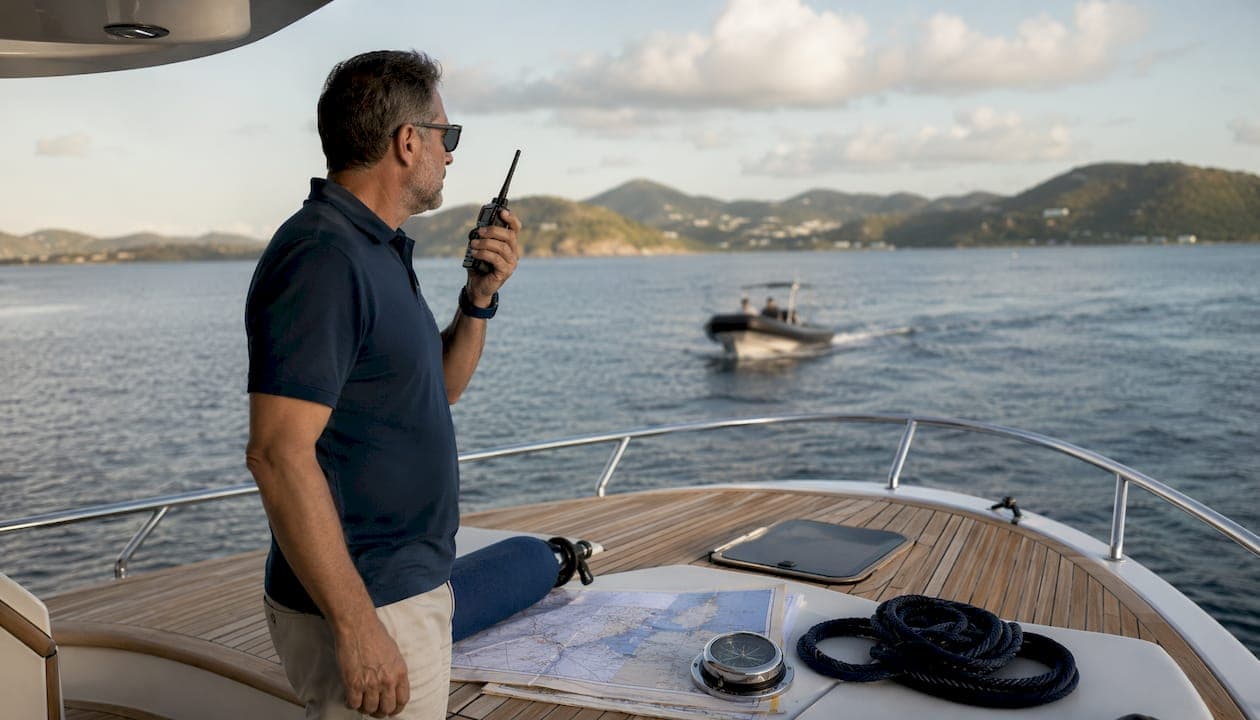
A tender vessel on a charter yacht is the small support boat that makes everything else possible. It bridges the gap between the mothership and the world beyond, ferrying guests to remote shorelines, handling provisioning runs, and launching water sports that the main yacht simply cannot support from its hull. On any serious charter, the tender is not an afterthought. It is the operational backbone that determines how freely you can move, explore, and experience the destinations around you.
On a typical crewed charter, you will find at least one tender aboard, and larger superyachts often carry two or more. Their functions span guest transport, supply logistics, safety response, and recreational support. Without a capable tender, even the most extraordinary anchorage becomes a view you admire from the deck rather than a place you actually reach.
- Tenders serve as the primary link between the yacht and shore when docking is not feasible due to the vessel's size or shallow water depths.
- They transport guests and crew to beaches, restaurants, and remote coves inaccessible to the mothership.
- They handle provisioning, moving fuel, food, and equipment between shore and the yacht.
- They support water sports including diving, wakeboarding, and fishing.
- Large superyachts often carry multiple tenders, including a dedicated limousine tender for formal transfers and a rigid inflatable boat (RIB) for active use.
Table of Contents
- What does a tender vessel actually do on a charter?
- What types and sizes of tenders do charter yachts carry?
- How are tender vessels operated safely on a charter?
- How do you choose the right tender for your charter experience?
- Exoticacharters brings tender expertise to every extraordinary destination
- Key Takeaways
What does a tender vessel actually do on a charter?
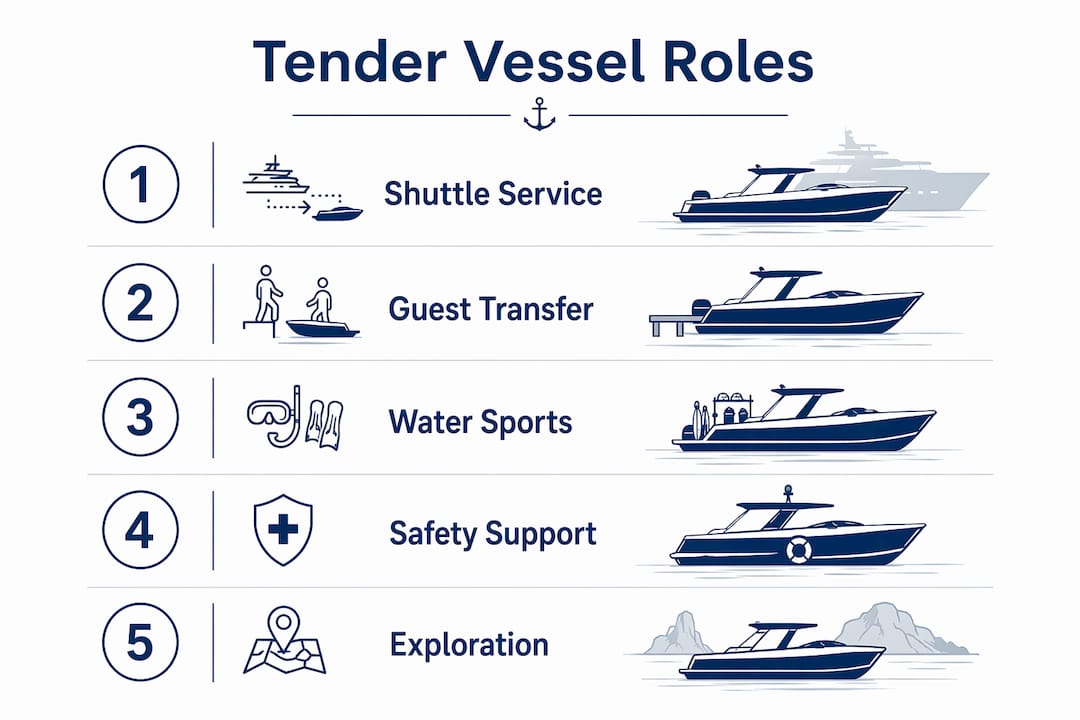
The role of tender vessel on charter goes well beyond simple shuttling. Tenders are the operational workhorses that keep a charter running smoothly across every dimension of the guest experience.
Guest and crew transport is the most visible function. When a superyacht anchors off a dramatic volcanic coastline or a protected coral bay, the tender makes the run to shore, often multiple times a day. Guests reach waterfront restaurants, local markets, and hidden beaches that no marina could ever provide access to.
Provisioning and logistics keep the yacht stocked and functional. Fresh produce, ice, fuel, and dive equipment all move through the tender. On longer itineraries through remote waters, this supply chain role becomes genuinely critical.
- Water sports facilitation: tenders tow wakeboarders, deploy dive flags, and position guests at the best snorkeling sites.
- Safety and rescue: tenders serve as the first-response craft for man-overboard situations and emergency evacuations.
- Exploration support: they carry guests into shallow lagoons, sea caves, and mangrove channels that the mothership cannot enter.
- Platform for fishing: tenders position anglers away from the yacht's shadow and engine noise for better results.
- Shore excursion logistics: they coordinate timing for guided hikes, wildlife tours, and cultural visits.
Experts consistently point to the tender as the factor that determines a charter's true operational flexibility. The ability to access remote coves or shore-side dining beyond the mothership's reach is what separates a genuinely immersive charter from one that simply anchors in beautiful water.
What types and sizes of tenders do charter yachts carry?
Tender design has evolved considerably, and the variety available today reflects the range of tasks these boats are asked to perform. The distinction between a limousine tender and a utility RIB captures the core trade-off: formal comfort versus rugged capability.
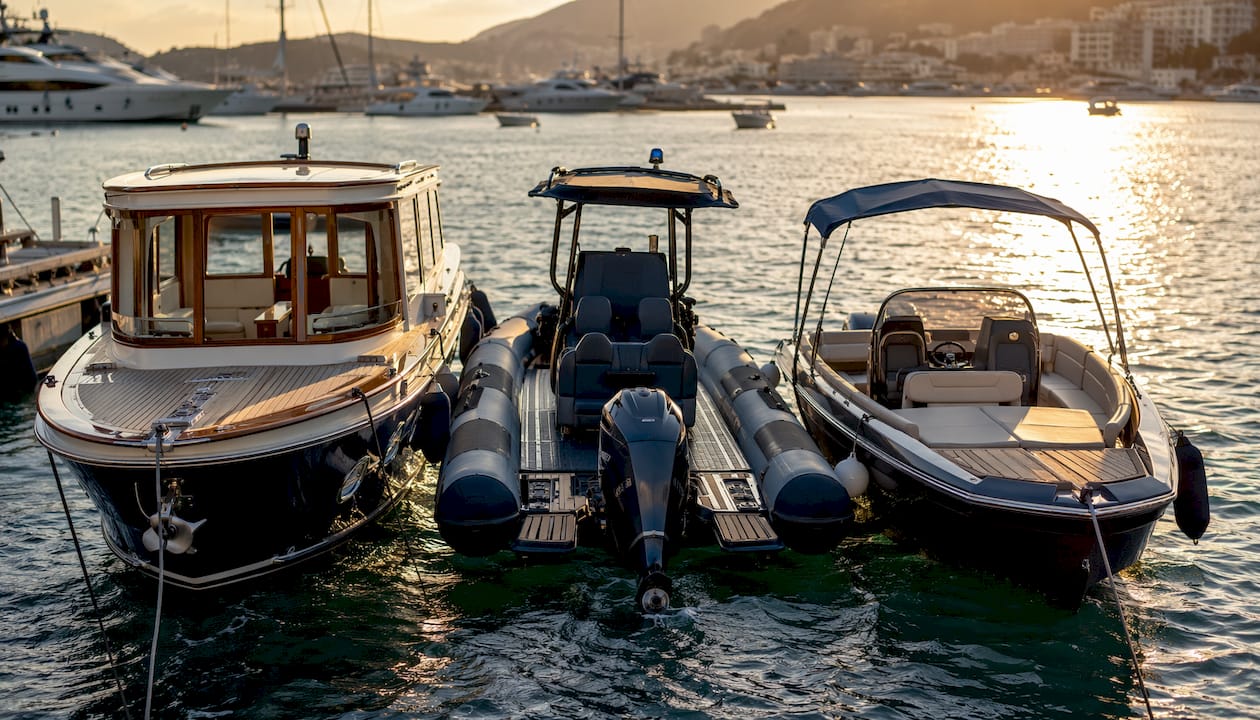
Limousine tenders feature enclosed, climate-controlled cabins with upholstered seating and polished finishes. They are built for formal guest transfers, arriving at a marina or superyacht event with the same aesthetic care as the mothership itself. Speed matters here too. Some superyacht tenders are capable of high speeds, enabling rapid transfers across open water.
RIBs (rigid inflatable boats) prioritize durability, quick boarding, and stability in chop. They are the preferred choice for water sports support, dive operations, and any situation where guests need to get in and out of the water repeatedly. Their inflatable tubes absorb impact and provide a forgiving boarding surface.
Utility and crew tenders handle the less glamorous but equally vital work: fuel runs, equipment transfers, and crew logistics. They tend to be simpler in finish and focused purely on capacity and reliability.
- SOLAS-compliant rescue boats are mandatory on larger commercial charter yachts, often doubling as tenders in day-to-day use.
- Lifeboat-certified catamaran tenders on large vessels are designed specifically for stability and can carry a large number of passengers.
- Shadow vessels, ranging from 20–100 meters in length, accompany the largest superyachts carrying helicopters, automobiles, and additional watercraft that the main yacht cannot stow.
Storage shapes which tenders a yacht can carry. Larger superyachts store tenders in stern garages, launching them via cranes or slipways. Smaller yachts use davits above the transom or tow tenders externally, which requires specialized rigging and, for insurers, a tracking system in case the tow rig fails.
How are tender vessels operated safely on a charter?
Tender operations rank among the riskiest activities on any charter, and the Australian Maritime Safety Authority classifies tenders as distinct domestic commercial vessels, each requiring its own safety management system (SMS). That system must cover risk assessments, maintenance schedules, emergency planning, crew training, and minimum crewing requirements.
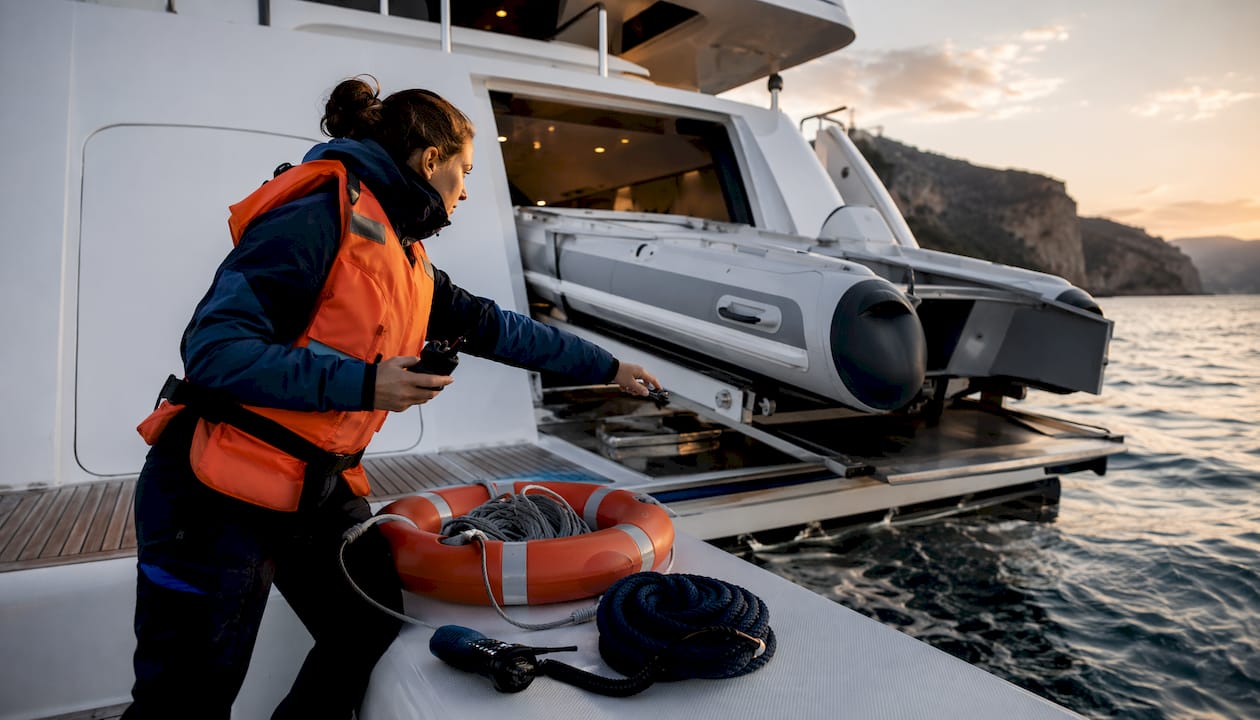
Weather changes fast on the water. A tender operating in a protected bay at noon can face steep chop and reduced visibility by mid-afternoon. Crew training must account for this variability, and the SMS must set out safe operating procedures for all wind strengths, wave heights, and tidal conditions.
Communication between the tender and the mothership is non-negotiable. VHF marine radios establish two-way contact, while AIS and the parent vessel's radar system allow continuous position monitoring. Scheduled check-in times, when the tender returns or reports its position, add another layer of accountability.
Pro Tip: Ask your charter provider whether their tenders carry Personal Locator Beacons (PLBs) and whether the crew holds current first aid certification. These two details reveal more about a charter operation's safety culture than any brochure will.
Every tender should carry a first aid kit, appropriate emergency equipment, and navigation instruments including depth sounders. Operating in a buddy system with a second tender reduces the risk of a single-operator incident, particularly in remote anchorages where outside assistance is far away.
How do you choose the right tender for your charter experience?
Matching the tender to your itinerary is one of the most practical decisions in charter planning, and it is one that experienced charter specialists handle as a matter of course. The right choice depends on where you are going, what you want to do, and how many guests will be moving at any given time.
- Yacht size and storage capacity determine which tenders can physically be carried. A 40-meter motor yacht with a stern garage can accommodate a full-size limousine tender and a RIB simultaneously; a 20-meter sailing yacht may carry only one small RIB on davits.
- Itinerary and anchorage type shape the priority. Remote archipelagos with no marina infrastructure demand a capable, seaworthy tender. Destinations with good port access reduce the pressure on tender logistics.
- Activity focus drives the design choice. Diving and water sports call for a RIB with a swim platform and gear storage. Formal evening transfers to a coastal town call for a limousine tender.
- Guest preferences and mobility matter more than many guests realize. Boarding a RIB in open water requires agility; a limousine tender with a stable boarding platform is far more comfortable for guests who prefer a gentler experience.
For charters with ambitious itineraries across multiple destinations, clients can also arrange dedicated chase boat services beyond the onboard tender, adding a high-performance vessel with a specialized crew for transfers and excursions that require greater range or speed. This option is genuinely underappreciated on multi-destination charters, where a single onboard tender can become a bottleneck.
Working with a charter specialist who understands tender logistics from the inside, rather than simply listing what each yacht carries, makes a real difference. The right yacht setup for a Galápagos wildlife expedition looks very different from the setup for a French Riviera social charter, and the tender configuration is a significant part of that difference.
Exoticacharters brings tender expertise to every extraordinary destination
For guests heading to the Galápagos, French Polynesia, Alaska, or other genuinely remote waters, tender capability is not a luxury detail. It is what makes the charter work.
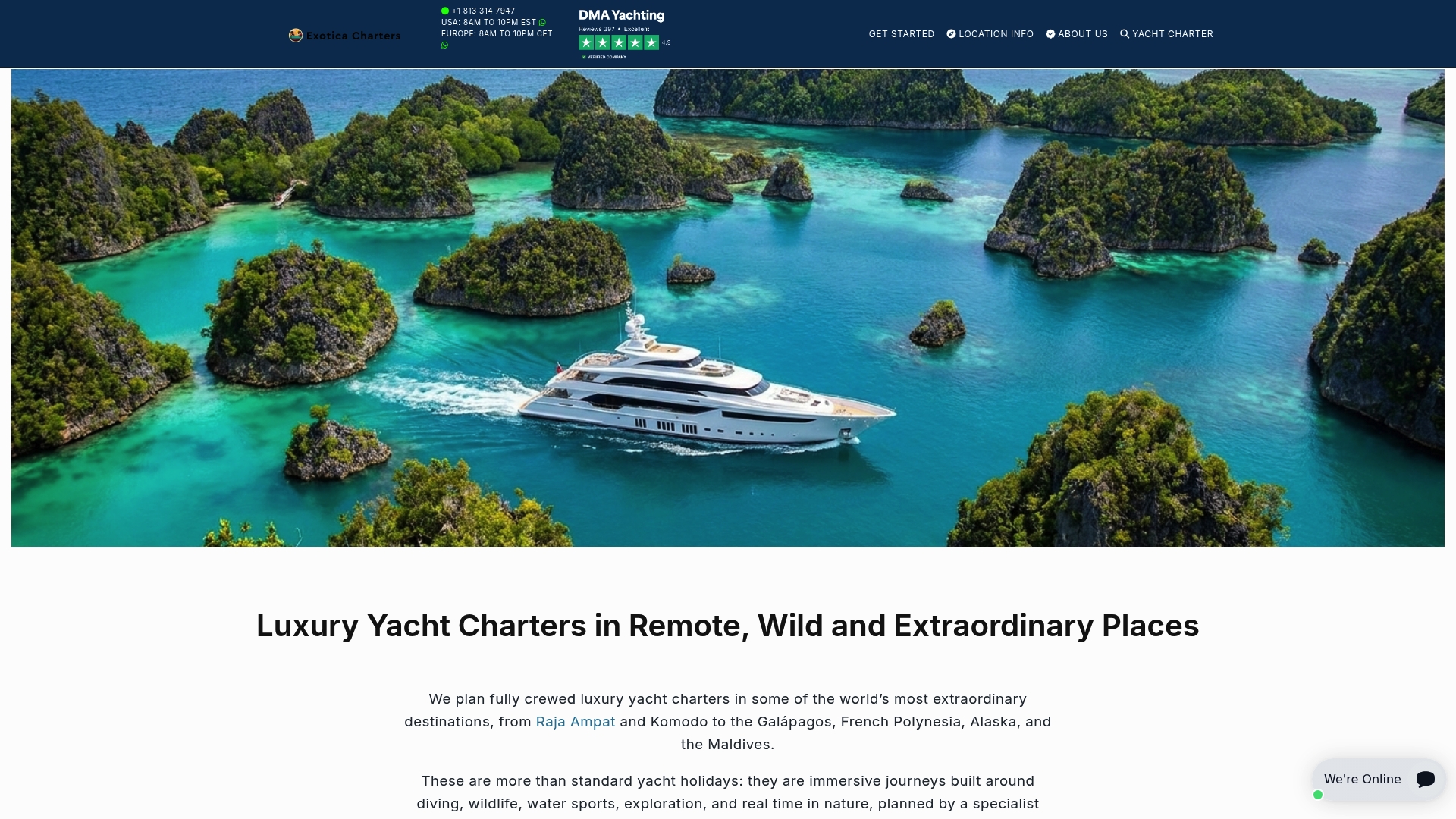
Exoticacharters is built around exactly this kind of operational depth. The team consists of former captains and water sports professionals who understand tender logistics from direct experience, not theory. They match each charter to a vessel whose tender setup fits the destination and the guest group, whether that means a RIB for daily dive operations in remote anchorages or a limousine tender for a more formal itinerary. Rated highly on Trustpilot, Exoticacharters has a track record of delivering charters that are both adventurous and genuinely comfortable. Browse the luxury yacht fleet and speak with a charter specialist to find the right vessel and tender configuration for your next voyage.
Key Takeaways
The tender vessel is the single most operationally important support craft on a charter yacht, determining how freely guests can access remote destinations, water sports, and shore-side experiences.
| Point | Details |
|---|---|
| Core function | Tenders bridge the gap between the mothership and shore when docking is not feasible due to size or shallow water. |
| Speed capability | Some superyacht tenders are capable of high speeds, enabling rapid guest transport across open water. |
| Safety classification | Tenders are classified as domestic commercial vessels requiring their own safety management system and trained crew. |
| Passenger capacity | Lifeboat-certified catamaran tenders on large vessels can carry 100 to 150 passengers, designed for stability. |
| Exoticacharters advantage | Exoticacharters matches each charter to a vessel with the right tender setup for remote, adventure-focused destinations. |