
Yacht charter contract negotiation is the process of securing advantageous terms and clear expectations before signing the legally binding agreement for your luxury charter. The standard industry document governing most crewed charters is the MYBA contract, which defines payment schedules, cancellation policies, liability, crew roles, and usage restrictions in precise legal language. Getting these terms right before you sign protects your investment and sets the tone for the entire trip. Whether you are planning a week in French Polynesia or an expedition through the Galápagos, the negotiation phase is where great charters are made or broken.
What are the key yacht charter contract terms you must understand?
Every charter agreement covers the same core categories, and knowing each one gives you real leverage at the table. These are not boilerplate formalities. They are the clauses that determine what you actually get for your money.
-
Charter fee and payment schedule. Standard payment terms require a 50% deposit upon signing, with the remaining 50% plus the Advance Provisioning Allowance (APA) due 30 days before embarkation. The APA covers fuel, provisioning, and port fees, and typically runs 25–35% of the base charter fee. Clarify the APA estimate in writing before you sign.
-
Cancellation policy and force majeure. Cancellation terms define refund amounts and penalty timelines, while force majeure clauses account for events like travel restrictions or extreme weather. After recent global disruptions, these clauses carry more weight than ever. Push for a clear definition of what qualifies as force majeure.
-
Liability and insurance. The contract must specify who holds liability for damage to the vessel, third parties, and your personal belongings. Confirm that the yacht carries valid hull and P&I (Protection and Indemnity) insurance. Ask for proof of coverage before signing.
-
Crew and service obligations. A crewed yacht charter contract should name the captain and specify the crew count, their roles, and the service standard expected. Vague language here leads to disappointment on board.
-
Cruising area and usage restrictions. The contract defines exactly where the yacht may travel. Anchoring outside the agreed cruising area can void your insurance and trigger penalties. If your itinerary includes remote anchorages, confirm they fall within the permitted zone.
-
Inclusions and exclusions. Fuel, water sports equipment, dockage, and provisioning are frequently listed as extras. Get a written breakdown of what the base fee covers and what goes against the APA. Ambiguity here is the most common source of post-charter disputes.
The MYBA E-Contract is a serially numbered digital document used widely in European and Mediterranean charters. Verify the serial number before your charter begins. An unverified contract is a red flag worth acting on immediately.
How can you negotiate beyond price for better charter terms?
Price is only one dimension of a charter agreement. Effective negotiation moves beyond the base fee to terms like fuel inclusion, guest capacity, and amenity packages, where owners face low marginal cost but you gain significant value. This is where the most experienced charterers find their edge.
-
Ask open-ended questions first. Uncovering owner motivations through open-ended questions reveals priorities you can address. An owner eager to fill a gap in the calendar may accept fuel inclusion or a reduced APA estimate far more readily than a price cut.
-
Negotiate inclusions, not just rates. Request that fuel, water sports gear, or a specific docking location be folded into the base fee. These additions cost the owner relatively little but meaningfully improve your experience and total value.
-
Trade concessions strategically. Identify which terms matter least to you and offer flexibility there in exchange for gains on the terms that matter most. Agreeing to a slightly shorter turnaround day, for example, can unlock a meaningful discount or a premium cabin upgrade.
-
Time your offer strategically. Off-peak timing and listings that have sat on the market give you natural leverage. Submitting an offer during shoulder season or when a yacht has had a recent cancellation puts you in a stronger position. Knowing when to start looking is itself a negotiation advantage.
-
Document every agreed term in writing. Verbal agreements create ambiguity and rarely hold up when disputes arise. Every concession, inclusion, and modification must appear in the signed contract or a written addendum.
Pro Tip: Ask the broker or owner directly: "What flexibility do you have on inclusions for this period?" That single question often surfaces options that were never advertised.
What preparation should you do before negotiating a charter contract?
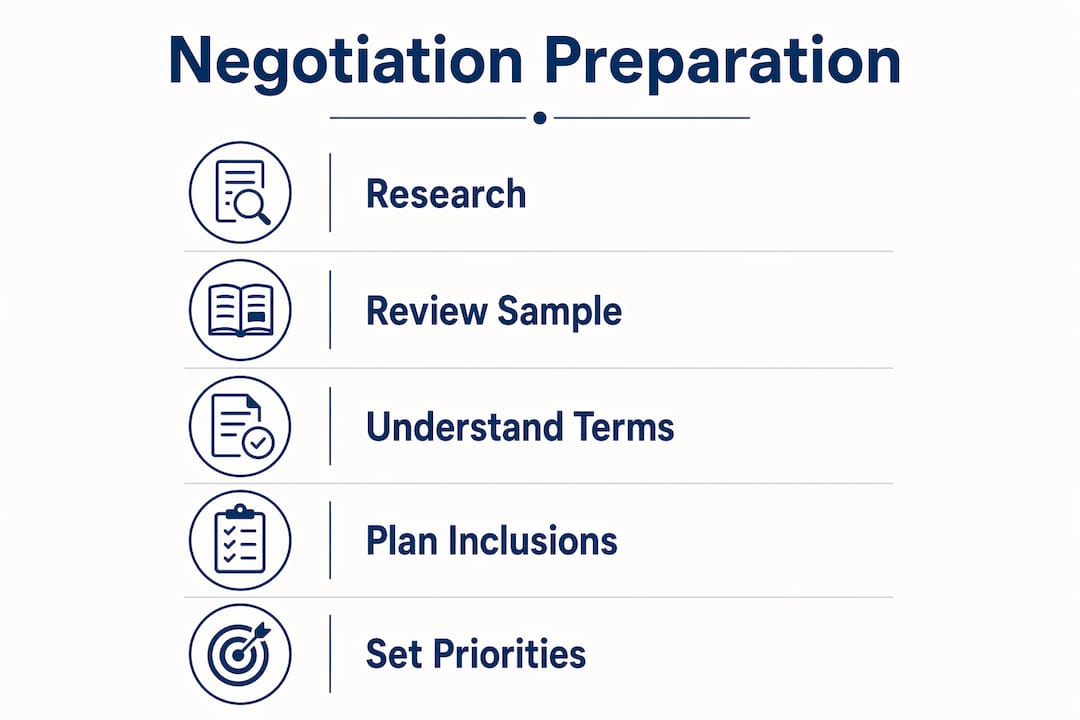
Preparation separates charterers who get favorable terms from those who accept whatever is offered. Walking into a negotiation without research is the fastest way to overpay or miss critical protections.

| Preparation step | Why it matters |
|---|---|
| Research MYBA, CYBA, and IYBA contract standards | Knowing standard clauses prevents you from accepting unusual or unfavorable terms |
| Define your budget ceiling in advance | Knowing your limit keeps you from revealing it prematurely during negotiation |
| Request comparable pricing from a broker | Market data gives you a factual basis for any counteroffer |
| Prepare a detailed itinerary and preference sheet | Clear preferences reduce ambiguity and give the contract drafter less room for vague language |
| Work with a charter specialist or legal advisor | Specialist expertise provides access to off-market yachts and contract terms aligned with your needs |
Understanding guest capacity rules before you negotiate also matters. Contracts specify maximum guest numbers, and exceeding them mid-charter creates liability and service quality problems. Lock in the correct figure before signing.
Pro Tip: Request a sample contract from your broker before negotiations begin. Reading it cold, without time pressure, reveals clauses you would otherwise miss at the signing stage.
How to handle common mistakes in charter contract negotiation?
Even experienced travelers make avoidable errors when negotiating charter agreements. Most of these mistakes share a common root: moving too fast or leaving too much undefined.
-
Never reveal your maximum budget. Once an owner or broker knows your ceiling, every negotiation anchors to that number. Share a range, not a hard limit.
-
Avoid agreeing to anything verbally without follow-up in writing. A handshake on a fuel inclusion means nothing if it does not appear in the contract. Always request written confirmation of any agreed modification.
-
Do not rush the review process. Post-signature modifications often incur penalties or get rejected outright. The negotiation phase is your only clean window to define all expectations.
-
Clarify what counts as an "extra." Ambiguous language around extras versus base fees is the most common source of surprise charges. Ask for a line-item breakdown of what the APA is expected to cover.
-
Understand APA management. The APA is held in a separate account and reconciled at the end of the charter. Any unspent funds are returned; any overage is your responsibility. Negotiate the APA estimate carefully, and ask for receipts throughout the trip.
"The negotiation phase is the time to specify all expectations clearly. Once signed, modifications to contracts are difficult and costly. Treat the contract review as the most important conversation of your charter planning."
Checking whether crewed charter discounts are available for your dates is also worth doing before you finalize any agreement. Owners sometimes offer unpublished reductions for repeat clients or last-minute bookings.
Key Takeaways
Successful yacht charter contract negotiation requires understanding standard contract structures, preparing thoroughly, and focusing on non-price terms that deliver real value without confrontation.
| Point | Details |
|---|---|
| Know the MYBA contract structure | The MYBA contract governs most crewed charters and defines payment, cancellation, crew, and usage terms. |
| Negotiate inclusions, not just price | Fuel, water sports, and docking inclusions often cost owners little but add significant value for you. |
| Prepare before you negotiate | Research comparable rates, define your budget ceiling, and prepare a preference sheet before any discussion. |
| Document every agreed term | Verbal agreements create disputes; every concession must appear in the signed contract or a written addendum. |
| Time your offer strategically | Off-peak submissions and listings with recent cancellations give you the strongest negotiating position. |
What I have learned about charter negotiation after years on the water
Most people approach a charter negotiation the way they approach buying a car: they focus almost entirely on getting the price down. That instinct is understandable, but it leaves a lot of value on the table.
The most favorable charter agreements I have seen come from charterers who treated the process as collaborative rather than adversarial. They came prepared with data, asked the right questions, and focused on building a contract that worked for both sides. An owner who feels respected is far more likely to throw in fuel coverage or a premium anchorage than one who feels pressured.
Timing matters more than most people realize. Submitting an offer during shoulder season, or when a yacht has had a recent gap in bookings, shifts the dynamic meaningfully. Patience is a genuine negotiation tool, not just a virtue.
Working with a skilled broker changes everything. A good specialist knows which owners have flexibility, which yachts are underpriced for their quality, and how to phrase requests so they land well. That insider knowledge is worth far more than any single concession you might win on your own.
The single most important habit is precision. Vague contract language is always resolved in the owner's favor when disputes arise. Every term you care about deserves a specific, written definition. That discipline, more than any negotiation tactic, is what separates a great charter experience from a frustrating one.
— Mo
How Exoticacharters helps you secure the right charter terms
Planning a luxury charter to a remote destination like the Galápagos or French Polynesia involves contract terms that go well beyond a standard Mediterranean booking. Exoticacharters brings former captains and water sports professionals to every client conversation, which means you get advice grounded in real on-water experience rather than generic brokerage guidance.
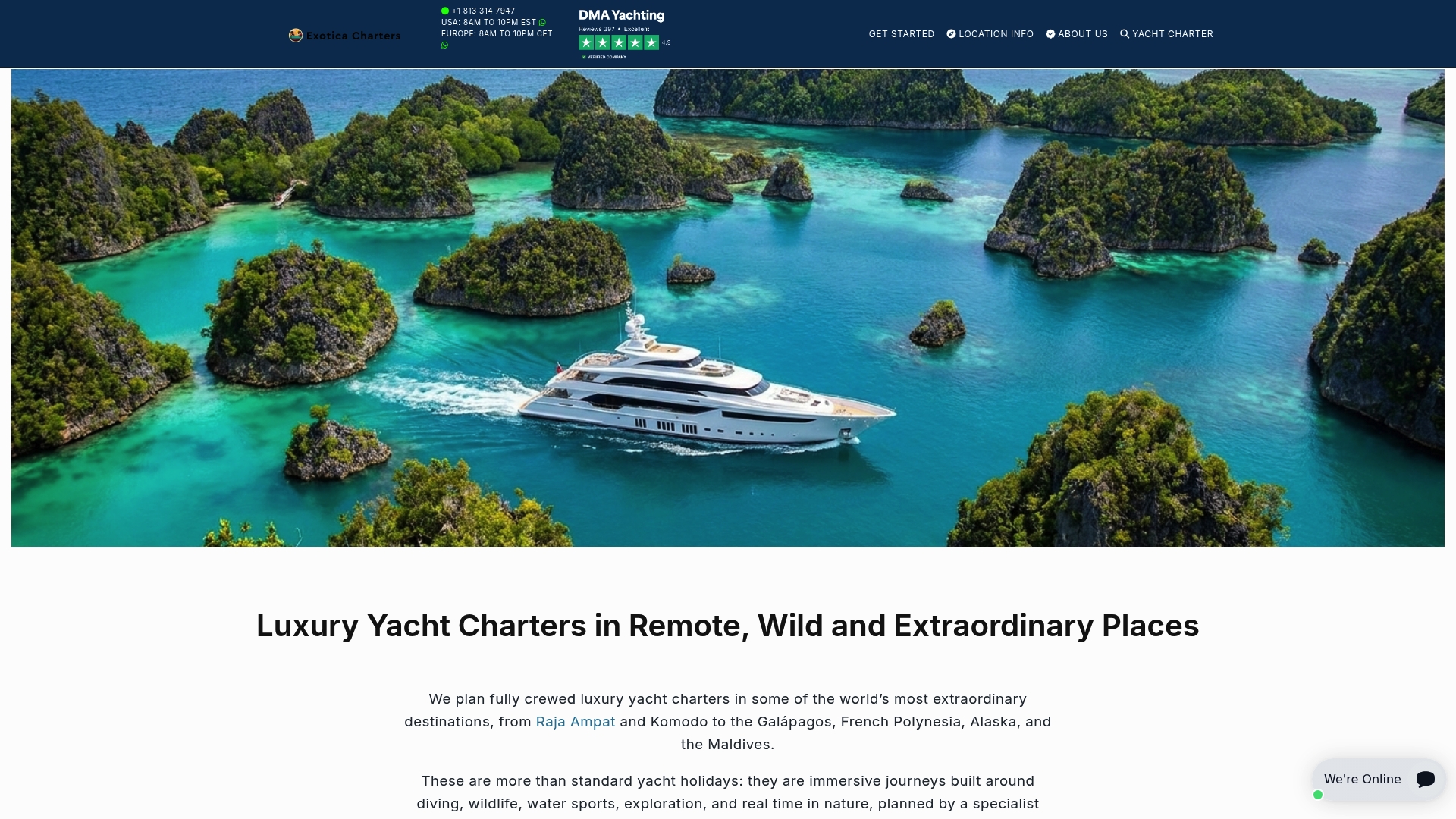
The Exoticacharters team guides clients from initial yacht selection through to contract signing, identifying favorable terms, flagging unusual clauses, and negotiating inclusions that match your specific itinerary. Access to off-market yachts and exclusive anchorages means the options available to Exoticacharters clients often never appear on public listings. Browse the full luxury yacht fleet to see what is available for your dates, or speak directly with a charter specialist to discuss your contract priorities before any commitment is made.
FAQ
What is the MYBA contract in yacht chartering?
The MYBA contract is the most widely used legal document governing crewed charters in Europe and the Caribbean. It defines payment schedules, cancellation policies, crew obligations, and cruising area restrictions for both parties.
When should I start negotiating a yacht charter contract?
Start negotiations as early as possible, ideally during shoulder season when owners have more calendar flexibility. Strategic timing significantly increases your chances of securing favorable inclusions and rates.
What is the APA in a charter contract?
The Advance Provisioning Allowance (APA) is a separate fund, typically 25–35% of the base charter fee, held to cover fuel, provisioning, port fees, and other running costs. Unspent APA funds are returned to you at the end of the charter.
Can I negotiate inclusions rather than just the charter fee?
Yes, and this is often the most effective approach. Fuel coverage, water sports equipment, and docking fees are frequently negotiable inclusions that owners can offer at low cost while delivering high value to you.
What happens if I need to modify the contract after signing?
Post-signature modifications typically incur penalties or are rejected by the owner. Define all expectations, inclusions, and itinerary details during the negotiation phase before any document is signed.