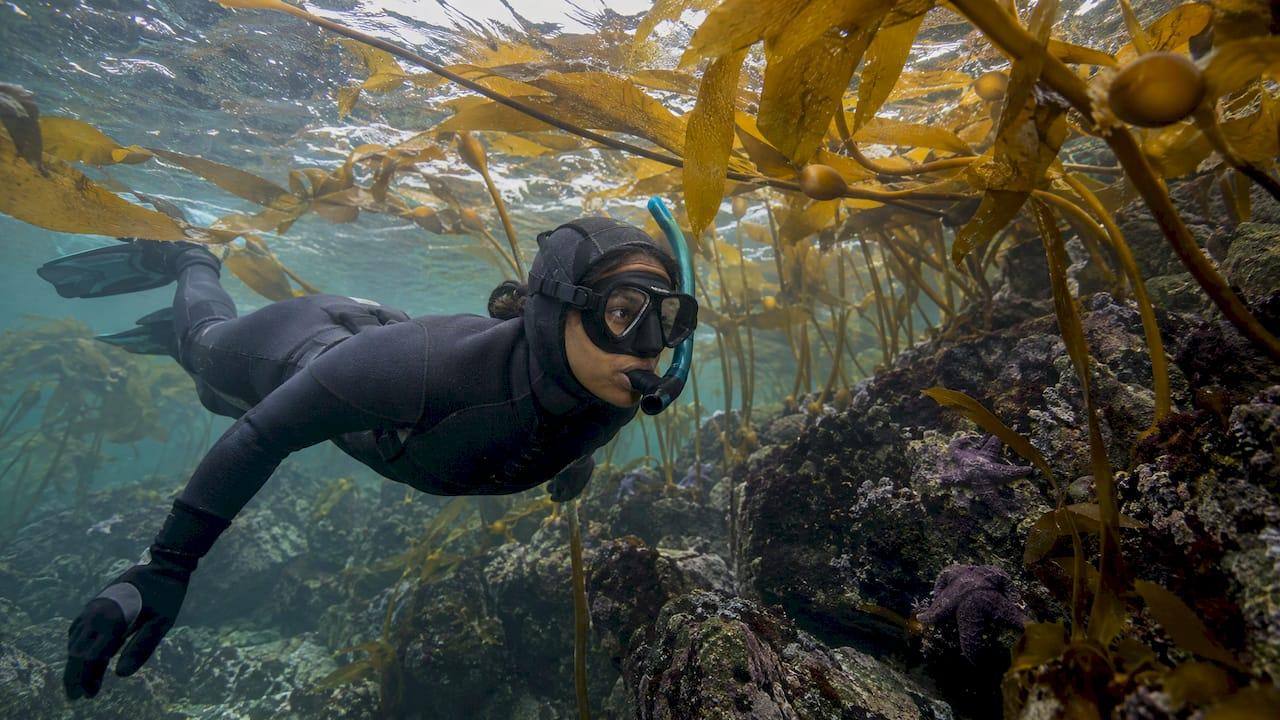
Yes, you can snorkel in Alaska, and it is one of the most unexpected things you can do on the water there. You will not find coral or tropical shallows. You will find bull kelp forests, sea stars in purple and orange, curious sea lions and, now and then, a whale passing in the distance. The best places are in Southeast Alaska, from Ketchikan to Sitka and Juneau, and the best way to see more than a single shore site is to reach the coves by boat. That is where a fully crewed yacht charter, planned around wildlife and water sports, changes the experience.
TL;DR
- Alaska snorkeling is a cold-water, wetsuit activity: Ketchikan's average summer water temperature is about 55°F, and the season runs roughly May through September.
- The best-known sites are Mountain Point near Ketchikan, Magic Island at Sitka and shore sites around Juneau, with the Channel Islands north of Juneau reached by boat.
- Expect kelp, sea stars, anemones, sea cucumbers and jellyfish, with seals, sea lions and whales as occasional extras.
- No experience is needed for a guided outing, but a typical one lasts only about an hour in the water.
- A crewed yacht lets you add anchorage-by-anchorage snorkeling to a wider wildlife itinerary, at your own pace.
Table of Contents
- Snorkeling in Alaska: what it is really like
- Where to snorkel in Alaska
- What you can see underwater
- When is the snorkeling season in Alaska?
- Wetsuits, comfort and safety
- Beginners, couples and families
- Why a crewed yacht changes Alaska snorkeling
- Our perspective
- Plan your Alaska snorkeling trip with us
- FAQ
- Sources
Snorkeling in Alaska: what it is really like
Think of it as a different sport from Caribbean snorkeling. The water is cold, the visibility can be strikingly clear, and the scenery sits in the first few feet below the surface: kelp, rock walls, starfish and the small, strange animals of the Pacific coast.
AARP's guide to Alaskan activities puts Ketchikan's average summer water temperature at 55°F. That is why snorkelers here wear thick neoprene. A National Geographic writer describes suiting up in super-thick neoprene, walking backwards into the water, and then diving down through bull kelp to bright purple starfish below. The wetsuit ritual is part of the appeal, and most people find that once they are in the water, the cold fades into the background of what they are seeing.
The rewards are real. A bull kelp forest moving in the current is one of the most beautiful sights in cold-water snorkeling, and it is rarely crowded. You also have the backdrop above the surface: spruce-covered shorelines, mist on the mountains, and eagles on the rocks.
Where to snorkel in Alaska
Most snorkeling happens in the Inside Passage, the sheltered island-and-channel waterway of Southeast Alaska, where calm water and rocky shorelines make for easy entries.
Ketchikan: Mountain Point
Mountain Point is the name you will see most often. National Geographic describes snorkeling off Mountain Point, five miles outside Ketchikan, where visitors in wetsuits can spot sea cucumbers and swim through a bull kelp forest in cold, clear water. It is also the spot most cruise visitors know, since Ketchikan is often the first port of call in the region. You can reach the town by cruise ship, commercial or float plane, or the Alaska Marine Highway ferry, as National Geographic notes.
Sitka: Magic Island
Sitka offers a quieter alternative. According to AARP, guided snorkel tours off Magic Island have similar summer water temperatures to Ketchikan, and the wildlife to expect includes sea stars, anemones and abalone, with possible octopus, sea lions, schools of salmon and a passing humpback whale. Travel Alaska also points to guided snorkel tours in Sitka and Ketchikan as ways to come face-to-face with Alaska's underwater world.
Juneau and the Channel Islands
Juneau, the state capital, has shore sites within reach of town, but the more memorable water lies beyond it. The Alaska Department of Natural Resources management plan for Channel Islands State Marine Park (November 2009) describes 14 islands in Lynn Canal about 25 miles northwest of downtown Juneau. The marine life includes humpback, orca and minke whales, harbor seals, Steller sea lions and porpoises, with intertidal clams, snails, mussels, small fish and crabs along the shore. The park is reached by boat or floatplane from Juneau, which is exactly the kind of place that rewards a vessel of your own.
What you can see underwater
The cold Pacific is productive, which means there is more life packed into a shallow dive than many first-timers expect. Reports from the main sites describe:
- Sea stars: TravelAge West's 2021 account of a Ketchikan snorkel describes large sea stars, a glowing lion's mane jellyfish, a reddish-orange sea cucumber, spiny sea urchins and even a bald eagle catching a fish overhead.
- Intertidal life: National Geographic mentions purple and red sea stars, chitons and anemones in the intertidal zones.
- Kelp forests: the signature scene, with light filtering down through the fronds.
- Larger animals: harbor seals, sea lions and, rarely, orcas and humpback whales. AARP lists these as occasional encounters on tours, not promises.
That last point matters. Whales and sea lions are a bonus, never a guarantee. Plan your trip around the quieter pleasures of the kelp and the rock, and treat any big animal as a gift.
When is the snorkeling season in Alaska?
Snorkeling tours in Ketchikan typically operate from May through September, according to AARP. That is the practical window for any water activity in Southeast Alaska: long daylight hours, milder weather and the wildlife in its most active months.
Within that window, the month you choose shapes the trip. Early summer tends to bring long days and fewer visitors; late summer brings warmer air and a different mix of wildlife. If you are weighing the options for a vessel-based trip, our guides to when the Alaska yacht charter season actually starts and to June versus August walk through the trade-offs month by month.
Water temperature moves only slightly across the season, so the wetsuit is a constant. What changes is the air, the light and who else is out on the water.
Wetsuits, comfort and safety
Cold-water snorkeling is accessible, but it rewards a bit of preparation.
Gear. Guided outings in Southeast Alaska generally supply the cold-water kit. The Alaska 100 notes that tours provide wetsuits, gloves, hoods and boots. Thick neoprene is what keeps the experience comfortable, though TravelAge West observes that it limits mobility and takes time to adjust to. Give yourself a few minutes in the water before you decide how you feel about it.
Swimming ability. You should be comfortable in water, and a wetsuit adds buoyancy, but cold water takes your breath at first. Take the first minutes slowly, breathe steadily through the snorkel and stay close to your guide or crew.
Life jackets on board. If you travel by boat, Alaska's rules apply. The state's Alaska Boater's Handbook says a U.S. Coast Guard-approved life jacket must be carried for each person on board and readily accessible. Children under 13 must wear one in an open boat, on an open deck or while being towed, and each jacket must be the proper size and fit for the wearer.
Health. If you have a heart condition, breathing problems or any medical concern, speak to your doctor before cold-water immersion, and tell the people running your outing before you get in.

Beginners, couples and families
You do not need to be an experienced snorkeler. TravelAge West reports that no snorkeling experience is needed for the Ketchikan guided tour, that groups are limited to 10 snorkelers and that the outing typically includes about an hour in the water. That is a sensible length for a first cold-water swim.
For families, the main questions are age, comfort in the water and warmth. Children who love tide pools tend to love this: the underwater world looks like a tide pool you can swim through. Keep sessions short, warm up fully afterward and match the plan to the least confident swimmer in the group.
For couples, the appeal is the setting. A quiet cove, a still morning and no one else in sight make for a very different kind of romantic trip from the standard beach holiday.
If you are stretching the journey into a wider American adventure, an Arizona outdoor adventures guide shows what a private, guided desert itinerary can look like alongside your Alaska water time.

Why a crewed yacht changes Alaska snorkeling
Shore sites such as Mountain Point are wonderful, but they are fixed: one beach, one time slot and the same hour in the water that everyone else gets. Southeast Alaska's best water is spread across hundreds of islands and channels, much of it reachable only by boat, as the Channel Islands plan makes clear.
A private, fully crewed charter reverses the logic. Instead of fitting snorkeling into a port day, you build the day around the water. You can anchor where the kelp is thick, move on when the conditions change, and pair a morning swim with an afternoon of whale watching. Our team of former captains and water sports professionals plans these itineraries around diving, wildlife exploration and adventure on the water, so the snorkeling is part of a route rather than an add-on.
The region you pick shapes what you see:
- Glacier Bay versus Prince William Sound compares two very different routes, one glacier-led, one rich in wildlife and sheltered fjords.
- Inside Passage versus Glacier Bay helps you decide between the island-and-kelp country where most snorkeling happens and the grander ice scenery.
- What a crewed Alaska charter looks like in Glacier Bay shows a day aboard, from anchorage to galley.
- For the whale side of the trip, plan by ecotype and region to improve your chances of orca sightings.
If budget is on your mind, our breakdown of what an Alaska crewed charter costs in peak season is the place to start, and the overview of Alaska yacht charters shows the types of vessel that suit the region.
Our perspective
We have spent our careers on the water, and Alaska snorkeling is one of the experiences we most like to talk about with guests, because it surprises almost everyone. People arrive expecting to be cold and leave talking about the kelp.
What we have learned is that the quality of a cold-water swim depends on choices made before you get in: where the boat is anchored, how the tide is running, how long the group stays in, and how warm they are when they come out. Those are captain's decisions, and they are easier to get right on a private vessel with a crew who know the coast.
That is why we plan Alaska itineraries around the wildlife and the water instead of around a timetable. A morning in the kelp, an afternoon watching whales and an evening at a quiet anchorage is a day that only works when the boat answers to you.
Mo
Plan your Alaska snorkeling trip with us
We plan fully crewed yacht charters to remote destinations, Alaska among them, with itineraries tailored around diving, wildlife and adventure on the water. Whether you prefer a motor yacht, a sailing yacht, a catamaran or an expedition vessel, our specialists can match the boat and route to your group. Start with our Alaska yacht charters, or explore the full range of charter yachts.
Tell us who is traveling, the month you have in mind and what you most want to see below the surface, and we will shape the itinerary from there.
FAQ
Can you really snorkel in Alaska?
Yes. Guided snorkeling runs in Southeast Alaska, notably at Mountain Point near Ketchikan and off Magic Island in Sitka. You wear a thick wetsuit, and the water is cold but often clear, with kelp and sea stars to see.
How cold is the water?
AARP reports an average summer water temperature of about 55°F in Ketchikan. That is why snorkelers wear thick neoprene, and why a short, well-planned session is the right way to start.
When is the best time to go snorkeling in Alaska?
Tours typically operate from May through September. Within that window, choose by the kind of trip you want: early summer for long days and quieter waters, later summer for warmer air. Our season guides on the charter pages go into each month.
Is it safe for kids and beginners?
Beginners are welcome on guided outings, and no prior experience is needed on the Ketchikan tour. Children under 13 must wear a life jacket in an open boat or on an open deck under Alaska's boating rules. Keep sessions short and warm everyone up afterward.
Will I see whales while snorkeling?
It is possible but rare. Orcas and humpbacks have been seen near snorkel sites, but they are occasional encounters. A boat-based itinerary gives you far more time on the water to spot them from the deck.
Sources
- AARP: Fun, Unique and Little-Known Alaskan Activities
- National Geographic: With or Without You, Southeast Alaska Edition
- National Geographic: 10 best things to do in Alaska
- Travel Alaska: Alaska Activities on the Water
- Alaska DNR: Channel Islands State Marine Park Management Plan
- TravelAge West: Why You Should Go Snorkeling in Ketchikan, Alaska
- The Alaska 100: Where to scuba dive and snorkel in Alaska
- Alaska Boater's Handbook (Alaska DNR)