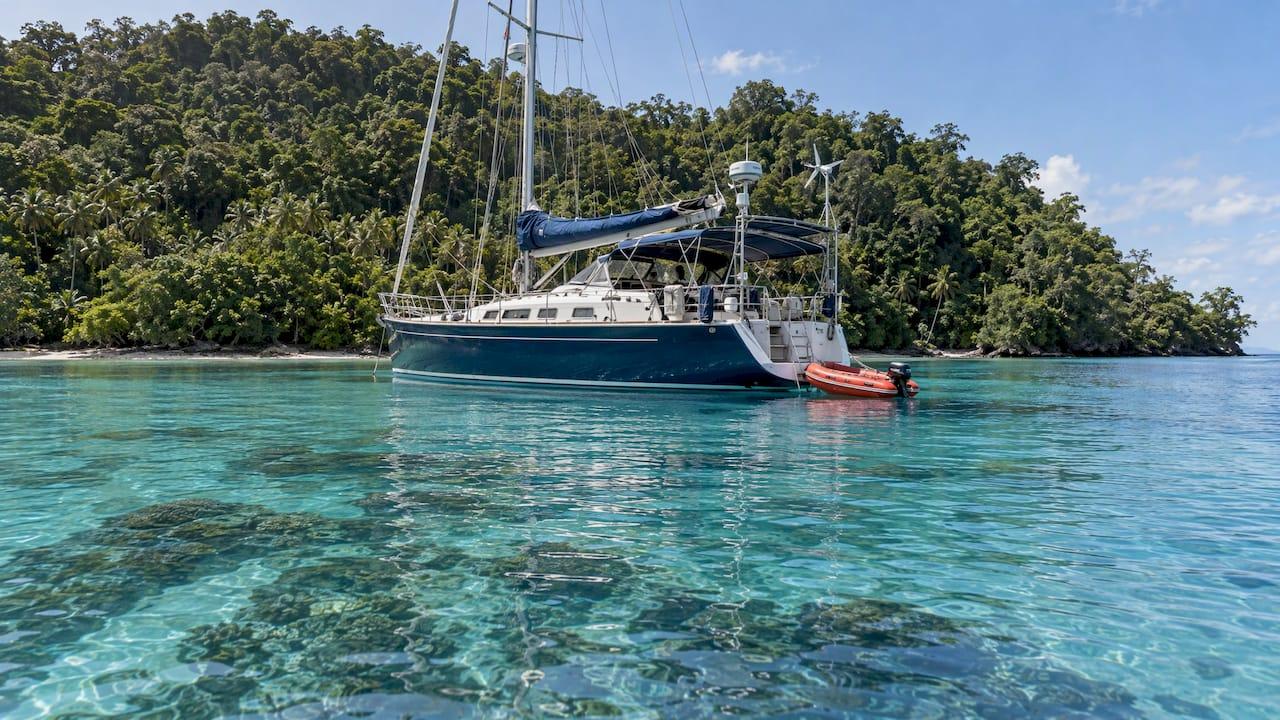
A Solomon Islands yacht charter is one of the quietest ways left to see the South Pacific: more than 900 islands, coral lagoons, WWII wrecks and anchorages where you may be the only boat. It is also a destination where the right crew, the right vessel and the right month matter more than almost anywhere else. At Exotica Charters, our team of former captains and water sports professionals plans fully crewed charters to remote places like this, built around diving, wildlife and time on the water. This guide covers what to expect, when to go, how to reach the Solomons from the United States, and how to pair the trip with swimming alongside humpback whales in Tonga.
TL;DR
- The Solomons span more than 900 islands and atolls of volcanic peaks, coral lagoons and rainforest, and see far fewer yachts than Fiji or French Polynesia.
- The dry season (Ara) runs May to October and the wet season (Komburu) November to April, according to Tourism Solomons; water sits around 29 to 30°C, so a 2 mm wetsuit is enough.
- U.S. citizens do not need a visa; you fly into Honiara, usually via Brisbane or Fiji.
- Tonga's humpback whale season, when swimming with them is permitted, runs July to October, so a July to October itinerary can combine both countries.
- A crewed charter planned by people who have captained in remote waters takes care of reef navigation, anchorage choice and logistics.
Table of Contents
- Why the Solomons suit a crewed yacht
- What you can do on a Solomon Islands charter
- When to go
- Getting there from the United States
- The vessel: what suits the Solomons
- Adding Tonga: swimming with humpback whales
- Who this trip is for
- Planning checklist
- Our perspective
- Start planning your charter
- FAQ
- Sources
Why the Solomons suit a crewed yacht
Most South Pacific cruising grounds have marinas, fuel docks and well-worn routes. The Solomons are different. Passages between islands are short, but the cruising guides are blunt about the trade-off: reefs are strewn through the channels, navigational aids are limited, and careful planning is needed, including wide safety margins and avoiding night entries into passes.
That is exactly why we recommend going with a professional crew rather than a bareboat. A captain who has spent a career reading reef edges, tides and weather decides where you anchor, when you move and which pass is safe in the afternoon light. You spend your time in the water, on deck or ashore in a village, not studying satellite imagery.
The same remoteness is the reward. Relatively few yachts visit in a season, so anchorages stay quiet and encounters with local communities feel genuine rather than staged.
What you can do on a Solomon Islands charter
Diving the wrecks and the reefs
The Solomons sit inside the Coral Triangle, the global center of marine biodiversity. DIVE Magazine notes that despite this, they remain one of the least-dived areas in the world, with consistently good visibility and sites that include drop-offs, coral gardens, caves, seamounts and numerous WWII wrecks.

Near Honiara, Iron Bottom Sound holds some of the best-known wreck diving in the Pacific. Tourism Solomons describes numerous WWII wreck sites there, along with village visits and evening fishing for kingfish, wahoo, yellowtail and tuna from boats based in Honiara.
For divers, the practical points are simple:
- Diving is possible year-round, with sites chosen by tide and weather, per the official dive guide.
- Average air temperature is about 27°C (81°F) and water 29 to 30°C (84 to 86°F).
- Wrecks and walls suit different certification levels, so tell your planner your logbook history early.
Village visits and time ashore
The Solomons are not only for divers. Tourism Solomons says families, honeymooners, sports fishermen, yachties and culture-lovers are increasingly visiting, drawn by WWII history and village life. A yacht lets you reach communities that road and air links barely touch, and a crew that knows the etiquette of arriving in a village makes those visits easier.
Snorkeling, paddling and fishing
Warm, clear lagoons make snorkeling easy for children and non-divers, and a yacht carrying kayaks and paddleboards turns each anchorage into its own playground. Evening fishing for pelagic species is part of the local boating tradition around Honiara. Couples can build in a slower rhythm: a morning swim, a sandbar lunch, a sunset at anchor with no other lights in sight.
When to go
The official dive guide gives the seasonal pattern: dry season (Ara) from May to October, wet season (Komburu) from November to April. Cruising guides describe May to October as the settled period under southeast trade winds, while the wet months bring squalls and, at the fringe of the cyclone belt, some cyclone risk.
For most of our readers, that points to May through October. If you want to see Tonga's whales on the same journey, the window narrows to July through October, which is the sweet spot for a two-country itinerary.
| Season | Months | What it means on a yacht |
|---|---|---|
| Dry (Ara) | May to October | Settled trade winds, easier passages, the natural choice for first-time visitors |
| Wet (Komburu) | November to April | Squalls and rain, more weather planning; diving still possible |
How long should you go for?
Short hops between islands mean you can see a lot in a week, but the Solomons reward time. Liveaboard dive trips in the country typically run 7 to 14 nights, according to DIVE Magazine's profile, and that range is a useful guide for a private charter too. Seven nights suits a focused trip around the central islands; ten to fourteen lets you add the wrecks near Honiara, remote lagoons and unhurried village stops. Add a few days if you are continuing to Tonga.

Getting there from the United States
Honiara International Airport is the gateway. According to Tourism Solomons, Solomon Airlines flies from Brisbane in under three hours, and connections from North America are available via Fiji. U.S. citizens do not need a visa, but check the current entry requirements on the official tourism site before you book flights, and make sure your passport has adequate validity.
Build in a night or two on either side. Long-haul flights across the Pacific rarely line up perfectly with a charter start, and arriving a day early means you board rested and your luggage, dive gear and any delayed bags have time to catch up. If your route runs through London, luxury vacation rentals in London make a comfortable pause before the final long leg.
The vessel: what suits the Solomons
We plan charters across several vessel types, and each has a role in remote cruising:
- Catamarans: shallow draft, stable platform and generous deck space; a natural fit for families and for lagoon exploring.
- Sailboats: the classic choice for couples and sailing enthusiasts who want to feel the trade winds.
- Motor yachts: speed, range and comfort for covering distance between island groups.
- Expedition vessels: built for remote waters with greater self-sufficiency. Our expedition charter guide explains what crew is on board.
- Luxury yachts: for guests who want a full crew, premium cabins and a long list of water toys.
If diving is the heart of your trip, tell us before we choose a vessel. A yacht with space for tanks, a compressor and a tender with easy entry changes your day completely. For ideas on what to look for, read our piece on dive destinations you can only reach by boat.
Adding Tonga: swimming with humpback whales
The other query we hear alongside the Solomons is Tonga whale swimming from a yacht. The two destinations pair well because their seasons overlap.
Tonga Tourism says southern humpback whales arrive in Tonga's reef-protected waters from July to October to give birth, and that Tonga is one of the few places in the world where you can still swim with them. It directs visitors to use only licensed whale operators with sustainable practices, trained guides and correct equipment.
What to expect in the water
Swims are conducted from a licensed boat, in small groups, and with a guide leading. Plan on snorkeling gear and confidence in open water, since you will be in deep ocean swell rather than a sheltered lagoon. Encounters are wildlife encounters: they cannot be guaranteed, and allowing several days in your itinerary gives you the best chance of a memorable swim.
Rules that change
Tonga's whale-swim rules are set by its Ministry of Tourism and have been adjusted from season to season. A May 2025 Tonga Court of Appeal judgment records that Vava'u had 26 licences after re-issuances in July 2023 and 42 vessels operating by July 2024, and that the whale season runs July to October. Because licensing and equipment rules (for example, fin types) can be updated shortly before each season, we confirm the current requirements for your dates and pass them to you before you pack.
For your own safety and the whales' wellbeing, follow your guide's instructions at all times, keep the group together, and let the whales decide the distance.
Planning the combination
A typical combined trip runs the Solomons first in the settled dry-season months, then moves on to Tonga for whale swimming before October ends. Both are remote, so we would suggest treating them as two separate charters, each with a crew suited to the waters, joined by a flight through Fiji or Brisbane. Our South Pacific charters page is a good place to see the region we plan in.
Who this trip is for
- Divers who want wrecks and walls without crowds.
- Families with older children who enjoy snorkeling, kayaking and cultural encounters.
- Couples looking for a remote, unhurried escape.
- Nature lovers drawn to reefs, rainforest and, with Tonga, humpback whales.
If you prefer a destination with more infrastructure, our French Polynesia and Indonesia charters offer different takes on the same island-hopping idea.
Planning checklist
- Choose your window. May to October for the Solomons; July to October if you add Tonga's whales.
- Decide your focus. Diving, wildlife, culture or relaxation shapes the vessel and itinerary.
- Set your length. Seven nights is a focused trip; ten to fourteen is richer.
- Confirm entry rules. Check passport validity and official entry requirements before booking flights.
- Book flights with buffer days. Honiara connects via Brisbane or Fiji.
- Brief your crew. Certifications, ages, swimming ability and any dietary or medical needs, so the itinerary is built around you.
- Consult your doctor. Talk to your physician or a travel clinic well before departure about vaccinations and malaria precautions for the Pacific, and about diving fitness if you plan to dive.
Our perspective
We have spent careers on boats in places where the chart is only half the story. The Solomons are one of those places: a few thousand miles of reefs and passes where what matters is a captain's judgment, not a marina's amenities.
That is why we believe the right way to see them is with a crewed yacht planned around you. A crew that has navigated reef-strewn waters before can choose the anchorage for the light, the tide and the weather, and a team with a water sports background can make sure the diving, snorkeling and paddling suit every guest on board, from the certified diver to the child on a first snorkel.
We would suggest thinking about the trip as an expedition with comfort: remote lagoons by day, a cool cabin and a good dinner by night. And if the calendar allows, follow it with Tonga's whales. It is the kind of journey we love to plan.
Mo
Start planning your charter
Exotica Charters plans fully crewed luxury yacht charters, from sailing yachts and catamarans to motor yachts and expedition vessels, for remote destinations worldwide, with itineraries built around diving, wildlife and adventure. Tell us your dates, your group and what you want to see, and our team will shape the trip around you. You can browse what we offer on our charter page or speak to a yacht charter specialist.
If you are still comparing regions, our South Pacific destination page shows where else we sail in the ocean.
FAQ
Do U.S. citizens need a visa for the Solomon Islands?
According to Tourism Solomons, U.S. citizens do not need a visa. Entry requirements can change, so confirm them on the official tourism or immigration page before you travel, and check your passport's validity.
What is the best time of year for a Solomon Islands yacht charter?
The dry season, May to October, brings settled southeast trade winds and easier passages. The wet season runs November to April. Diving is possible all year, but most guests choose the dry months.
Can I combine the Solomon Islands with Tonga's whale swimming?
Yes, between July and October, when humpback whales are in Tonga's waters and the Solomons are in their dry season. We plan each leg with a crew suited to the area, and recommend leaving several days in Tonga since whale encounters are never guaranteed.
How do I get to Honiara from the United States?
Honiara International Airport is the gateway. Tourism Solomons notes that Solomon Airlines flies from Brisbane in under three hours and that connections from North America are available via Fiji. Allow a buffer day before boarding.
Sources
- Tourism Solomons Visitors Guide 2023
- Tourism Solomons Dive Guide
- DIVE Magazine: best scuba diving liveaboards
- Sailing to the Solomon Islands: arrival, visas and cruising
- Tonga Tourism: swim with whales
- Court of Appeal of Tonga: Setima Hanif v Minister of Tourism, May 2025