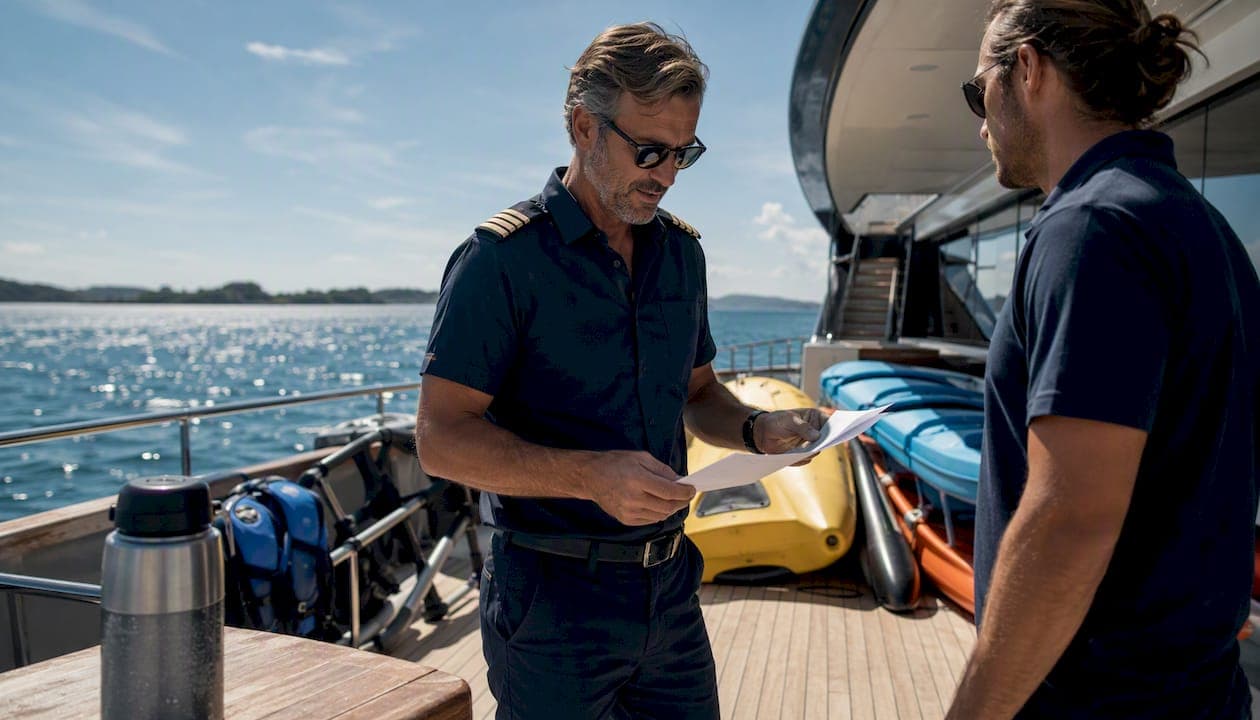
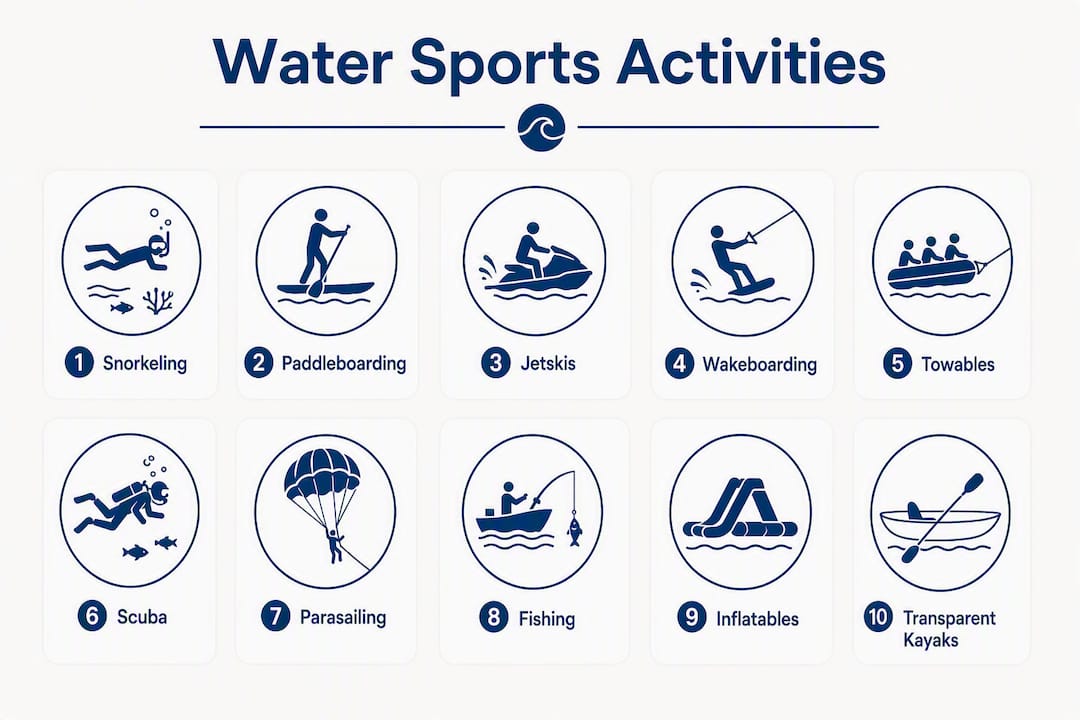
The best water sports activities on charter are snorkeling, stand-up paddleboarding, kayaking, jetskis, towables and tubing, wakeboarding or waterskiing, scuba diving, parasailing, and fishing. On a crewed yacht charter, a USCG-licensed captain and trained crew handle all safety protocols, equipment launches, and recovery, so guests of any age can participate without holding a boating license. The yacht becomes a floating basecamp, and the day's rhythm is yours to shape.
Before you email your broker, run through this quick checklist:
- Toy inventory: Ask which water toys are onboard and whether a tender is included.
- Tender size: Confirm the tender can tow and transport guests to shallow anchorages.
- Instructor fees: Ask whether scuba, parasailing, or wakeboarding instruction costs extra.
- Storage and weight limits: Verify the vessel can carry the toys your group needs without exceeding capacity.
Exoticacharters plans fully crewed adventure and luxury charters with former captains and water sports professionals on staff, rated highly on Trustpilot for exactly this kind of coordinated, multi-activity planning.
Table of Contents
- 1. Snorkeling
- 2. Stand-up paddleboarding and sea kayaking
- 3. Jetskis and e-foils
- 4. Wakeboarding, waterskiing, and wakesurfing
- 5. Towables, tubing, and banana boats
- 6. Scuba diving
- 7. Parasailing
- 8. Fishing
- 9. Inflatable waterparks and trampolines
- 10. Transparent kayaks and glass-bottom boards
- What U.S. charter safety rules mean for your group
- How to plan and schedule activities during your charter
- Typical extra costs for water sports on a charter
- How to choose activities that actually fit your group
- How Exoticacharters approaches water sports planning on expedition charters
- Insurance and liability coverage for water sports on charter
- Best charter destinations for specific water sports
- Physical fitness and skill levels for on-charter water sports
- Key Takeaways
- The part most planners get wrong about charter water sports
- Plan your water sports charter with Exoticacharters
- Useful resources for charter water sports planning
1. Snorkeling
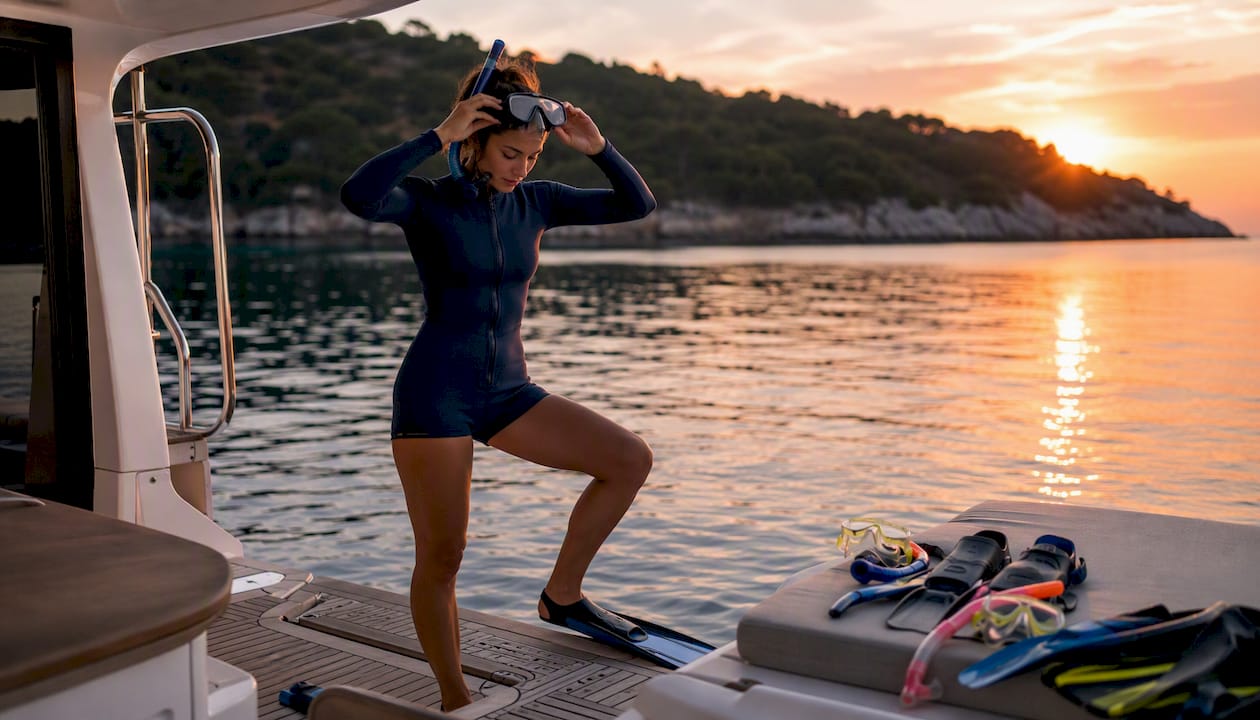
Snorkeling is the most universally accessible activity on any charter. Masks, fins, and snorkels stow compactly, require no engine power, and suit guests from age five to seventy-five. The captain anchors over a reef or sandbar, crew briefs guests on currents and marine life, and everyone enters at their own pace. Ideal conditions are calm, clear water with visibility above 15 feet. No instructor is required, though crew supervision is standard.
2. Stand-up paddleboarding and sea kayaking
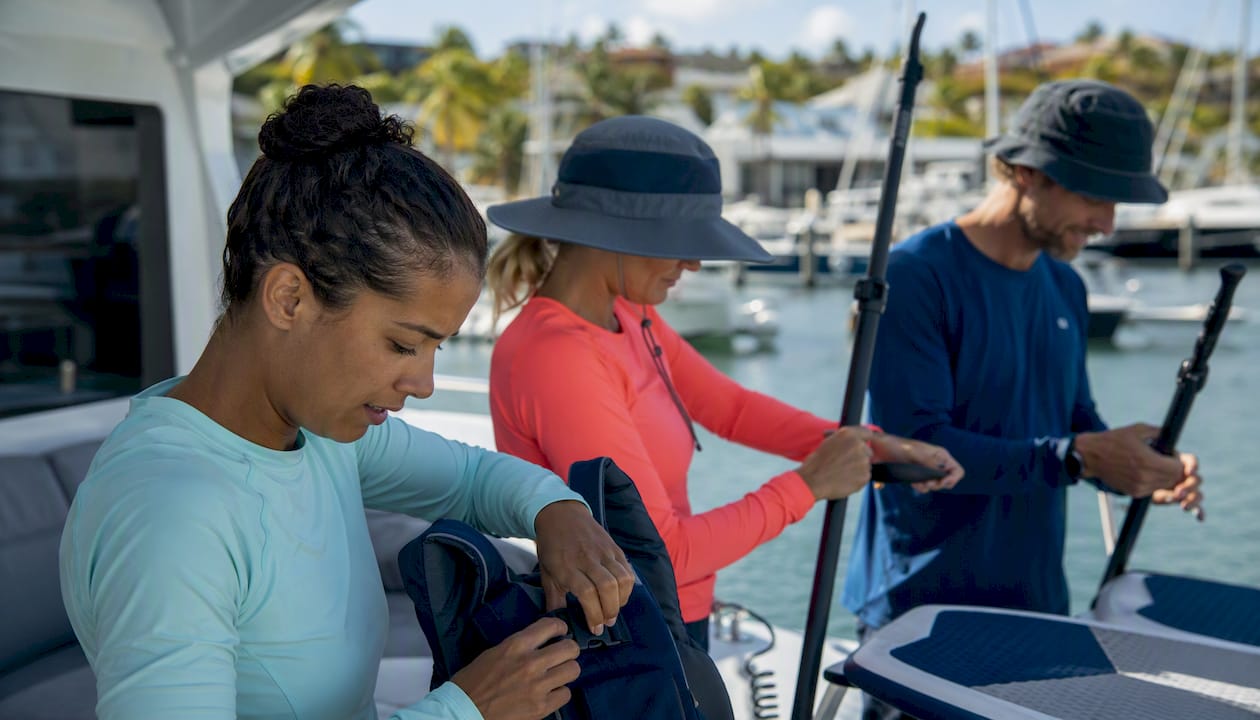
Paddleboards and sea kayaks are staple toys on family yacht charters, loaded before departure so parents never manage logistics on the water. Both activities work best in protected bays and calm anchorages. Inflatable SUPs stow easily in lockers; rigid boards need deck space or a tender. Transparent kayaks and boards have become a popular upgrade in crystal-clear destinations, letting guests see the reef beneath them. No instructor is needed, and the crew typically assists with boarding from the swim platform.
3. Jetskis and e-foils
Jetskis and e-foils represent the high-energy end of the toy spectrum. A jetski-equipped yacht typically launches from a hydraulic swim platform or beach club, which removes the need for a separate trailer or shore facility. E-foils, which use an electric motor to lift the board above the surface, require calm water and a short learning curve; most guests are riding within 30 minutes with crew guidance. Both activities suit teens and adults. Children under a certain age or weight threshold set by the captain are generally excluded from solo operation.
4. Wakeboarding, waterskiing, and wakesurfing
Wake sports need open water, a capable towboat or tender, and a captain who understands towing speeds and safety distances. Wakeboarding suits athletic beginners; waterskiing has a steeper learning curve; wakesurfing, done close to the boat's wake without a rope, is the most relaxed of the three. Watersports yachts with hydraulic platforms can launch and recover riders efficiently, turning the yacht into a true wake-sports hub. Confirm that the captain's insurance covers towing activities before booking.
5. Towables, tubing, and banana boats
Towables are the crowd-pleaser for mixed-age groups. Inflatable tubes, banana boats, and multi-rider towables attach to the tender and deliver pure fun with minimal skill required. They stow flat, launch quickly, and rotate large groups through short, high-energy rides. Crew manages towing speed and monitors riders throughout. Age and weight limits apply, and the captain sets the pace based on sea conditions.
6. Scuba diving
Scuba diving from a charter is a different proposition from a shore dive shop. Local dive operators typically provide cylinders and guide services; the charter broker coordinates host-boat procedures, but confirm upfront whether the charter fee covers shore-side dive operator costs or whether guests pay those directly. PADI-certified operators are the standard for quality and safety assurance. Divers need Open Water certification at minimum; the captain designates safe entry and exit points. For non-divers in the group, snorkeling at the same site keeps everyone in the water together.
7. Parasailing
Parasailing lifts guests 200–400 feet above the water on a parachute towed by the vessel, offering dramatic aerial views of coastlines and reefs. It requires a specialized parasail boat or a tender with a winch system, so confirm equipment availability with your broker. In U.S. waters, operators typically follow guidelines from the United States Parachute Association (USPA) and state-level regulations. Minimum age and weight requirements vary by operator. Parasailing is best suited to calm, low-wind conditions and suits guests who want a thrill without physical exertion.
8. Fishing
Inshore, nearshore, and bluewater fishing each demand different gear and vessel capability. Inshore fishing works from a tender in shallow flats; nearshore trolling suits most motor yachts; bluewater big-game fishing requires outriggers, fighting chairs, and significant fuel range. Family charters to sandbars often include light tackle for kids as a low-key add-on. Confirm whether rods, reels, bait, and a fishing license are included, or whether a licensed fishing guide joins the charter as a day-operator.
9. Inflatable waterparks and trampolines
Inflatable waterparks, climbing walls, and trampolines anchored off the stern are increasingly common on superyachts and larger catamarans. They transform a calm anchorage into an aquatic playground and are particularly effective for keeping children engaged during longer charter days. Setup and breakdown take 20–30 minutes; crew manages the process. Storage requires significant deck or tender space, so confirm vessel compatibility before requesting this option.
10. Transparent kayaks and glass-bottom boards
A quieter, more contemplative option, transparent kayaks and glass-bottom paddleboards let guests observe marine life without getting wet. They work beautifully over shallow reefs and seagrass beds in destinations like the Florida Keys, the Bahamas, or French Polynesia. No instruction is needed, and they suit all ages, including older guests who prefer a gentler pace.
Equipment summary: space and tender requirements
| Activity | Small tender | Large tender / hydraulic platform | Instructor required | Safety gear |
|---|---|---|---|---|
| Snorkeling | Optional | No | No | Masks, fins, PFDs |
| SUP / kayaking | Optional | No | No | PFDs |
| Jetski / e-foil | No | Yes | Recommended | PFDs, helmet |
| Wake sports | Yes (tow) | Preferred | Recommended | PFDs, rope |
| Towables / tubing | Yes (tow) | No | No | PFDs |
| Scuba diving | Yes | Preferred | Yes (PADI) | BCD, cylinders, regulator |
| Parasailing | Specialized | Yes | Yes | Harness, winch |
| Fishing | Optional | No | Optional guide | Rods, tackle, license |
| Inflatable waterpark | No | Yes | No | PFDs |
Pre-departure equipment checklist for multi-activity days:
- Masks, snorkels, and fins in multiple sizes
- Personal flotation devices (PFDs) for all ages and sizes
- Towable tubes and banana boat with tow rope
- Stand-up paddleboards and paddles (inflatable or rigid)
- Dive cylinders, BCDs, and regulators (if dive operator not shore-based)
- Jetski fueling kit and spare fuel bladder
- First aid kit and VHF radio on the tender
Pro Tip: Rotate activities in 45–60 minute blocks and schedule at least one 20-minute rest period between high-energy sessions. Mixed-ability groups stay happier when quieter activities like snorkeling or paddleboarding follow a jetski or wake-sports session, rather than stacking two adrenaline activities back to back.
What U.S. charter safety rules mean for your group
On a captained U.S. charter, a USCG-licensed captain manages all safety protocols, including towing speed, passenger limits, and equipment launches. Guests do not need a personal boating license. That single fact opens most water sports to beginners and mixed-age groups who would otherwise face barriers on a bareboat rental.
The captain's responsibilities typically cover:
- Launch and recovery of all water toys
- Pre-ride safety briefings for towed activities
- Life jacket provision for all guests, including child-sized PFDs
- Monitoring fuel levels and tow-line integrity
- Designating safe swim and dive entry zones
Before booking, confirm these items in writing with your broker or captain:
- Verified USCG license number and expiration date
- PFDs available in all required sizes, including infants
- PADI certification for any dive operator joining the charter
- USPA compliance for parasailing operators
- Towing speed limits and minimum age for each towed activity
- Whether the yacht's insurance policy covers towing, wake sports, and parasailing
Pro Tip: Ask your broker to include a watersports addendum in the charter contract listing every activity approved under the vessel's insurance policy. A written list prevents disputes on the day and confirms the captain has authority to run each activity.
Towing high-speed toys requires specific authorizations; always verify that both the captain's personal coverage and the yacht's policy extend to waterskiing, wake sports, and parasailing. The charter yacht liability insurance framework distinguishes between activities covered under the base policy and those requiring separate endorsements or shore-operator insurance.
How to plan and schedule activities during your charter
The most effective approach is to give the captain a short priority list and let them sequence the day around live conditions. Operators consistently advise that a flexible priority list produces better results than a rigid minute-by-minute schedule, because tides, wind, and water clarity shift throughout the day.
Sample daily itineraries
6-hour charter (half-day):
- Depart and cruise to calm anchorage (30 min)
- Snorkeling or paddleboarding at anchor (60 min)
- Towables or tubing in open water (45 min)
- Lunch at anchor or underway (30 min)
- Return cruise with optional fishing lines out (45 min)
8-hour charter (full day):
- Morning departure to sandbar or reef (45 min)
- Snorkeling and paddleboarding (75 min)
- Jetski or e-foil session (60 min)
- Lunch at anchor (45 min)
- Towables or banana boat (45 min)
- Sunset cruise back with light fishing (60 min)
10-hour expedition day:
- Early departure for dive site (60 min)
- Scuba diving with PADI operator (90 min)
- Snorkeling for non-divers simultaneously
- Sandbar stop: SUP, kayaking, and tubing (90 min)
- Lunch and rest period (60 min)
- Wake sports or parasailing in afternoon wind (60 min)
- Sunset anchorage and fishing (60 min)
- Return (60 min)
Priority list template to give your captain:
- Must-dos (1–3): e.g., scuba dive, sandbar stop, jetski
- Flexible choices (1–2): e.g., paddleboarding, fishing
- Activities to skip or avoid: e.g., parasailing (fear of heights), banana boat (elderly guest)
The captain's optimization levers include tidal windows for reef access, morning calm for snorkeling and diving, afternoon wind for wake sports, and daylight cutoffs for safe return. Communicate your flexibility clearly, and the captain will fit more into the day than any fixed schedule would allow.
Pro Tip: Build a 30-minute buffer into every itinerary. Conditions change, guests linger at a beautiful anchorage, or a pod of dolphins appears. The best charter days are the ones where the captain had room to say yes.
Typical extra costs for water sports on a charter
Most water toys and specialist services are priced as add-ons to the base charter fee. Understanding the pricing shapes before you book prevents surprises at settlement.
Common extras and typical pricing shapes:
- Jetski hire: Often a flat per-day fee or included in a watersports package on larger yachts; standalone rentals from shore operators typically run by the hour.
- PADI dive operator: Usually a per-person, per-dive fee paid directly to the dive operator; the charter broker coordinates logistics but the cost sits outside the charter fee unless bundled.
- Parasail operator: Shore-based operators charge per flight; confirm whether the captain's vessel can run parasailing independently or whether a third-party boat is required.
- Inflatable waterpark: Typically a daily rental fee for the equipment, plus crew time for setup.
- Guided fishing add-on: A licensed fishing guide joining as a day-operator is usually a separate flat fee.
- Extra fuel and tender time: High-speed towing and jetski use consume significantly more fuel; ask whether fuel is included or billed at cost.
Some operators offer pre-built watersports packages that bundle two or more activities at a fixed price, which can be more economical than per-item pricing for groups who want variety. Ask your broker specifically for a watersports package rate versus itemized pricing, and compare both before confirming.
On gratuity: crew who manage a full watersports day, including toy launches, briefings, and recovery, typically receive 15–20% of the charter fee as a tip. Budget for this separately.
How to choose activities that actually fit your group
The narrowest constraint in your group determines which activities are realistic. That constraint is usually guest age and mobility, vessel capability, or available daylight, in that order.
Decision checklist:
- How many children are in the group, and what are their ages?
- Are any guests elderly or have limited mobility?
- What is the group's thrill tolerance (relaxed vs. adrenaline-seeking)?
- Does the vessel have a hydraulic swim platform or beach club for safe toy launches?
- What size is the tender, and can it tow?
- How many guests can rotate through each activity within the available time?
- Are there guests who cannot swim, and does the captain know?
Red flags that signal an activity mismatch:
- No tender onboard when wake sports or parasailing are requested
- No PADI-certified operator arranged for a scuba request
- Vessel without a hydraulic platform attempting e-foil or jetski launches
- Age or weight minimums not checked against the youngest or smallest guests
Questions to send your broker or captain before booking:
- What water toys are onboard, and what is the tender size?
- Is an instructor or dive operator included, or is that a separate arrangement?
- What are the age and weight limits for towed activities?
- What does the vessel's insurance cover for water sports?
- Can we see the toy inventory list before we confirm?
How Exoticacharters approaches water sports planning on expedition charters
Exoticacharters plans fully crewed charters where mixed activity days are the norm, not the exception. Former captains and water sports professionals on the team coordinate toys, dive operators, and safety logistics so guests arrive and simply enjoy. USCG-licensed captains, PADI-certified dive operator partnerships, and detailed onboard equipment inventories are standard considerations in the planning process, and high client satisfaction on Trustpilot reflects how consistently that coordination delivers.
When you reach out to Exoticacharters, include the following in your initial inquiry for the fastest, most accurate response:
- Group size and age range
- Two or three must-do activities
- Preferred destination or region
- Charter dates and duration
- Vessel type preference (catamaran, motor yacht, sailing yacht)
Insurance and liability coverage for water sports on charter
Charter yacht liability insurance is more layered than most guests realize. The base policy on a crewed charter typically covers general navigation and passenger liability, but specific activities, particularly towing, parasailing, and scuba diving, often require separate endorsements or are explicitly excluded.
The key distinction is between activities the captain runs from the vessel and those requiring a shore-based or third-party operator. Parasailing through a shore operator, for example, transfers liability to that operator's policy for the flight itself; the charter vessel's policy covers the transit. Scuba diving coordinated through a PADI dive operator similarly involves the operator's own liability coverage for the dive itself.
For guests, the practical step is straightforward: ask the broker to confirm in writing which activities are covered under the yacht's policy and which require guests to sign a separate waiver with a third-party operator. Review the charter yacht liability insurance framework if you want a deeper understanding of how risk is allocated between owner, operator, and guest. Personal travel insurance with adventure sports coverage is worth adding for any charter that includes diving, wake sports, or parasailing.
Best charter destinations for specific water sports
The activity you prioritize should influence where you charter, not just which vessel you choose.
Snorkeling and scuba diving: The Florida Keys, the Bahamas, and the U.S. Virgin Islands offer accessible reef systems for snorkeling. For world-class scuba, French Polynesia, the Galápagos, and the Red Sea deliver extraordinary visibility and marine biodiversity. Exoticacharters operates in several of these regions, with dive-equipped yachts available in selected locations.
Wake sports and jetskis: Protected bays and flat-water anchorages in the Florida Gulf Coast, the Bahamas, and the Pacific Northwest suit wake sports well. Seattle-area charters, for example, combine dramatic scenery with the calm inland waters that wake surfing requires.
Fishing: The Florida Keys and the Gulf of Mexico are legendary for inshore and bluewater fishing. Alaska offers extraordinary salmon and halibut opportunities from expedition-style charters. The five most dramatic expedition destinations Exoticacharters covers include several with exceptional fishing.
Parasailing and towables: Calm, warm-water destinations with consistent light winds, such as the Caribbean and the Gulf of Mexico, are ideal. Myrtle Beach and the Florida coastline are popular domestic options for families.
Inflatable waterparks: Best suited to sheltered anchorages in the Bahamas, the British Virgin Islands, and the Mediterranean, where calm conditions allow extended setup time.
Physical fitness and skill levels for on-charter water sports
Most charter water sports are designed to be accessible, but a few carry genuine physical demands worth knowing before you commit.
Low fitness requirement, no experience needed: Snorkeling, paddleboarding (flat water), kayaking, tubing, and banana boats. These suit all ages and most fitness levels, including guests with limited mobility who can enter the water from a swim platform.
Moderate fitness, some coordination helpful: Wakesurfing, e-foil, and stand-up paddleboarding in chop. Guests who are comfortable in the water and reasonably active will progress quickly. Falls are frequent during learning phases, so comfort with submersion matters.
Higher fitness and certification required: Waterskiing demands leg strength and core stability. Scuba diving requires Open Water certification and basic swimming competence; guests with cardiovascular conditions should consult a physician before diving. Parasailing is physically passive but not suitable for guests with severe vertigo or certain heart conditions.
Age considerations: Most towed activities set a minimum age of 6–8 years and a minimum weight threshold. Scuba diving through PADI's Junior Open Water program is available from age 10. Jetski solo operation typically requires guests to be 16 or older, though age rules vary by state and operator.
A good captain will assess the group on the day and adjust activity selection if conditions or guest readiness suggest a change of plan.
Key Takeaways
The single smartest planning move on any charter is to give the captain a written priority list with two or three must-do activities and two flexible alternatives, then let them sequence the day around live conditions.
| Point | Details |
|---|---|
| Prioritize by group type | Match activities to the youngest or least experienced guest first; snorkeling and paddleboarding suit almost everyone. |
| Confirm tender and toy inventory early | Ask for the vessel's toy list and tender size before booking; a hydraulic platform expands your activity options significantly. |
| Budget for add-ons | Dive operators, parasail operators, and extra fuel are typically priced outside the base charter fee; ask for a bundled watersports package rate. |
| Verify captain credentials and insurance | Confirm USCG licensing and ask which activities are covered under the yacht's policy before signing the charter contract. |
| Exoticacharters for complex planning | Exoticacharters coordinates toys, PADI dive operators, and multi-activity itineraries on fully crewed luxury and expedition charters worldwide. |
The part most planners get wrong about charter water sports
There is a widespread assumption that the more activities you pack into a charter day, the better the experience. We would argue the opposite. The most memorable charter days we have seen planned are built around two or three activities done properly, with genuine time at each stop, rather than six activities rushed through in sequence.
The reason is simple: transitions take time. Launching a jetski, briefing riders, recovering the toy, and moving to the next anchorage can consume 45 minutes of a six-hour charter. Multiply that across five activities and you have spent more time on logistics than on the water. A captain who knows the destination will always find a better version of your day if you give them room to do so.
The other underestimated factor is rest. Children and older guests fatigue faster than the group's most enthusiastic members expect. Building a 20–30 minute quiet period after high-energy activities, whether that is lunch at anchor, a slow cruise, or simply floating on paddleboards, keeps the whole group engaged through the afternoon rather than flagging by 2 PM.
We consider the priority list, not the packed schedule, to be the single most valuable tool a charter planner can bring to the conversation with their captain.
Plan your water sports charter with Exoticacharters
Exoticacharters offers something most planners cannot find elsewhere: a team of former captains and water sports professionals who handle the full coordination of toys, dive operators, tender logistics, and activity sequencing on luxury and expedition crewed yachts worldwide. You describe the experience you want; the team builds the itinerary, confirms the equipment, and connects you with the right vessel and crew.
To get the most useful response from the team, paste this into your inquiry:
- Group size and ages:
- Top 2–3 activities (must-dos):
- Preferred destination or region:
- Charter dates and duration:
- Vessel preference (catamaran, motor yacht, sailing yacht, or open to suggestions):
Browse luxury yacht options by location to see which vessels carry the toy inventories and tender setups your group needs, or visit the charter experiences page for curated watersports and diving itineraries. When you are ready, speak with a charter specialist directly to confirm availability and build your day.
Useful resources for charter water sports planning
Authoritative next steps for planners who want to go deeper on safety, compliance, and booking:
- Charter Yacht Liability Insurance Guide — practical breakdown of how liability is allocated between yacht owner, operator, and guest for water sports activities.
- Private Yacht Operating Limits — maritime compliance primer covering operational constraints relevant to charter guests and brokers.
- Exoticacharters: Scuba Diving on Charter — how dive logistics, PADI operator coordination, and onboard equipment work on crewed charters.
- Exoticacharters: Jetski-Equipped Yachts — vessel listings with jetski and toy inventories, including hydraulic platform availability by location.
- Exoticacharters: Charter Itineraries — flexible planning frameworks and real itinerary examples for multi-activity charter days.