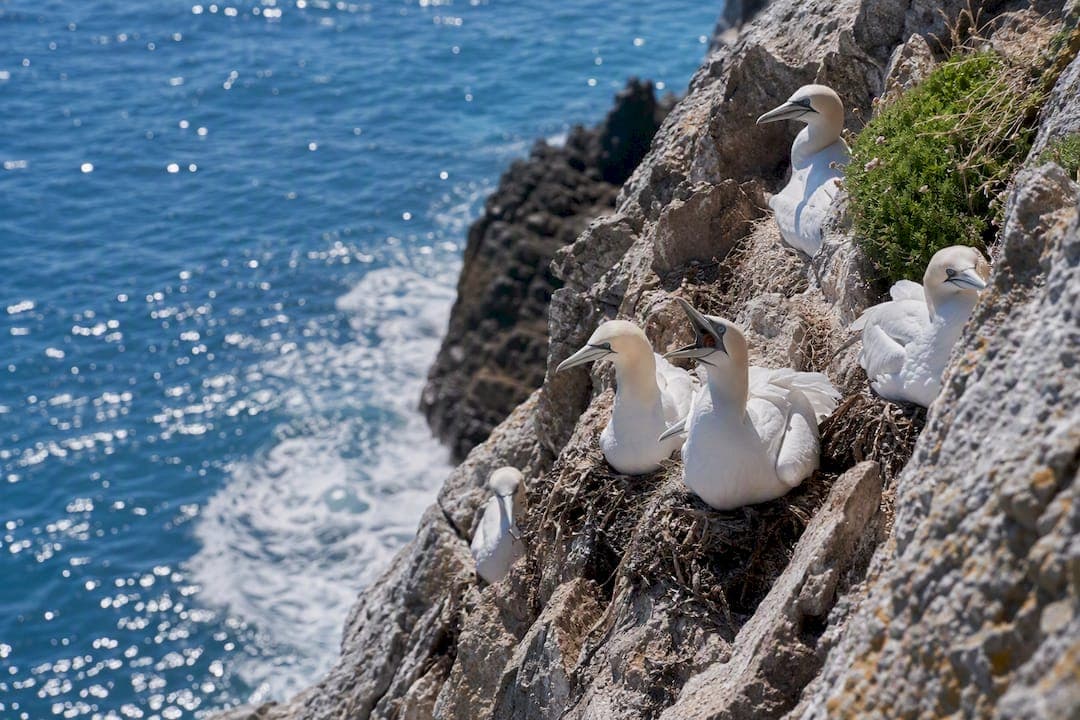
Seabird colonies nest on islands because islands solve three problems at once: they keep ground predators away, they provide stable cliff and burrow real estate near productive feeding grounds, and they let thousands of birds share information about where the fish are running that week. Nearly 95% of all seabird species nest colonially, and the vast majority of those colonies sit on islands rather than mainland coastlines. That preference isn't random. It's a long evolutionary bet that isolation beats convenience.
The core reasons come down to a short list:
- Predator avoidance — no foxes, rats, or ground-based hunters to raid eggs and chicks
- Prime nesting microhabitats — cliffs, ledges, and burrows concentrated in a small, defensible footprint
- Access to patchy marine food — islands sit close to upwellings, reefs, and current lines where prey clusters
- Social information networks — dense colonies let birds watch each other and locate food faster
Here's the catch worth knowing before we go further: every one of these advantages can collapse the moment a predator, a careless visitor, or a rising tide line reaches that island. We'll get to that too.
Key Takeaways
Seabirds nest on islands because isolation from ground predators, dense clusters of specialized microhabitats, and proximity to productive marine food combine to maximize breeding success, and that advantage disappears fast once predators, disturbance, or rising seas reach the island.
| Point | Details |
|---|---|
| Predator-free ground drives the pattern | Nearly 95% of seabird species nest colonially, mostly on islands isolated from ground predators. |
| Site fidelity cuts both ways | Birds return to the same burrow or ledge for years, which speeds recovery but worsens new threats. |
| Colonies function as information networks | Birds track successful foragers to locate patchy, moving prey more efficiently. |
| Guano rebuilds the island itself | Seabird nutrient input shapes island vegetation and can boost nearby reef productivity. |
| Human visits carry real cost | Studies from New Caledonia link repeated visitation to lower breeding success in reef-nesting species. |
Table of Contents
- Why Seabird Colonies Nest on Islands: The Predator-Avoidance Advantage
- How Islands Solve the Problem of Patchy Ocean Food
- Where Seabirds Actually Build Their Nests on Islands
- The Guano Connection: How Colonies Reshape Islands and Reefs
- When Islands Stop Protecting Colonies
- What We See on Expedition Charters Near Seabird Colonies
- Ready to See a Seabird Colony the Right Way?
- The Real Lesson Islands Teach Us About Seabirds
- Sources
Why Seabird Colonies Nest on Islands: The Predator-Avoidance Advantage
Islands work as natural fortresses. Water is a barrier most mammalian predators can't cross, which means a colony on a rock two miles offshore is functionally safer than one on a headland connected to the mainland by a strip of sand. This is the single biggest driver behind island seabird breeding, and it shows up across nearly every seabird family, from tiny storm petrels to king penguins.
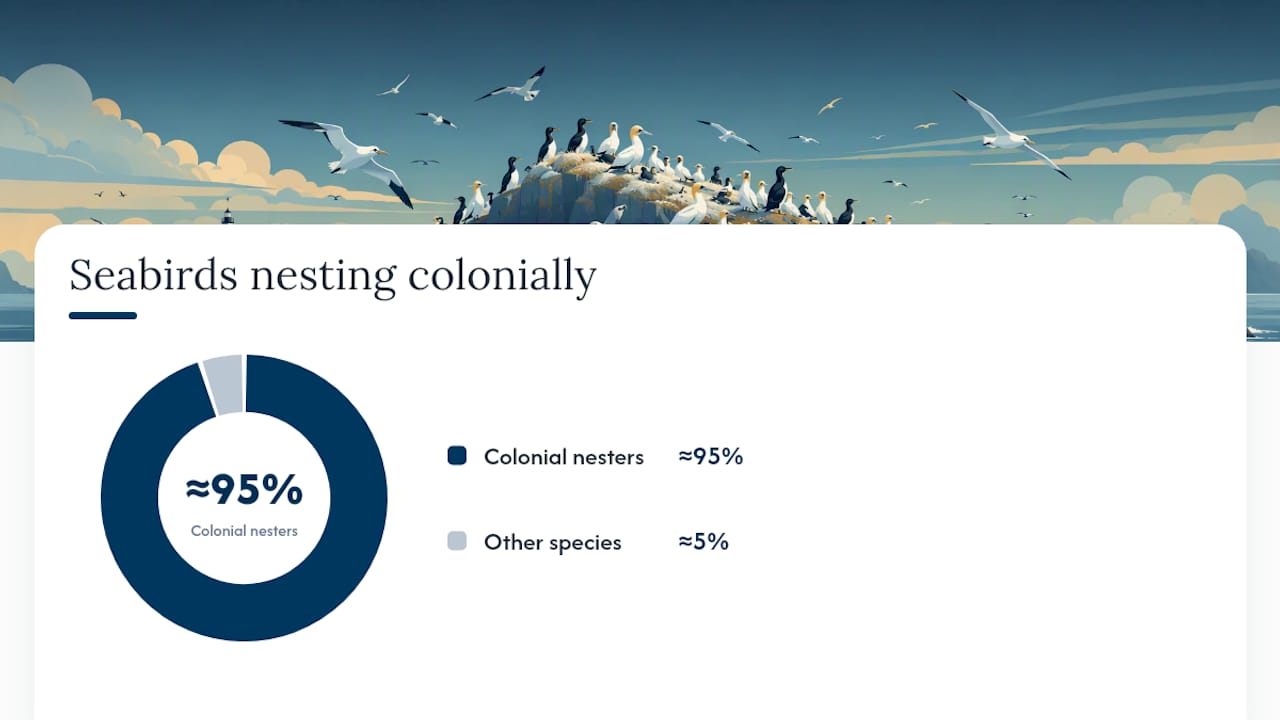
Site fidelity reinforces the pattern. Many seabirds return to the exact burrow or ledge they used the previous season, sometimes for a decade or more, rather than searching out fresh ground each year. That loyalty makes sense when a site has proven safe, but it also means a colony can't simply relocate overnight if a new threat shows up. A predator introduced to a historically safe island does disproportionate damage precisely because the birds keep coming back to the same vulnerable spot.
Breeding synchrony adds a second layer of protection. When most of a colony lays eggs and hatches chicks within a tight window, predators (native ones, at least) get overwhelmed by sheer volume and can only take a small percentage of the total brood. Spread that same colony's nesting over three months, and predators pick off a steady trickle of vulnerable eggs the whole season.
The numbers on what happens when this system breaks down are stark:
- Arctic fox introductions to Aleutian islands in the twentieth century devastated seabird colonies that had nested there for millennia, wiping out ground-nesting species almost entirely on affected islands.
- Rat invasions, usually arriving via shipwrecks or supply vessels, remain one of the most common causes of colony collapse worldwide, since rats eat eggs, chicks, and sometimes incubating adults.
- Recovery after predator removal can be dramatic. Long-term monitoring shows that controlling or eradicating invasive mammals is one of the most effective single interventions for bringing colonies back from the brink.
Statistic to remember: with close to 95 percent of seabird species nesting colonially and gravitating toward predator-free ground, island geography isn't a preference. It's closer to a survival requirement baked into the group's evolutionary history.
How Islands Solve the Problem of Patchy Ocean Food
Fish don't sit still. Marine prey moves with currents, temperature fronts, and seasonal upwellings, which means a seabird can't just build a nest near "the food" the way a songbird might near a fruiting tree. Islands solve this by acting as fixed home bases near water that is reliably productive over the long run, even if the exact prey patch shifts day to day.
That's where colony life earns its keep. A bird returning from a successful foraging trip doesn't fly home in secret. Other colony members notice, and behavioral ecologists have documented how seabirds use social cues, following, and local enhancement to locate the same productive water. In effect, a colony functions as a distributed sensor network. Every successful forager makes the next bird's search a little more efficient.
Species differ sharply in how far they're willing to range, and that distance shapes where colonies form in the first place:
- Coastal foragers like cormorants and some gulls nest on islands within a few miles of shore, prioritizing proximity over range
- Pelagic feeders such as albatrosses and shearwaters will fly hundreds of miles per trip, so they can afford islands far from the mainland as long as productive water lies somewhere within reach
- Reef-associated species like boobies and noddies cluster on islands adjacent to coral reef systems, where fish schools concentrate around structure
- Species tied to seasonal upwellings often site colonies to align with current patterns rather than pure distance to shore
An island near an upwelling zone or a reef edge offers something a random patch of coastline usually can't: predictable proximity to unpredictable food. That combination, safety plus a good commute, is close to the whole story of island colony placement.
Where Seabirds Actually Build Their Nests on Islands
Not every seabird uses an island the same way. Islands offer a menu of microhabitats, and different species have specialized to fill nearly every available niche, which reduces competition and lets colonies pack far more breeding pairs onto a small landmass than you'd expect.
The main categories look like this:
- Burrow nesters (puffins, shearwaters, storm petrels) dig into soil or peat, gaining insulation and near-total concealment from aerial predators
- Ledge nesters (murres, kittiwakes, many auks) use narrow cliff shelves, trading comfort for a location almost no land predator can reach
- Surface nesters in dense colonies (many terns and gulls) rely on numbers and coordinated mobbing to defend open ground
- Widely spaced surface nesters (albatrosses, some boobies) need enough room for elaborate courtship displays and don't tolerate crowding
Documented nest densities across these strategies swing wildly. Some auk colonies pack in multiple nests per square meter on suitable cliff ledges, while albatross pairs might space themselves ten or twenty feet apart across the same acre of ground. The tight packers gain safety in numbers and thermal benefits from close neighbors. The spacers gain reduced aggression and enough real estate for the theatrical mate-selection dances albatrosses are known for.
Microhabitat details matter more than they might seem to at first glance. A burrow's depth affects internal temperature swings. A ledge's orientation determines whether spray from below keeps eggs cool in a heat wave or drenches them in a storm. Wind exposure on a cliff face can be the difference between a nest that fledges chicks and one that gets scoured bare.
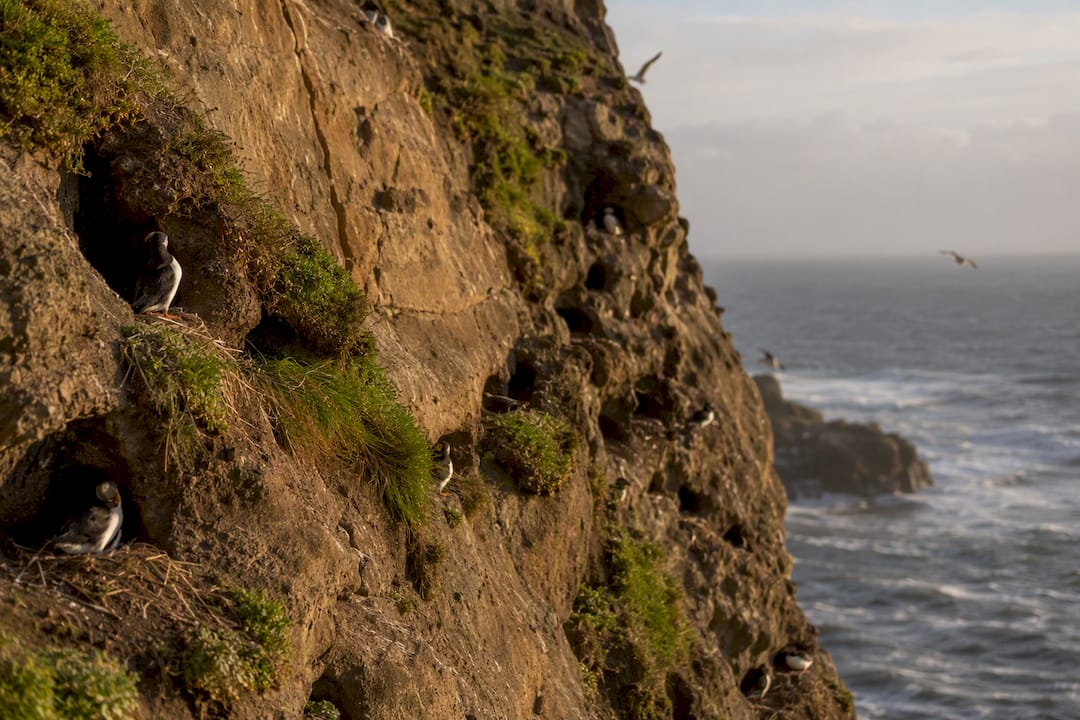
Pro Tip: Field researchers surveying a new island for nesting potential look past overall vegetation cover and check three things first: burrow-friendly soil depth, ledge width relative to the target species' body size, and wind shelter on at least one aspect of the island. Miss any of the three and even a predator-free island can sit empty.
The Guano Connection: How Colonies Reshape Islands and Reefs
Seabirds don't just use islands. They change them. Every colony deposits enormous volumes of guano over a breeding season, and that waste carries marine nitrogen and phosphorus that terrestrial ecosystems rarely see in such concentration. Researchers have documented that seabirds function as connectors between ocean and land, moving nutrients that reshape vegetation, soil chemistry, and even nearby marine food webs.
On coral reef islands specifically, this nutrient subsidy doesn't stop at the shoreline. Runoff and groundwater carry guano-derived nitrogen and phosphorus into adjacent reef systems, and studies tracking seabird populations on coral reef islands have linked healthy colonies to stronger reef productivity nearby.
| Ecosystem Component | Observed Effect of Seabird Guano Input |
|---|---|
| Island soil chemistry | Elevated nitrogen and phosphorus concentrations near colony sites |
| Island vegetation | Shifts in plant community composition around dense nesting areas |
| Adjacent reef systems | Increased nutrient availability linked to reef productivity |
| Long-term island stability | Feedback loop where healthy reefs support the accretion processes that maintain future nesting ground |
This is a two-way relationship, not a one-time gift. Healthier reefs help stabilize the very island structure the colony depends on, which means a thriving seabird population and a thriving reef often reinforce each other over time. At least 52 seabird species breed on coral reef islands worldwide, and that number underscores how much of global seabird reproduction runs through this specific, fragile island type.
When Islands Stop Protecting Colonies
Every advantage islands offer can be undone, and usually by the same short list of culprits. Invasive mammals top that list, but human disturbance runs a close second. Studies conducted in New Caledonia between 2000 and 2023 found that human visitation on reef islands significantly reduces breeding success for pelagic-feeding species like boobies and noddies, even when visitors never touch a nest directly. Just showing up repeatedly can be enough.
Sea-level rise adds a slower but more permanent threat, particularly for low-lying coral reef islands that already host a disproportionate share of tropical seabird breeders. Habitat destruction, whether from coastal development or vegetation clearing, rounds out the major pressures.
Field teams working on reef islands report that colony sensitivity to disturbance is often far more acute than casual visitors assume. Even brief, repeated approaches by boats or foot traffic can measurably lower breeding success in species that would otherwise thrive undisturbed for generations.
Conservation responses have matured considerably over the past two decades, and several approaches show consistent results:
- Rodent and predator eradication on islands with a documented invasion history, which has repeatedly triggered colony recovery once completed
- Artificial nesting sites, including built or converted islands designed specifically to remove predator access, such as the artificial floating island project in Hampton Roads, which has been monitored as a model for restoring lost nesting habitat
- Access restrictions and seasonal closures during peak breeding windows to limit human disturbance at known sensitive sites
- Biosecurity protocols for any vessel or research team visiting predator-free islands, preventing accidental introduction of rats or seeds from invasive plants
None of these interventions work in isolation. A predator-free island that gets overrun by boat traffic during nesting season loses its advantage just as thoroughly as one that gets invaded by rats.
What We See on Expedition Charters Near Seabird Colonies
Exoticacharters plans expedition itineraries through some of the world's most significant seabird breeding regions, and colony behavior around approaching vessels tells you a lot about how sensitive these sites really are. Ground-nesting terns and boobies will often flush off a nest at distances that surprise first-time visitors, sometimes well before a landing party even reaches the beach. Cliff-nesting species tend to tolerate a closer approach by water than by foot traffic on the island itself.
Our guides typically hold groups back from active colonies and adjust routes seasonally based on known breeding windows, since a five-minute visit at the wrong moment can undo weeks of successful incubation. A few habits our crews follow on every expedition near a colony:
- Approach by water and keep engines at idle speed well before reaching nesting areas
- Disinfect boots and gear between landings to avoid transferring seeds or pests between islands
- Keep group sizes small and time on any single island short during peak nesting months
- Share sighting logs with local conservation contacts, which supports the kind of longitudinal monitoring that detects population trends early
Guided visits done this way don't just minimize harm. They can genuinely feed into the monitoring data that conservation programs rely on to track colony health over time.
Ready to See a Seabird Colony the Right Way?
Watching a cliffside packed with nesting auks or a reef island alive with boobies and noddies is one of the more humbling experiences on the water, and it's a very different thing to see it with a crew who knows exactly how close is too close. Exoticacharters builds expedition itineraries around exactly this kind of wildlife encounter, pairing former captains and water sports professionals with routes planned to respect breeding seasons and colony sensitivity. If a trip built around remote seabird destinations and marine biology experiences sounds like the kind of adventure you've been circling, our luxury yacht charters are a good place to start planning one.
The Real Lesson Islands Teach Us About Seabirds
The conventional explanation, that islands simply keep predators out, is true but incomplete. What the research actually supports is a tighter, more interesting claim: islands work because they let colonies function as a single organism, sharing information, synchronizing risk, and reshaping the ground beneath them through guano until the island itself becomes part of the breeding strategy. That's a far more dynamic relationship than "safe rock in the ocean."
Where conservation advice often falls short is treating predator removal as the whole fix. Eradicate the rats, and you've solved one problem. Ignore microhabitat quality, disturbance timing, or nutrient feedback loops, and the colony may still fail to thrive. Anyone serious about understanding these systems, whether managing a reserve or simply visiting one, should prioritize timing and distance over good intentions alone. A quiet, well-timed visit does more for a colony than a well-meaning one at the wrong moment.
— Mo
Sources
- Bird colony — Wikipedia
- Global study: seabirds as connectors between islands, the ocean and people — Lancaster University
- Coral reef islands hold keys for tropical seabird conservation — SeabirdTracking
Recommended
- Rare Bird Species Seen on Yacht Charters: Top 10 Guide
- Which Remote Charter Destinations Have the Strictest Biosecurity — and Why – Exotica Charters
- Which Crewed Charter Destinations Offer the Best Marine Biology Experiences? – Exotica Charters
- Which Galápagos Yacht Itinerary Actually Covers the Best Islands? – Exotica Charters