
Yes, a luxury yacht charter can accommodate nearly any dietary preference or medical diet, from strict keto to certified kosher, provided you disclose the details early and confirm the arrangements directly with the captain and chef. The one action that matters most: complete your preference sheet the moment provisioning planning begins. For life-threatening allergies, insist on written confirmation of galley procedures and a contingency plan before you ever step aboard.
TL;DR:
- Disclosing dietary needs at least four weeks before boarding allows chefs to source certified ingredients and plan menus that accommodate complex or strict restrictions.
- Chefs can generally adapt menus to most diets, but fully certified kosher or halal meals may require prior arrangements with trusted suppliers and may not be strictly certified onboard.
- A strict allergy or life-threatening medical condition demands written confirmation of galley procedures and a detailed emergency plan, as allergen-free environments can't be guaranteed at sea.
- Group charters with conflicting dietary profiles often require separate dish preparation or clearly labeled, parallel dishes to ensure guests’ safety without sacrificing meal cohesion.
- A yacht's small galley relies on meticulous menu design, dedicated equipment, and crew training to minimize cross-contact, but complete allergen elimination isn't always possible.
Table of Contents
- Which Dietary Profiles Can a Yacht Chef Accommodate?
- When Should You Tell Your Chef About Dietary Needs?
- How Do Crews Prevent Cross-Contact in a Small Galley?
- What Does a Multi-Day Charter Menu Actually Look Like?
- Should You Use a Dockside Caterer for Special Diets?
- Why Former Crew Understand Dietary Planning Differently
- Planning a Dietary-Friendly Charter With Exoticacharters
- Sources
- FAQ
Which Dietary Profiles Can a Yacht Chef Accommodate?
Onboard chefs on crewed charters are trained to work around almost any eating pattern, not just the familiar handful. Professional yacht chefs and provisioning teams routinely adapt menus for guests who provide full details before provisioning begins, and the range they cover is broader than most first-time charter guests expect.
The diets we see most often on remote-destination itineraries include:
- Vegan and vegetarian, including raw or macrobiotic variations
- Pescatarian, which pairs naturally with fresh dockside catches
- Gluten-free, dairy-free, and nut-free, each requiring distinct storage protocols
- Shellfish-free, especially relevant on seafood-heavy charter routes
- Kosher and halal, which may require certified or externally supervised sourcing
- Low-FODMAP, keto, and diabetic-friendly plans built around blood sugar stability
There's a real difference between a preference, an intolerance, and an allergy, and that distinction changes how the galley operates. A preference (no red meat, say) gives the chef creative latitude. An intolerance (lactose, gluten) demands ingredient substitution but rarely a full galley lockdown. A true allergy, particularly one with anaphylaxis risk, requires dedicated equipment, sealed packaging, and a documented emergency plan.
Some requirements hit a hard limit at sea. Strict rabbinical kosher supervision or fully halal-certified supply chains are difficult to replicate in a working yacht galley, so on those charters we typically arrange certified meals sourced dockside rather than promise onboard certification. Flagging this early lets your chef pivot to trusted suppliers instead of scrambling mid-charter.
When Should You Tell Your Chef About Dietary Needs?
Timing separates a charter where dietary needs feel effortless from one where the crew is improvising on day two. Provisioning guides for charter yachts consistently recommend a structured timeline that starts well before boarding, and it works because it gives suppliers, not just the chef, time to react.
- At booking: Flag any dietary needs to your broker immediately, even in general terms.
- Four to eight weeks out: Complete a detailed preference sheet covering every guest, not just the person with the restriction.
- One to two weeks out: Expect a direct call from the chef to confirm specifics, brands, and meal ideas.
- At embarkation: Do a final walkthrough with the chef, confirming pantry stock and any last-minute changes.
Your preference sheet should go well beyond "gluten-free" or "nut allergy." Include the exact allergen, whether cross-contact is tolerated at all, current medications like an EpiPen, preferred brands (some guests have strong opinions about specific plant-based milks or gluten-free pastas), sample meals you already enjoy, children's needs, and any religious or cultural constraints affecting how food is prepared or served.
Group charters often mix conflicting needs: one guest is keto, another is vegan, a third has a shellfish allergy. Chefs handle this by prioritizing medical needs first, then building parallel dishes off a shared base, such as a grain bowl with separate protein and dressing stations. For larger or more divided groups, switching from plated service to a family-style spread with clearly labeled dishes often resolves the tension without anyone feeling singled out. Families juggling different generations' tastes may also want to look at how family meal planning on a yacht typically works.
Pro Tip: Send photos of packaged products you rely on (a specific almond butter, a particular protein powder) rather than just naming the brand. Chefs can source faster with a picture than a description.
How Do Crews Prevent Cross-Contact in a Small Galley?
A yacht galley is tighter than any restaurant kitchen, which makes allergen control both harder and, in some ways, more disciplined. Because small footprints limit full segregation, chefs lean on menu design rather than physical separation alone, building parallel dishes and scheduling single-ingredient prep sessions to cut cross-contact risk.
Real galley practices include:
- Dedicated cutting boards, utensils, and pans reserved solely for allergen-free prep
- Labeled, sealed storage bins separating allergen ingredients from everything else
- Batch cooking allergen-free dishes first, before any allergen-containing ingredient enters the space
- Requesting sealed, certified products from suppliers rather than bulk or loose ingredients when severe allergies are involved
- Briefing every crew member, not just the chef, on which guests carry which risks
Emergency readiness matters as much as prep technique. Most yachts carry epinephrine and require crew to hold current first-aid or medical training, and captains build a nearest-port contingency into the passage plan whenever a severe allergy is on the guest list.
Here's the honest part: no charter operator can promise a completely allergen-free environment. Large-scale providers with far more control than a yacht galley, including major airlines, state plainly that they cannot guarantee a 100% allergen-free space, and the same physical reality applies at sea. What you can and should demand is a written procedure for handling a life-threatening allergy, confirmed before departure, not improvised afterward.
What Does a Multi-Day Charter Menu Actually Look Like?
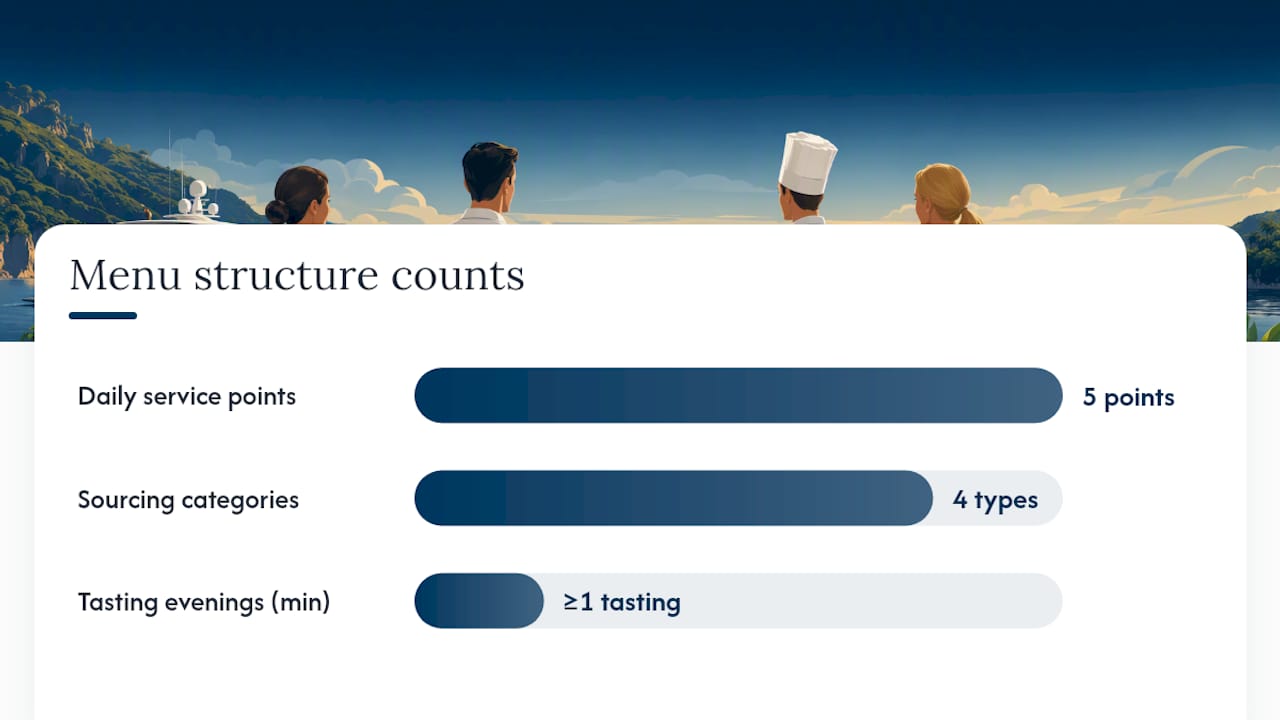
A well-run charter menu isn't a fixed set of dishes; it's a framework the chef adapts daily around what's fresh, what guests requested, and what's realistic to store. Provisioning guides for multi-day charters typically structure the day around five service points: breakfast, lunch, a plated dinner, snacks between activities, and at least one bespoke tasting evening for a special night.
A single base dish often flexes across diets with small swaps. Grilled local fish with a herb crust works for pescatarians and low-FODMAP guests alike; swap in a marinated tofu steak for the vegan at the table, and the dish still reads as one cohesive meal rather than two separate menus.
Sourcing decisions shape what's possible more than most guests realize:
- Local fresh markets supply produce and seafood but vary wildly by destination
- Specialty suppliers handle certified kosher, halal, or hard-to-find allergen-free products
- Frozen-bulk backups cover remote legs where fresh restocking isn't an option
- Certified dockside items get pre-arranged before departure when the itinerary heads somewhere isolated, which is why routes through places like the Indian Ocean and Southeast Asia require earlier sourcing conversations than a Mediterranean run
Beverages deserve the same attention as food. Diabetic-friendly and low-sugar mixers, nonalcoholic pairings, and clearly labeled options at the bar prevent well-meaning crew from handing a guest something that derails a medical diet. Waste policy matters too: specialty ingredients bought for one guest's restriction often can't be repurposed, so chefs plan portions tightly and adjust standing orders after the first few days once actual consumption patterns are clear.
Should You Use a Dockside Caterer for Special Diets?
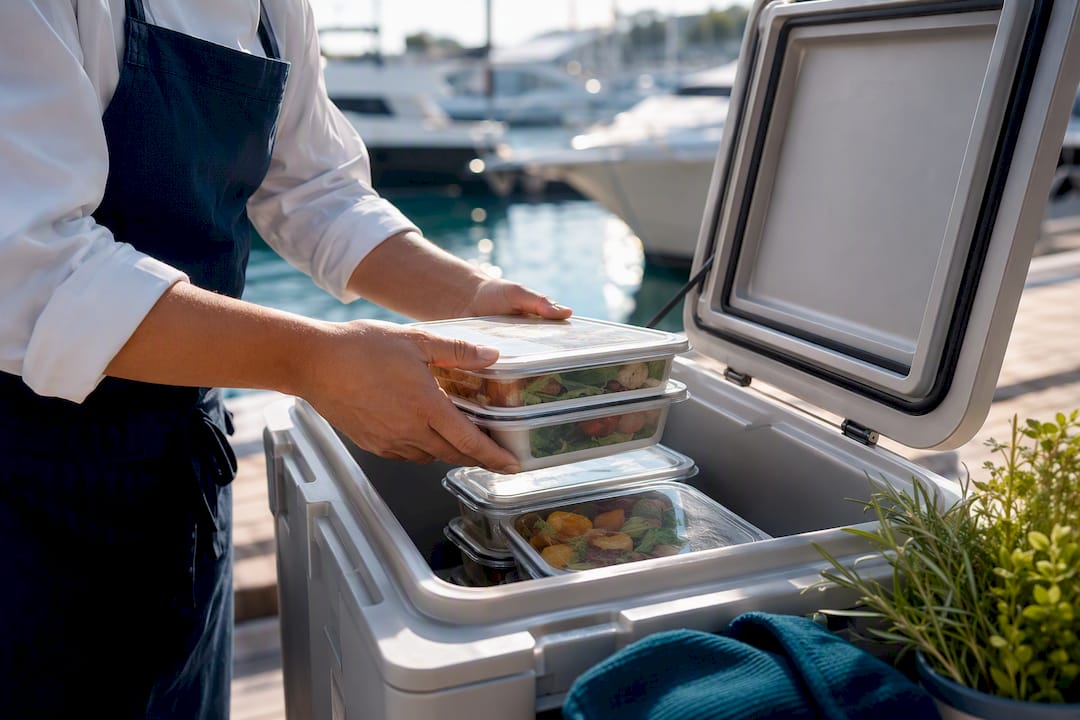
Sometimes the onboard galley isn't the right tool for the job, and that's fine. Large group events, strictly certified kosher or halal needs, or bulk specialty items (a full sushi spread, a kosher-certified celebration cake) usually call for outside help. Marine catering services increasingly offer dockside delivery with restaurant-grade packaging built to integrate with a yacht's own service schedule.
Vet any outside caterer before committing:
- Confirm cold-chain packaging and refrigerated transport, not just "insulated bags"
- Ask directly about allergen controls in their own kitchen, not just on the final plate
- Verify liability insurance and prior experience delivering to yachts specifically, not general event catering
- Confirm timed delivery windows that match your itinerary, since timing and temperature control are what separate a smooth handoff from a scramble
Crew should run their own acceptance checklist at delivery: verify temperature, inspect packaging integrity, and confirm quantities against the order before anything reaches the guest table. A good transfer protocol also covers who plates the food and how it's presented, so a catered dish doesn't look out of place next to the chef's own courses.
Why Former Crew Understand Dietary Planning Differently
Most guides to yacht dining are written by people who've never stood in a rocking galley trying to keep a nut-free prep station clean during a busy dinner service. This company was built by former captains and water sports professionals who have lived that reality, which changes what we tell clients to prioritize.
We've watched provisioning plans fall apart not because a chef couldn't cook gluten-free, but because a guest disclosed a severe allergy the night before boarding, leaving no time to source certified backup ingredients for a remote leg. We've also seen the opposite: a family with three different dietary profiles and a shellfish allergy enjoy a completely relaxed week because the preference sheet was thorough and the chef call happened five weeks out, not five days.
That operational memory is why we push disclosure timing as hard as we do.
— Mo
Planning a Dietary-Friendly Charter With Exoticacharters
This company is an alternative to booking blind through a generic charter listing: instead of hoping a chef "figures it out," they coordinate chef selection, provisioning logistics, and dockside sourcing before you ever step aboard.
The team matches you with a crewed yacht where the chef has real experience running multi-diet galleys, not just a willingness to try. When a charter calls for certified kosher or halal sourcing, arrangements are made through vetted suppliers or dockside specialists rather than claiming onboard certification. For provisioning that touches specialty cold-chain items, we also draw on practical guidance like proper cooler packing for shorter excursions and day trips.
If you're ready to plan a charter around specific dietary needs, browse our crewed yacht options or start with our luxury yacht charter page and request a bespoke provisioning plan directly from the team.
Sources
For readers who want to compare provisioning approaches, these sources cover the ground this article draws on: a detailed breakdown of dietary accommodation on private charters, a provisioning timeline guide for multi-day trips, and a look at how marine caterers handle dockside delivery logistics.
- Charter Yacht Provisioning Guide 2025
- Yacht Catering in South Florida | 954 Catering
- Special In-Flight Meals | Delta Air Lines
FAQ
Does a Yacht Charter Include Food?
Yes, fully crewed luxury charters include a dedicated chef and provisioning as part of the package, with menus built around your preferences and any dietary restrictions you disclose in advance.
What Is the 12-Person Rule on a Yacht?
It refers to maritime passenger limits under international safety codes, which cap many private charter yachts at a dozen guests unless the vessel holds additional commercial passenger certification.
What Are Good Food Ideas for a Yacht Menu?
Fresh local seafood, grilled proteins with adaptable sides, vibrant salads, and a signature tasting dinner all work well, since they're easy to modify across vegan, gluten-free, or low-FODMAP needs without losing flavor.
Do Yacht Crew Members Get Paid a Salary?
Yes, professional yacht crew, including chefs, are salaried employees of the yacht or charter operation, which is part of why experienced crews bring real culinary training and food-safety discipline to dietary requests.
Can a Yacht Chef Guarantee an Allergen-Free Meal?
No provider can promise a completely allergen-free environment, even major carriers acknowledge this limit, so guests with severe allergies should confirm written galley procedures and carry their own medication as a backup.