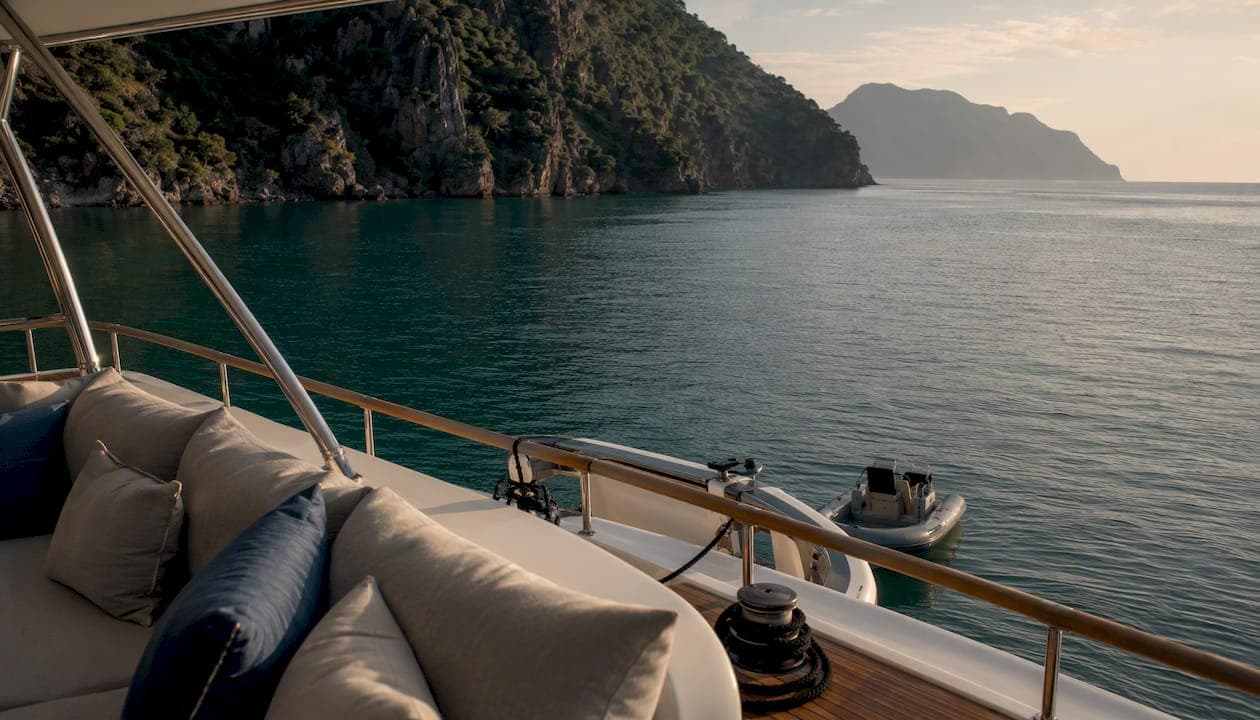
Yes, you can charter a yacht for the first time with zero sailing experience, and the smartest way to do it is with a fully crewed vessel. A professional captain, chef, and crew handle every technical and logistical detail, so your only real job is deciding how you want to spend your days on the water. Crewed arrangements already dominate the market: industry data puts crewed charters at roughly 60 to 82% of the global charter market, a strong signal that this is where most guests, not just first-timers, feel most comfortable.
The logic is straightforward. A crew navigates, cooks, and anticipates your preferences; a good broker turns your answers on a preference sheet into a bespoke week built around your interests rather than a generic package. You bring the guest list and the wish list. Everyone else handles the ropes.
Before you contact anyone, get these basics sorted:
- Pick a destination and a rough week (peak season or shoulder season changes both price and availability).
- Confirm your party size and how many cabins you'll actually need.
- Decide on a rough budget band, including costs beyond the headline rate.
- Reach out to a broker who asks about your "trip shape" before sending a catalog.
- Block time to complete a preference sheet once a yacht is shortlisted.
Budget expectations: luxury crewed weeks typically start in the low tens of thousands of dollars for smaller yachts and climb well past six figures for larger superyachts with full water toy inventories. Layer on an Advance Provisioning Allowance of roughly 20 to 40% of the base charter fee for food, drink, fuel, and dockage, plus crew gratuity.
Key Takeaways
A first time yacht charter succeeds when guests choose a crewed yacht, budget for the APA and gratuity beyond the base fee, and complete the preference sheet early.
| Point | Details |
|---|---|
| Choose crewed for a first charter | Crewed charters remove the need for sailing experience and account for the majority of the global market. |
| Budget beyond the base fee | Plan for an APA of 20 to 40% of the charter fee plus separate crew gratuity of 10 to 20%. |
| Book four to nine months out | Start earlier for peak season weeks, when the best crewed yachts sell out first. |
| Complete the preference sheet early | Detailed answers on food, drinks, and activities shape provisioning and daily planning. |
| Work with a specialist broker | Exotica Charters pairs first-timers with former captains who build itineraries around real trip shape, not a generic catalog. |
Table of Contents
- What Type of First Time Yacht Charter Should You Book?
- What Does a First Time Yacht Charter Actually Cost?
- How Do You Book a Yacht Charter Step by Step?
- How Do You Choose the Right Yacht for Your Group?
- Where Should First-Time Charterers Sail?
- What Happens Day to Day on a Crewed Charter?
- What Should You Know About Charter Contracts and Insurance?
- How Do You Prepare for Embarkation Day?
- What Etiquette and Safety Rules Should Guests Follow?
- How Exotica Charters Supports First-Time Guests
- A Captain's Honest Advice for First-Time Charter Guests
- Ready to Book Your First Crewed Charter?
- Where to Verify These Facts and Read Further
- Sources
What Type of First Time Yacht Charter Should You Book?
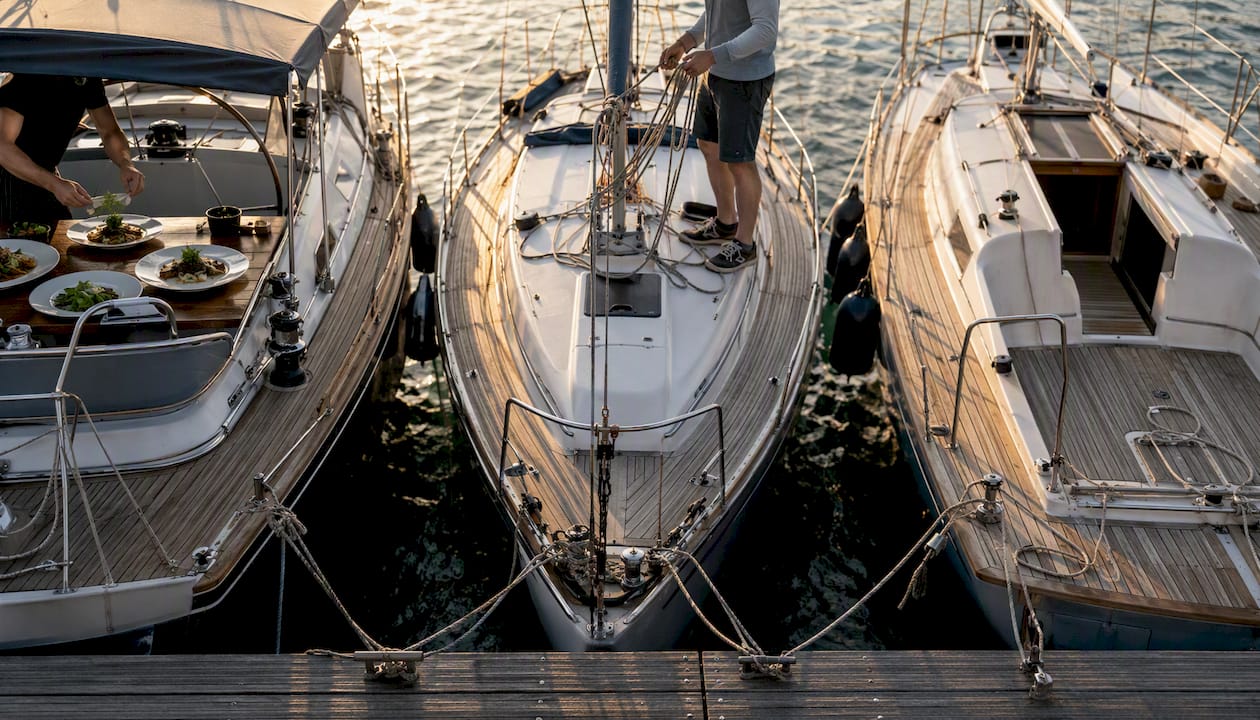
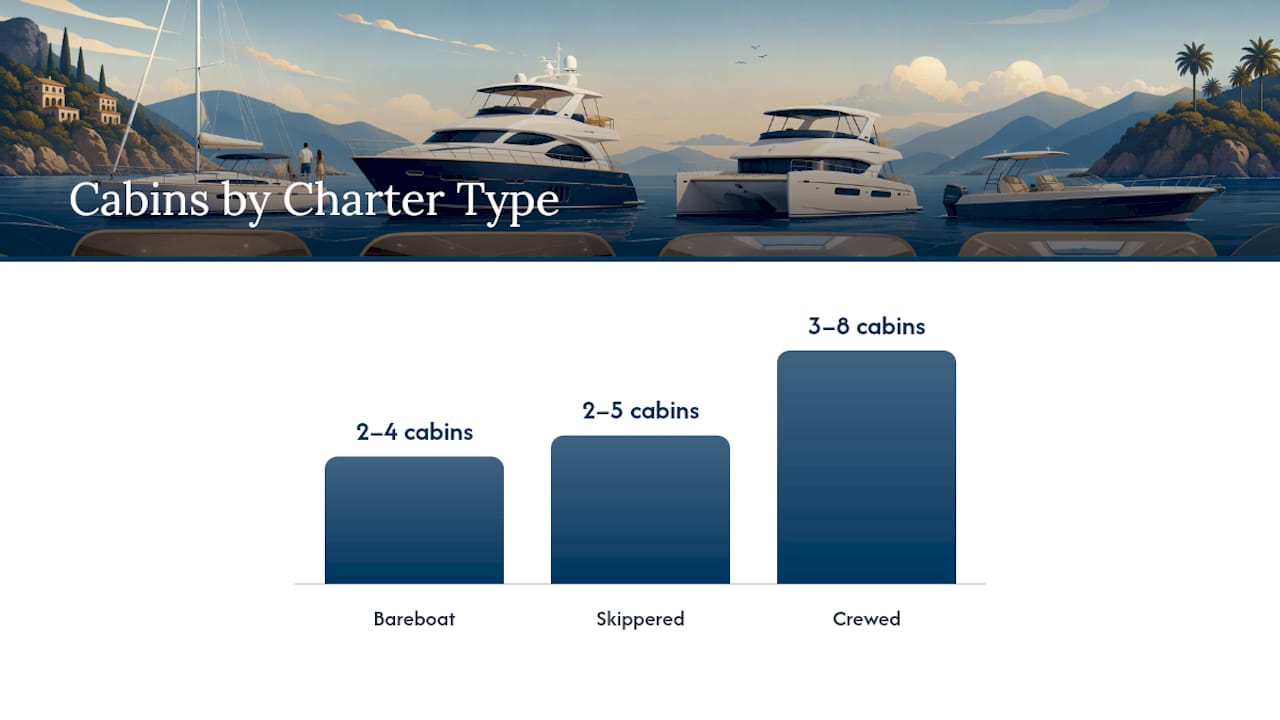
There are three charter models, and they sit on a spectrum of how much responsibility you take on. Bareboat charters put you in command of the vessel with no crew aboard, which requires a sailing license and real offshore experience. Skippered charters add a single professional to handle navigation while you and your group still do some of the hands-on work, like cooking or line handling. Crewed charters put a full team aboard, a captain, chef, and one or more stewards or deckhands, so every function from route planning to breakfast is handled for you.
For a first time yacht charter, crewed is the default recommendation, and skippered is a reasonable middle ground if you have some boating familiarity and want a lower price point. Bareboat is not a beginner option regardless of how appealing the independence sounds; it demands certification and experience you likely don't have yet.
| Charter type | Typical weekly cost band | Best for | Group size / cabins | What's included |
|---|---|---|---|---|
| Bareboat | Lowest of the three | Experienced sailors with certification | Small groups, 2 to 4 cabins | Vessel only, no crew, fuel and provisioning extra |
| Skippered | Mid-range | Confident travelers wanting some hands-on role | Small to mid groups, 2 to 5 cabins | Captain, vessel, basic safety briefing |
| Crewed | Highest, scales with yacht size | First-timers, luxury travelers, families, groups | Couples up to large groups, 3 to 8 cabins | Full crew, chef, provisioning coordination, water toys on larger yachts |
Pro Tip: If your group includes non-swimmers, older relatives, or young children, crewed is not just more comfortable, it's materially safer. A trained deckhand watching the swim platform is worth more than any amount of enthusiasm from a well-meaning uncle.
A few quick recommendations depending on who's coming:
- Couples often do best on a smaller crewed sailing yacht or catamaran, where the ratio of crew attention to guests is highest.
- Families with children benefit from a catamaran's stability and the extra deck space for water toys and shaded lounging.
- Multi-family or multi-generational groups need to prioritize cabin count and layout over speed or styling, since comfort at anchor matters more than passage-making performance.
- Diving groups should confirm the yacht carries compressors, tanks, and a crew member trained in dive support before booking, since not every crewed yacht is dive-ready.
What Does a First Time Yacht Charter Actually Cost?
The headline weekly rate you see on a yacht's listing covers the vessel and crew salaries. It typically excludes fuel, food, drink, marina or mooring fees, and gratuity, all of which get bundled into a separate fund called the Advance Provisioning Allowance, or APA.
The APA works like a running tab. You pay it upfront, usually as a percentage of the base charter fee, and the chief steward or captain uses it throughout the week to buy provisions, fuel the tender, pay marina fees, and cover incidentals. At the end of the charter, the crew provides a full accounting, and any unspent balance is refunded. Industry guides commonly recommend budgeting 20 to 40% of the base fee for this allowance, and it's worth erring toward the higher end if your group drinks well or wants top-shelf everything.
| Cost item | Typical range or basis | Notes |
|---|---|---|
| Charter fee (base rate) | Varies widely by yacht size and season | Covers vessel and crew wages, not fuel or food |
| APA (provisioning allowance) | 20 to 40% of base fee | Reconciled with receipts at week's end; unspent funds refunded |
| VAT / local taxes | Varies by cruising region | Charged on top of the base fee in many jurisdictions |
| Fuel | Billed through APA | Higher for motor yachts and long-distance itineraries |
| Marina and mooring fees | Billed through APA | Varies by marina and season, higher in peak months |
| Crew gratuity | Typically 10 to 20% of base fee, paid separately | Given directly to the crew, not part of APA |
| Charter/travel insurance | Separate purchase | Recommended alongside the security deposit |
The security deposit, a refundable damage bond typically held against the credit card on file, sits outside this operating budget entirely and is returned after a clean end-of-charter inspection.
Glossary in plain terms: the charter fee is your rent for the yacht and crew; APA is your onboard spending fund; VAT is a regional tax layered on top; the security deposit is a refundable damage bond, not a cost at all if the week goes smoothly.
The most commonly underbudgeted items are gratuity, which guests forget sits outside the APA, and pre-charter travel, since flights and connecting hotel nights to reach a remote marina can add thousands to the real total cost of the week.
How Do You Book a Yacht Charter Step by Step?
Start the process four to six months before your target week for shoulder-season travel, and six to nine months out for peak weeks in popular regions, since the best crewed yachts get reserved early. This lines up with the broker-first approach recommended in most professional booking playbooks, where narrowing your "trip shape" before browsing yachts saves enormous time.
- Contact a broker with your destination window, party size, and rough budget so they can filter options instead of sending a wide catalog.
- Review a shortlist of five to eight yachts that actually fit your criteria, typically delivered within days of a good initial call.
- Request video walkthroughs or, where possible, an in-person viewing if you're deciding between similar yachts.
- Sign the charter agreement and pay the deposit, commonly 50% of the base fee, to secure the dates. This follows the MYBA-style contract structure used across most of the professional charter industry.
- Complete the preference sheet as soon as the yacht is confirmed, since chefs and stewards need lead time to source specialty items.
- Pay the balance, usually due 30 days before embarkation, along with the APA and security deposit.
- Arrive at the marina on embarkation day for a welcome briefing, safety orientation, and a walkthrough of the week's itinerary with the captain.
The standard booking sequence rewards guests who lock decisions early. Yachts with the best crew reputations and most flexible itineraries book out first in high season, so hesitation costs you options, not just money.
How Do You Choose the Right Yacht for Your Group?
Cabin count should drive your decision more than any other single factor. A yacht advertised for eight guests in four cabins works fine for two couples but gets tight fast for a multi-family group that needs privacy and separate bathrooms. Look closely at where the owner's suite sits, since a forward-positioned master cabin can feel motion-heavy in choppier water, and check whether remaining cabins have doubles or twin berths, which matters for friends traveling together versus couples.
The hull type shapes daily comfort as much as the layout does. Motor yachts offer speed and often more onboard amenities like stabilizers and larger tenders; sailing yachts deliver a quieter, more traditional feel with less fuel dependency; catamarans provide the most stable platform and the widest deck space, which makes them a strong pick for families or anyone prone to seasickness. Stabilizers, a well-stocked water toy inventory, and extras like an onboard gym or spa setup all push the price up, but they also meaningfully change what a week actually feels like at anchor.
A guest who books based on photos alone often misses the details that matter most: cabin storage, engine noise at anchor, and how many crew are actually assigned to a boat that size. Ask your broker to walk you through a video tour and to specify crew-to-guest ratio before you commit.
Ask the captain directly about typical anchorages for your season, tender capacity, and how storage works, since most cabins on yachts have shallow closets built for soft bags, not hard suitcases. A partner resource on itinerary planning is worth a read if you want to understand how a good crew sequences days around wind, light, and guest energy rather than just moving between islands on autopilot.
Where Should First-Time Charterers Sail?
Croatia and the Ionian coast of Greece consistently rank among the best regions for a first time yacht charter, largely because the sailing distances between anchorages are short, marinas are plentiful, and the summer weather is dependable. The British Virgin Islands offer the same short-hop logic in the Caribbean, with protected waters that keep motion sickness concerns to a minimum. Turkey's Turquoise Coast adds dramatic scenery to the same easy-logistics formula.
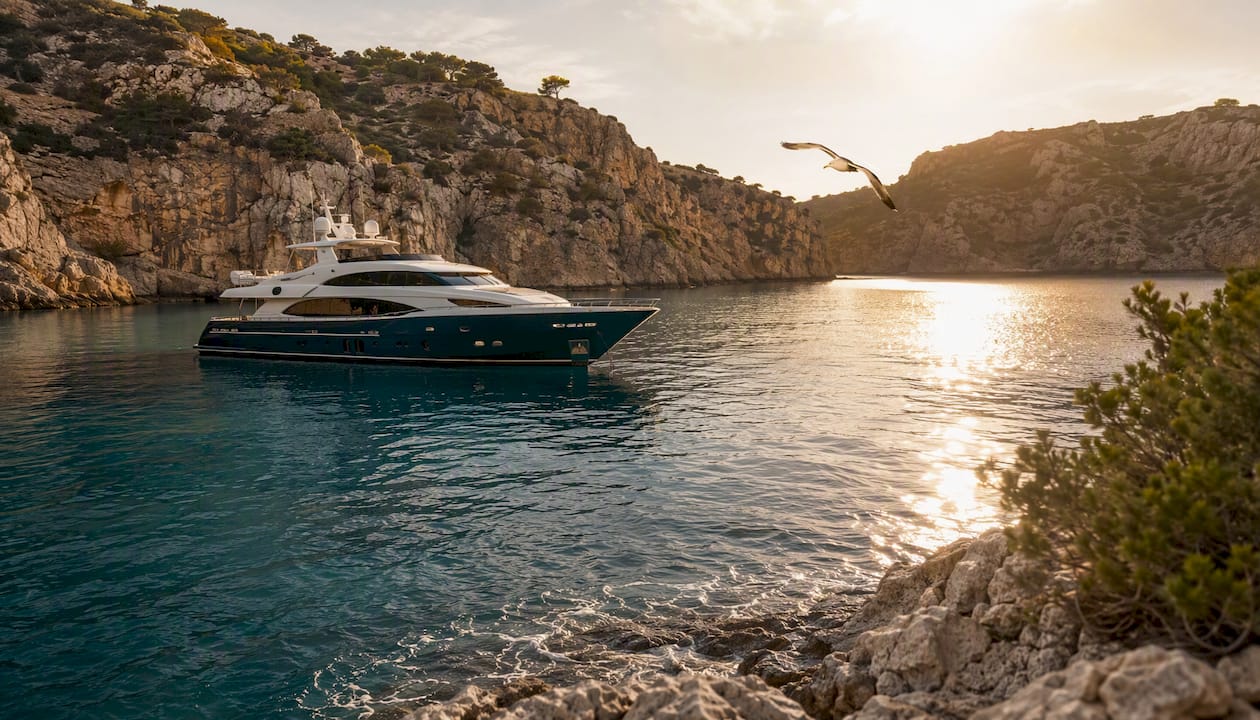
Shoulder season, generally late spring or early autumn in the Mediterranean, often delivers the best value: fewer crowds, lower rates, and weather that's still comfortable for swimming and time on deck. Peak July and August weeks command premium pricing and require booking furthest in advance.
Practical logistics matter as much as scenery. Check how far the marina sits from the nearest international airport, since a two-hour transfer eats into your first and last days, and confirm what medical access looks like nearby if anyone in your group has ongoing health needs.
| Region | Why it's beginner-friendly | Best season |
|---|---|---|
| Croatia | Short hops between marinas, calm Adriatic waters | Late May to June, September |
| Ionian Greece | Protected anchorages, mild summer winds | June, September |
| British Virgin Islands | Sheltered sailing, minimal open-ocean exposure | December to April |
| Turkey (Turquoise Coast) | Easy marina access, gentle coastal cruising | May, September to October |
Guests drawn to wildlife-forward itineraries beyond these classic beginner routes might also consider Exotica Charters' Galápagos programs, though these lean more expedition-style and suit travelers who want adventure layered onto their first charter rather than the gentlest possible entry point.
What Happens Day to Day on a Crewed Charter?
The crew divides responsibilities clearly. The captain navigates, manages safety, and liaises with marinas and port authorities; the chef plans and prepares every meal around your preference sheet; a chief steward or stewardess manages housekeeping, service, and guest requests; and deckhands handle mooring, water toys, and general upkeep. Your role is simple: relax, communicate what you want, and let the professionals run the operation.
A typical seven-day rhythm looks something like this: mornings start with breakfast on deck and a swim before the yacht moves to a new anchorage, midday brings lunch and water sports, afternoons offer a choice between a shore excursion or lounging aboard, and evenings feature a chef-prepared dinner, either on deck or ashore at a recommended restaurant the crew has scouted. Activity options usually include snorkeling, paddleboarding, and jet skiing where provisioned, plus dive support on yachts equipped for it.
The best weeks happen when guests treat the crew as skilled professionals rather than staff to direct constantly. A little warmth and clear communication go a long way toward a genuinely personal week.
Pro Tip: Crew quarters and guest quarters are separate for a reason. Respecting that boundary, and giving the crew a little downtime during quiet afternoon hours, tends to translate into a noticeably warmer, more attentive week from everyone aboard.
What Should You Know About Charter Contracts and Insurance?
Most professional yacht charters run on a MYBA-style agreement, a standardized contract format used widely across the industry that spells out the charter fee, APA terms, cancellation policy, and liability for damage. Read the cancellation clause carefully, since refund percentages typically shrink the closer you get to your departure date, and confirm how force majeure situations, like severe weather, are handled.
Deposits are usually 50% of the base charter fee at signing, with the balance, APA, and security deposit due roughly 30 days before boarding. Payment is typically made by bank transfer, and the security deposit is refundable after an end-of-charter inspection confirms no damage.
Travel or charter-specific insurance is worth treating as non-negotiable rather than optional, since it covers trip interruption, medical evacuation in remote cruising grounds, and sometimes a portion of your deposit if you need to cancel.
Before signing anything, confirm with your broker or a legal advisor:
- The exact APA percentage and how unspent funds are returned.
- The cancellation schedule and what triggers a full versus partial refund.
- What counts as damage under the security deposit clause.
- Whether gratuity is included in any published rate or strictly separate.
How Do You Prepare for Embarkation Day?
The preference sheet is the single document that shapes your entire week, and completing it as soon as your yacht is confirmed, ideally three to four weeks before departure, gives the chef and crew real lead time to source specialty ingredients or arrange dietary accommodations. It typically asks about dietary restrictions, favorite drinks, activity interests, and any special occasions worth marking. Exotica Charters' guide on the yacht preference sheet walks through exactly what's asked and why answering in detail matters so much.
Pack soft-sided luggage only. Cabin storage is built for duffels and totes, not hard-shell suitcases, and most first-time luxury travelers are genuinely surprised by how little closet space even a large yacht offers. Bring reef-safe sunscreen, non-marking deck shoes, and expect to live largely in swimwear and light layers for the week.
Arrive at the marina with a buffer, ideally the night before boarding if your flight connections are tight, and carry passports, any required visas, and medication in your carry-on rather than checked luggage.
Pro Tip: Roll rather than fold, and pack one soft duffel per person instead of a suitcase plus a carry-on. Crew genuinely appreciate less luggage to stow, and you'll appreciate having actual drawer space once aboard.
What Etiquette and Safety Rules Should Guests Follow?
Good manners aboard are mostly common sense, but a few habits make a real difference to how smoothly the week runs:
- Remove deck shoes or any hard-soled footwear before stepping on teak decking.
- Address crew by name and keep requests specific rather than vague.
- Ask before inviting outside guests aboard for a shore dinner or day visit.
- Respect crew quarters and designated off-hours as private space.
- Follow the captain's guidance on weather calls without pushback, even if it means altering the day's plan.
Gratuity norms vary by region but generally land between 10 and 20% of the base charter fee, split among the crew by the captain rather than distributed guest by guest. Pack it as a separate line in your budget, paid in cash or via the arrangement your broker sets up, distinct from the APA entirely.
On safety, take seasickness seriously even if you've never experienced it, since motion on an unfamiliar vessel affects people differently than a cruise ship does; pack medication in advance rather than hoping for the best. Every reputable crewed yacht carries a stocked medical kit and runs a safety briefing on embarkation day covering life jackets, emergency exits, and man-overboard procedure. If something goes wrong mid-charter, from a medical issue to a contract dispute, contact your broker immediately; a good one stays reachable throughout your trip and can mediate directly with the captain or yacht owner.
How Exotica Charters Supports First-Time Guests
Exotica Charters was built around a specific gap: most first-time charterers don't need another glossy brochure, they need someone who has actually stood on a bridge and made the calls a captain makes. The team is staffed by former captains and water sports professionals, the kind of background that means a broker call includes real answers about tender capacity, dive logistics, or how a given yacht handles in afternoon chop, not just marketing copy pulled from a spec sheet.
A typical support flow looks like this: a pre-booking call clarifies destination, party size, and interests; a shortlist follows within days; once you choose a yacht, the preference sheet gets built out in detail; the captain receives a full handover of your priorities before you ever board; and after the charter, the crew reconciles the APA with itemized receipts so nothing about the final invoice is a surprise.
First-time guests consistently tell us the preference sheet conversation is what shifted their week from "nice boat" to "best trip we've taken." Getting that document right before boarding changes everything downstream.
Trust signals worth verifying independently: Exotica Charters is rated highly on Trustpilot, works within MYBA-style contract frameworks, and confirms every captain's licensing and crew qualifications before a charter is booked, in line with the professional licensing standards that govern the industry. If you want to see what a first call actually covers, expect a straightforward conversation about your destination window, group size, and budget, nothing more, before a shortlist ever lands in your inbox.
A Captain's Honest Advice for First-Time Charter Guests
The most common first-charter mistake isn't a big one. It's usually a guest who skips the preference sheet, figuring the crew will "just figure it out," and then spends day one frustrated that the wine selection or the kids' snacks aren't quite right. Good crews recover fast, a mid-week provisioning run at the next port usually fixes it, but that first day of mild disappointment is entirely avoidable with fifteen minutes of upfront honesty about what you actually want.
A few pieces of advice show up again and again from experienced captains:
- Fill out the preference sheet in real detail; vague answers get you a generic week.
- Trust the captain's weather calls completely, even when the change of plan is annoying in the moment.
- Label valuables and store passports in the safe on day one, not "sometime this week."
- Tip in the currency and manner your broker recommends for the region, not what feels familiar from home.
- Ask questions early rather than nursing a small frustration until it becomes a big one.
Guests are sometimes invited to take the helm for a stretch of calm, open water, usually under close supervision and never in tight anchorages or challenging conditions. If the captain offers, accept graciously and follow instructions exactly. It's one of the most memorable moments of a first charter precisely because it's offered selectively, to guests the crew trusts to listen.
Ready to Book Your First Crewed Charter?
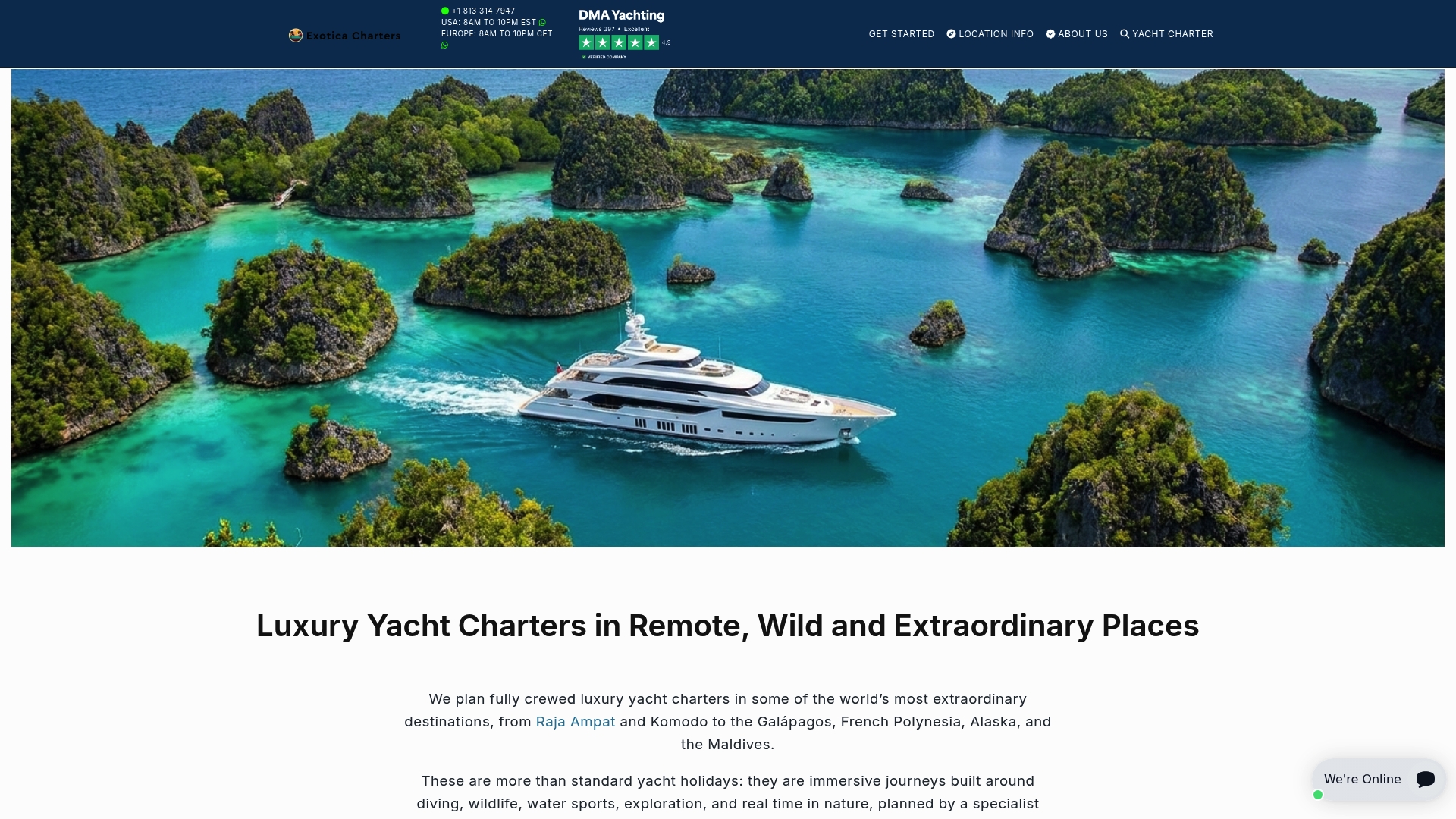
Exotica Charters specializes in exactly the kind of first time yacht charter that removes the guesswork: fully crewed luxury yachts planned by former captains and water sports professionals who've actually done the job you're trusting them with. Rather than handing you a catalog and hoping something fits, the team builds your itinerary around your interests first, whether that's diving, wildlife, or simply a quiet week of good food and better views.
What that looks like in practice:
- Bespoke provisioning built from your preference sheet, not a standard menu.
- Itinerary planning led by former captains who know how a region actually sails.
- On-the-ground logistics support from first inquiry through post-charter reconciliation.
If you're ready to see what's realistically available for your dates and group size, browse Exotica Charters' luxury yacht listings and send over your destination window, party size, and rough budget. A broker will follow up with a shortlist built specifically around what you tell them, not a generic package.
Where to Verify These Facts and Read Further
A first-time charterer doesn't need to take any broker's word at face value. The best resources let you cross-check pricing norms, contract structure, and packing advice independently before you commit.
For readers who want to dig deeper before booking, a few resources are worth bookmarking:
- The Mordor Intelligence yacht charter market report for current data on crewed versus bareboat market share.
- The Seafarer's beginner's guide to chartering for a deeper walkthrough of MYBA-style contracts and charter types.
- Yachts for Kings' step-by-step booking playbook for the full decision sequence brokers use with new clients.
- Independent guest feedback on Tripadvisor for on-the-ground impressions of specific charters and marinas.
- Exotica Charters' own Yacht Charter Insights hub for ongoing articles on itinerary planning and hospitality details.
Each covers a different piece of the puzzle, market data, contract mechanics, booking sequence, and firsthand impressions, so cross-referencing more than one before you sign anything is always worth the extra hour.
Sources
- Yacht charter market — Mordor Intelligence
- How to charter a yacht: The complete beginner's guide — The Seafarer
- First-Time Yacht Charter Tips: What to Pack, Expect & Budget — GetBoat Blog
- How to charter a yacht for the first time: A step-by-step — Yachts for Kings
- How captains are licensed — MITAGS