For privacy, flexible routing, and genuine wildlife access, a private crewed yacht or phinisi charter is the way to see Komodo properly, while budget-minded travelers often start with a shared group day trip. Expect private multi-day charters to sit well above the cost of a group outing. Whichever route appeals, confirm permit handling and e-ticket timing with your operator before you book.
TL;DR:
- For three or more travelers, compare a private day charter’s total boat price with everyone’s group tour tickets before booking.
- Fuel and crew are usually included in a charter rate, but park and ranger fees or dive gear rental may be charged separately at embarkation.
- Match the vessel to your plans: divers need a suitable tender and compressor, while families should check cabin layout, shade, and freshwater capacity.
- With three days, travelers can visit Padar, Pink Beach, and Komodo Island; a fourth day adds time for diving, manta stations, or weather delays.
- Confirm in writing who files timed park permits and electronic tickets, filing deadlines, included fees, and the operator’s weather rerouting plan.
Table of Contents
- What does a Komodo charter actually cost?
- How do you choose the right operator and vessel?
- What do typical Komodo routes and itineraries look like?
- Who handles permits, transfers, and safety logistics?
- What should you pack and prepare before you sail?
- Why this guide reflects real charter experience
- A planner's note on timing and flexibility
- Plan your Komodo charter with us
- FAQ
What does a Komodo charter actually cost?
Budgeting for Komodo starts with understanding the gap between a shared boat and a private vessel. Group day tours are the most economical entry point, typically sold per person, while private charters are priced per boat and scale with vessel size, crew, and season.
- Group day tours commonly run in the lower range per person, suited to travelers comfortable sharing a schedule with strangers.
- Private day charters are priced per boat rather than per person, which makes them efficient once you have three or more travelers splitting the cost.
- Multi-day private or crewed charters carry a daily rate that reflects the vessel class, from a simple wooden boat to a fully crewed phinisi or motor yacht.
Several factors move the needle beyond the base rate. Vessel type matters most: a basic liveaboard costs less to run than a crewed phinisi with air-conditioned cabins and a dedicated chef. Season plays a role too, since the dry months draw heavier demand and firmer pricing. Group size, fuel consumption, and whether diving or specialty excursions are bundled in all shift the final number.
What is included varies by operator, which is why the math only works when you ask directly. Fuel and crew wages are usually built into the daily rate, but park entrance fees, ranger accompaniment fees, and dive gear rental are sometimes billed separately at embarkation. For a family of four considering a private day charter against two group tours, the private option often comes out comparable once everyone's individual day-tour ticket is added up, with far more flexibility in return.
How do you choose the right operator and vessel?
Matching the boat to your trip goals makes the rest of the planning easier. A dive-focused group needs a vessel with a proper tender and compressor setup, a family wants stable cabins and shade, and a photography-minded traveler benefits from a flexible schedule that chases good light rather than a fixed clock.
- Define your priority first: diving, wildlife viewing, photography, or simple comfort, since this determines which vessel class fits.
- Check the captain's experience and confirm that a national-park ranger will accompany the vessel into Komodo's protected waters, which is standard practice for reputable operators.
- Review safety and insurance documentation, including seaworthiness papers, and look at how consistently past guests describe the crew and vessel.
- Assess cabin configuration, freshwater capacity, refrigeration, and dive tender setup against your group's size and activity plan.
- Ask who files the park permits and e-tickets, by what date, and what the cancellation terms look like if plans shift.
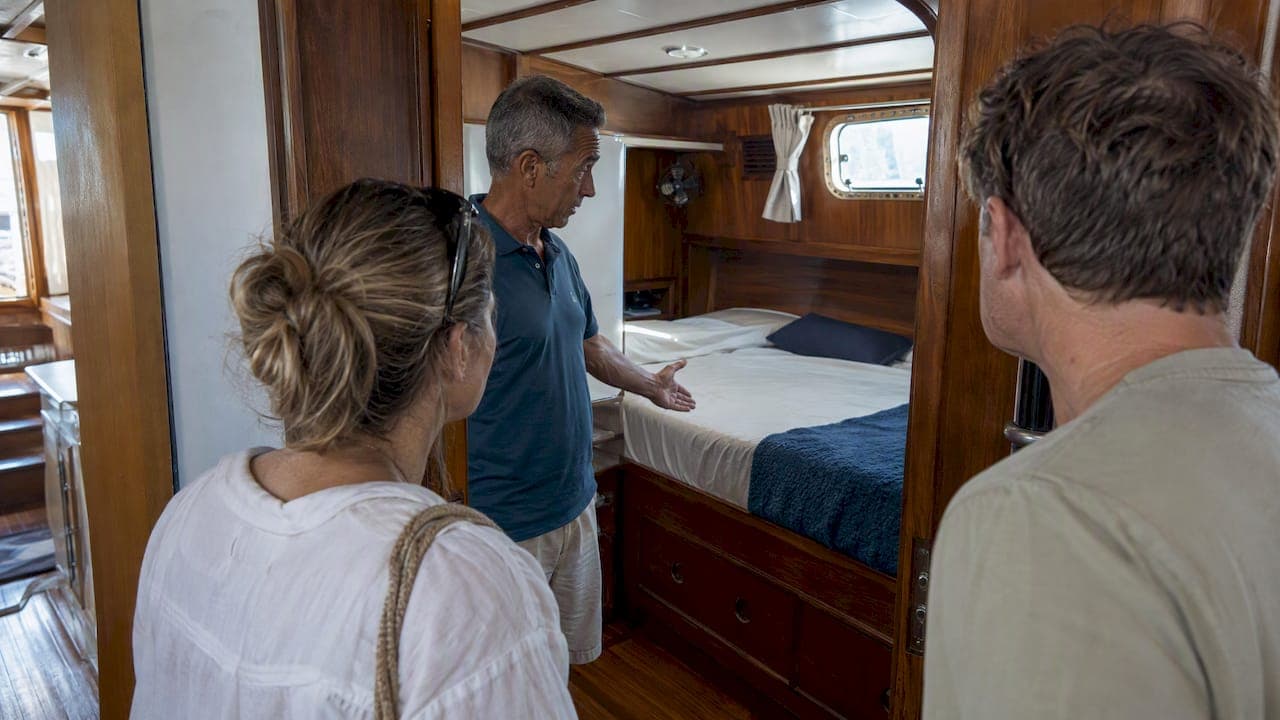
Charter guides consistently point to the same five factors when narrowing a shortlist: itinerary flexibility, crew experience, cabin comfort for your party size, safety and documentation, and whether the trip leans toward snorkeling or diving. Cabin layout deserves early attention too, since a charter with the wrong bed configuration or no ensuite bathrooms for a family group causes more friction than any scenery ever will.
Pro Tip: Ask for photos of the actual cabins you will sleep in, not stock images of the vessel's flagship suite.
What do typical Komodo routes and itineraries look like?
A single day trip from Labuan Bajo can cover one or two headline stops, usually Padar's viewpoint or Pink Beach, but the tight schedule leaves little room for weather delays or a slow manta sighting. Multi-day charters solve that by spreading the same highlights across a more relaxed itinerary.
- A sample three-day itinerary might open with Padar's viewpoint hike at sunrise, move to Pink Beach for the afternoon, dedicate day two to Komodo Island's dragon walk and a nearby snorkel stop, then close with a manta cleaning station on the final morning.
- A sample four-day version adds a dive or snorkel day at Batu Bolong or Manta Point, plus a visit to a local fishing village, giving divers and wildlife watchers extra time at the sites that matter most.
- Padar's viewpoint, Pink Beach, the Komodo Island dragon walk, and the manta cleaning stations are the highlights that recur across nearly every published itinerary, since they are reliably reachable in good conditions.
- Sea conditions and seasonal currents can force a reordering of stops, which is one more reason a flexible, privately chartered schedule holds up better than a fixed group tour.
Who handles permits, transfers, and safety logistics?
Park entrance and ranger fees apply throughout Komodo National Park, and most operators either include them in the daily rate or collect them at embarkation. Confirm which applies to your booking before you sail, since this is one of the most common sources of surprise charges.
- Park permits and e-tickets are timed and must be filed in advance, which is why experienced operators manage this process rather than leaving it to guests.
- Confirm your port of departure, boarding time, and any land transfer that connects your flight to the boat, since a missed connection can shift the whole itinerary.
- Ask about dive medical requirements if diving is planned, how the crew handles seasickness, and what the emergency plan looks like for a remote, multi-day route.
- Clarify in writing whether fuel surcharges, park fees, and dive gear rental are included or billed separately.
Booking platforms such as Sailorix's charter guide recommend getting these operational details confirmed in writing before departure, a habit worth carrying into any Komodo booking.
What should you pack and prepare before you sail?
A short packing list and a few pre-trip checks go a long way toward a smooth embarkation.
- Pack reef-safe sunscreen and reef-safe insect repellent, lightweight breathable clothing, a waterproof bag for tenders, and any personal medication in its original packaging.
- Bring your own mask and fins if you have them, along with certification cards and a logbook if diving; most boats can rent tanks and weights.
- Carry copies of your passport and permit confirmation, plus cash for tips and small purchases in villages where cards are not accepted.
- Confirm your travel insurance covers diving if relevant, check your fitness for the Komodo Island trek, and verify your transfer time to the departure port.
Why this guide reflects real charter experience
This guidance comes from a planning team built around former captains and water sports professionals who have spent years on the water in destinations like Komodo. That background shapes the emphasis on ranger accompaniment, permit timing, and honest cabin assessments rather than brochure promises. You can see the same operational depth on our Komodo yacht charter destination page, and our client feedback on Trustpilot reflects that same attention to detail across past charters.

A planner's note on timing and flexibility
Build slack into your itinerary. Komodo's best moments, a dragon sighting, a clear manta pass, often depend on tides and light rather than a printed schedule. Ask your operator specifically how they handle permit delays or a weather-forced reroute before you commit.
— Mo
Plan your Komodo charter with us
We build bespoke Komodo itineraries around what matters most to you, whether that is diving the manta stations, photographing Padar at sunrise, or simply relaxing aboard a crewed phinisi with your family. We handle permit timing, ranger coordination, and inclusions so you are not sorting through fine print.
When you request a quote, ask us about itinerary flexibility, exactly how park permits are handled, and what is included in the daily rate. Browse our Komodo yacht charter options or get in touch through Exoticacharters to check availability for your dates.
FAQ
How much does a private Komodo yacht charter cost?
Pricing depends heavily on vessel type, season, and trip length, with private charters priced per boat rather than per person. For an exact quote based on your dates and group size, we recommend requesting pricing directly from a charter specialist.
What is the best length for a Komodo itinerary?
A three-day itinerary comfortably covers Padar's viewpoint, Pink Beach, and the Komodo Island dragon walk, while a four-day version adds dedicated time for diving or a manta cleaning station. Longer trips give more buffer against weather and crowds at the busiest stops.
Do operators handle park permits and ranger fees?
Reputable operators typically manage the park permit and e-ticket process directly since the system is timed and requires advance filing. Always confirm in writing whether ranger and park entrance fees are included in your rate or collected separately at embarkation.
What is the best time of year to sail in Komodo?
The dry season draws the calmest conditions and the clearest visibility for diving and wildlife viewing, though it also means higher demand on popular vessels. Seasonality can shift the order of stops on your itinerary, so ask your operator how they adjust routing around weather.
What should I pack for a Komodo charter?
Pack reef-safe sunscreen and insect repellent, lightweight clothing, a waterproof bag, and any personal medication, along with certification cards if you plan to dive. Bring copies of your passport and some cash for tips and village purchases, since cards are not always accepted ashore.