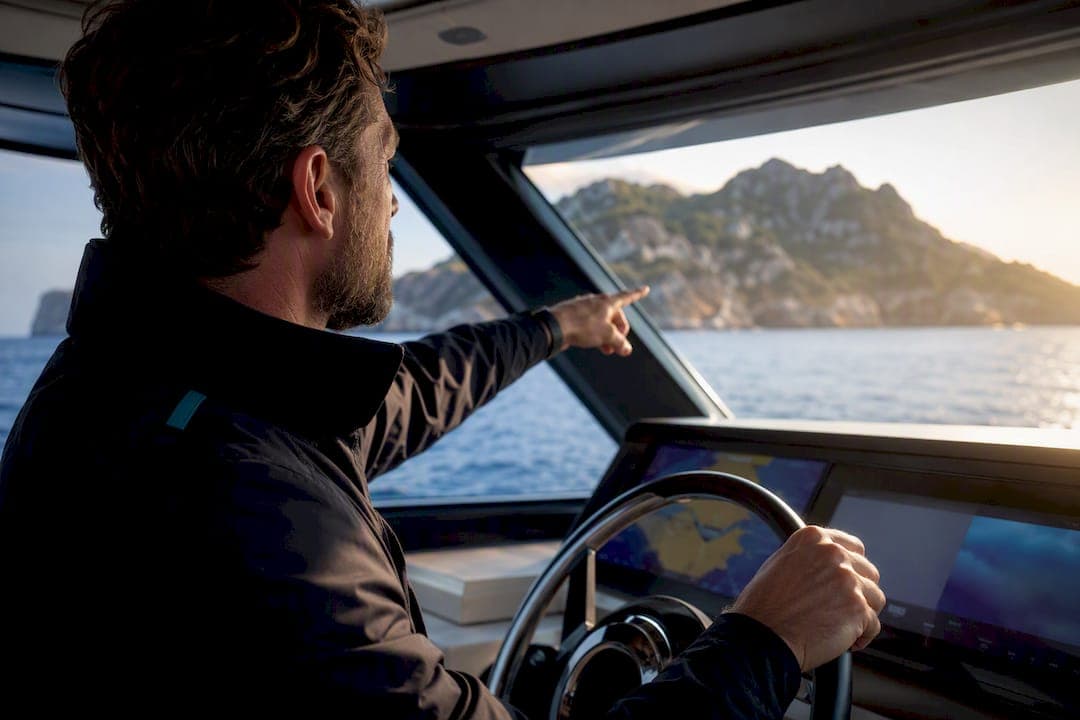
A captain-led itinerary is a private boat or yacht trip planned and adjusted in real time by a professional captain around your interests, rather than a fixed route sold from a brochure. It suits divers, wildlife watchers, and photographers chasing specific conditions; guests who want to learn boat handling hands-on; and groups celebrating an occasion who want a private, flexible plan. The real value comes from the captain's local knowledge, safety judgment, and ability to reshape the day as conditions and your priorities shift.
TL;DR:
- Captain-led trips are highly flexible, with real-time adjustments driven by weather, tides, and wildlife activity tailored to guest interests.
- Detailed pre-trip information, including interests and mobility needs, allows captains to craft routes that prioritize guest safety and preferences.
- Safety always takes precedence, with route changes common for weather, environmental restrictions, or mechanical issues, and must be transparently communicated.
- Pricing varies based on vessel size, crew composition, and remote destination requirements, so a line-item quote is essential for comparison.
- Exotica Charters specializes in fully customizable, crewed yacht experiences built around diving, wildlife, and adventure, with experienced captains leading route planning.
Table of Contents
- What Formats Do Captain-Led Itineraries Take?
- How Do Captains Personalize an Itinerary?
- How Safe Are Captain-Led Trips, and What Happens When Plans Change?
- How Do You Plan and Book a Captain-Led Charter?
- What Does a Captain-Led Charter Typically Cost?
- What Does a Captain Actually Do Beyond Steering the Boat?
- How Do Captain-Led Trips Handle Environmental Responsibility?
- How Exotica Charters Builds a Captain-Led Itinerary Around You
- A Straight Take on What Actually Makes These Trips Work
- Sources
- FAQ
What Formats Do Captain-Led Itineraries Take?
Captain-led trips range from a half-day private charter to a multi-week, fully crewed yacht expedition, and the format you choose shapes everything else, from group size to how much input you get. A half-day or full-day charter typically runs on a smaller vessel with a captain and maybe one deckhand, built around a single goal like a snorkel run or a sunset cruise. Multi-day itineraries move to larger sailing yachts, motor yachts, or catamarans with a full crew, chef, and often a dedicated dive or naturalist guide.
The scenarios these trips serve are specific:
- A dawn wildlife run timed to when dolphins or whales feed close to shore.
- A dive-focused day built around two or three sites picked for current and visibility.
- A family or milestone celebration where the captain keeps the schedule loose and social.
- A skills-learning charter where guests take the helm under supervision.
Group size tracks vessel size closely. A 40-foot sailing catamaran comfortably handles a small group of guests for a day trip, while a large motor yacht crewed for a week might sleep a modest number of guests in comfort. Smaller charters often let guests handle lines or take a turn at the helm, turning what could be a passive ride into an active learning experience, a detail worth asking about if that kind of participation appeals to you.
How Do Captains Personalize an Itinerary?
Personalization starts before you ever step aboard. Captains build the route around what you tell them, then refine it hour by hour based on what the water and weather are doing that day.
What captains need from you before booking:
- Your primary interest: diving, wildlife photography, quiet anchorages, or active exploration.
- Pace preference: packed days versus long, unhurried stops.
- Any accessibility or mobility needs that affect boarding, swimming, or shore excursions.
- Special dates like anniversaries or milestone celebrations that deserve a particular stop or moment.
Captains also draw on real-time inputs no brochure can capture: tide tables, wind direction, and known wildlife windows tied to season and time of day. A flexible, real-time approach to routing is how experienced captains protect both safety and experience quality, adjusting a planned stop the moment conditions shift rather than sticking to a printed schedule.
In practice, that looks like a captain moving a dive to the morning because afternoon current at that site runs too strong, or rerouting to a sheltered bay when afternoon wind picks up on the exposed side of an island. Naturalist-led wildlife charters take this further, pairing a marine biologist or trained guide with the captain to read animal behavior and tailor narration to the questions guests are actually asking. On a multi-day charter, that might mean swapping a planned anchorage for a lesser-known cove once the crew learns you'd rather eat dinner ashore at a small local spot than aboard.
Pro Tip: Tell the captain your top three priorities in order, not just a general wish list. When conditions force a tradeoff, an ordered list lets the captain protect what matters most to you instead of guessing.
How Safe Are Captain-Led Trips, and What Happens When Plans Change?
Safety sits above the itinerary on every legitimate captain-led charter, and that ordering is what actually protects your trip rather than limits it. Captains hold professional credentials for a reason: in U.S. waters, that typically means a USCG-endorsed license appropriate to the vessel and commercial liability insurance covering the charter; outside the U.S., the equivalent is local commercial licensing and comparable coverage. Ask about both before you book.
Several conditions routinely force a change of plan:
- Deteriorating weather or sea state that would make a planned crossing or anchorage unsafe.
- Shifting tides or shoaling that changes water depth at a planned stop.
- Protected species zones or seasonal closures that restrict where a vessel can operate.
- Mechanical or logistical issues that require adjusting the day's sequence.
A captain who moves you off a planned route because of wind or current isn't failing to deliver your itinerary. Preparing for a trip means understanding that captains will adjust routes for conditions, and communicating your interests clearly in advance is what lets them find you the best available alternative fast. Reputable operators explain their weather-related refund and credit policy at booking, not after a change happens, so ask for that policy in writing before you pay a deposit.
How Do You Plan and Book a Captain-Led Charter?
Booking well comes down to asking the right questions upfront and giving the captain enough information to plan around your priorities rather than guess at them.
- Confirm exactly what's included: fuel, food and beverage, port or mooring fees, and equipment like snorkel gear or dive tanks.
- Ask about crew composition. A captain-only charter differs meaningfully from a fully crewed yacht with a dedicated chef and deckhands, and that difference affects both price and the kind of attention you'll get.
- Disclose any medical conditions, mobility limits, or swimming ability that could affect activity choices.
- Share your interests in specific terms: reef diving versus wreck diving, bird photography versus big-mammal sightings, active snorkeling versus a slower sightseeing pace.
- Confirm arrival time, dock location, and what to pack. Most crewed charters ask guests to arrive 30 to 60 minutes before departure.
- Ask about tipping norms for the crew, which on fully crewed charters is customary and typically separate from the charter fee.
The more specific you are about interests and limitations before the trip, the less time gets spent negotiating changes once you're on the water. A short call or written brief covering all six points above generally produces a smoother first day than any amount of back-and-forth once you're aboard.
What Does a Captain-Led Charter Typically Cost?
Pricing structures shift depending on trip length and vessel type, and understanding the model helps you compare quotes that otherwise look wildly different on the surface.
- Short private charters (half-day or full-day) are usually quoted hourly or as a flat day rate.
- Multi-day, fully crewed yacht itineraries are quoted as a package that bundles the vessel, crew, and provisioning.
- Remote or expedition-style routes carry additional costs for permits, fuel logistics, and specialized guides.
The biggest swing factors are vessel size, crew size, and how remote the destination is. A captain-only day charter on a modest sailing yacht costs far less than a week aboard a fully crewed motor yacht with a chef and dive guide headed to a marine park requiring special permits.
| Cost Driver | Effect on Price |
|---|---|
| Vessel size and type | Larger yachts and multi-cabin layouts raise both charter and crew costs |
| Crew composition | A chef, deckhands, or dive guide add cost beyond a captain-only rate |
| Provisioning and fuel | Multi-day trips and longer distances increase both significantly |
| Destination and permits | Remote or protected areas often carry permit or park fees |
Always ask for a line-item quote that separates the boat hire, any separate captain fee, fuel, provisioning, port or dockage fees, and extras like dive equipment. That breakdown is the only reliable way to compare two offers that look different on their headline number but cover different things.
What Does a Captain Actually Do Beyond Steering the Boat?
Navigation is the visible part of the job; the rest of it is what determines whether your day actually goes well. A good captain functions as trip director, safety officer, and local guide rolled into one role.
That means briefing guests on safety procedures before departure, monitoring weather and radio traffic throughout the trip, and making the judgment calls about anchorage, speed, and timing that a guest never sees happening. On smaller charters, the captain often doubles as the person narrating what you're looking at, whether that's a reef system, a historic coastline, or a pod of dolphins running the bow wave.
Captains also manage the social dynamics of the day: reading whether a group wants quiet time or active engagement, pacing meals and stops accordingly, and stepping back to let guests take the helm or handle lines when that fits the group's interest and skill level. On fully crewed yachts, the captain coordinates the rest of the crew, from the chef's meal timing to the deckhands' handling of tenders and water toys, so the whole operation runs as one coordinated experience rather than several disconnected services.
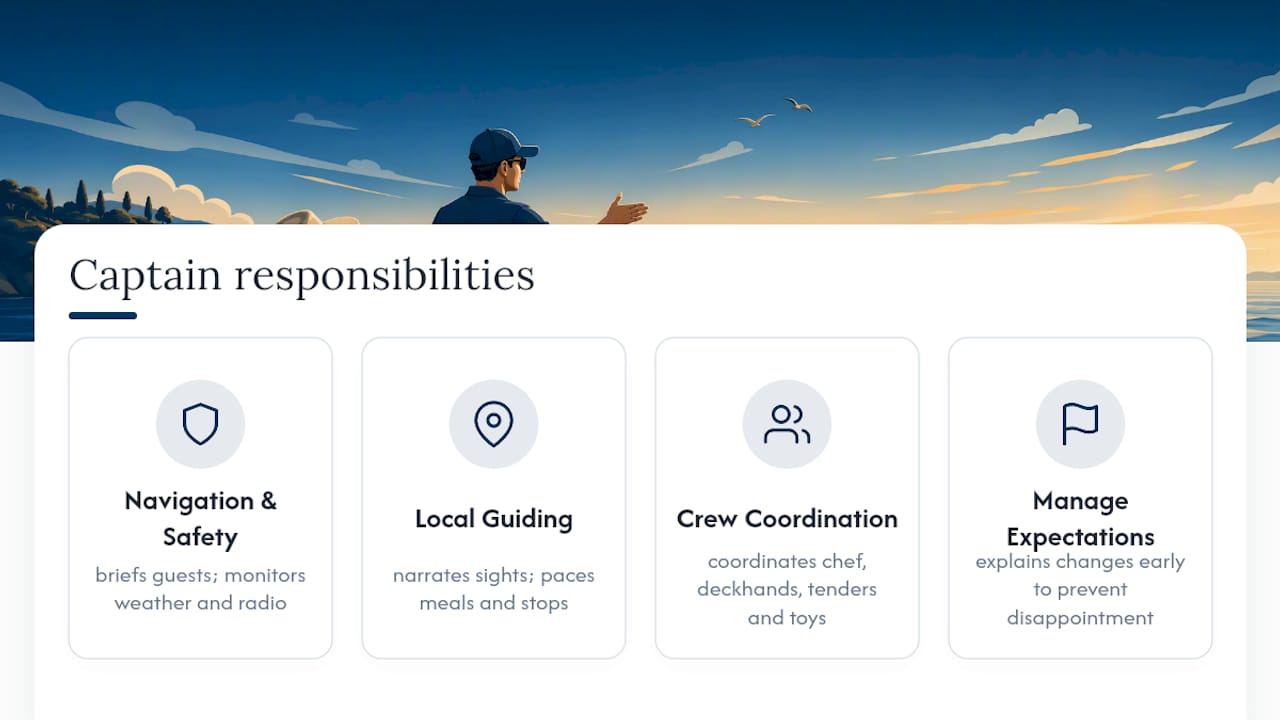
Perhaps most underrated: a captain manages expectations. Telling a group early that today's conditions favor a different bay than the one they'd hoped for, and explaining why, prevents disappointment far better than a silent, unexplained course change ever could.
How Do Captain-Led Trips Handle Environmental Responsibility?
Operating in remote and ecologically sensitive waters carries real responsibility, and captains who work these routes regularly build environmental judgment into every decision, not just the ones with a rule attached.
That starts with respecting marine protected areas, seasonal wildlife closures, and no-anchor zones over coral or seagrass, all of which can force a route change regardless of what a guest requested. Responsible captains also manage wake and speed near sensitive shorelines, limit time spent close to wildlife to avoid disturbing feeding or nesting behavior, and follow no-discharge practices for waste and gray water in coastal and reef areas.
Provisioning choices matter too. Many crews now prioritize reef-safe sunscreen requirements for guests, minimize single-use plastic aboard, and source food locally when a multi-day itinerary allows it, which supports the small communities the yacht is visiting rather than importing everything from a home port.
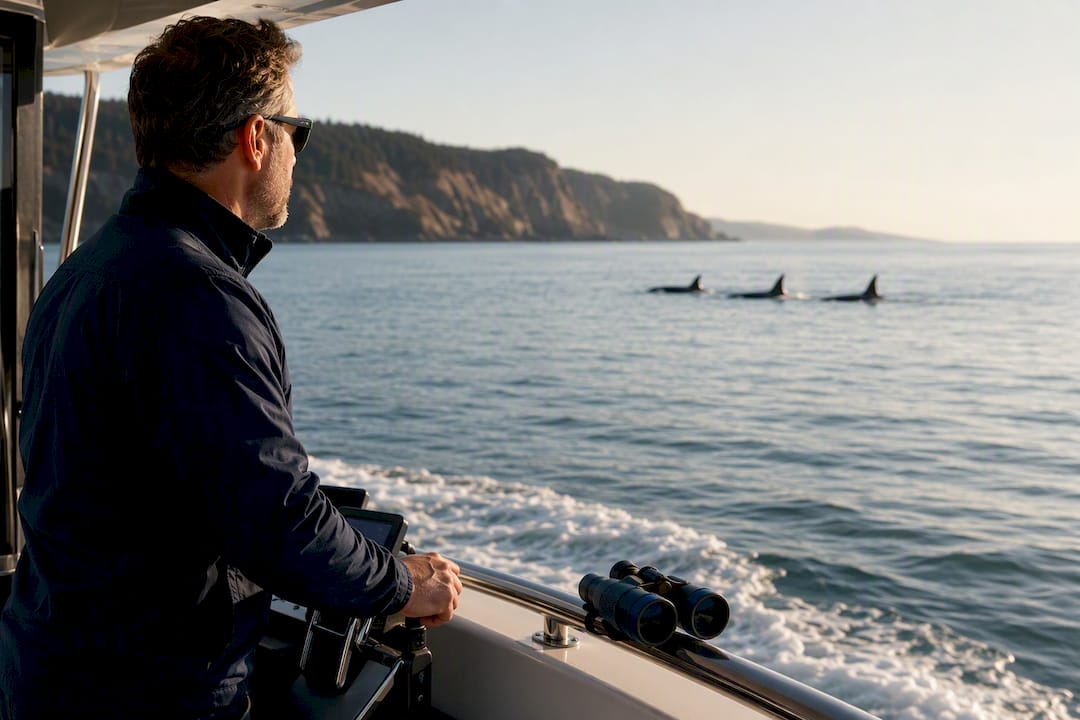
None of this is abstract for the traveler experience. A captain who slows the boat near a whale pod or keeps distance from a nesting seabird colony is protecting the very wildlife encounter you booked the trip to see. Ask any operator directly about their approach to marine protected areas and wildlife distance guidelines before booking; a captain who answers that question specifically, rather than generically, is usually the one who takes it seriously on the water.
How Exotica Charters Builds a Captain-Led Itinerary Around You
Exotica Charters exists for exactly the traveler this guide describes: someone who wants a fully crewed, private yacht trip shaped around diving, wildlife, or adventure, not a fixed package tour. The team is built from former captains and water sports professionals, which means the person planning your route has actually navigated the waters you're asking about.
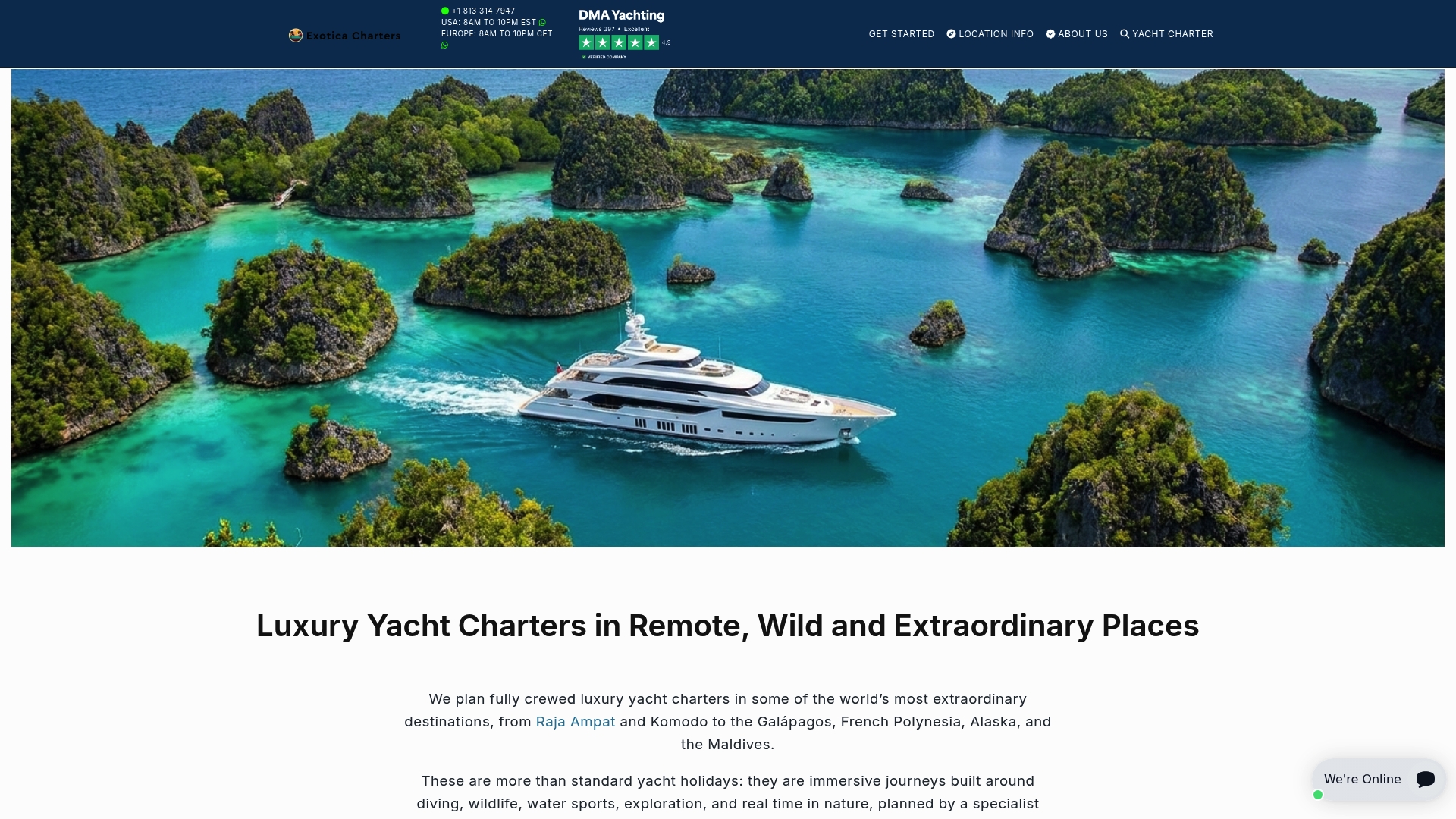
The process starts with a real consultation about what you want to see and do, whether that's tracking marine life through the Galápagos, diving remote reef systems in French Polynesia, or watching for whales along the Alaskan coast. From there, Exotica Charters builds an itinerary with built-in flexibility for on-route adjustments, and pairs guests with specialist guides when diving or wildlife tracking is the focus of the trip.
Start by browsing the luxury yacht fleet to see vessel types and layouts, then reach out with your priority interests, group size, and preferred dates. On that first call, ask specifically about crew composition, dive or naturalist guide availability, and how the team handles weather-driven route changes, the same questions this guide recommends asking any operator.
A Straight Take on What Actually Makes These Trips Work
Most guides on this topic oversell "customization" as if it means getting exactly what you asked for, every time. It doesn't, and the operators who imply otherwise are setting guests up for disappointment the first time weather rolls in. What actually makes a captain-led trip work is a captain who can take a vague wish (see whales, dive somewhere memorable, find somewhere quiet) and translate it into a route that survives contact with real conditions.
The former captains on Exotica Charters's team bring that translation skill directly from experience navigating remote waters like the Galápagos and French Polynesia, where a printed schedule means very little against tide and wind. The real signal of a good operator isn't a flashy sample itinerary. It's how specifically they answer your questions about crew, safety credentials, and what happens when plan A doesn't work.
— Mo
Sources
- Planning a recreational boating trip: how to prepare — Freedom Boat Club
- Flexible itinerary is the ultimate luxury — TravelingTed
- What to expect as guests aboard a captained charter — BoatMart blog
FAQ
What Is a Captain-Led Itinerary?
It's a private boat or yacht trip where a professional captain plans and adjusts the route in real time around your interests, safety conditions, and the day's weather, rather than following a fixed, pre-sold schedule.
How Far in Advance Should I Share My Interests With the Captain?
Share your priorities, from diving preferences to wildlife interests to accessibility needs, at booking so the captain can build the route around them rather than adjusting on the fly with limited information.
Can a Captain Change the Itinerary Once We're Underway?
Yes, and it's normal: captains regularly adjust routes for weather, sea state, tides, or wildlife protection zones, prioritizing safety and experience quality over sticking to a printed plan.
What Credentials Should a Charter Captain Have?
In U.S. waters, look for a USCG-endorsed license appropriate to the vessel size and current commercial liability insurance; outside the U.S., verify the equivalent local licensing and coverage.
Does Exotica Charters Offer Fully Customizable Captain-Led Itineraries?
Yes. The company builds bespoke, fully crewed yacht itineraries around diving, wildlife exploration, and adventure travel, staffed by experienced captains and water sports professionals who plan the route with you directly.