
Good yacht charter etiquette comes down to one idea: respect the crew and follow the captain's lead. That means listening closely during the safety briefing, asking before you step into crew-only spaces, keeping tips in the 5% to 20% range. Boat International's guest etiquette guide outlines, and leaving your shoes below deck.
TL;DR:
- Guests should always present themselves politely to crew, remove sunglasses during introductions, and avoid entering crew-only spaces without invitation.
- Wearing soft-soled shoes or going barefoot is essential to prevent deck damage, and tips should be given to the captain as a single payment at the end of the trip.
- Water toys must be used only under crew supervision, and guests should ask before entering the galley or other restricted areas to avoid disrupting provisioning.
- Punctuality for scheduled transfers and excursions is crucial, as delays impact crew turnaround and safety, especially with strict passenger limits.
- Guests should respect safety briefings, confirm if gratuity is included in the contract, and avoid posting live location details to maintain privacy and security.
Table of Contents
- Top Rules for Yacht Charter Etiquette Every Guest Should Follow
- How Much Should You Tip on a Yacht Charter?
- What Safety Rules Must Guests Follow Aboard a Charter Yacht?
- Packing and Dress Code: What to Bring Aboard a Yacht
- What Are the Rules for Photos and Privacy on a Charter?
- What Do Former Captains Say Guests Should Know?
- Who Can Come Aboard, and How Do You Invite Them?
- How Should Guests Use Phones, TVs, and Onboard Entertainment?
- Why Courtesy Makes Every Charter Better
- Book a Fully Crewed Charter With the Guesswork Removed
- Sources
Top Rules for Yacht Charter Etiquette Every Guest Should Follow
A charter yacht runs on rhythm, not improvisation. The crew has a system for everything from tender transfers to towel changes, and the guests who have the best week are the ones who slide into that rhythm instead of fighting it. Below are the rules that matter most, drawn from what crews themselves consistently flag as the difference between a smooth charter and a stressful one.
Respect the crew's expertise and their space. These are trained professionals, not hotel staff filling a role. Many have logged extensive experience running vessels in open water, and their judgment on weather, anchorages, and safety is not up for negotiation. Introduce yourself to each crew member early in the trip. Boat International's guide notes a small but telling detail: removing sunglasses when meeting someone helps with good communication. It signals you see them as a person, not part of the furniture. Crew quarters, the bridge, and the engine room are off-limits unless you're invited in.
Follow the footwear rules without exception. Teak decks scar easily, and dark-soled shoes or stiletto heels leave marks that cost real money to repair. The standard aboard crewed yachts is typically soft-soled deck shoes or bare feet. This detail shows up in nearly every credible etiquette guide because it is nearly universal, and it is one of the fastest ways to signal you know what to wear on a yacht charter before you even step aboard.
Let the crew run the water toys. Jet skis, paddleboards, and inflatables look simple, but currents, other vessels, and gear limits make crew supervision non-negotiable. Never launch a toy on your own initiative. The same logic applies to alcohol on a yacht charter: enjoy it, but pace yourself, especially before swimming or water sports, and take direction from the crew on when activities pause for safety.
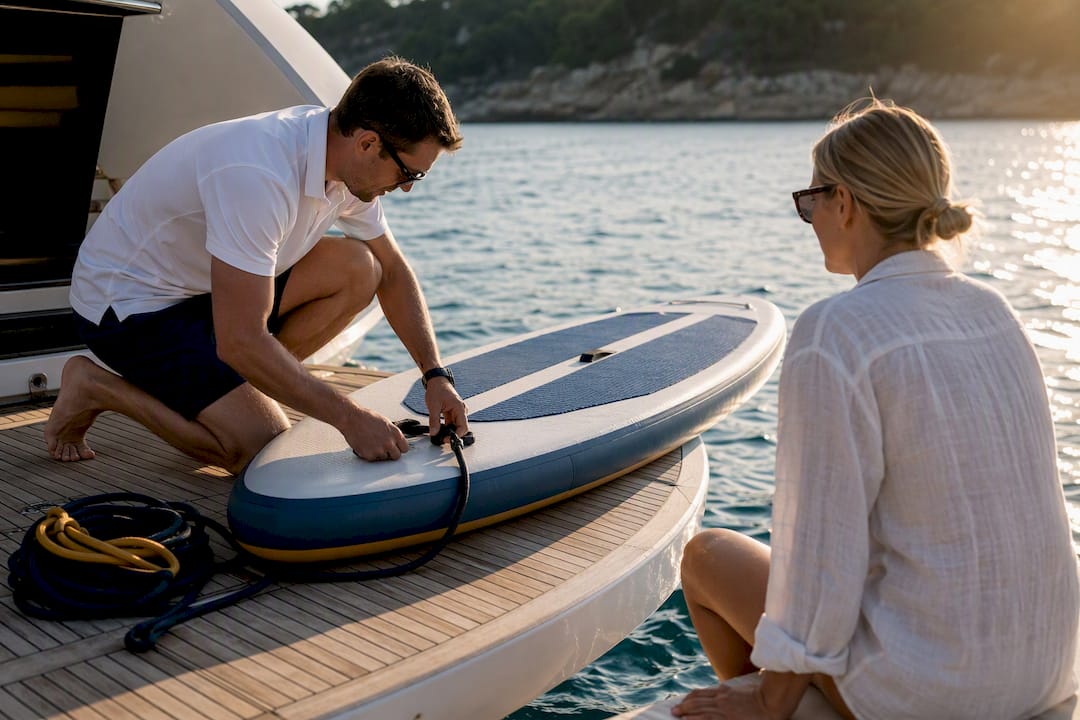
Stay out of the galley unless invited. The chef is often provisioning meals around a tight budget known as the Advance Provisioning Allowance, or APA, and unscheduled snacking or last-minute special requests can throw off both the food supply and the timeline. If you want something between meals, ask a steward rather than opening the fridge yourself.
Be ready on time, every time. Tender runs, helicopter transfers, and shore excursions all operate on a schedule the crew has built around tides, daylight, and other logistics. Showing up late doesn't just inconvenience your fellow guests. It can compress the crew's turnaround window for cleaning cabins or resetting the boat for the next activity. Respect guest capacity limits too. Crewed yachts are rated for a specific number of overnight guests, and adding extra visitors without clearing it first puts everyone's safety and comfort at risk.
Here's a fast reference for the behaviors that separate a welcome guest from a memorable headache:
- Greet crew members by name and remove sunglasses during introductions
- Wear soft-soled shoes or go barefoot; leave heels and hard-soled sandals packed away
- Ask before entering the galley, bridge, or crew quarters
- Wait for crew instruction before using jet skis, tenders, or inflatables
- Show up early for transfers, and stick to the agreed guest count
How Much Should You Tip on a Yacht Charter?
Tipping on a crewed yacht isn't optional in the way it might feel ashore, but it's also not fixed the way it is at a restaurant. American charterers, according to Boat International's tipping guidance, tend to land closer to the top of that range, often near 20% when service has been exceptional, while European guests more commonly tip moderately within the recommended range.
Here's how the process typically works, step by step:
- Calculate the tip against the base charter fee, not the total invoice that includes APA, fuel surcharges, or taxes.
- Arrange a short private meeting with the captain, usually on the last morning of the trip, away from other guests.
- Hand the tip to the captain as a single amount, in cash or via the agreed payment method, and let the captain distribute it among the crew according to role and seniority.
- Ask your broker beforehand whether a gratuity is already built into your contract; some all-inclusive packages fold it into the total price, which changes what you owe on departure day.
The most common mistake guests make is tipping individual crew members directly instead of going through the captain. It undermines the internal distribution system crews use to divide gratuities fairly across deckhands, stewards, and the chef, and it can create resentment below deck that has nothing to do with your intentions. A second common error is confusing the tip with the APA, the operating budget for fuel, food, and dockage that gets reconciled separately at the end of the trip. Treat the two as entirely separate transactions.
Pro Tip: If you're unsure whether your quoted charter price already includes gratuity, ask your broker directly before boarding. Confirming it in writing avoids an awkward last-morning conversation.
What Safety Rules Must Guests Follow Aboard a Charter Yacht?
Every legitimate charter begins with a safety briefing, and it is not a formality to sit through politely while thinking about lunch. The captain will walk you through lifejacket locations, muster points, fire extinguishers, and what to do in a man-overboard situation. Pay attention. This is also the moment the captain establishes authority over the itinerary and the vessel's operation, and that authority extends through the entire charter, including weather calls and route changes you might not love in the moment.
A few things worth confirming before departure:
- Ask about guest capacity limits; U.S. regulations tied to vessel inspection and the Passenger Services Act impose passenger limits on charter vessels, and your broker or captain can confirm the specific number for your vessel.
- Confirm water toy rules, including safety guidance about alcohol consumption before jet skis or diving.
- Review our full safety briefing breakdown so you know what to expect before you're standing on deck hearing it live.
If you disagree with a captain's call on weather, timing, or an excursion, raise it calmly and privately. Arguing in front of other guests or crew rarely changes the outcome and can compromise the safety decision-making the captain is legally responsible for.
Packing and Dress Code: What to Bring Aboard a Yacht
Pack in soft-sided duffel bags, never hard-shell suitcases. Crewed yachts have limited stowage space, and rigid luggage takes up room that soft bags simply don't. Leave hard suitcases at the marina or with your hotel concierge if you're extending your trip.
Daytime dress on board leans toward breathable, casual fabrics: swimwear, linen shirts, cotton shorts, and a light cover-up for the ride between anchorages. Evenings shift toward smart-casual, think a linen dress or collared shirt, especially if the itinerary includes a dinner ashore or a sunset cocktail hour that the crew has planned around. Footwear follows the same rule as the deck itself: soft soles only, and skip anything with a heel that could scuff teak or slip on a wet surface.
A short packing list that covers most charters:
- Soft-sided duffel bags instead of hard luggage
- Reef-safe sunscreen (standard sunscreen can damage coral in many charter destinations)
- Lightweight cover-ups and one smart-casual outfit for evenings
- Travel-sized toiletries, since bathroom storage is tighter than a hotel room
- A small gift for the crew is a thoughtful touch, though never expected
Pro Tip: Pack your departure bag the night before disembarkation. Crews often need to turn the yacht around quickly for the next charter, and having your bags ready at the agreed time keeps everyone's schedule intact.
For a broader rundown of what to expect before your first trip, our beginner's charter guide covers the planning steps that come before packing even starts.
What Are the Rules for Photos and Privacy on a Charter?
Ask before photographing crew members, even candidly. Some crew prefer to stay out of guest photos entirely, and it's a simple courtesy to check first. The same goes for any part of the yacht the owner considers private, interiors, décor, or areas the captain flags as off-limits to cameras.
Hold off on posting real-time location details or your full itinerary while you're still underway. It's a security consideration more than a social one, since broadcasting exactly where a private yacht is at any given moment isn't something most owners or captains want circulating publicly.
At the table, put the phone down. Crew are timing courses and reading the room to know when to clear plates or pour the next glass, and a guest buried in a screen makes that harder to read. It also just makes for a better dinner. Save the scrolling for downtime on the sundeck.
What Do Former Captains Say Guests Should Know?
Crew typically work rotational watches to keep the yacht running around the clock, and that means someone is always off duty and resting somewhere on board, according to Boat International's crew perspective on charter etiquette. Respecting those quiet hours, rather than knocking on crew doors for non-urgent requests, keeps the whole boat running smoother for everyone, including you.
The detail that experienced crew mention most often is advance notice. Dietary needs, allergies, and even a sudden request for a specific wine all take time to source, and last-minute changes eat into the APA in ways a heads-up avoids entirely. A short email to your broker two weeks out solves most of this.
Small gestures go further than guests expect: a thank-you at the end of a long excursion day, clear communication about plan changes, and simply being on time. None of it is complicated, and none of it costs anything beyond a little consideration.
Who Can Come Aboard, and How Do You Invite Them?
Every charter contract specifies a maximum overnight guest count, and that number is fixed for safety and insurance reasons, not flexible hospitality math. If you want to bring a friend for a day sail or invite someone to join for dinner while at anchor, clear it with the captain first, ideally days in advance rather than the morning of.
Day visitors who aren't part of your original guest manifest may need to be added formally, particularly in jurisdictions with strict passenger limits like those outlined in the Bahamas Maritime Authority's restricted charter notice, which caps passenger numbers and operational scope for private yachts running charters. The same logic applies closer to home. U.S. bareboat and crewed charter operations carry their own passenger and inspection thresholds, and exceeding them isn't just a courtesy issue, it's a compliance one.
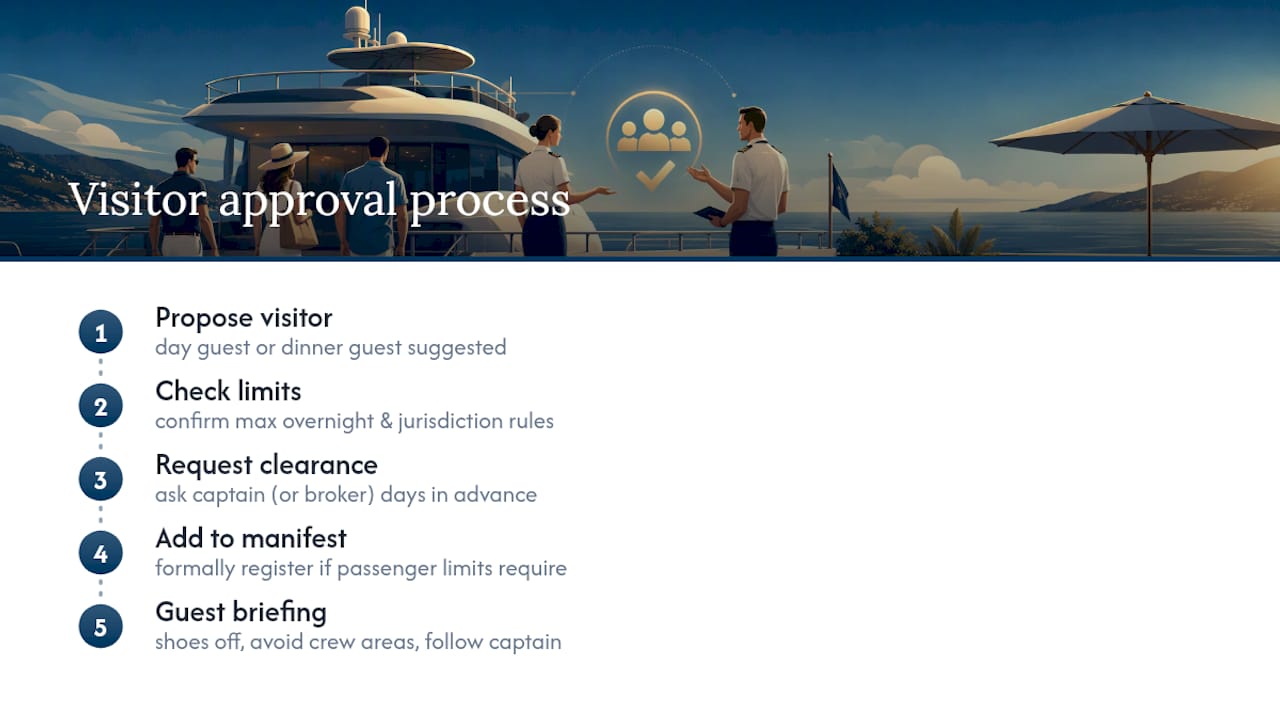
If a visitor does come aboard for a shorter stretch, brief them the same way you'd brief yourself: shoes off, ask before entering crew areas, and follow the captain's guidance. It reflects on you as the host of your own charter, and it keeps the crew from having to manage an unbriefed guest mid-afternoon. When in doubt, a quick conversation with your broker before the trip settles almost every gray area around who can join and when.
How Should Guests Use Phones, TVs, and Onboard Entertainment?
Most crewed yachts come stocked with entertainment systems, satellite TV, sound systems, sometimes a full media room, and using them is part of the experience you're paying for. The etiquette question isn't whether to use them, it's when and how loudly.
Keep volume considerate after sunset, especially if other cabins are close to the salon or deck speakers. Charging cables and devices belong in your cabin, not scattered across shared lounge areas where the stewardess is trying to reset the space between activities. If the yacht has Wi-Fi, and most do, treat bandwidth with some awareness; streaming video from multiple devices simultaneously can strain a connection that's also being used for navigation and weather updates.
Ask the crew before connecting your own device to onboard speakers or the entertainment system. It's a small step, but it avoids fumbling with unfamiliar equipment or accidentally disrupting settings the crew has calibrated for the yacht's systems.
Why Courtesy Makes Every Charter Better
Etiquette on a yacht isn't about performing manners for an audience. It's about recognizing that a handful of professionals are managing a complex, moving environment on your behalf, and the guests who understand that get a noticeably better week. Every rule in this piece traces back to that same idea, whether it's footwear, tipping, or giving the crew a heads-up on dietary needs.
None of this is complicated once you've heard it once. Listen to the safety briefing, respect the crew's space and rest, and handle tips through the captain. For deeper planning help, our yacht charter insights cover the questions guests ask most before their first trip.
— Mo
Book a Fully Crewed Charter With the Guesswork Removed
Pre-charter preparation helps ensure that etiquette questions in this guide rarely become on-the-water surprises. Before you board, you can expect guidance on provisioning choices, dietary forms collected in advance to help the galley, and coordination of safety briefing details directly with your captain.

That groundwork matters most on remote diving expeditions, wildlife-focused itineraries, and destinations where a local partner guide, like this Captiva Island charter overview, simply can't replace a crew who has run that specific route before. Fully crewed charters mean the etiquette above isn't theoretical, it's the actual rhythm you'll step into from the moment you board.
If you're ready to see what a properly planned, fully crewed yacht charter looks like, browse current availability or reach out to a charter broker to start mapping out dates, destinations, and guest counts for your trip.
Sources
- Charter yacht etiquette: 24 tips every luxury guest should know
- U.S. Coast Guard regulations for bareboat charter in Florida — CHARISMA SAILING
- YACHT NOTICE 07 — Bahamas Maritime Authority