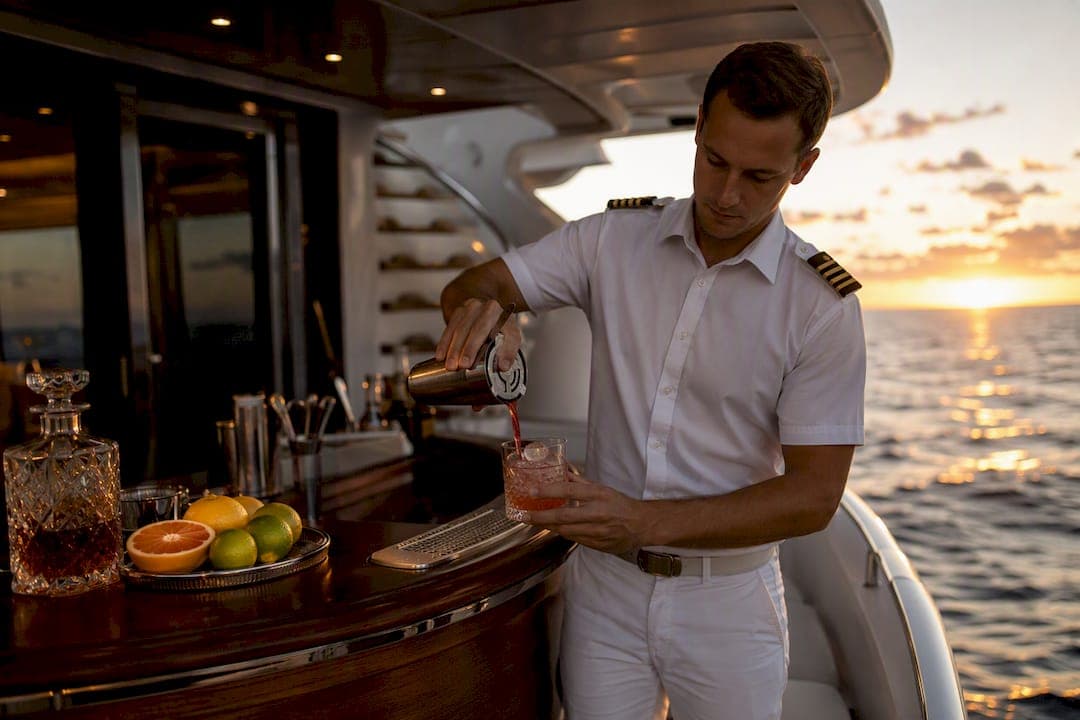
Yes, alcohol is commonly allowed on yacht charters, but the specific rules shift depending on the operator, the vessel's liquor license, and where you're sailing. Some captains run a strict BYOB arrangement with limits on quantity and container type; others provision a full bar through your Advance Provisioning Allowance; a licensed few pour an open bar while underway.
The one move that saves you from a dockside surprise: ask for the operator's written alcohol policy before you pay a deposit. Get it in writing, not a verbal "sure, that's fine."
Here's why this matters. Licensed operators must follow local liquor laws, which often require refusing service to visibly intoxicated guests and can give the captain authority to end a charter early for safety reasons. On crewed trips, alcohol is frequently folded into the Advance Provisioning Allowance, meaning the crew buys what you request and bills it against that budget. A company like Exotica Charters, which builds fully crewed itineraries with former captains on staff, typically spells out provisioning and alcohol terms as part of the booking process rather than leaving it to chance.
Expect one of three outcomes when you book:
- BYOB permitted with restrictions on glass, quantity, or timing around water activities.
- Operator-provisioned bar stocked and billed through your APA, with the crew handling purchases.
- Licensed vessel with an open bar, subject to the same responsible-service rules as a shoreside restaurant.
Key Takeaways
Getting alcohol right on a yacht charter comes down to one habit: confirm the operator's policy in writing before you pay, and understand how the marine environment changes the risk.
| Point | Details |
|---|---|
| Get the policy in writing | Request BYOB rules, corkage fees, and APA treatment before final payment, not after boarding. |
| Understand the three common setups | Expect BYOB with restrictions, operator-provisioned APA bar, or a licensed open-bar vessel. |
| Respect the captain's authority | Captains can refuse service or end a charter early for safety reasons under local liquor laws. |
| Account for amplified risk | Heat, motion, and dehydration make alcohol hit harder at sea than on land. |
| Exotica Charters builds the plan in | Exotica Charters arranges provisioning, APA receipts, and license confirmation as part of booking. |
Primary Sources and Further Reading
- YATCO Charter Provisioning Guide: how APA covers alcohol and specialty provisioning.
- The Boat Galley: practical BYOB policy advice and liability considerations.
- Sydney Charter Boat Terms: a real operator contract example of Responsible Service of Alcohol clauses.
Confirm rules with your specific operator and local maritime authorities, since jurisdictions vary widely.
Table of Contents
- What Are Typical Alcohol Policies on Yacht Charters?
- How Does APA Provisioning Cover Alcohol Costs?
- Can Crew Drink on a Charter? Captain Authority Explained
- What Legal and Liability Issues Should You Confirm?
- Why Does Alcohol Hit Harder on a Boat?
- What Should You Confirm in Writing Before Boarding?
- What Onboard Etiquette Should Guests Follow?
- What Happens if a Guest Breaks the Rules?
- Why the "Just Ask the Captain" Advice Falls Short
- How Exotica Charters Handles Provisioning and Peace of Mind
- Frequently Asked Questions
- Sources
What Are Typical Alcohol Policies on Yacht Charters?
Policies split into three broad categories, and knowing which one you're booking changes how you plan the trip.
BYOB with restrictions is common on smaller day charters and some sailing yachts. Guests bring their own bottles, but the operator usually sets limits: a cap on hard liquor, a ban on glass bottles, or a rule against drinking before diving or snorkeling. Operator-provisioned alcohol shows up most often on crewed luxury charters, where the alcohol gets sourced by the crew and charged against your APA. Licensed open-bar vessels are the least common but the most flexible; these boats carry an exclusive liquor license that lets them serve drinks while the vessel is underway, something unlicensed operators often cannot legally do.
Watch for these recurring restrictions regardless of policy type:
- Glass containers are frequently banned; broken glass on deck creates real injury risk and can damage teak or clog drains.
- Hard liquor may be capped or prohibited even when beer and wine flow freely.
- No drinking is allowed in the window before swimming, diving, or tender rides.
- Per-person quantity limits sometimes apply on shorter day charters.
Day charters tend toward looser BYOB arrangements simply because the trip is short and the risk window is small. Multi-day crewed charters, by contrast, lean toward full provisioning since the crew is managing meals, snacks, and drinks as one coordinated operation anyway. Before you commit, ask for four things: proof of liquor license if alcohol will be served by the crew, a written provisioning list, APA receipts once purchases are made, and a clause confirming the captain's authority over safety decisions. Operators who hand these over without hesitation are the ones worth booking.
How Does APA Provisioning Cover Alcohol Costs?
The Advance Provisioning Allowance is a prepaid budget, separate from the charter fee, that covers fuel, food, and drinks, including alcohol on most crewed itineraries. You fund it before the trip, the crew shops against it, and you get an itemized accounting afterward, usually with a refund for anything unspent.
Here's a rough sense of how that plays out at two different scales. These are illustrative figures meant to show the shape of the math, not fixed pricing:
| Charter Type | Typical APA Structure | Alcohol Line Item Behavior |
|---|---|---|
| day charter | Smaller flat provisioning fee or BYOB with no APA | Guests often supply their own drinks; little to no alcohol charged to APA |
| Multi-day crewed charter | APA set as a percentage of the base charter fee | Crew purchases wine, spirits, and mixers against APA; itemized receipts provided at trip's end |
On a multi-day trip, alcohol rarely sits alone on the invoice. It shares space with several other line items you should ask about upfront:
- Corkage fees if you bring your own wine or spirits onto a provisioned vessel.
- Bartender or service charges on yachts that staff a dedicated bar.
- Premium bottle surcharges for specific labels or vintages sourced on request.
- Sourcing fees when the crew has to special-order something not locally available.
Before final payment, request a provisioning list and a written cost estimate that spells out whether the crew is purchasing alcohol on your behalf or whether you're expected to supply it. A reputable provisioning guide will note that crews can often source specialty bottles or champagne ahead of time if you flag a celebration during booking, which is far easier to arrange before departure than once you're anchored somewhere remote.
Can Crew Drink on a Charter? Captain Authority Explained
Most crew do not drink while on duty, and the captain holds final say over anything that touches safety, including whether service continues if a guest has had too much.
This isn't a courtesy policy. It's built into how licensed vessels operate.
The captain's authority over alcohol service isn't a suggestion buried in the fine print. Licensed operators are bound by local liquor laws that can require refusing service to intoxicated guests, and the same laws often give the captain grounds to end a charter early if consumption becomes a safety issue.
Off-duty crew members on longer, multi-day trips sometimes share a drink during a brief celebration, a milestone dinner, or a rare downtime evening at anchor. It's uncommon, and it's never during active operations like docking, tendering, or diving support. The reasoning is straightforward: someone needs a clear head to handle lines, weather, or a guest who's misjudged how many drinks they've had.
Before boarding, confirm a few practical points with the operator:
- Whether crew members are permitted to open or serve alcohol you've brought aboard yourself.
- What triggers a refusal of service, and whether that decision rests solely with the captain.
- How the crew handles a guest who becomes visibly impaired mid-trip.
That authority is written into most charter contracts, not just implied by maritime custom. It's worth reading that clause before you sign, not after someone tests it.
What Legal and Liability Issues Should You Confirm?
Alcohol service on a chartered vessel sits inside a real regulatory framework, not a gray area you can negotiate around once you're at sea.
Licensed operators must comply with local liquor laws, which typically govern refusal of service to intoxicated guests. Some jurisdictions, similar to the Responsible Service of Alcohol standards referenced in Sydney charter contracts, require that substantial food be served alongside alcohol and explicitly forbid serving minors or pouring shots. An unlicensed vessel that serves alcohol anyway is taking on legal exposure the operator, not you, will eventually have to answer for, though that exposure can trickle down to your charter if it triggers an early termination.
Liability runs in both directions. If a guest damages the vessel while intoxicated, most contracts hold that guest financially responsible, and some allow the operator to withhold refunds if the charter ends early due to guest behavior. Before booking, confirm these points directly with the operator:
- Whether the vessel holds a liquor license, and whether that license covers underway service or only at anchor.
- How APA receipts document alcohol purchases, so you have a clear record if a dispute arises.
- What the contract says about damages caused by an intoxicated guest, and whether indemnity clauses shift that cost onto you.
- Whether refund policy language addresses early termination for alcohol-related behavior.
Regional variation is real. A charter in Dubai operates under far stricter alcohol regulations than one in the South Pacific, so the same question can have a completely different answer depending on where you're sailing. This is general guidance, not legal advice; jurisdiction-specific rules should be confirmed with local authorities or a maritime attorney if you have any doubt.
Why Does Alcohol Hit Harder on a Boat?
Alcohol affects you faster and harder at sea than it does on land, and the physical environment is the reason.
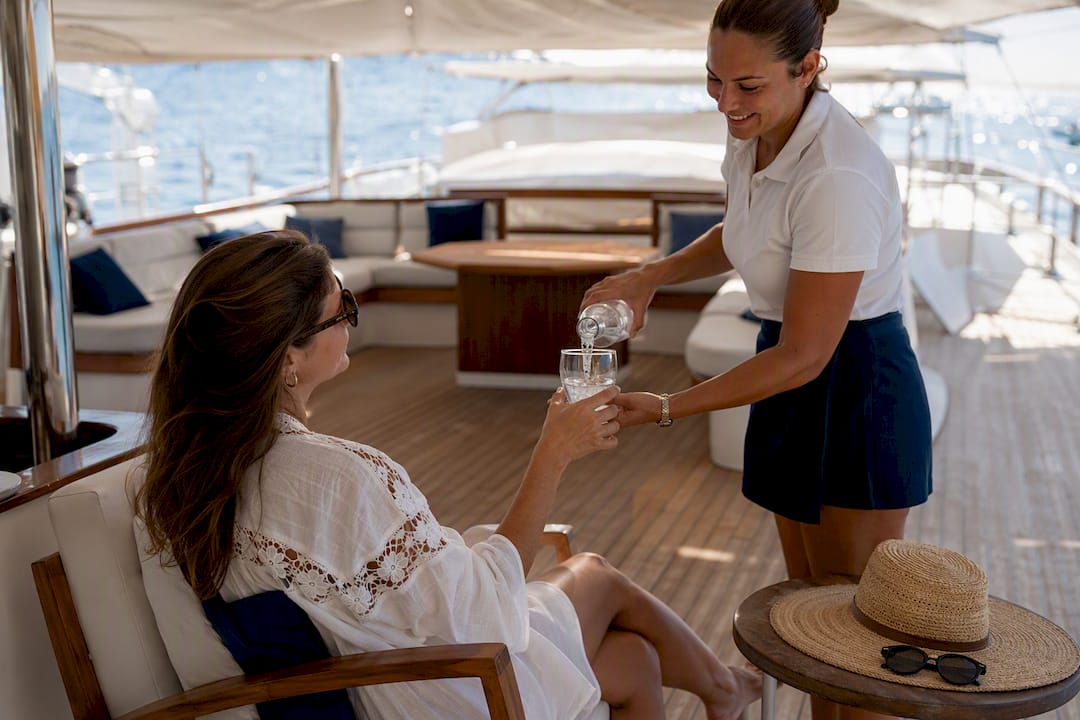
Sun exposure and heat accelerate dehydration, which concentrates alcohol's effects in your bloodstream. Boat motion disrupts your inner ear's sense of balance at the same time alcohol is already impairing coordination, a combination that makes stumbling, and falling overboard, far more likely than the same drink count would suggest on solid ground. Experienced crews recognize this and treat responsible consumption as a core part of onboard safety, not an afterthought.
A few habits make a real difference:
- Drink water between every alcoholic beverage, especially in direct sun.
- Eat substantial food rather than snacking lightly; it slows absorption meaningfully.
- Pace drinks rather than front-loading them in the first hour at anchor.
- Skip glass containers on deck; use cans or decanted options instead.
- Wait 30 to 60 minutes after a drink before swimming, diving, or tubing.
Pro Tip: Rotate a sober buddy during water activities, someone who stays dry and alert while others swim or dive, so there's always a clear-headed set of eyes on the water.
Good crews watch for early signs of impairment and step in before things escalate: offering food and water first, moving a guest to shade to cool down, and only considering a return to port if the situation genuinely calls for it. That graduated response protects everyone aboard, including the guest who's had one too many.
What Should You Confirm in Writing Before Boarding?
Get these details in writing before you finalize payment, ideally in the same email thread as your booking confirmation:
- The BYOB policy: is outside alcohol permitted, and are there quantity limits?
- Permitted container types; most operators require cans or decanted drinks instead of glass.
- How alcohol factors into your APA, and whether the crew purchases it on your behalf.
- Corkage fees if you're bringing bottles onto a provisioned vessel.
- Whether a bartender or dedicated service staff will be aboard.
- What happens in an emergency involving an intoxicated guest.
A simple line in your booking email works well: "Could you send the vessel's written alcohol policy, including BYOB rules, corkage fees, and how alcohol is handled under the APA?" Follow up separately to confirm liquor-license status if the crew will be serving.
Keep every APA receipt once the trip wraps. If local Responsible Service of Alcohol rules require "substantial food" alongside drinks, ask the operator what qualifies. Also confirm the refund and enforcement terms tied to guest behavior before you sign anything.
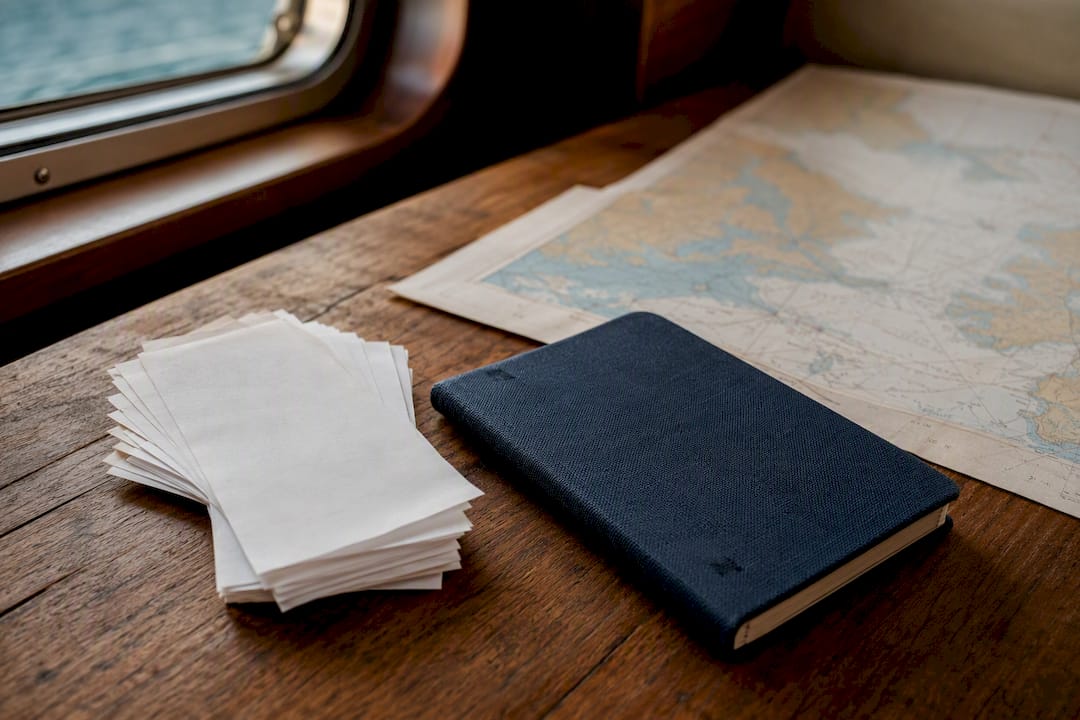
If an operator won't put their alcohol policy in writing, treat that as a warning sign. Either walk away or make written confirmation a condition of your deposit.
What Onboard Etiquette Should Guests Follow?
A few unwritten rules keep everyone, guests and crew alike, comfortable for the duration of the trip.
Expected behavior: Respect the crew's instructions, keep noise reasonable once the sun goes down, and pace celebratory drinking rather than lining up shots. Typically forbidden: nudity outside designated areas, illicit drugs of any kind, and removing alcohol or glassware from the vessel during shore excursions.
- Discuss glassware limits with the crew early; most yachts prefer cans or acrylic drinkware over glass.
- Champagne service is usually handled by the crew, who pop and pour to avoid spills near electronics or teak.
- Request specialty bottles, a particular vintage, a specific spirit, well before departure rather than hoping the local market has it.
- If you're planning a toast or milestone celebration, flag it during booking so the crew can prep safe alternatives to glass flutes.
Handled this way, a celebration onboard feels considered rather than improvised, which is exactly the point.
What Happens if a Guest Breaks the Rules?
Consequences escalate in a fairly predictable order, and none of them are pleasant to experience firsthand.
Refusal of further service comes first, followed by denial of boarding if the intoxication starts before departure. In serious cases, operators can end the charter early without a refund, and dangerous or threatening behavior can trigger an immediate return to port with a report filed to maritime authorities.
- Guests are typically responsible for any damage caused while intoxicated, per the contract's indemnity terms.
- Open alcohol during transit in restricted zones can carry local fines beyond whatever the operator enforces.
- If you witness unsafe behavior from another guest, tell the captain rather than intervening yourself.
- If you're the guest in question, cooperating with the captain's decision is the fastest way to keep the situation from getting worse.
Why the "Just Ask the Captain" Advice Falls Short
Most guidance on this topic tells you to "check with the captain," which is true but incomplete. A verbal answer at check-in isn't a policy; it's a hope. What actually protects your trip is a written record, one that names quantities, corkage fees, glass rules, and who's paying for what before anyone steps aboard.
The bigger blind spot is safety, not permission. Guests fixate on whether alcohol is allowed and skip past why it behaves so differently at sea. Heat, motion, and dehydration change the math on every drink, and a crew that manages this well is doing more for your trip than one that simply says yes to BYOB.
If there's one thing to prioritize, it's this: book with an operator that treats provisioning as a planned, documented process, not an improvisation. A yacht charter with clear APA breakdowns and a captain who enforces safety without apology tends to be the same yacht charter where everything else runs smoothly too.
How Exotica Charters Handles Provisioning and Peace of Mind
Exotica Charters removes the guesswork from all of this by building the alcohol and provisioning plan into your booking from the start, not leaving it as a question you raise after paying a deposit. As a marketplace staffed by former captains and water sports professionals, Exotica Charters arranges fully crewed itineraries where APA provisioning lists, receipts, and liquor-license confirmation are handled directly with the operator on your behalf.
Planning a celebration, an anniversary toast, or a dive trip where timing around alcohol matters? Mention it during booking and request a written alcohol and provisioning plan as part of your itinerary. Exotica Charters can also source specialty bottles ahead of time for onboard celebrations, a detail worth reading more about in this wine pairing guide for charter yachts. If your plans include diving, alcohol timing around water activities matters even more, and Exotica's scuba-focused charter yachts build that into the schedule. Ready to see what's available? Browse Exotica Charters' luxury yachts and request your written provisioning plan today.
Frequently Asked Questions
Is alcohol allowed on all yacht charters? Most yacht charters allow alcohol in some form, but the specific arrangement, BYOB, operator-provisioned, or licensed open bar, depends on the vessel and jurisdiction. Always confirm the exact policy in writing before booking.
Can I bring my own alcohol on a yacht charter? Often yes, though many operators restrict glass containers and may cap quantities. Some captains prohibit hard liquor while allowing canned beer, so confirm specifics with the captain directly.
Does the charter price include alcohol? On many crewed charters, alcohol is billed through the Advance Provisioning Allowance rather than included in the base fee. Ask for a provisioning list and cost estimate before your final payment.
Can the captain refuse to serve alcohol? Yes. Captains have the authority to refuse service to intoxicated guests and can end a charter early if safety is at risk, a standard built into most licensed operators' contracts.
What happens if I bring glass bottles aboard? Many operators ask that alcohol be decanted or served in cans rather than glass, since broken glass on deck poses a real injury and damage risk. Check the vessel's specific rule before packing.
This article is general information, not a substitute for advice from a qualified lawyer. Consult a qualified legal professional about your own circumstances before acting on anything here.
Sources
- Charter Yacht Provisioning Guide 2025 | YATCO
- An Alcohol Policy on Your Boat — TheBoatGalley
- Sydney Charter Boat Terms and Conditions - Sydney Charter Boat
- Can I bring alcohol on my trip? - FishingBooker, Inc.