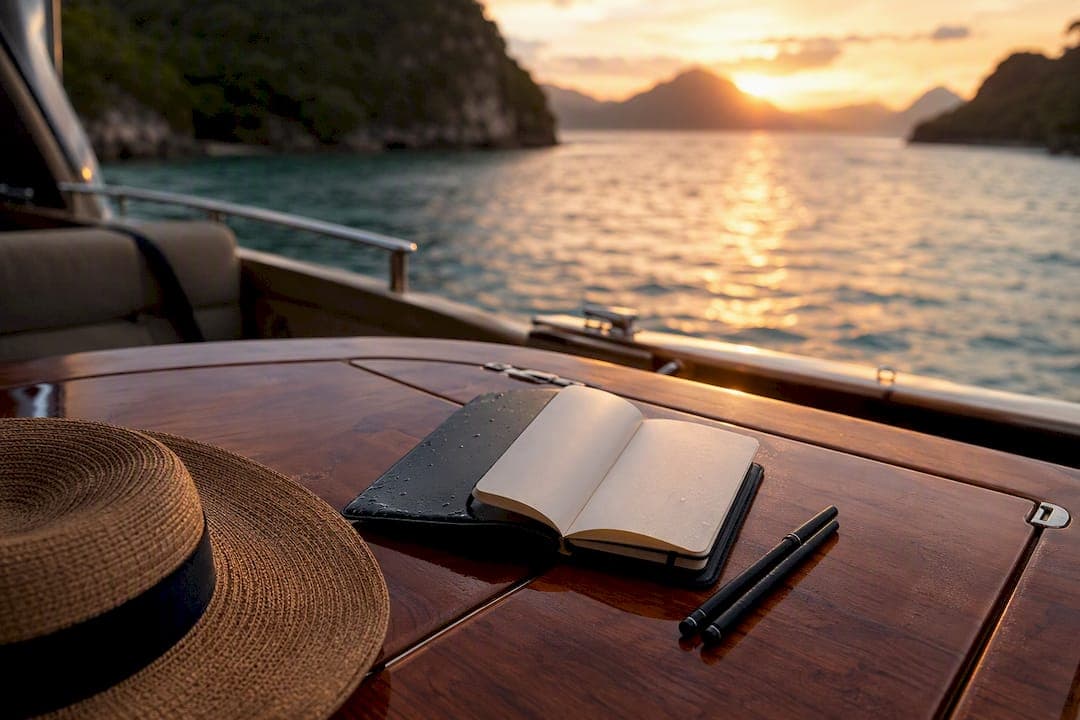
The best approach to nature journaling during remote expeditions comes down to two things: a lightweight, waterproof kit, and a repeatable entry structure you use every single time, regardless of conditions. That structure is simply date, time, precise location, and weather, recorded before anything else, a habit that enhances group bonding as explored in the role of gastronomy in travel. Master that habit and everything else, sketches, species notes, group storytelling, follows naturally.
Before you read another word, here's the pocket kit worth packing:
- A small notebook (3x5 inches works well) rather than a bulky sketchbook
- One or two waterproof, permanent-ink pens
- A gallon-sized Ziploc bag as your primary journal protector
- A compact waterbrush or your phone's voice memo app for backup notes
- A binder clip or elastic band to keep pages from flapping open in wind
The payoff is bigger than a pretty page. A well-kept expedition journal becomes a memory anchor, a study aid for species you spotted at 6 a.m. from a zodiac, and, on a shared trip, one of the strongest bonding rituals a group can build around the dinner table.
Key Takeaways
Consistent nature journaling on a remote expedition depends on a small waterproof kit and a fixed entry header, not artistic skill or expensive gear.
| Point | Details |
|---|---|
| Keep the kit minimal | Use a small notebook, one or two waterproof pens, and a Ziploc bag as your journal protector. |
| Start every entry the same way | Log date, time, precise location, and weather before adding sketches or notes. |
| Match method to the moment | Use photos underwater, voice memos when hands are busy, and sketches when you have stillness. |
| Build a nightly ritual | A five to ten minute recap each evening sustains the habit and invites group page-sharing. |
| Choose a trip built for it | Exotica Charters' fully crewed expeditions pair naturalist-led sightings with the flexible timing journaling requires. |
Table of Contents
- Why Lightweight Gear Matters for Nature Journaling During Remote Expeditions
- How Do You Structure a Field Journal Entry Quickly?
- What Journaling Tactics Work in Zodiac, Snorkel, and Polar Conditions
- How Do You Keep Journaling Consistent on a Multi-Day Expedition?
- What Do Great Expedition Journal Entries Actually Look Like?
- What the Conventional Advice on Journaling Gets Wrong
- Let Exotica Charters Handle the Logistics So You Can Focus on the Page
- Frequently Asked Questions
- Sources
Why Lightweight Gear Matters for Nature Journaling During Remote Expeditions
Weight and bulk are the enemy of consistency. A heavy, hardbound journal feels precious, and precious objects tend to stay zipped in a dry bag rather than open on your lap during a fleeting whale surfacing or a hummingbird visit. Experts who study field journaling habits consistently point to a smaller kit as the difference between people who journal for a week and people who journal for a lifetime.
Notebook size and pens. A small ultralight notebook, something you could tuck into a jacket pocket, removes the psychological weight of "filling pages." For sustained field use, a small, portable kit built around one or two waterproof pens beats a stuffed pencil case every time; carrying eight pen options just means eight things to lose overboard. Permanent, waterproof fine-tip pens also remove the temptation to erase, which matters when you have ninety seconds before the zodiac pulls away from a sea lion colony.
Color without the weight penalty. You don't need a full watercolor set. A small waterbrush and a few compact color sheets let you lay down quick color notes on a lichen pattern or a sunset without hauling a palette and a jar of water. A collapsible silicone cup handles the water half of that equation.
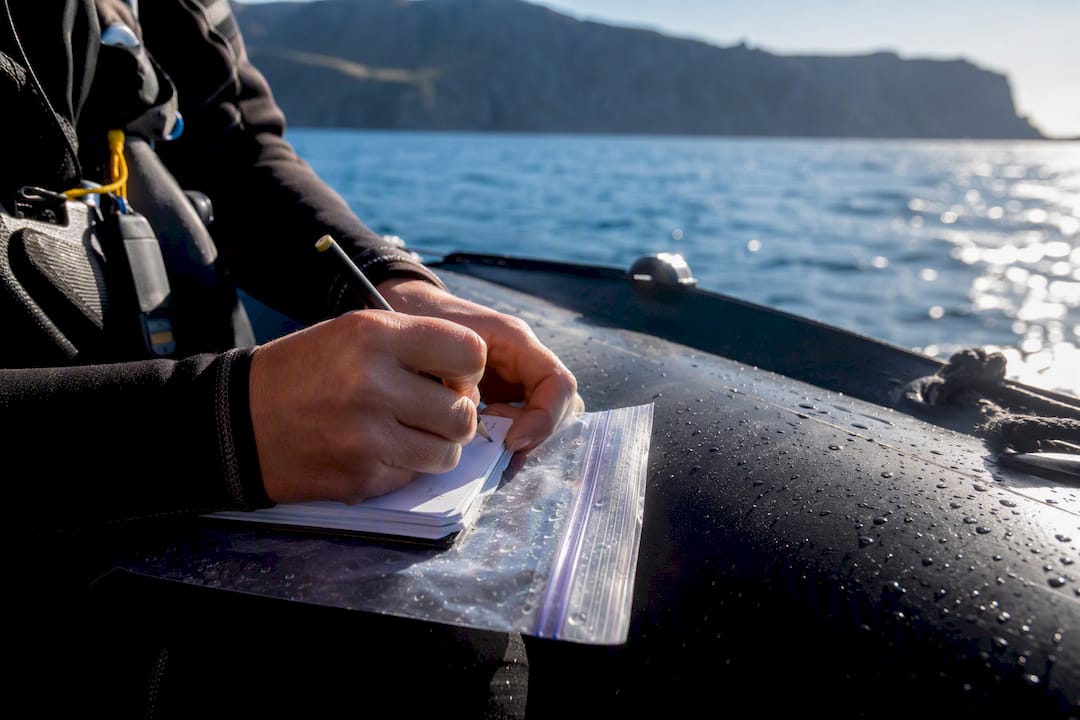
Protecting what you've made. The single most effective, and cheapest, piece of gear in this entire kit is a gallon-sized Ziploc freezer bag. John Muir Laws recommends it as a lightweight journal protector for wet or zodiac-transfer conditions, and it works: it seals out spray, keeps sand out of the spine, and floats if it goes overboard. For longer open-water passages, store the active notebook inside a slim dry bag as a second layer.
- Keep pens tethered to the journal with a short cord so they don't disappear into the bilge
- Use a small pouch, not a full dry box, so the whole kit clears your pocket in one motion
- Binder clips hold pages flat in wind and mark your current page for fast reopening
Pro Tip: Test your entire kit in your own bathtub or shower before you leave. If a page survives a five-minute soak in your Ziploc, it will survive a zodiac transfer.
How Do You Structure a Field Journal Entry Quickly?
Speed matters more than artistry when a pod of dolphins is bow-riding for ninety seconds. The fix is a template you can execute without thinking, so your hand moves faster than your hesitation.
- Header first, always. Before anything else, write the date, time, and precise location, GPS coordinates if you have them, or a landmark like "anchorage north of Fernandina." Add weather and wind. This single habit, recommended by field journaling guides, turns a scattered pile of sketches into a dataset you can actually cross-reference months later against tide charts or migration timing.
- Run the five senses fast. Sound, smell, temperature, texture, light quality. A one-word note per sense takes fifteen seconds and captures atmosphere a photo never will.
- Sketch in gestures, not portraits. A thumbnail gesture drawing, a single contour line tracing an animal's back, a note on relative scale ("wingspan roughly two kayak paddles"), gets you 80% of the useful information in 20% of the time a detailed illustration demands.
- Choose your medium deliberately. Voice memos work best when your hands are busy, holding a rail, steadying binoculars. Photos work best for fast-moving wildlife or underwater scenes. Drawn notes work best when you have thirty seconds of relative stillness. Mix all three across a single day rather than forcing one method.
- Recap at night. A five to ten minute nightly session, adding species names, correcting a scale note, or finishing a half-drawn gesture, locks in details your memory would otherwise erode by morning.
There genuinely isn't a wrong way to do this. Field journaling guidance from the Washington Trails Association makes the point directly: what matters is capturing what feels meaningful to you, whether that's a paragraph, a sketch, or a two-second voice note, not producing something gallery-worthy.
What Journaling Tactics Work in Zodiac, Snorkel, and Polar Conditions
Remote expedition conditions rarely cooperate with a still, dry desk. Here's what actually holds up in the field.
Zodiac transfers and on-deck work. Keep your journal in its Ziploc until the exact moment you're writing, then reseal it immediately. Write short, factual notes rather than attempting sketches on a bouncing hull; save the drawing for when you're back on the mothership.
Snorkeling and underwater moments. You can't journal underwater, so don't try. Photograph what you see instead, and write your deck notes the moment you climb back aboard while the visual details are still sharp. If you sketch, do it from memory within the hour, not the next day.
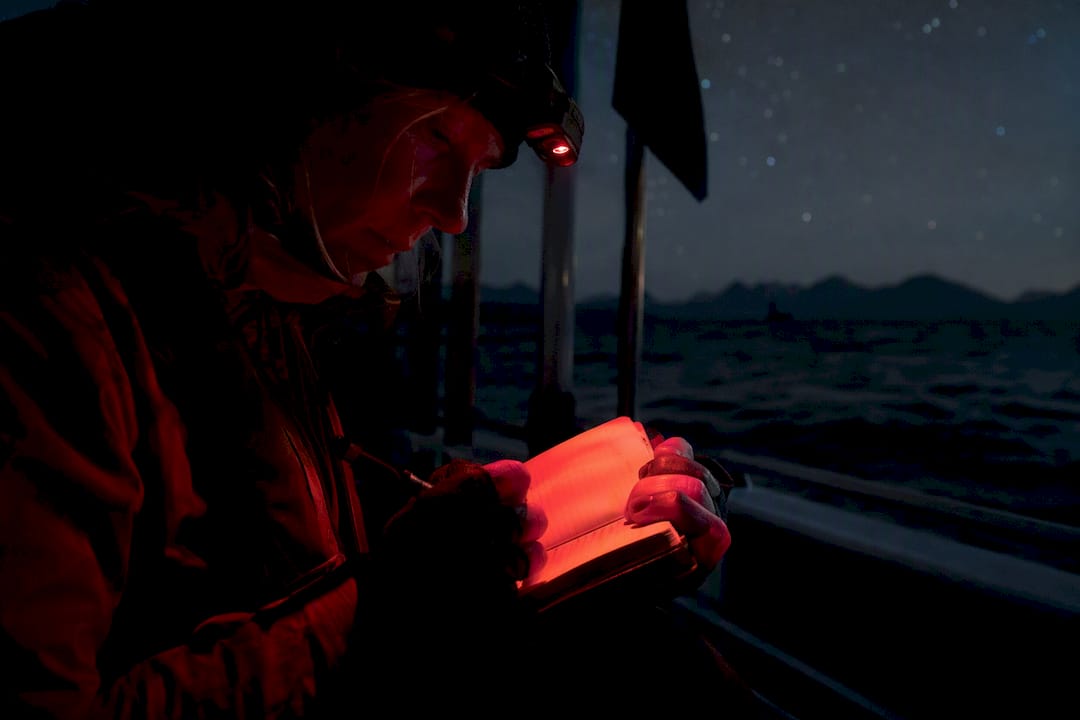
Night journaling. A headlamp with a red-light mode preserves your night vision and everyone else's. Stick to a minimal palette (pencil or one pen color) since you can't judge color accurately in headlamp light anyway. Mark pages you'll want to expand with color or detail once daylight returns.
Polar and wet-weather conditions. Cold hands fumble fine-tip pens, so glove-friendly, thicker-barrel pens work better than delicate liners. Pre-warm pens inside a jacket pocket before use, since ink can thicken in freezing temperatures. Limit continuous exposure to short bursts rather than one long session outdoors.
Wet-weather backup workflow. Run dual storage, Ziploc for the active notebook, dry bag for anything not in use, and photograph completed pages as you finish them each day. That photo backup matters more on a boat than anywhere else; salt spray and a dropped bag over the rail are real risks.
Pro Tip: On multi-day polar or wet-weather legs, dedicate one page per day to a running weather log alone. It takes ten seconds and gives future you an instant reference for comparing conditions across the whole trip.
How Do You Keep Journaling Consistent on a Multi-Day Expedition?
Consistency beats intensity. A five to ten minute nightly recap, done every single evening, produces a far richer record than sporadic marathon sessions that inevitably get skipped when you're tired.
- Set a fixed nightly window. Right after dinner or right before lights-out works well because it's a slot that already exists in the day's rhythm.
- Record the ordinary alongside the extraordinary. A slow, gray afternoon with no wildlife sightings still has archival value: it's the baseline that makes the exceptional days stand out later, and it keeps the habit alive on quiet days.
- Turn sharing into a ritual. Passing journals around at dinner or during an evening briefing, a practice common on guided expedition trips, builds group memory and often surfaces details one person missed entirely.
- Photograph and back up as you go, then dry and flatten any water-damaged pages at the first opportunity rather than waiting until you're home.
- Sync with onboard naturalist sessions. If your trip includes ID briefings or presentations, journal during them; it's the fastest way to correct a guess ("some kind of booby") into a confirmed species note.
What Do Great Expedition Journal Entries Actually Look Like?
Galápagos: You snorkel beside a marine iguana grazing on algae, surface, and photograph it before it dives. On deck, you sketch the gesture from memory: blunt snout, flattened tail, the way it clung to rock in current. That evening, a naturalist confirms the species and diet behavior, and you fold both into the entry.
Alaska, midnight sun: Extended daylight means you can journal at 10 p.m. with full natural light. One popular workaround among small-ship travelers is passing journals around after a late dinner, since everyone is still awake and the light hasn't faded.
Intertidal night walk: Gear stays minimal, headlamp, single pen, small notebook in a hip pocket. Sketches are quick contour lines of anemones and chitons, expanded with color the next morning back in the cabin.
What the Conventional Advice on Journaling Gets Wrong
Most journaling guides treat every trip the same, whether you're on a weekend hike or a two-week passage through the Drake Passage. That's the gap. Remote expedition journaling has constraints that backyard journaling never faces: salt spray, rolling decks, a fifteen-minute zodiac window, and gear that can't be replaced at the next outfitter.
The advice that actually holds up prioritizes protection and speed over artistic ambition. A journal that survives a soaking in a Ziploc and gets filled in consistently beats a beautiful sketchbook that stays zipped away because its owner is afraid to ruin it. I'd also push back on the idea that journaling is a solitary pursuit. On a shared expedition, the evening page-sharing ritual often does more for group cohesion than any planned activity, because it turns individual observation into a collective record everyone helped build.
Prioritize the header habit first. Everything else, sketching skill, watercolor technique, can be learned later. A page with no date or location is a page you can't use for anything beyond nostalgia.
Let Exotica Charters Handle the Logistics So You Can Focus on the Page
A fully crewed expedition removes the exact friction that derails most field journaling: uncertain zodiac timing, no one to confirm a species ID, and no fixed evening moment to compare notes with anyone else aboard. Exotica Charters builds itineraries around former captains and water sports professionals who know how to work a wildlife-rich anchorage around your journaling window, not against it.

Because the team plans dives, snorkeling, and shore excursions with naturalist input built into the schedule, your evening recap has real material to work with, confirmed sightings, tide notes, behavior details you'd otherwise have to guess at. That structure, paired with a strong Trustpilot rating built on repeat client satisfaction, is why families and small groups keep booking with the same crews trip after trip. If a remote, wildlife-focused itinerary sounds like the kind of trip worth documenting page by page, browse Exotica Charters' expedition experiences or explore the luxury yacht options built for exactly this kind of journaling-friendly adventure, and request a quote for your own remote expedition.
Frequently Asked Questions
What's the single most important habit for nature journaling during remote expeditions? Recording date, time, precise location, and weather at the start of every entry. That header turns scattered notes into a usable record you can reference for species behavior or timing months later.
What pens work best for expedition journaling in wet conditions? Waterproof, permanent-ink fine-tip pens hold up best. They won't smear if spray hits the page, and they remove the temptation to erase when you're working fast.
How do you journal while snorkeling or diving? You don't journal underwater. Photograph what you see, then write deck notes immediately after surfacing, while the details are still fresh in memory.
How do you protect a journal on a zodiac or small boat? A gallon-sized Ziploc bag is the cheapest and most effective protection. Keep the notebook sealed until the moment you're writing, and reseal it right after.
How much time should you spend journaling each day on a multi-day trip? A five to ten minute nightly recap is enough to sustain the habit across a long expedition, far more reliable than occasional long sessions that get skipped when you're tired.
Sources
- How to Start a Nature Journal While Hiking: Beginner’s Guide
- Nature Journaling Week — Ten things to do for nature journaling
- Field sketching equipment — John Muir Laws
- How to use journaling to connect with nature — Washington Trails Association