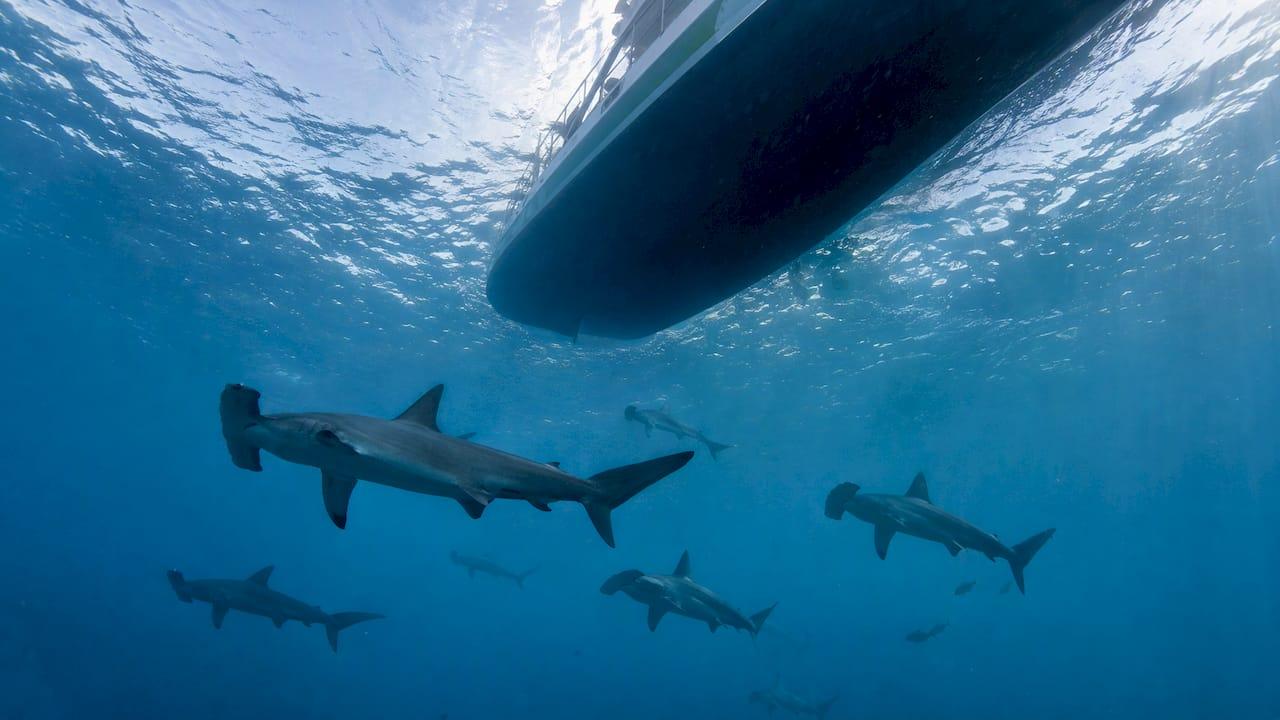
The best way to dive with sharks by yacht is a private, fully crewed charter built around one or two remote sites, with an itinerary that follows the animals and the season rather than a fixed schedule. Day boats and cage trips near shore give you a taste. A crewed yacht takes you to places such as the Galápagos, Cocos Island and the passes of French Polynesia, where sharks gather in numbers you will not see from a marina. Our team of former captains and water sports professionals plans these trips for divers, couples and families who want the encounter and the comfort afterward.
TL;DR
- Shark diving by yacht means chartering a private, crewed vessel and basing the trip at remote sites, instead of joining a short day trip or cage dive near shore.
- The destinations we point divers to first are the Galápagos, Cocos Island (Costa Rica) and French Polynesia, each with different species, currents and seasons.
- Experience matters: many of the best sites have current and depth, so check your certification and recent logged dives early with the charter planner.
- A private charter lets you set the dive plan, bring non-diving family members along, and keep the rest of the day relaxed.
- Start the conversation several months ahead for peak seasons; the right yacht type depends on the region, group size and how much diving you want.
Table of Contents
- What "shark diving by yacht" actually means
- Why a yacht changes the shark encounter
- Where the best shark diving by yacht is
- Matching the shark to the season
- Choosing the right yacht for a dive trip
- How to plan a shark diving charter, step by step
- Is it safe to dive with sharks?
- What the rest of the family does
- A word from our team
- Start your shark diving charter
- FAQ
- Sources
What "shark diving by yacht" actually means
The phrase covers three quite different experiences, and it helps to separate them before you plan anything.
The first is the short outing: a half-day boat from a Florida or Hawaii port, often with a cage or a guided drift dive over a reef where sharks are common. It is a fine introduction, and it is limited by the distance a day boat can cover and by a fixed departure time.
The second is the shared dive vessel, where you book a cabin among strangers on a set route. The diving is serious, but the itinerary, the group size and the daily rhythm belong to everyone aboard.
The third is the private crewed charter, which is what we plan. You hire the whole yacht with its captain and crew, the route is designed around your group, and the diving is one thread in a longer trip that can include snorkeling, wildlife landings, paddleboarding and quiet anchorages. For a mixed group, say two certified divers, a couple of teenagers who snorkel and grandparents who prefer the deck, this is the format that keeps everyone happy at once.

Why a yacht changes the shark encounter
Sharks are not spread evenly through the ocean. They concentrate where currents bring food, where seamounts rise from deep water, where cleaning stations sit and where channels funnel tides. Many of those places are hours or days from the nearest port and are protected, which limits how many vessels can visit.
A yacht helps in four practical ways.

Range. A crewed yacht can reach offshore islands and outer atolls that day boats never see. You wake up at the site rather than spending the morning getting there.
Timing. Shark activity at many sites is better at particular tides or light. When the vessel is yours, the captain can shift the dive window by a few hours or move to a second site if conditions change, rather than following a printed timetable.
Fewer divers in the water. With a private group you decide how many divers go in at once, which makes for calmer, closer observation and fewer fins in the frame.
Recovery. Deep, current-swept diving is tiring. Coming back to a comfortable cabin, a good meal and a crew that has already rinsed your gear makes day five as good as day one.
Where the best shark diving by yacht is
Three regions come up in nearly every serious conversation with divers. We plan trips to each, and what follows is how we would think about them.
The Galápagos Islands, Ecuador
The Galápagos are the classic big-animal destination. The archipelago has been a UNESCO World Heritage site since 1978, and the remote northern islands of Darwin and Wolf are the ones divers talk about, for schooling hammerheads, Galápagos sharks, whale sharks in the right months and the sea lions, turtles and rays that share the water with them.
These are advanced dives. The currents can be strong, the water can be cool and the visibility changes with the season, so operators generally look for experienced divers with logged open-water time. Landings on the islands themselves are tightly regulated by the national park, and an itinerary has to be built within those rules, which is one reason to plan it with people who do this regularly. If part of your group will not dive, the archipelago's land wildlife, from giant tortoises to marine iguanas, makes the trip rich for non-divers too.
Cocos Island, Costa Rica
Cocos Island sits in the Pacific far off Costa Rica's coast and is a UNESCO-listed national park. It is known among divers for hammerhead sharks, whitetip reef sharks, rays and other pelagic life around its rocky pinnacles. The crossing from the mainland takes a long time, which is exactly why a yacht is the way in: you travel, dive, sleep and travel again on one vessel.
Because the island is a protected area, visits are managed, and you plan around permits and the vessel's suitability for open-ocean passages. Expect a trip measured in days, not hours.
French Polynesia
French Polynesia is the gentler, more romantic option, and it suits couples and families especially well. In the Tuamotu atolls, the passes, the narrow channels where the lagoon meets the open sea, can fill with grey reef sharks, blacktips and, in places, larger visitors, while the lagoons themselves offer calm swimming and snorkeling. Dives in the passes are typically drift dives with the tide, so timing is everything, and a captain who knows the tide tables and the local pilots earns their place.
A sailing yacht or a catamaran works beautifully here, with shallow-draft stability in the lagoons and plenty of deck space for lounging between dives.
Other regions worth asking about
Other destinations round out a shark-focused trip, from Indonesia's reef-rich waters to the Bahamas and Pacific island groups. We would suggest starting with the animals you most want to see, then working backward to the right region and month, rather than choosing a country first.
Matching the shark to the season
Seasons matter more for sharks than for almost any other travel goal. Water temperature, plankton blooms and breeding cycles all shift what is present and how close it comes. The table below is a planning guide for the conversation with a charter planner, not a promise; animal sightings are never guaranteed anywhere.
| What you hope to see | Regions to consider | How the trip is shaped |
|---|---|---|
| Schooling hammerheads | Galápagos (Darwin and Wolf), Cocos Island | Long crossing, advanced diving, mostly current dives |
| Whale sharks | Galápagos, Pacific and Indian Ocean regions | Timing around seasonal presence; often snorkel-friendly |
| Grey reef and blacktip sharks in numbers | French Polynesia's atoll passes | Tide-timed drift dives; calm lagoons for the rest of the group |
| Reef sharks and mixed marine life | Caribbean, Indonesia, Pacific islands | Easier diving, good for newer divers and families |
A good planner will ask you about your diving level, the months you can travel and your appetite for long passages before recommending a vessel. Ask the same of anyone you speak to.
Choosing the right yacht for a dive trip
Not every yacht suits shark diving, and the vessel type changes the whole feel of the trip.
Motor yachts. They offer speed, stable platforms and generous interiors, which helps on long offshore legs between islands. Browse our motor yacht charters if range and comfort lead your list.
Sailing yachts and catamarans. These suit lagoon-based regions such as French Polynesia, where the pace is slower and the spaces are social. Our sailboat charters and catamaran options cover that style.
Expedition vessels. Built for remote water and demanding passages, they fit the farthest sites. If you are curious about what these vessels carry, see what crew is on board an expedition charter and what activities are offered on an expedition charter.
Superyachts. For larger groups and the highest level of service, our luxury yachts and yachts over 200ft bring space for family, guests and a full crew.
If diving is the point, start with our page of charter yachts with scuba diving onboard, or see the version for selected locations. Cabin count matters too: a couple may want a 1 cabin yacht while a family or diving group may need a 4 cabin yacht.
How to plan a shark diving charter, step by step
- Name the animals and the people. Write down the sharks you most want to see, who is diving, who is snorkeling and who is staying aboard. This single list shapes the region, the vessel and the cabins.
- Be honest about experience. Many of the best sites involve current, depth or open-ocean conditions. Share your certification level, your last dive date and your total logged dives. If you are rusty, plan a refresher or an easier first day; a good crew will build one in.
- Pick the season, then the region. Use the table above as a starting point and confirm with a planner, since conditions shift year to year.
- Choose the vessel type. Match the vessel to the water: sailing yachts and catamarans for lagoons, motor yachts and expedition vessels for long passages.
- Build the itinerary with slack. Weather, tides and animal behavior all move. A trip with a spare day or two gives the captain the freedom to take the best window instead of the scheduled one.
- Sort permits and logistics early. Protected areas manage visitor numbers, and international flights to remote embarkation ports are not frequent. Starting months ahead for peak seasons protects your dates.
- Confirm the dive set-up with your planner. Ask what diving facilities the yacht carries, what guides are aboard and what you should bring yourself, such as your own mask, computer and certification card.
At step two through seven, this is where a team that has worked the water earns its keep: our specialists come from captaining and water sports backgrounds, so we talk about tides, anchorages and conditions the way the crew will.
Is it safe to dive with sharks?
This is the question readers ask most, and the honest answer is that, for divers following good practice, the risk is low. The International Shark Attack File at the Florida Museum is the long-running record of incidents worldwide, and it is the place to look if you want the numbers rather than the headlines. Most shark species you will meet on a dive are curious or indifferent to people.
Safe use of any dive trip comes down to habits:
- Dive with a qualified guide who knows the site and briefs you on the species and behavior.
- Stay with your group and keep a calm, steady position; do not chase, touch or corner an animal.
- Never feed sharks or bring food into the water yourself.
- Follow the surface and depth limits of the dive plan, and keep to the no-fly interval after your last dive that your operator gives you.
- If you have a medical condition, a heart or lung issue or take regular medication, see a physician trained in dive medicine before you book.
Cage diving is a separate matter: it is designed for people who are not certified divers and who want to observe large species from a protected position. It suits some groups, but a private charter in a remote region offers the free-swimming experience for those with the skills.
What the rest of the family does
Shark diving rarely fills the whole day, and on a yacht it does not have to. Between dives, non-divers can snorkel shallow reefs, paddleboard in a lagoon, join a guided wildlife landing, fish for the table where permitted or simply read on deck. Children who are not yet certified often get more out of the trip than parents expect, because the setting is a floating wildlife classroom with a crew who like to explain what they see.
For couples, the same itinerary shifts toward privacy: a sundown anchorage, an empty beach, a dive in the morning and nothing else on the schedule. That flexibility is the real luxury here.
A word from our team
We have spent our careers on boats and in the water, and the trips that stay with our clients are rarely the ones with the longest list of sites. They are the ones where the captain had room to say, "The current is right, let's go now."
That is why we suggest a private crewed charter for shark diving. The animals set the pace, the yacht gives you the range, and the crew carries the load: the routing, the anchorages, the tender runs and the meals. You concentrate on the water.
If you are choosing between destinations, we would begin with the species on your wish list and the months you can travel, then match the vessel. A sailing yacht in French Polynesia and an expedition vessel in the Galápagos are very different holidays, and both can be extraordinary.
Mo
Start your shark diving charter
We plan fully crewed yacht charters, from motor yachts and sailboats to catamarans, luxury yachts and expedition vessels, to remote destinations including the Galápagos, French Polynesia and Alaska, with itineraries shaped around diving, wildlife and adventure. Tell us which sharks you want to see, who is traveling and when, and we will propose the vessel and route that fit. Explore our remote luxury yacht charters or speak to a yacht charter specialist.
If you want a sense of budget before you start, our page on how much an expedition charter costs is a good place to begin.
FAQ
Can you dive with sharks from a private yacht if you are a beginner?
Yes, in the right place. Many reef sites with calm conditions have reef sharks and suit newer divers with a guide. The most famous big-animal sites, such as Darwin and Wolf in the Galápagos, generally call for experienced divers, so share your certification and logged dives when you plan.
What is the best time of year for shark diving by yacht?
It depends on the region and the species. Hammerhead and whale shark seasons differ between the Galápagos and Cocos Island, and French Polynesia's passes have their own tide and weather patterns. Tell your planner which animals matter most, and they will match the month to the destination.
Do I need to bring my own dive equipment?
Most divers bring personal items such as a mask, fins, computer and certification card, while larger gear is often provided or arranged. Confirm the exact set-up for your yacht with your charter specialist before you travel.
Is shark diving safe for families?
Certified divers who follow the guide's briefing and keep to the dive plan face a low risk, and non-diving family members can enjoy snorkeling, wildlife landings and time on deck. Anyone with a medical condition should see a physician trained in dive medicine before booking.
Sources
- Galápagos Islands, UNESCO World Heritage Centre
- Cocos Island National Park, UNESCO World Heritage Centre
- International Shark Attack File, Florida Museum