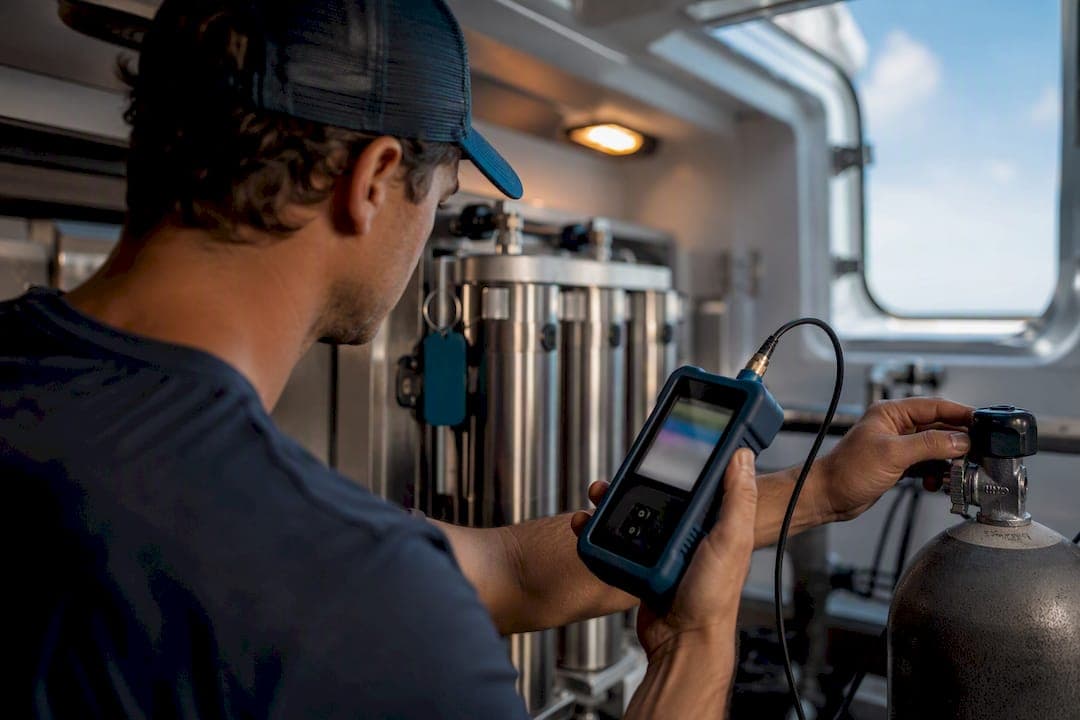
Yes, nitrox is available on many dive-capable yacht charters, but it is not universal, and availability depends entirely on the vessel's compressor setup and crew training. It matters most on multi-dive days and liveaboard-style itineraries, where enriched air lets you stay in the water longer with a wider safety margin. Certification and confirmed onboard logistics are non-negotiable prerequisites before you plan a trip around it.
TL;DR:
- Many yachts have nitrox but only if they have a dedicated membrane system, oxygen analyzers, and trained crew, so verification is essential beforehand.
- Nitrox is most beneficial on multi-day itineraries with four or more dives, as it extends bottom time and reduces fatigue from nitrogen buildup.
- Certification is mandatory; many charters offer onboard courses for PADI Enriched Air Nitrox or equivalent, but fees and schedules should be confirmed in advance.
- Nitrox fills are priced variably and often require written confirmation of costs and fill limits, with some operators including it in packages and others charging per tank or fill.
- On a single deep dive, nitrox offers limited or even negative advantages due to shallower MOD limits, so its value peaks on repetitive, moderate-depth dives.
Table of Contents
- What Is Nitrox and Why Charter Divers Use It
- How Nitrox Works on Board Yachts: Equipment, Fills, and Logistics
- What Certification Do You Need to Dive Nitrox?
- Safety Planning: MOD, Oxygen Exposure, and Dive Computer Settings
- What Should You Ask a Charter About Nitrox Before Booking?
- How Exotica Charters Evaluates Nitrox-Capable Yachts
- Book a Nitrox-Capable Luxury Charter With Exotica Charters
- Sources
- FAQ
What Is Nitrox and Why Charter Divers Use It
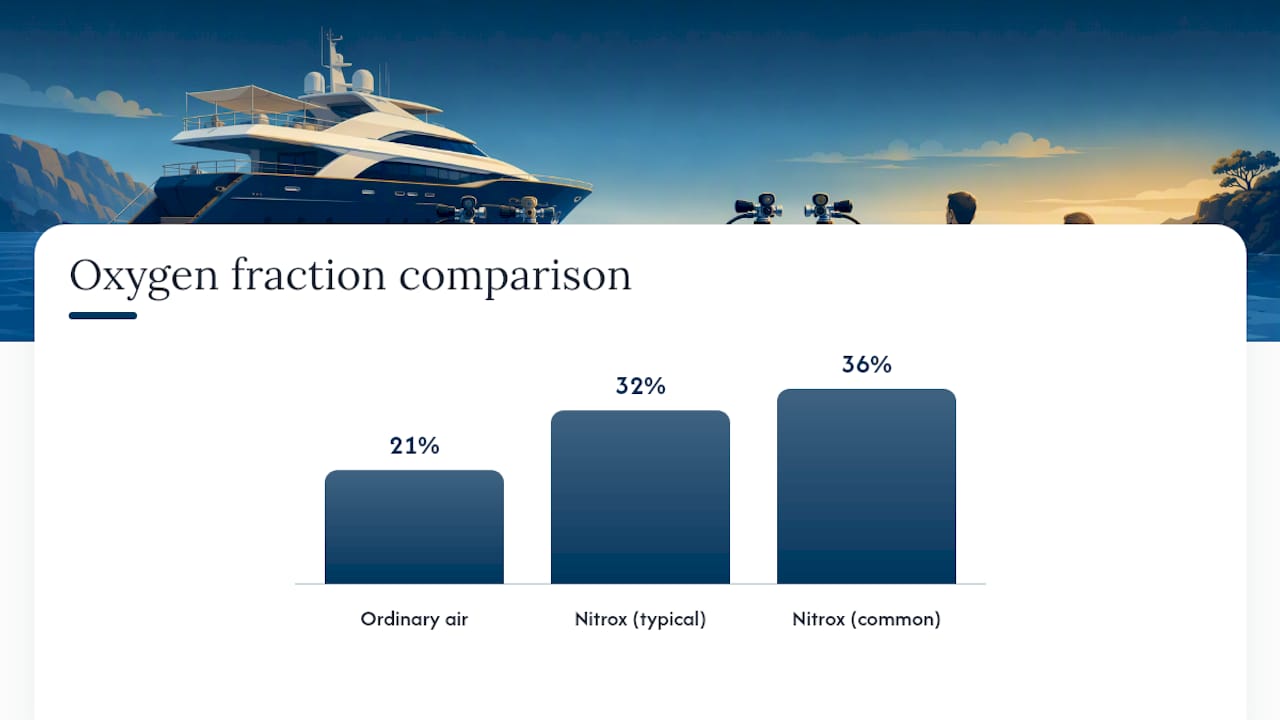
Nitrox, short for enriched air nitrox, is a breathing gas with an oxygen content above the 21% found in ordinary air, typically 32% or 36% for recreational diving. That extra oxygen displaces nitrogen, and less nitrogen absorbed into your tissues means longer no-decompression limits and shorter surface intervals between dives.
On a standard charter with two or three dives a day, that difference shows up as less fatigue by dive three and more flexibility in how the crew schedules the day. Liveaboards that pack in four or five dives push that advantage further, since the cumulative nitrogen load from breathing air alone becomes the limiting factor well before your tank runs low.
Nitrox is not a universal upgrade, though. On a single deep dive, the higher oxygen fraction can actually reduce your maximum operating depth compared to diving on air, so the benefit flips into a limitation. It shines specifically on repetitive, moderate-depth diving. That is exactly what most multi-day charter itineraries look like.
- Longer no-decompression times on repetitive dives
- Reduced nitrogen loading and less post-dive fatigue
- More scheduling flexibility for crews running multiple dives per day
- Little to no advantage on a single deep dive, where MOD limits can work against you
How Nitrox Works on Board Yachts: Equipment, Fills, and Logistics
A yacht that genuinely supports nitrox carries specific hardware, not just a tank rack. Most dive-capable vessels run high-pressure compressors, often Coltri units, paired with a membrane nitrox system that separates oxygen from compressed air, plus an oxygen analyzer to verify the final mix before anyone straps on a tank.
Cylinder compatibility matters more than most first-time charter divers expect. Boats commonly carry 12-liter or 15-liter aluminum tanks, and fittings run either DIN or INT (yoke), so it is worth confirming which your regulator uses before you fly out with the wrong first stage. Genuinely nitrox-capable operators use oxygen-clean cylinders and maintain that standard rigorously, since oxygen-enriched gas in a poorly maintained tank is a real hazard.
Here is how the daily flow usually works on a well-run dive charter:
- The crew fills tanks from the compressor or membrane system between dive sessions.
- A crew member or divemaster analyzes each tank's oxygen percentage with a handheld analyzer.
- The verified mix gets written on a tank label or dive log, along with the diver's name.
- Divers sign or verify the analysis themselves before entering the water, per standard nitrox protocol.
Pricing models vary widely. Some operators fold nitrox into package pricing, others charge per fill or per tank day.
Pro Tip: Get nitrox pricing and fill limits in writing before departure. Verbal assurances during the booking call rarely match what the crew tells you on day one.
What Certification Do You Need to Dive Nitrox?
You cannot legally use enriched air on a certified charter without a nitrox certification, and reputable crews will check your card before handing you a labeled tank. PADI Enriched Air Nitrox is the most widely recognized certification, though SSI, NAUI, and other major agencies offer equivalent courses that charters generally accept.
The good news for charter guests without a card yet: many liveaboards and dive-focused charters run the course onboard. A typical format pairs classroom or e-learning theory with two open-water training dives, often completed within the first day or two of a longer trip.
- Bring your certification card or a digital copy accessible offline.
- Expect the crew to log your certification level alongside your dive profile.
- If you are certifying onboard, confirm the course fee and schedule before booking, since it can affect your first day or two of diving.
Safety Planning: MOD, Oxygen Exposure, and Dive Computer Settings
Maximum operating depth, or MOD, is the deepest point where a given oxygen mix stays within a safe partial pressure limit. Because nitrox carries a higher oxygen fraction than air, its MOD is shallower than air's, and the exact depth depends on which mix you are breathing and the limit your training agency sets. Never rely on memory here. Follow the ceiling your certification course taught you and let your dive computer, set to the correct mix, do the real-time math.
Oxygen exposure adds a second layer most new nitrox divers underestimate. Central nervous system (CNS) oxygen toxicity and oxygen tolerance units (OTUs) accumulate across a single dive and across a multi-day repetitive schedule alike, which is precisely the pattern of a liveaboard or intensive charter itinerary. Tracking that exposure day over day, not just dive over dive, is part of responsible nitrox diving.
Liveaboard itineraries that pack in eight to eleven dives over two or three days are exactly the schedules where nitrox earns its keep, since the reduced nitrogen loading helps divers stay within safe repetitive limits without cutting dives short.
A few habits keep the whole system honest:
- Set your dive computer to the exact oxygen percentage analyzed for that tank, not an assumed 32%.
- Confirm the written analysis on the tank label matches what the crew tells you verbally.
- Log CNS and OTU exposure across the full trip, not just per dive.
- Follow the crew's gas switching and tank handoff procedures without shortcuts.
What Should You Ask a Charter About Nitrox Before Booking?
A few direct questions during the inquiry stage save a lot of frustration once you are on the water. Advertising "nitrox available" on a listing does not always mean the boat has a dedicated membrane system or a crew trained to run one, so verify the specifics.
- How many nitrox-certified divers do you typically accommodate, and do you supply oxygen-clean cylinders with analyzer-verified fills?
- Is your nitrox produced by an onboard membrane system, or do you rely on shore-based fills between dive days?
- How experienced is your dive crew or divemaster with nitrox fills and gas analysis specifically?
- What is the maximum number of nitrox tanks you can fill per day, and could that limit affect our schedule?
- What does nitrox cost per fill or per trip, and can you confirm your nitrox policy in writing?
Direct answers here tell you more about a yacht's real dive capability than any marketing photo of a tank rack ever will.
How Exotica Charters Evaluates Nitrox-Capable Yachts
Our team is built from former captains and water-sports professionals who have stood on the deck of a compressor room and know the difference between a boat that advertises nitrox and one that actually delivers it reliably. That experience, combined with our Trustpilot standing, shapes how we vet every dive-focused itinerary we build.
Before we confirm a nitrox-capable yacht for a client, we check the compressor and membrane system, the crew's fill and analysis routine, and whether documented procedures exist for gas logging and cylinder maintenance. When a course is needed, we coordinate the onboard PADI training and confirm logistics so your first dive day is not spent waiting on paperwork.
Book a Nitrox-Capable Luxury Charter With Exotica Charters
Exotica Charters exists to solve exactly the problem this guide walks through: confirming, in advance, that a yacht's nitrox capability matches what your dive plans actually require. Rather than gambling on a listing's photos or a broker's general assurance, our team of former captains and water-sports professionals checks compressor type, cylinder inventory, and crew experience before you commit to a booking.
When you reach out, tell us how many nitrox-certified divers are in your group, what certification level each person holds, and your preferred itinerary or region. We will confirm back the compressor setup, whether onboard PADI Enriched Air Nitrox courses can be arranged for anyone still working toward certification, and what nitrox fills will cost for your trip. Browse current luxury yacht options or start an inquiry through our main booking page, and let us handle the equipment questions so you can focus on the dive sites.
Sources
- 3 Day /2 Night Liveaboard with PADI Nitrox Course - Great Barrier Reef - Cairns - Enriched Air Nitrox - PRO DIVE
- MY Dolce Vita – Luxury Red Sea Liveaboard | Egypt Diving Adventures
FAQ
Is Nitrox Commonly Available on Yacht Charters?
Many dive-focused yachts and liveaboards offer nitrox, but it depends entirely on whether the vessel carries a compressor with a membrane nitrox system and analyzer-verified fills. Always confirm capability directly with the operator rather than assuming from a general listing. Exotica Charters verifies this equipment and crew experience before confirming a dive-capable booking.
Do I Need Certification to Use Nitrox on a Charter?
Yes, a nitrox certification such as PADI Enriched Air Nitrox or an equivalent from another major agency is required before crews will fill a tank for you. Some liveaboards let you complete the course onboard, combining theory with two training dives early in the trip.
How Much Does Nitrox Cost on a Charter?
Pricing varies by operator and can run per fill, per tank day, or bundled into a dive package. Ask for written pricing during booking, since verbal quotes often shift once you are onboard.
Does Exotica Charters Arrange Nitrox-Capable Yachts?
Yes, some charter companies coordinate dive-focused itineraries and may confirm a yacht's nitrox equipment, crew experience, and course availability before booking. Reach out through our main site with your certification level and preferred itinerary to get specifics confirmed.
When Does Nitrox Make the Biggest Difference on a Dive Trip?
Nitrox delivers the most value on multi-dive days and liveaboard-style itineraries with four or more dives, where reduced nitrogen loading extends comfortable bottom time across the day. It offers little advantage on a single deep dive, where its shallower maximum operating depth can actually work against you.