There are two decisions behind every yacht charter. The first is how much of the running of the boat you hand to someone else: bareboat, skippered or fully crewed. The second is what kind of vessel carries you: a sailing yacht, a catamaran, a motor yacht or an expedition vessel. Get both right and the trip feels effortless; get one wrong and you spend your holiday managing a boat. This guide walks through each option, who it suits, and how we would match them to a family week, a dive trip, a honeymoon or a wildlife expedition.
TL;DR
- Charter arrangements come in three forms: bareboat (no crew, you take legal responsibility), skippered (a captain only) and fully crewed (captain plus professional crew who run the yacht and look after you).
- Vessel type shapes the trip: catamarans offer stability and shallow anchorages, sailing yachts offer connection to the sea, motor yachts offer space and range, and expedition vessels reach the remote places.
- For remote destinations such as the Galápagos, French Polynesia or Alaska, a fully crewed charter is usually the practical choice.
- Check what is in the base fee and what is paid on top before you compare two quotes.
Table of Contents
- The three ways to charter: bareboat, skippered and crewed
- Choosing the yacht: sailing, catamaran, motor and expedition
- Matching the charter to who is traveling
- Perspective: what we have learned from the other side
- Building a custom itinerary
- What a crewed charter includes, and what comes on top
- Questions to ask before you book
- Start planning with our specialists
- FAQ
- Sources
The three ways to charter: bareboat, skippered and crewed
In yachting the word "charter" covers several different legal and practical arrangements. The distinction that matters most is who is in command.
Bareboat charter
A bareboat charter hands you the yacht with no crew. You navigate, provision, anchor and maintain the vessel, and you carry the responsibility that goes with it. In U.S. waters, a bareboat (or demise) charter transfers full control, operation and navigation to the charterer, and if you do hire a crew, you should choose and engage that crew yourself rather than have the owner dictate it.
That last point is not a technicality. The Coast Guard, as reported by The Log in 2025, draws a line between a vessel chartered without crew and one chartered with crew; a true bareboat arrangement leaves hiring, insurance and provisioning with the charterer, and a bareboat may carry no more than 12 passengers plus the charterer. A U.S. maritime-law review of the Coast Guard's guidance adds that the indicators are guides rather than conclusive tests, and each agreement is judged on its facts: who selects and pays the crew, who pays for fuel, stores and port charges, and who buys the insurance.
Who it suits: experienced sailors with the qualifications and time to run a boat, usually in familiar cruising grounds. Most bareboat companies ask for proof of competence before they release a yacht. If you are weighing that route, a water and ocean safety checklist is a sensible habit to build before you are the person responsible for everyone on board.

Skippered charter
A skippered charter adds a professional captain to an otherwise self-run boat. The captain handles navigation and safety; you and your guests usually cook, clean and help with sailing if you like. It is a good middle path for confident travelers who want local knowledge without a full staff on board, and for families who want to learn a boat with someone beside them.
One caution from the legal side: when an owner or rental company appoints the captain, the arrangement can stop being a bareboat in the eyes of the Coast Guard. The Log reports that this can make it a crewed operation subject to extra licensing and inspection requirements. Ask any provider offering a skippered boat in U.S. waters how the arrangement is structured and licensed.
Fully crewed charter
A fully crewed charter is what most people picture when they imagine a luxury charter: the yacht, captain and crew come under a single contract, and the owner retains control of the vessel. Miller Watson, a U.S. yachting law firm, describes these time or voyage charters as the arrangement commonly called a crewed charter. Beyond the captain, the crew typically includes a chef, stewards or stewardesses and, on larger yachts, an engineer and dive or water-sports staff. Our guide to what a crew consists of compared with just a captain and our piece on yacht crew roles explain who does what.
| Bareboat | Skippered | Fully crewed | |
|---|---|---|---|
| Who is in command | You | Hired captain | Captain employed by the yacht |
| Food and cleaning | You | You | Chef and stewards |
| Experience needed | Qualified, experienced | Some helps | None |
| Best for | Seasoned sailors | Confident couples, small groups | Families, divers, remote trips |
| Remote destinations | Rarely sensible | Limited | Our core focus |
We offer crewed charters; if you are wondering whether we also handle self-run boats, our answer on bareboat versus crewed charters explains where we focus.
Choosing the yacht: sailing, catamaran, motor and expedition
Once you know how the boat will be run, the vessel itself shapes the days. Boat International's guide to yacht types frames the contrast simply: motor yachts offer spacious interiors and amenities for long-distance cruising, while sailing yachts appeal to those seeking a connection to nature and the sea. Here is how we see each category.
Sailing yachts
A sailing yacht is for the traveler who wants to hear the water along the hull. Cabins are more compact than on a motor yacht, and the boat heels when under sail, but nothing matches the quiet of a slow passage between islands at dusk. Sailboats suit couples, small groups of friends and keen sailors who want to join in. Browse our sailboat charters, or narrow by size with 2-cabin, 3-cabin and 4-cabin options.
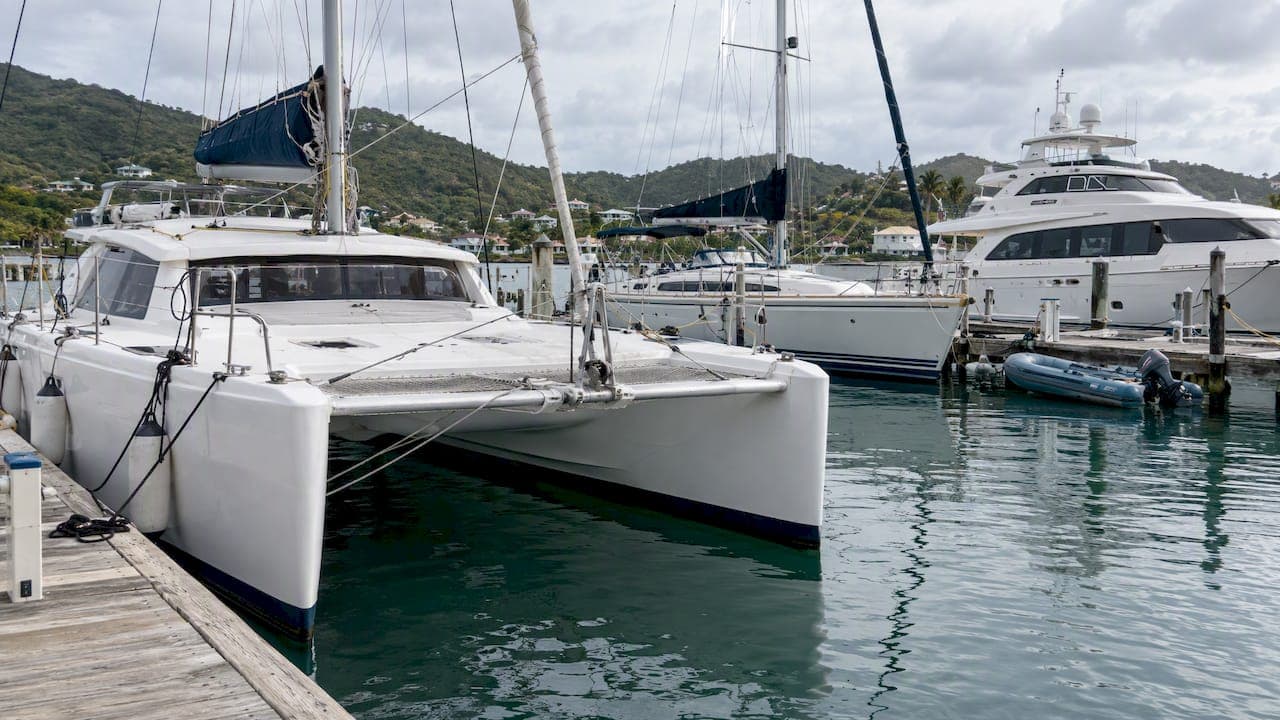
Catamarans
With two hulls, a catamaran sits flatter, spreads its living space across one broad deck and draws little water. Both Boat International and YachtBuyer's charter advice present them as a good fit for families and first-time charterers because they offer a stable platform and access to shallow anchorages. That shallow draft matters in places with reef-fringed lagoons and sandy coves, where a deeper keel stays offshore. Cabins are often equal in size, which makes sharing easier for two couples or a family with teenagers.

See our catamaran charters, including 1-cabin and 2-cabin boats, and power catamarans if you prefer speed and engines to sails.
Motor yachts and luxury yachts
Motor yachts are the choice for space, range and amenities: large salons, sun decks, often a spa pool or a generous tender garage stocked with water toys. They cover distance quickly, which helps when your itinerary links far-flung anchorages in a single week. Class matters onboard just as it does elsewhere in travel; a piece on how vehicle class shapes travel comfort makes the same point about choosing the level of space and service before you set out.
Our motor yachts range from 1-cabin and 2-cabin boats to 10+ cabin vessels, and the luxury yachts collection sits at the top end of space and service.
Expedition vessels
Expedition vessels are built for the places ordinary charter yachts do not go: polar waters, remote archipelagos, long passages between ports. They carry more fuel and equipment, and often the crew and tenders to land you on shorelines with no marina in sight. If a trip to Alaska or a faraway reef is in your mind, start with what makes a yacht suitable for polar or expedition waters, then look at which activities an expedition charter offers and how you reach remote expedition regions.
| Vessel | Space | Stability | Reach | Typical fit |
|---|---|---|---|---|
| Sailing yacht | Compact | Heels under sail | Moderate | Couples, sailors |
| Catamaran | Broad, shared | Very stable | Shallow bays | Families, first-timers |
| Motor yacht | Generous | Good at anchor | Long range | Groups, comfort seekers |
| Expedition vessel | Functional to luxurious | Built for open water | Remote | Divers, wildlife, adventure |
Matching the charter to who is traveling
Families
Families tend to do best on a crewed catamaran or a motor yacht: stable decks, space for children to spread out, and a crew who handle the logistics. Cabin arrangement deserves attention before you book; our family cabin layout guide shows how to read a plan. Check minimum age rules if you are traveling with very young children, and see our family-friendly destinations and destination picks for families.
Couples
Couples are well served by a small sailing yacht or a 1-cabin motor yacht or catamaran: a private crew that disappears when you want quiet, a chef who learns what you like by the second dinner, and anchorages chosen for the sunset. Remote is the point, so itinerary matters more than boat size.
Divers
Divers need a different checklist: compressor or nitrox capability, dive-qualified crew, a tender suited to reaching sites, and a captain who knows the conditions. The Galápagos and French Polynesia reward a boat with that infrastructure. Our team of former captains and water-sports professionals plans trips around the dive sites, not the other way round.
Wildlife travelers
If you want to meet sea lions, whales or glaciers, choose a vessel with range, quiet engines and tenders for landings. An expedition-style yacht, or a motor yacht with a skilled captain and naturalist-minded crew, gives you the time to linger rather than the schedule of a large cruise ship.
First-time charterers
New to the water? A fully crewed boat means you need no experience at all. Our walkthrough of booking a crewed sailing yacht charter without experience covers it step by step.
Perspective: what we have learned from the other side
Before we planned charters, many of us ran them. We were captains and water-sports professionals who watched guests choose a boat for its photographs and then discover that the itinerary, not the yacht, decided their week. A beautiful motor yacht tied to a marina is a floating hotel; a modest catamaran anchored off an empty reef can be the trip of a lifetime.
So we start with the places and the activities: where you want to wake up, what you want to see beneath and above the surface, and how many days you can spare. Only then do we look at vessels. We also lean towards crewed charters for remote waters, because a captain who knows the weather windows, anchorages and permit rules removes the risks you should not have to carry on holiday.
— Mo
Building a custom itinerary
A charter is the one kind of vacation where the route is written around you. These are the levers we adjust.
- Destination and season. Weather, water temperature, marine life and crowds change by month. Tell us what you want to see and we match the season, rather than the other way round.
- Pace. Two anchorages a day with long passages, or three nights in one bay? Faster boats stretch the map; slower ones deepen it.
- Activities. Diving, snorkeling, paddleboarding, hiking, wildlife landings, fishing, or simply swimming off the stern. Each calls for different tenders, toys and crew skills.
- Trip length. Remote regions often need more days because the getting there takes time; ask us how travel fits around your charter dates.
- Guests. Ages, mobility, cabin sharing and dietary needs shape the boat as much as the route does.
A useful test: describe your best day on the water in two sentences. That is the itinerary, and everything else, vessel included, follows from it.
What a crewed charter includes, and what comes on top
A crewed charter quote is usually built from a base fee for the yacht and crew, plus costs that vary with how you use the boat. The base covers the vessel, captain and crew. Variable costs commonly include fuel, food and drinks, marina and port fees, and crew gratuity, and many yachts collect an advance provisioning allowance up front against these, settled with a final accounting. Whether alcohol, water toys and dive equipment sit in the base rate differs from yacht to yacht, so ask for an itemized list rather than comparing headline numbers.
Charter pricing depends on yacht size, season, destination and length of stay, and we do not publish fixed rates because every itinerary is built individually. Speak to us and we will provide a quote for the specific yacht and route, with the inclusions spelled out. For expeditions, read how an expedition charter is priced.
Questions to ask before you book
- Who is in command, and who employs the captain and crew?
- What does the base fee include, and what is billed afterwards?
- What are the crew's qualifications? Our crew credentials guide lists what to look for.
- How many guests can the yacht sleep, and how are cabins arranged?
- What is the cancellation and weather policy?
- Does the yacht carry the equipment your activities need?
Start planning with our specialists
We plan fully crewed charters aboard motor yachts, sailboats, catamarans, luxury yachts and expedition vessels in remote destinations around the world, including the Red Sea, Cuba and the South China Sea. Tell us who is traveling, what you hope to see and when, and our team of former captains and water-sports professionals will propose the boat and route. Our clients rate us highly on Trustpilot.
FAQ
What are the main types of yacht charter?
There are three: bareboat, where you take command of a boat with no crew; skippered, where a professional captain is added; and fully crewed, where the yacht comes with captain and crew who handle everything. Within these you choose a vessel type: sailing yacht, catamaran, motor yacht or expedition vessel.
Do I need a license to charter a yacht?
Not for a fully crewed charter, since the captain is a professional. Bareboat charters usually require proof that you can handle a boat, and in U.S. waters the charterer bears the legal and safety responsibility for the vessel.
Which type of yacht is best for families?
Catamarans and motor yachts usually work best. Catamarans give a stable platform and access to shallow anchorages, while motor yachts add space and comfort. Whichever you choose, look closely at cabin layout and age policies.
What does a crewed yacht charter cost?
It depends on the yacht, destination, season and number of days, and extras such as fuel, food and port fees are usually paid on top of the base fee. We build each quote around your itinerary, so contact our specialists with your plans.
Sources
- Plan on Chartering Your Yacht in U.S. Waters? Know the Issues, Miller Watson PLLC
- Don't Fall for an Illegal Charter: Coast Guard Cracks Down, Educates Public, The Log
- A Brief Look at How the Courts Interpret Criteria for Bareboat Charters
- Types of yachts: motor yachts, sailing yachts, catamarans and more, Boat International
- How Vehicle Class Shapes Your Travel Comfort
- Ocean Safety Checklist: Beach and Water Activity Guide